‘Tourists Please Don’t Go To Home of Canada’s Dirty Oil Sands’ Ad Campaign

Beautiful Alberta, Canada??

US enviro group is putting up billboards in four U.S. cities urging Americans to exclude Alberta from their travel plans, saying it is “one of the world’s dirtiest destinations”.

Let’s be clear here: I am not a supporter of this use of  a big “economic” club to hit govt over the head to get their attention. It will hurt many Albertans who are in the tourist biz where many likely support a moratorium on new tar sands development. Indeed most Albertans have said they want a “time out” in the tar sands. But big oil says no way and are pushing for faster approvals of new projects with “streamlined environmental reviews” of course.

In their  Re-Think Alberta Campaign enviro groups say they are trying to counter Alberta and Canadian government propaganda. Canada is lobbying the US  to prevent any cleaner-fuel regulations because the tar sands has the world’s highest CO2 levels and is the most destructive form of oil production. Yes worse, than off shore drilling – see here for more

And they are also down here lobbying for infrastructure, new pipelines, refineries, which would keep us addicted to high-carbon oil for another 50 years.” Corporate Ethics International Executive Director Michael Marx told Reuters.

1.3 million barrels of dirty oil is shipped  from tar sands region  to the US every day

Corporate Ethics also has a powerful video about the ongoing environmental mess that can easily be seen from space it is so big.

See also International Stop the Tar Sands Day commencing July 17 (more on this later).

You can learn more on enviro impacts of the tar sands in my short ebook:

Oil Stains in the Boreal Forest: The Environmental Cost of Canada’s Oil Sands

And from my recent articles:

Canada’s “Mordor” Ensures Climate Treaty Failure in Copenhagen

Tar Sands, Riot Police & Hope in Copenhagen

— Green wishes, Steve

Biggest Conservation Agreement Ever — 2X the Size of Germany

By Stephen Leahy

UXBRIDGE, Canada, May 18, 2010 (IPS)

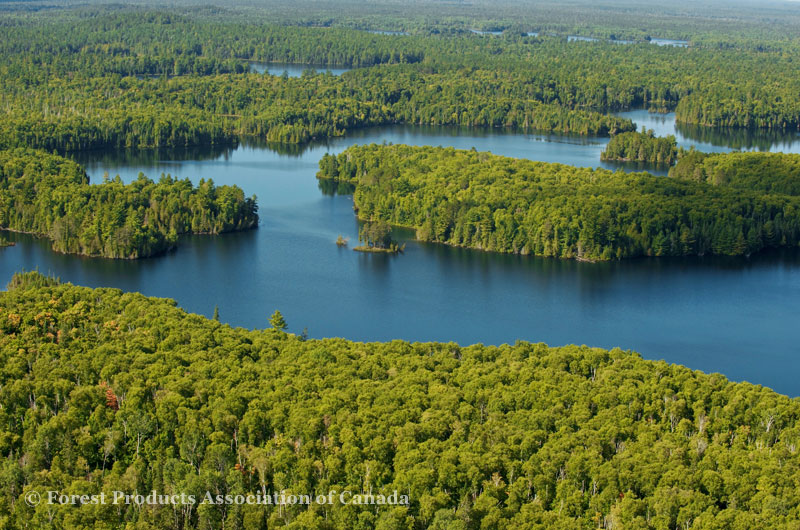
The decades-long war in Canada’s northwoods appears to be over. Environmental groups and Canadian logging companies linked arms Tuesday morning and agreed to work together to sustainably manage and protect 720,000 square kilometres of Canada’s boreal forest – an area twice the size of Germany.

“This is the biggest conservation agreement on the entire planet,” said Richard Brooks, spokesperson for participating environmental organisations and forest campaign coordinator of Greenpeace Canada.

The vast northern boreal forest is a broad band that circles the top of the world below the Arctic. It is the last great forest ecosystem – larger even than the Amazon – and the largest terrestrial storehouse of carbon. Made up primarily of pine and spruce trees, Canada’s boreal covers more than five million square kilometers, representing more than a quarter of the remaining intact forest on the planet. Just eight to 10 percent is currently protected.

“This is our best and last chance to save woodland caribou, permanently protect vast areas of the boreal forest and put in place sustainable forestry practices,” Brooks said in a press conference.

“We estimate there is roughly 20 billion tonnes of carbon in the trees and soils that are part of this agreement.”

That is equivalent to the annual emissions from 18 billion cars, he estimated. Continue reading

Canada’s Idea of Working on Climate Change Means Muzzling Climate Scientists, Closing Research Stations and Cutting Funding

“This government is doing nothing on climate but they always make sure to sound like they’re doing something to fool Canadians.” — John Bennett, Sierra Club of Canada

By Stephen Leahy

UXBRIDGE, Canada, Mar 16, 2010 (IPS)

Canada’s climate researchers are being muzzled, their funding slashed, research stations closed, findings ignored and advice on the critical issue of the century unsought by Prime Minister Stephen Harper’s government, according to a 40-page report by a coalition of 60 non-governmental organisations.

“This government says they take climate change seriously but they do nothing and try to hide the truth about climate change,” said Graham Saul, representing Climate Action Network Canada (CAN), which produced the report “Troubling Evidence”.

“We want Canadians to understand what’s going on with this government,” Saul told IPS.

Climate change is not an abstract concept. It already results in the deaths of 300,000 people a year, virtually all in the world’s poorest countries. Some 325 million people are being seriously affected, with economic losses averaging 125 billion dollars a year, according to “The Anatomy of a Silent Crisis“, the first detailed look at climate change and the human impacts.

Released last fall by the Geneva-based Global Humanitarian Forum, the report notes that these deaths and losses are not just from the rise in severe weather events but mainly from the gradual environmental degradation due to climate change.

Is this article of interest? It exists thanks to contributions from readers. Please click here to learn more about Community Supported Journalism.

“People everywhere deserve to have leaders who find the courage to achieve a solution to this crisis,” writes Kofi Annan, former U.N. secretary-general and president of the Forum, in the report.

Canadians are unlikely to know any of this. Continue reading

Canada’s “Mordor” Ensures Climate Treaty Failure in Copenhagen

[Hello from snowy and cold Copenhagen. Tensions have ramped up as political leaders arrived but are mainly meeting in secret.

Ashamed to say Canada is a widely acknowledged as a public embarrassment here. And called a climate criminal by some. Several protests like the one I covered below and a smaller one earlier have focused on the Athabasca Tar Sands perhaps the world’s biggest source of carbon emissions.

Outside the artificial reality of the Bella Center ordinary people get it. Here is good video summary of what happened on Wed as civil society were gradually banned from the conference. It accords with my son’s version who was in the middle of all this as an observer. — Steve]


By Stephen Leahy

COPENHAGEN (IPS/TerraViva) Dec 14 2009

Climate activists jammed a small square near the police-barricaded Canadian Embassy here Monday for the second day of protests over the country’s tar sands development.

Simultaneous protests were held at the Canadian Embassy in London because British oil companies and financial institutions are deeply invested in the Canadian mega-project.

“As indigenous people, we are here at the international climate negotiations to speak about threats to our cultural survival and the direct life-threatening impacts of climate change in our communities,” said Clayton Thomas Muller, tar sands campaigner for the Indigenous Environmental Network.

“Canada has been blocking the climate negotiations and hasn’t kept Kyoto commitments…because of the tar sands,” he told a crowd of 75 to 100 people surrounded by four squads of riot police.

Boreal forests and wetlands the size of Greece are been destroyed in northern Alberta in an industrial project that turns millions of tonnes of sand and earth into oil, mainly for the U.S. market he said.

“All the efforts by Canadians to reduce their carbon emissions are undone by the tar sands,” said Canadian writer and activist Naomi Klein.

The tar sands are Canada’s largest single source of carbon dioxide (CO2) emissions and the major reason why Canada has refused to live up to its commitments to reduce emissions and is blocking negotiations, Klein told protesters.

“Canada is making a mockery of international law and of developing countries’ need for urgent emission reductions in rich countries,” she said.

Canadian Prime Minister Stephen Harper is here at the Dec. 7-18 U.N.-sponsored climate summit under false pretences, Klein charged.
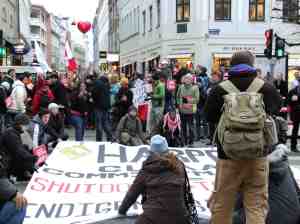
Harper does not have the Canadian people’s permission to promote the tar sands or to favour Canadian interests over those of the planet,” she said.

The tar sands are “Canada’s Mordor”, said Maude Barlow, head of the Council of Canadians, the largest citizens’ group in Canada. She was referring to the devastated land of rock and fire in the “Lord of the Rings” trilogy.

“What else can you call a project that leaks 11 million litres of toxic waste a day into rivers and groundwater?” Barlow said in this very un-Mordor upscale shopping district of downtown Copenhagen.

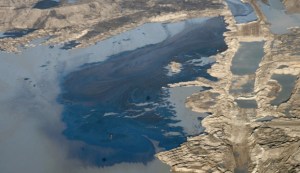
The tar sands project has the largest toxic waste containment ponds on the planet – easily visible from space. Last week, a report revealed the extent of the leaks to be an estimated 11 million litres a day.

Shockingly, this is based on the oil companies’ own self-reported data, says Environmental Defence, the Canadian advocacy, research and education group that compiled the report.

It calculated that four billion litres of leakage a year will grow to 25 billion in a decade based on current growth of the tar sands and aging of the enormous dams that hold back the waste.

“There is no question Harper will stand up for  the oil sector [in the climate talks here],” Barlow said.

Their [oil industry] footprints are all over this negotiation and that is why it will fail.”

-30-

Corrected 2/2/12

For more on the Tar Sands see:

Oil Stains in the Boreal Forest: The Environmental Cost of Canada’s Oil Sands – Revised V2.1Oil Stains in the Boreal Forest: The Environmental Cost of Canada’s Oil Sands – Revised V2.1

Tar Sands, Riot Police & Hope in Copenhagen

By Stephen Leahy

COPENHAGEN, Dec 12 (IPS/TerraViva)

A small group of protesters stood outside the Canadian Embassy in the cold Saturday night in Copenhagen to  shine a small spotlight of attention on the fact that Canada is home to the Alberta tar sands, the world’s largest and possibly most
polluting industrial project on the planet.

“It’s not just the huge CO2 emissions, it’s the water pollution, destruction of the forests, impacts on the food supply and all of the cancers the native people are getting,” said Janet Payne, an activist from the United Kingdom. “It’s dirty, toxic and huge.

Thousands of square kilometers of tar-laden soil and sands underlying Canada’s boreal forests are being mined, and then boiled with millions of liters of steaming water to extract the tar to produce 2.7 million barrels a day, mostly to feed the insatiable appetite for oil in the US.

“I feel strongly Canada is getting away with this Payne had participated in the day’s big march saying it was like a music festival but with a strong message to the world. “Everyone should be here. Climate change is affecting everything in the world; we all should be standing up.”

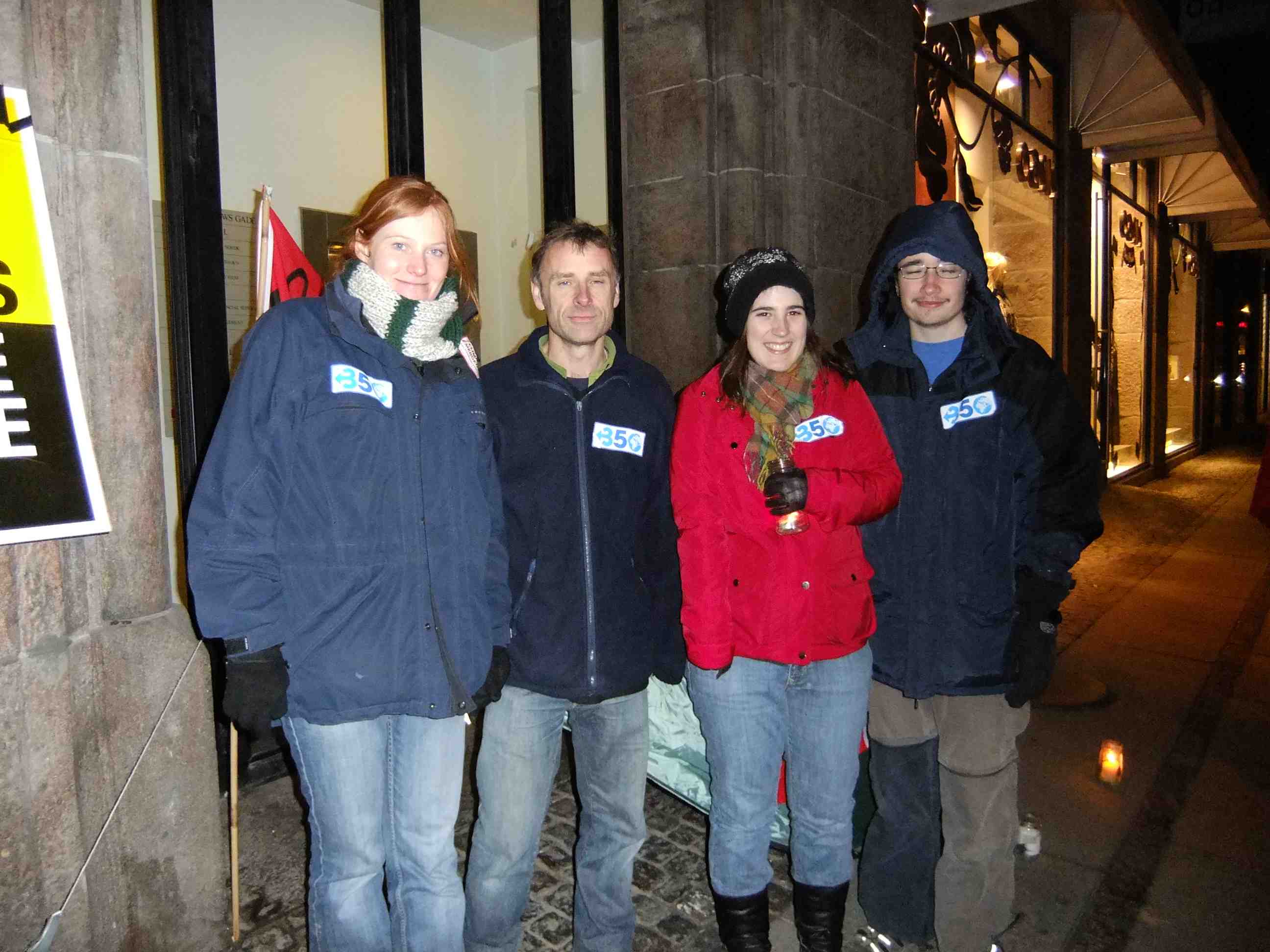
At the end of the interview three vans of Danish riot police pulled up and surrounded the group of eight protesters who were simply shivering on the sidewalk holding two small banners. The group was surrounded by police in full riot gear demanding to know what was going on.

Assuming this reporter was the leader, they asked me to explain what the protest was about, and I told them about the tar sands project. After the mandatory ID checks, permission was given to continue the protest and two officers said they’d join in once their shift was finished.

Maybe there is hope in Copenhagen.

The Arctic — The Earth’s Freezer — Is Defrosting With Dire Results

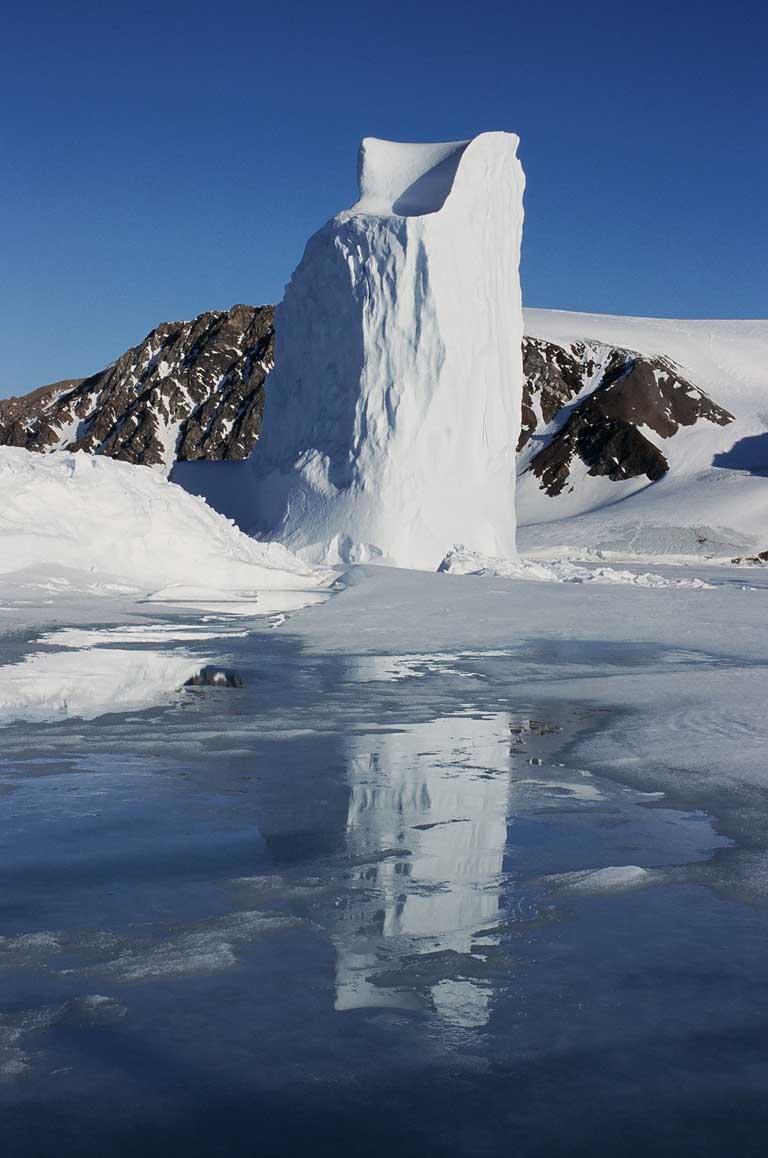
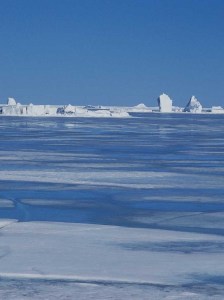
Iceberg in Glacier Strait, Nunavut, Canada, Image credit- Sandy Briggs.By Stephen Leahy

GENEVA, Sep 2 (IPS)

The rapidly warming Arctic region is destabilising Earth’s climate in ways science is just beginning to comprehend.

The entire world is being affected, and without urgent action to cut emissions, a too-warm Arctic could trigger catastrophic, irreversible climate change, top scientists say in a report released Wednesday in Geneva.

“It is crucial to know the full consequences of the Arctic warming, and this is an unprecedented review of the latest science,” said Martin Sommerkorn, an Arctic researcher and senior climate change advisor to World Wildlife Fund International.

“Simply put, if we do not keep the Arctic cold enough, people across the world will suffer the effects,” Sommerkorn told IPS.

Sea level rise of more than one metre, flooding affecting one quarter of the world’s population, and extreme global weather changes are on the way at the current pace of unchecked carbon emissions, the “Arctic Climate Feedbacks: Global Implications” report warns.

A warming Arctic has far wider and more serious consequences than previously believed based on the latest science of the past three years, including the very recent research from International Polar Year 2008-2009.

“There is a large potential that a warming Arctic will make climate change far worse,” said Sommerkorn, who acted as editor of the report written by 10 of the world’s leading climate scientists. Continue reading

Do Incinerators Kill Goal of Zero Waste?

zero-waste-conceptby Stephen Leahy

The Uxbridge Cosmos Apr 30 2009

Shawn Williamson took out 2.4 bags of trash last year. Williamson hopes to trim that to 1.6 bags of garbage this year from his family of three living in a typical newer home in nearby Brooklin.

“It’s easy,” says Williamson, a consultant and Director at Durham Sustain Ability, who also uses his home as an office. The secret is buying in bulk and “not buying crap”. The family buys 50lb bags of rice, uses glass jars for storage of other bulk food items and does its own backyard composting. [living zero waste – you tube video]

“It makes more sense to compost food waste in your backyard than transport it all over the Region.”

Uxbridge and Durham Region residents may not realize there is a looming garbage crisis. Virtually all of the Region’s more than 100,000 tonnes of trash goes to Michigan. But those landfills will be closed to Ontario’s garbage in 2010. In response Durham Region Council voted last year to build an estimated $230 million incinerator, or energy-from-waste (EFW) facility in Clarington near Lake Ontario.

“No incinerator is clean. Why let the Region blow toxic smoke into your lungs?” Dr. Sean Godfrey, Chief of Pediatrics, Lakeridge Health Oshawa asked about 80 people attending an information session in Whitby in early April. The event was part of a series of sessions organized by a group of Durham residents called ZeroWaste4ZeroBurning who oppose Durham’s proposed incinerator. Continue reading

Earth’s Arctic Freezer Turning Into Hothouse

meltwater-ponds-on-sea-ice-off-coburg-island-nunavut-canada-arctic-warming-has-been-associated-with-a-rapid-decline-in-arctic-summer-sea-ice-extent-image-credit-sandy-briggs1By Stephen Leahy

UXBRIDGE, Apr 10 (IPS) – The world is losing its northern freezer as Arctic winter ice is in sharp decline, NASA scientists reported this week. Even with below average winter temperatures, Arctic ice is thinner and covers less area than it did a decade ago.

Arctic sea ice is the cooling mechanism for the global climate system. As it declines and the region warms – already three to five degrees Celsius warmer – then inevitably there are local, regional and hemispheric climate impacts.

“We’ve already lost one third of the summer ice cover since the 1980s. There are already impacts from this,” says Ron Kwok of NASA’s Jet Propulsion Laboratory in Pasadena.

“A completely ice-free summer by 2013 is not impossible,” Kwok said in a telephone news conference. “You would have been laughed out the room if you suggested this five years ago.”

The new study shows that the maximum extent of the 2008-2009 winter sea ice cover was the fifth-lowest since researchers began collecting such information 30 years ago. The past six years have produced the six lowest maximums in that record.

More stunning, and indicative of the rapid warming of the region, is the decline in the thick, hard-to-melt multi-year ice, says Walter Meier, research scientist at the National Snow and Ice Data Centre in Boulder, Colorado. Multiyear ice is ice that is two or more years old and therefore doesn’t melt in the summer.

“Less than 10 percent is multiyear now. It used to be 30 percent in 1981,” Meier said at the news conference.

via ENVIRONMENT: Earth’s Arctic Freezer Turning Into Hothouse.

Canada Refuses to Support Wind Energy

windmill-winter-ponies

First World Wind Energy Conference held in Canada but Federal Government Refuses to Participate

Canada’s federal government refused to participate or support the wind energy conference. It was up to other countries and institutions, including Germany and the United Nations, to provide funding for delegates from the global South to attend.

“I’m embarrassed and ashamed,” Volker Thomsen, one of the chief conference organisers, told delegates at the opening of the meeting.

Governments fail to vigourously switch over to renewables because the way things are works for them, said Scheer. The extremely powerful fossil fuel lobby also wants no changes so they can continue to profit from their investments in the current energy infrastructure. And that’s why letting the conventional power companies, utilities and experts take charge of renewables will lead to very little change, he warns.

Not only is 100 percent renewable energy possible, it can be done much faster and cheaper than building coal or nuclear power plants, said Scheer. Multi-megawatt wind turbine farms and solar arrays can be up in running in 18 months. But when energy is needed, the first thing most governments want to build are big, expensive power plants.

“The public and renewable energy sector must push governments and push them hard to change this,” Scheer stressed.

[Excerpt from my IPS June 25/08 article Failure on Global Warming “Un-American”]

Polar Bears and the Arctic Meltdown

polar-bear-snout-wwwfirstpeopleus-smlA warm Arctic six-pack of 2008 science articles on how global warming is transforming the Arctic:

1. Arctic Ice Gone in 5 Years – First Time in One Million Years — “We’re going to see huge changes in the Arctic ecosystem”

2. Burning Down Our HouseThe roof of our house is on fire while the leaders of our family sit comfortably in the living room below preoccupied with “political realities”.

3. Things Happen Much Faster in the Arctic — “Things are happening much faster in the Arctic. I think it will be summer ice-free by 2015,” said David Barber, an Arctic climatologist at the University of Manitoba.

4. Arctic Is the Canary in the Coalmine — The Arctic is “ground zero” for climate change, with temperatures rising far faster than anywhere else on the planet.

5. Arctic Meltdown Signals Long-Term Trend — Soaring temperatures have led to the collapse of several huge ice shelves in the Canadian Arctic over the past few weeks.

6. Arctic Oil and Gas Rush Alarms Scientists — As greenhouse gas pollution destroys Arctic ecosystems, countries like Canada are spending millions not to halt the destruction but to exploit it.ceberg-in-glacier-strait-nunavut-canada-image-credit-sandy-briggs

Oh yeah, and about those polar bears:

Polar Bears Go Hungry as Icy Habitat Melts Away — The iconic animal of the frozen north, the polar bear, is starving to death because climate change is melting the Arctic Ocean sea ice.

Oil vs Polar Bears in Alaska — A coalition of environmental groups sued the George W. Bush administration Monday for delaying a decision to protect polar bears threatened with extinction

Polar Bears’ Future Bleak in Melting Arctic — “Without taking serious and urgent action to stabilize the climate, there is no future for polar bears” says Andrew Derocher, Chair of the World Conservation Union (IUCN), Polar Bear Specialist Group.