Truth and Wisdom From Spiritual Leaders at Durban Climate Talks

Why do countries at the international climate talks accomplish so little when they apparently understand the science and risks of global warming?

Here is the knowledgeable, depressing and yet inspiring answer from three remarkable spiritual leaders:


That was a press conference on one the last days of the 2011 climate talks in Durban. And here is the article I wrote about this and the “ubuntu” declaration by more than 130 African faith leaders. — Stephen 

A Very Inconvenient Truth: Gore Got It Right on Global Warming

[Reposted from 2006, nearly six years ago. It offers interesting perspective about the continuing (worsening?) political insanity of inaction  – Stephen]

By Stephen Leahy

BROOKLIN, Canada, Jun 20 (IPS)

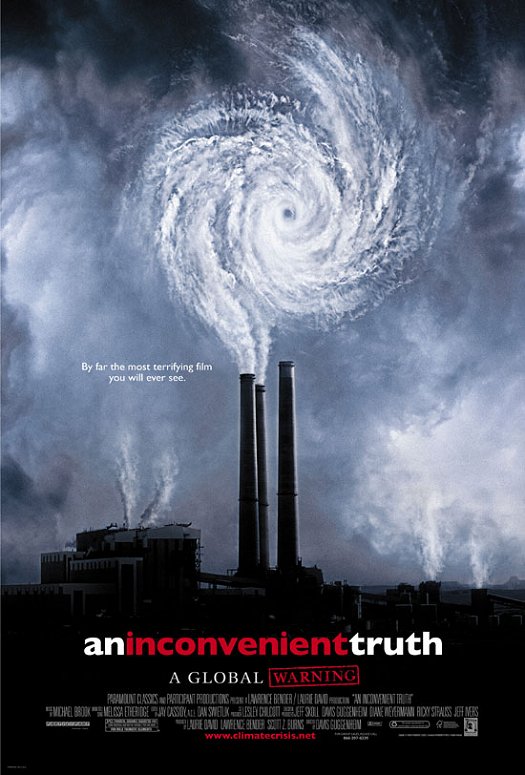
Former U.S. Vice President Al Gore’s documentary on global warming, “An Inconvenient Truth”, is filling theatres across North America – and gets the science right, according to climate experts.

“I saw it last night and was impressed with the climate science presented in the film,” said David Archer, a climatologist at the University of Chicago.

“I left the theatre profoundly depressed because of the political insanity in this country that denies global warming is a concern,” Archer told IPS.

Gore’s personal passion about global warming can be traced to the early 1980s. After losing the election to George W. Bush in 2000, Gore dedicated himself to warning the public about the devastating impacts climate change will have on hundreds of millions of people.

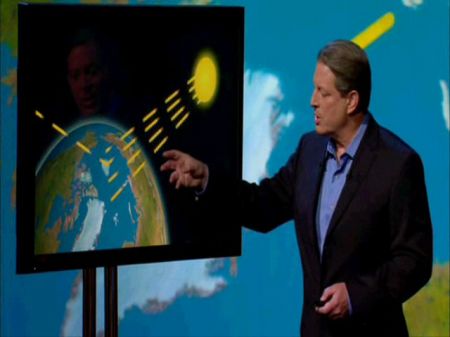
“An Inconvenient Truth” is a 98-minute documentary comprised mainly of highlights from Gore’s high-tech slide show explaining the science documenting global climate change.

Some truths are hard to hear, because if you really hear them – and understand that they are in fact true – then you have to change. And change can be quite inconvenient,” Gore says in the film.

Using an impressive set of graphics, he carefully illustrates changes underway such as receding glaciers, collapsing ice sheets, devastating floods and droughts. One memorable scene shows a graph of carbon-dioxide levels in the atmosphere going back 650,000 years that varies only a little until fifty years ago when it skyrockets. Gore mounts a motorised platform to lift him up high up the chart so he can place his finger on the current level of CO2. Continue reading

Shale Gas a Bridge to More Global Warming

Shale Gas Worse Than Coal Study Finds

By Stephen Leahy

UXBRIDGE, Canada, Jan 24, 2012 (IPS)

Hundreds of thousands of shale gas wells are being “fracked” in the United States and Canada, allowing large amounts of methane, a highly potent greenhouse gas, to escape into the atmosphere, new studies have shown.

Shale gas production results in 40 to 60 percent more global warming emissions than conventional gas, said Robert Howarth of Cornell University in New York State.

“Shale gas also has a larger greenhouse gas footprint than oil or coal over the short term,” said Howarth, co-author of a study called “Venting and Leaking of Methane from Shale Gas Development” to be published in the journal Climatic Change.

(Audio of news conference)http://of%20news%20conference

This latest study follows up on Howarth and colleagues’ controversial April 2011 paper that provided the first comprehensive analysis of greenhouse gas emissions from shale gas obtained by hydraulic fracturing. That study found that when gas wells are “fracked”, they leak large amounts of methane and pose a significant threat to the global climate.

“We stand by the conclusion of our 2011 research,” said Howarth.

That research undercuts the logic of energy sector claims that shale gas is a “bridge” to a low-carbon energy future. Those claims are based on the fact that natural gas (which is mainly methane) has half the carbon content of coal, and when burned for electricity it is more energy efficient than coal.

This independent  journalism depends on public support. Click here learn more.

However, those climate gains are more than negated by methane leaks both at the well during the fracking process (called flow-back), and through the gas delivery and distribution system. Howarth and colleagues estimate that between 3.6 and 7.9 percent of all shale gas produced leaks – called “fugitive emissions” – into the atmosphere, making it worse than burning coal or oil. Continue reading

No Time Left to Adapt to Melting Glaciers — Peak Water Has Already Come and Gone

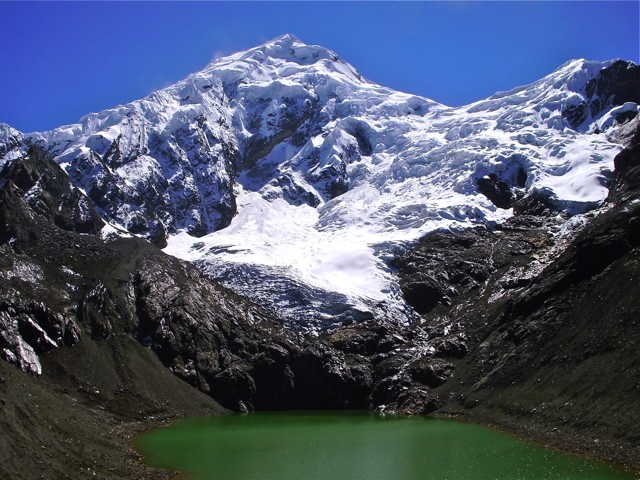
Melt water from the glaciers of the Cordillera Blanca forms lagoons that in turn feed rivers and streams. Credit:Courtesy of Michel Baraer

Without sharp reductions in the use of fossil fuels, the impacts of climate change could come faster and beyond what humanity can adapt to — Lonnie Thompson, glaciologist

By Stephen Leahy

UXBRIDGE, Canada, Dec 27, 2011 (Tierramérica)

The water supplied by the glaciers of the Cordillera Blanca, vital to a huge region of northwest Peru, is decreasing 20 years sooner than expected, according to a new study.

Water flows from the region’s melting glaciers have already peaked and are in decline, Michel Baraer, a glaciologist at Canada’s McGill University, told Tierramérica. This is happening 20 to 30 years earlier than forecasted.

“Our study reveals that the glaciers feeding the Río Santa watershed are now too small to maintain past water flows. There will be less water, as much as 30 percent less during the dry season,” said Baraer, lead author of the study “Glacier Recession and Water Resources in Peru’s Cordillera Blanca”, published Dec. 22 in the Journal of Glaciology.

When glaciers begin to shrink in size, they generate “a transitory increase in runoff as they lose mass,” the study notes.

However, Baraer explained, the water flowing from a glacier eventually hits a plateau and from this point onwards there is a decrease in the discharge of melt water. “The decline is permanent. There is no going back.” Continue reading

Oceans Becoming Hot, Sour and Breathless

Oceans home to 80% of all life — plankton provide 50 percent of the oxygen we breathe

By Stephen Leahy

DURBAN, South Africa, Dec 3 (IPS)

The world’s oceans are becoming hot, sour and breathless – threatening a vital source of food for a billion people mainly in the developing world experts warned today at a special Oceans Day event at the UN climate negotiation.

Oceans are home 80 percent of all life on the planet and emissions from fossil fuels are turning them increasingly acidic, raising water temperatures and reducing the amount of oxygen in some regions said oceanographer Carol Turley from Plymouth Marine Laboratory in the UK.

“We don’t know what all the consequences will be. We suspect the combination of all three will be far worse than one alone,” Turley told IPS in an interview on the sidelines of climate treaty negotiations known as COP 17.

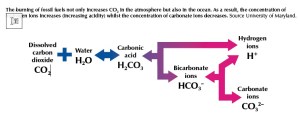
It was only a few years ago that researchers realised that human emissions of carbon dioxide (CO2) was making the surface waters of oceans more acidic. The oceans naturally absorb CO2 from the atmosphere and have now absorbed about a third of all human emissions. That has kept the climate from warming faster but the additional carbon is altering the oceans’ chemistry making them 30 percent more acidic.

One documented impact is that shell-forming creatures like plankton produce thinner shells in more acidic ocean waters. These species are often very important parts of the marine food chain. As emissions of CO2 into the atmosphere increase the more the ocean sours.

[See a powerful 11 min film on Ocean acidification]

In less than ten years at least 10 per cent of the Arctic Ocean surface waters will be too acid for shell-forming species like plankton. By 2040 most of the Arctic Ocean will be too acidic as will significant areas of the Antarctic Ocean said Turley.

Change in sea water acidity pH caused by anthr...The cold waters of the polar regions allow more CO2 to be absorbed faster. The oceans haven’t seen a rapid change like this in 60 million years, she explained.

“But there will also be strange impacts. New research is showing changes in growth, behaviour and reproduction in a variety of non-shell forming species.”

Estuaries and ocean upwelling zones that are often important fishing grounds are also regions where acidification is fastest. Those areas are also subject to low oxygen levels and increasing temperatures creating new conditions in the oceans that no marine species has ever had to cope with.

Oceans are also absorbing most of the extra heat trapped by the additional CO2 in the atmosphere. Again, without this land temperatures would far higher and extreme weather events far worse.

“There is some evidence that some crab species cannot tolerate higher temperatures when ocean is more acidic,” she said.

Continue reading

In Unprecedented Move, Harper Government Pulls Canada out Kyoto Protocol

Stephen Harper called Kyoto a “socialist scheme to suck money out of wealth-producing nations

Wealth-producing Nations Condemn Canada’s Withdrawal

By STEPHEN LEAHY

CAPE TOWN, Dec 14, 2011 (IPS)

Barely 24 hours after it signed a new global climate change agreement in Durban, South Africa, Canada became on Monday the first country to formally withdraw from the Kyoto Protocol, the only legally binding treaty to reduce emissions causing climate change.

The 17th Conference of the Parties (COP17) concluded last Sunday with an agreement called the Durban Platform, which includes a consensus agreement for a second commitment period of the Kyoto Protocol after the first expires at the end of 2012.

Canada’s government under Stephen Harper essentially agreed to a continuation of Kyoto only to announce formal withdrawal after Canadian Environment Minister Peter Kent arrived back safely in Canada on Monday.

“Kyoto, for Canada, is in the past,” Kent said in Durban on Dec. 7. Still, he insisted in a statement on Monday, “Canada went to Durban in a spirit of good will.”

Despite the so-called good will, Canada is well known as a pariah on climate and environmental issues, having being judged as the most uncooperative country for the last five climate treaty COPs.

Kent brought a “reckless arrogance with him to Durban, where he’s maintained a hard line… and fought hard to put polluters before people”, according to Climate Action Network, an international coalition of environmental non-governmental organisations (NGOs) attending COP17.

Canada’s withdrawal comes as no surprise. Mirroring the views of the fossil fuel industry, the Harper government has expressed disdain for the Kyoto Protocol. In a fundraising letter prior to coming to power in 2006, Harper called it a “socialist scheme to suck money out of wealth-producing nations”.

Under the Kyoto Protocol, Canada agreed to reduce its carbon emissions by six percent by 2012 in comparison to its 1990 emissions.

In Durban Canada wins Fossil of Year for 5th Year
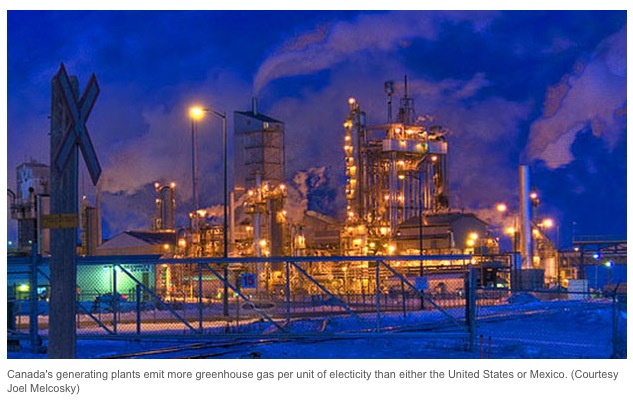
While Canadians individually cut emissions at the urging of previous governments, the enormous expansion of emission-laden tar sands operations inflated Canada’s emissions by 24 percent above 1990 emissions.

On Monday, Kent said that for Canada to meet emissions targets would entail taking every vehicle off the road and cutting the heat in every building in the country. He did not mention reducing emissions from the tar sands.

“I regret that Canada has announced it will withdraw and am surprised over its timing,” said Christiana Figueres, executive secretary of the U.N. Framework Convention on Climate Change (UNFCCC), under which climate negotiations like COP17 are held. Continue reading

EcoMobility Gaining Ground As Cars/Roads Become Too Expensive

Car Ownership Declines in Europe as Cities’ Focus on Walking, Bikes & Public Transit

Cost of Personal Car Ownership Tops $10,000 a year

By Stephen Leahy

CHANGWON, South Korea, Nov 1, 2011 (Tierramérica)

Berlin is a big capital city of a country famed for making excellent automobiles, but it can no longer afford roads and is now moving people by transit, bike and especially through walking.

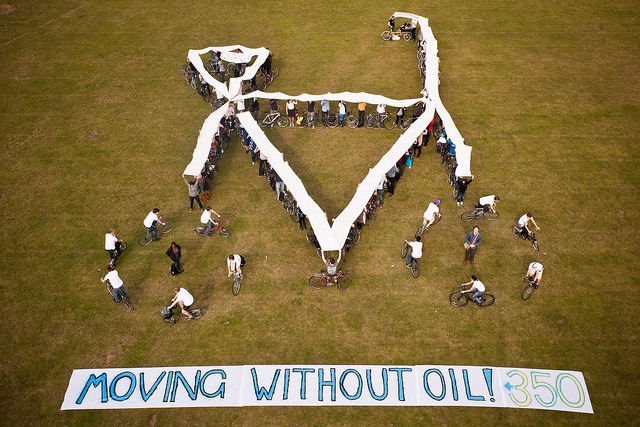
Berlin is not alone. Paris, Tokyo, Seoul, Bogotá, New York City and other major cities simply cannot afford the cost, the pollution, the noise and the congestion of more cars. They are embracing a new concept called EcoMobility – mobility without private cars.

“EcoMobility is not only walking, cycling and public transportation. It is about these three systems clicking together: connectivity is the key,” Gil Peñalosa, former director of parks and recreation in Bogotá, Colombia, told those attending the EcoMobility Changwon 2011 congress.

The congress on Mobility for the Future of Sustainable Cities was organised by the South Korean city of Changwon and ICLEI – Local Governments for Sustainability, an association of local government members from more than 1,220 cities in 70 countries.

“The famous Times Square in New York City is now a permanent pedestrian mall. Who would have believed that could happen just three years ago?” Peñalosa commented to Tierramérica.

“Five years ago who would have thought Paris would have over 22,000 bikes as part of a tremendously successful bike sharing system?” added Peñalosa, who is now the executive director of 8-80 Cities, an NGO based in Toronto that promotes walking, cycling, parks and urban trails to improve the public life of cities.

“We need to build cities around people and not around cars,” he stressed. Continue reading

Canada’s Harper Government Guts Environment, Science and Monitoring Programs

Man w picture of grandchild was arrested for protesting against tar sands expansion, Sept 2011 Ottawa, Canada - Pix by R Leahy

Environment budget slashed while PM Harper’s office places a gag order on government scientists. (And a $60 billion order for military equipment)

By Stephen Leahy

UXBRIDGE, Canada, Nov 9, 2011 (IPS)

Canada’s Stephen Harper government is spending more than 60 billion dollars on new military jets and warships while slashing more than 200 million dollars in funding for research and monitoring of the environment.

Amongst the programmes now crippled is Canada’s internationally renowned ozone monitoring network, which was instrumental in the discovery of the first-ever ozone hole over Canada last spring. Loss of ozone has been previously linked to increases in skin cancer.

“The proposed cuts go so far the network won’t be able to do serious science,” said Thomas Duck, an atmospheric scientist at Halifax’s Dalhousie University.

Canada was the pioneer in ozone monitoring, developing the first accurate ozone measuring tool that led to the discovery that the world’s ozone layer was dangerously thinning in the 1970s, which in turn led to the successful Montreal Protocol on Ozone Depleting Substances.

Canada has about one-third of the ozone monitoring stations in the Arctic region. It also hosts the world archive of ozone data, which is heavily relied on by scientists around the world.

“There’s only one guy running the entire archive, and he’s received a lay-off notice letter,” Duck told IPS.

Ozone monitoring and research is part of Environment Canada, the government department charged with protecting the environment, conservation and providing weather and meteorological information.

“Canada can’t afford to pay scientists but we can line the pockets of big oil?

That is totally backwards.”

Continue reading

The Quiet Crisis: Lost Foodlands Cover Area Larger Than Canada and China Combined – Two Billion People Affected

12 Million Hectares Lost Every Year to Desertification

Dealing with desertification has a long history of failure.

By Stephen Leahy

CHANGWON, South Korea, Oct 13, 2011 (IPS)

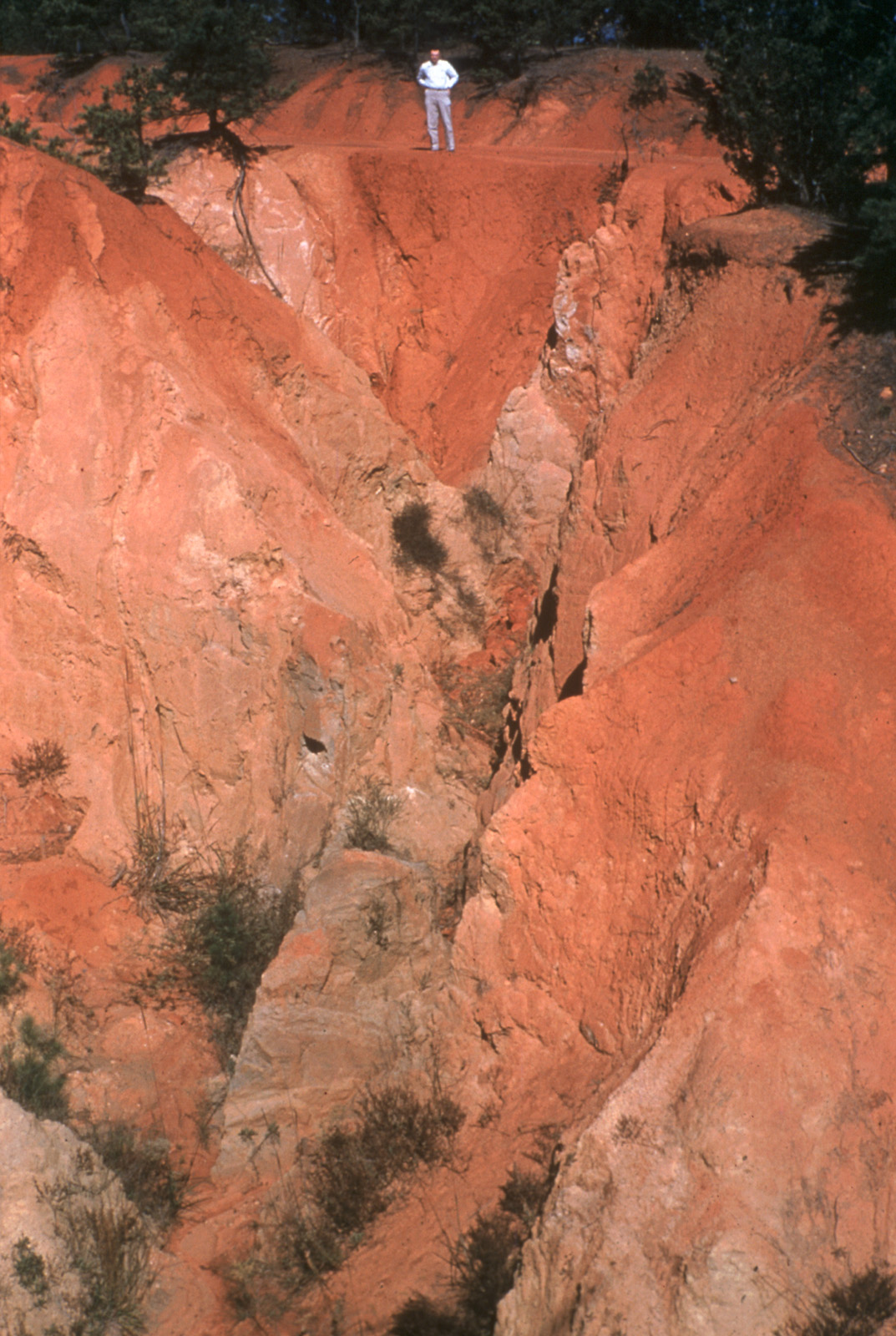
Degradation of land is the world’s quiet crisis, undercutting food production, increasing water scarcity, impoverishing hundreds of millions of people and affecting two billion overall. Nearly 20 million square kilometres of the earth’s arable lands – an area twice the size of Canada – have already been degraded.

Each year, 12 million hectares of land, where 20 million tons of grain could have been grown, are lost to desertification. Unless this trend is reversed soon, feeding the world’s growing population will be impossible, experts say. However, the global community has failed for over two decades to address this serious challenge.

Now, delegates from 193 countries are meeting in South Korea under the United Nations Convention to Combat Desertification (UNCCD) to review progress on a ten-year plan to reverse the ongoing decline in the quality and quantity of land in food-producing regions.

During the 10th Conference of the Parties (COP 10) under the UNCCD, delegates will also consider creating a scientific body like the Intergovernmental Panel on Climate Change to serve as the global authority on desertification and land degradation.

“The UNCCD will take bold steps towards delivering critical services to the two billion people that face negative impacts of desertification, land degradation and drought,” Luc Gnacadja, executive secretary of the UNCCD, told delegates during the opening session of COP 10 that began Oct. 10 and concludes Oct. 21.

Land degradation is mainly the consequence of poor land management in conjunction with changes in rainfall. Erosion and degradation most often result from ploughing fields, removing crop residues after harvest and overgrazing. It is akin to tire wear on cars – a gradual, less noticeable process with potentially catastrophic consequences if ignored for too long.

“People do not notice land degradation until there is a crisis,” said Pier Paolo Roggero, a scientist at University of Sassari in Italy. Continue reading

Brazil’s Forest Code and Land Speculators To Amp Up Amazon Deforestation Rates

90% of Forest in Apuí Converted into Pasture But the Real Profit is in Land Sales

By Stephen Leahy*

UXBRIDGE, Canada, Jul 28, 2011 (Tierramérica)

Many migrants from southern Brazil who clear forests in Brazil’s state of Amazonas are making their living as small-scale land speculators and not as farmers or as cattle ranchers, new research has found.

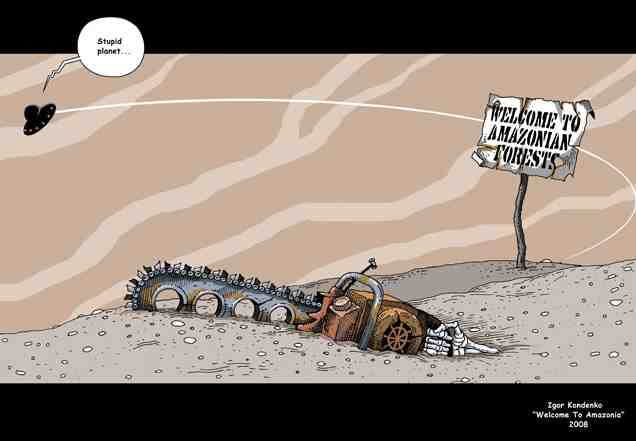
This on-the-ground reality and the proposed changes to Brazil’s Forest Code are likely to ramp up deforestation rates again, despite the country’s commitment to reduce deforestation 80 percent by 2020, experts say.

The Forest Code (Law 4771) was adopted in 1965 and has undergone numerous reforms, the most recent in 2001. This past May 24, an overwhelming majority in the Chamber of Deputies voted in favor of a bill to relax its requirements with regard to forest conservation. The bill is currently under study in the Senate. [Update Dec 28 2011]

A detailed study conducted in the municipality of Apuí along the Transamazon Highway in Amazonas found that many families in the region earned little income from cattle.

Instead, they were clearing the land in order to claim land titles to sell the land to large corporate ranchers, according to the study “Forest Clearing Dynamics and the Expansion of Landholdings in Apuí, a Deforestation Hotspot on Brazil’s Transamazon Highway”, published in the journal Ecology and Society in June.

From the early 1990s the population of Apuí has tripled, and the municipality has had some of the highest rates of deforestation in all of the state of Amazonas. Approximately 90 per cent of the area has been converted into pasture, the study found.

“These families are always moving into new forest areas to deforest so they can claim land title. And after a few years they sell it for a much higher price,” said study co-author Gabriel Carrero of the Institute for Conservation and Sustainable Development of Amazonas (IDESAM). Continue reading