8.7 Million Species Run Spaceship Earth and Our Life Support System

Charonia tritonis Credit: David Burdick

We share the planet with 8.7 million species. We’re unconcerned about the ongoing loss of 200 species a day since we fail to realize they are our life support system. And we don’t know how many or which species are needed to keep things running. There is metaphor in the article to make that clearer I hope. We are not even close to coming to grips with this issue.  — Stephen

“If the decline in species around us is not significant then I ask what is?”

By Stephen Leahy

UXBRIDGE, Canada, Aug 23, 2011 (IPS)

 The life support system that generates the planet’s air, water, and food is powered by 8.7 million living species according to the newest and best estimate. We know next to nothing about 99 percent of those unique species – except that lots of them are going extinct.

“It is like a complicated engine where we only know about the major pieces. If we lose one or some of the small hidden pieces that play a critical role the engine might stop working,” said Camilo Mora of the University of Hawaii and Dalhousie University in Halifax, Canada.

Many species may vanish before we even know of their existence, of their unique niche and function in ecosystems,” Mora told IPS.

Until now there wasn’t even a decent guesstimate about how many species exist currently: three million? 100 million? Now a new validated analytical technique has pined down the big number to 8.7 million species (give or take 1.3 million).

The analysis published Tuesday in the journal ‘PLoS Biology’ estimated there are 6.5 million species found on land and 2.2 million – about 25 percent of the total – dwelling in the ocean depths.

This independent environmental journalism depends on public support. Click here learn more.

“Not knowing the answer to this fundamental question really highlights our ignorance about life on this planet,” said Boris Worm of Dalhousie University, co-author of the study along with Mora.

“We’re so fixated on the human enterprise we don’t recognise nature’s enterprise… the 8.7 million species that run the planet and provide the air we breathe, the water we drink and the soil we grow our crops in,” Worm told IPS. “If the decline in species around us is not significant then I ask what is? This is all we have on this planet, the only planet that holds life.” Continue reading

On the Road to Green Energy for All

27 Jun 2011 09:33

By Stephen Leahy

VIENNA, Jun 27 (IPS)

Like our cave-dwelling ancestors of 200,000 years ago, nearly three billion people still use fire for cooking and heating. Of those, some 1.5 billion people have no access to electricity. For a billion more, their only access is to sporadic and unreliable electricity networks.Now an ambitious global effort is being launched by the United Nations to bring electricity to everyone on the planet by 2030.

“Energy is the issue for the next decade,” said Kandeh Yumkella, director-general of the United Nations Industrial Development Organization (UNIDO).

“Achieving the Millennium Development Goals (MDGs) is impossible without energy,” Yumkella said at the opening of the 2011 Vienna Energy Forum last week.

via On the Road to Green Energy for All – AlertNet.

Colombian Forest Project Reaps Credits… and Criticism

Procuenca reforestation

By Stephen Leahy*

UXBRIDGE, Canada, May 6, 2010 (Tierramérica)

The “Procuenca Initiative” in the Andes region of western Colombia may be the first in the world to sell certified forest carbon credits with a biodiversity protection component. But alarms are sounding about the potential negative social and environmental consequences.

Under way since 2001, the programme will begin to operate in the international market next year, having received official registration Apr. 16 under the Clean Development Mechanism (CDM).

Part of the Kyoto Protocol on Climate Change, in force since 2005, the CDM allows industrialised countries to earn credits for reducing emissions of greenhouse gases by investing in projects in developing countries that expand their capacity to absorb the carbon emissions.

Procuenca is expected to auction credits for some 350,000 tonnes of carbon that has been sequestered since the project began, initiative director Francisco Ocampo told Tierramérica through a translator.

At the current market value of 20 dollars per tonne, the total would be 7 million dollars for a struggling community, one that is still suffering from the collapse of coffee prices more than a decade ago.

“This project demonstrates the international importance of these forests for carbon storage,” said Ocampo. Continue reading

Is Rio Earth Summit 2.0 Doomed to Fail?

By Stephen Leahy

UXBRIDGE, Mar 7, 2011 (IPS)

Timed to coincide with the 20th anniversary of the 1992 Rio de Janeiro Earth Summit, the Rio 2012 Summit hopes to recapture the optimism of that earlier era.

At the June 2012 Rio Summit it is hoped countries will agree on policies to move toward a green economy from the present “brown” economic system driven by fossil fuel energy and the serial depletion and degradation of natural resources and ecosystems. A green economy promises to bring good jobs, clean energy and water while ensuring a more sustainable and fairer use of resources.

“If we continue on our current path, we will bequeath material and environmental poverty, not prosperity, to our children and grandchildren,” said Rio 2012 Secretary-General Sha Zukang.

“Rio 2012 will be one of the most important events in the coming decades,” Zukang said

Continue reading

Cut Climate Damaging Emissions in Half and Double Food Production With Eco-Farming

45- 50% of global warming emissions from industrial agriculture

By Stephen Leahy

UXBRIDGE, Feb 8, 2011 (IPS)

Eco-farming could double food production in entire regions within 10 years while mitigating climate change, according to a new U.N. report released Tuesday in Geneva.

An urgent transformation to ‘eco-farming’ is the only way to end hunger and face the challenges of climate change and rural poverty, said Olivier De Schutter, U.N. Special Rapporteur on the right to food, following the presentation of his annual report focusing on agroecology and the right to food to the U.N. Human Rights Council.

“Agroecology mimics nature not industrial processes. It replaces the external inputs like fertiliser with knowledge of how a combination of plants, trees and animals can enhance productivity of the land,” De Schutter told IPS, stressing that, “Yields went up 214 percent in 44 projects in 20 countries in sub-Saharan Africa using agro-ecological farming techniques over a period of 3 to 10 years… far more than any GM [genetically modified] crop has ever done.”

Other recent scientific assessments have shown that small farmers in 57 countries using agro-ecological techniques obtained average yield increases of 80 percent. Africans’ average increases were 116 percent.

“Today’s scientific evidence demonstrates that agroecological methods outperform the use of chemical fertilisers in boosting food production in regions where the hungry live,” De Schutter said. [Video Interviews with De Schutter]

Continue reading

Rampant Speculation Inflated Food Price Bubble – Wall St./Grain Traders Pushing Price Rises

“Hunger is not a food production problem. It is an income problem”

By Stephen Leahy

UXBRIDGE, Canada, Jan 28, 2011 (IPS)

Billions of dollars are being made by investors in a speculative “food bubble” that’s created record food prices, starving millions and destabilising countries, experts now conclude.

[This is the second of a multi-part series investigating what is driving food prices higher]

Wall Street investment firms and banks, along with their kin in London and Europe, were responsible for the technology dot-com bubble, the stock market bubble, and the recent U.S. and UK housing bubbles. They extracted enormous profits and their bonuses before the inevitable collapse of each.

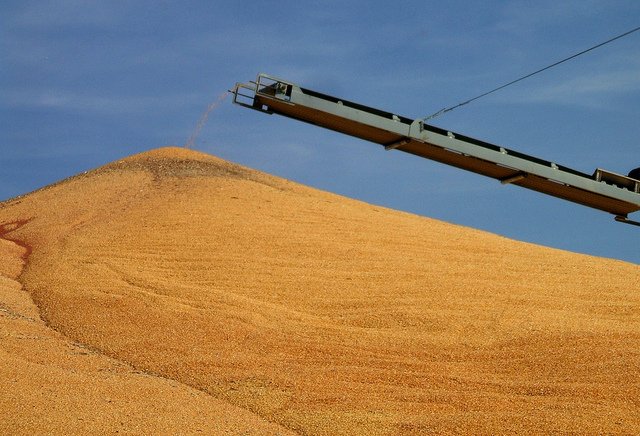
Now they’ve turned to basic commodities. The result? At a time when there has been no significant change in the global food supply or in food demand, the average cost of buying food shot up 32 percent from June to December 2010, according to the U.N. Food and Agriculture Organisation (FAO).

This independent environmental journalism depends on public support. Click here learn more.

Nothing but price speculation can explain wheat prices jumping 70 percent from June to December last year when global wheat stocks were stable, experts say.

“There is no food shortage in the world. Food is simply priced out of the reach of the world’s poorest people,” said Robert Fox of Oxfam Canada in reference to the estimated one billion people who go hungry.

“Hunger is not a food production problem. It is an income problem,” Fox told IPS. Continue reading

Report: +2.4C by 2020 leaves Billions Hungry? Scary but Untrue. Inside Story of Good Intentions Gone Wrong (and how the media fell for it)

Food Report Released Knowing the Science Was Wrong

By Stephen Leahy

Jan 19 2011

In the year 2020 climate change will devastate much of the world’s harvest leaving one in five people starving because the global temperature will have shot up an average of 2.4 degrees C a new report released Tuesday shows.

Shocking. Stunning. Scary even. And completely untrue.

Days before the report’s release I told the author Liliana Hisas of the Universal Ecological Fund (FEU), an Argentina-based NGO, it was impossible to get to 2.4 degrees of warming by 2020. Global temperatures have increased 0.8C in the last century and the 64-page report, “The Impacts of Climate Change on Food Production: A 2020 Perspective,” is based on additional 1.6C degree increase in just nine years time.

I asked several climate experts if it was possible to reach a +2.4 degree average global temperature by 2020. Their answer: “No way”.

This independent environmental journalism depends on public support. Click here learn more.

The reason is that the oceans absorb 93 per cent of the additional heat being trapped in the atmosphere due to the burning fossil fuels. If we stopped burning all fossil fuels and emitting other greenhouse gases today, the atmosphere would still continue to slowly heat up over the next 50 to 100 years as the oceans released that stored heat.

So ‘thank God for the oceans’ I said to Hisas who is also Executive Director of FEU-US when I explained all this via emails. And in an interview with Hisas on Monday I suggested the report be withdrawn. She refused, saying her organization had worked on the report for more than a year and the science was solid. It was all based on the Intergovernmental Panel on Climate Change (IPCC) 2007 report and had been vetted by Osvaldo Canziani, a former co-chair of the IPCC she said.

Unfortunately Canziani was in hospital and unavailable for an interview. Continue reading

Media Fails on Climate Change in 2010 – How You Can Ensure 2011 Will Be Better

Few people understand the serious danger climate change poses all of us largely because media have done a poor job in covering it. In 2010, US TV media pretended it had all gone away – no more global warming…poof, bad dream, moving on.

From the must-bookmark The Daily Climate:

Drexel University professor Robert Brulle has analyzed nightly network news since the 1980s. Last year’s climate coverage was so miniscule, he said, that he’s doubting his data.

….

Coverage of December’s United Nations climate talks in Cancun is Exhibit A: Total meeting coverage by the networks consisted of one 10-second clip, Brulle said. By contrast, 2009’s Copenhagen talks generated 32 stories totaling 98 minutes of airtime. “I’m trying to check it again and again,” Brulle said of the 2010 data. “It’s so little, it’s stunning.”

Newspapers do little better with a huge decline in the US/Canada in 2010 which had some of the lowest level of coverage in the world, lower than Asia and the Pacific according to this graph. Continue reading

Be a Partner in Independent Enviro Journalism

More than 20,000 people from 190 nations attended the international climate meeting in Cancun, Mexico and it received one ten second clip on US network TV 

Coverage of environment and science has been gutted. If there is coverage it rarely digs below the surface. It’s not just TV, it’s all media. After 18 years of being published in major publications on two continents, I now count myself lucky to get $150 to $200 for an in-depth article. The few independent media outlets are either non-profits or struggling.

Urgent environmental issues didn’t go away just because most media stopped covering them.

Many, many people tell me:we need people like you to write about these issues”.

I’d like to do more but it is impossible to continue without your support for what I call Community Supported Journalism. People directly support independent journalists who craft honest and thoughtful articles about important subjects the mainstream media ignores or gloss over.

Community Supported Environmental Journalism Works

In 2010 dozens of people offered their help, donating $5,750 which helped ensure many breaking international stories were covered including the first media reports on the global die-off of corals and how climate change may be bringing colder winters to Europe and eastern North America. Those donors — who are really partners — enabled me to cover important international meetings like the UN Convention on Biodiversity, UN climate change conference, scientific meetings and much more.

Please join us. Consider a donation of just $10 a month to support enviro journalism that serves the public interest.

Contributions can be made safely and easily via PayPal* or Credit Card*. [You can cancel at any time, automatically. No need to contact me] 

Monthly support options starting @ $10 a month

One-time donations are most welcome. Click and enter the amount.

*More than 100,000 non-profits safely use PayPal Donate service

If you’d like a mailing address or contact me with story ideas, please complete this comment form.

Thanks for reading. — Stephen

Letters of Support:

We need people like you. In tough economic times, where information flow is increasingly channeled and controlled, you perform a simply critical role. Hang in there. You are an admirable role model for the future.”

– E. Ann Clark, Associate Professor, University of Guelph.

“Stephen Leahy has done a superb job exposing the enormous sums the US government is spending on corporate welfare for big oil.”

Ross Gelbspan, Pulitzer-prize winning editor and author of The Heat is On

My continued appreciation to those who have contributed in the past.

Ending Africa’s Hunger Means Listening to Local Farmers Instead of Agribusiness

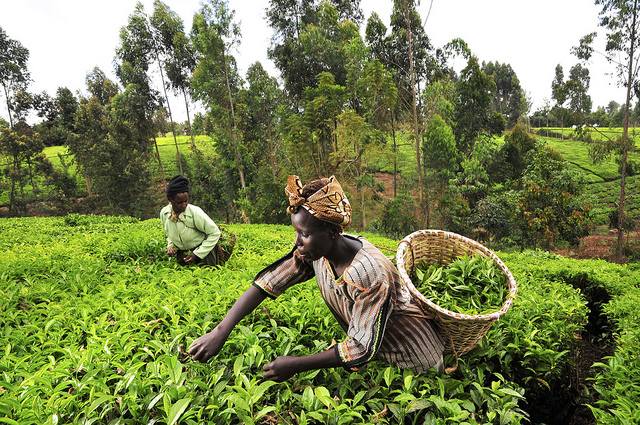
Africa is hungry – 240 million people are undernourished.

“Africa has enormous quantities of land and resources…and now there is a stampede to lock those up.”

By Stephen Leahy

NAGOYA, Japan, Oct 16, 2010 (IPS)

Africa is hungry – 240 million people are undernourished. Now, for the first-time, small African farmers have been properly consulted on how to solve the problem of feeding sub-Saharan Africa. Their answers appear to directly repudiate a massive international effort to launch an African Green Revolution funded in large part by the Bill and Melinda Gates Foundation.

Instead of new hybrid seeds, chemical fertilisers and pesticides, family farmers in West Africa said they want to use local seeds, avoid spending precious cash on chemicals and most importantly to direct public agricultural research to meet their needs, according to a multi-media publication released on World Food Day (Oct. 16).

“There is a clear vision from these small farmers. They are rejecting the approach of the Alliance for a Green Revolution in Africa,” said report co-author Michel Pimbert of the International Institute for Environment and Development (IIED), a non-profit research institute based in London.

“These were true farmer-led assessment where small farmers and other food producers listened and questioned agricultural and other experts and then came up with their own recommendations,” Pimbert told IPS.

“Food and agriculture policy and research tend to ignore the values, needs, knowledge and concerns of the very people who provide the food we all eat — and often serve instead powerful commercial interests such as multinational seed and food retailing companies,” he said.

This independent environmental journalism depends on public support. Click here learn more.
Continue reading