Environmental Destruction Makes Money. Conservation Costs Money. This Global Dilemma Must Be Solved

Rich Countries Balk At Spending $ to Halt Biodiversity Crisis

By Stephen Leahy

NAIROBI, May 31, 2010 (IPS)

Developing countries rich in plants and animals but poor in financial and technical resources refused to make binding commitments to halt the unraveling of the planet’s biological infrastructure at the close of a major meeting Friday at the U.N.’s African headquarters in Nairobi.

For their part, rich countries balked at a 50-fold increase in funding to support efforts to slow and reverse the loss of species and ecosystems.

“Anything to do with finance has been a big problem here at this meeting,” said James Seyani, a delegate from Malawi and spokesperson for the African countries.

It takes money to protect, conserve and enhance biodiversity – the term for all living things that make up Earth’s ecosystems that are our life support system. Exploitation and destruction of vital ecosystems like forests and peatlands generates millions of dollars in revenue, but conserving or using these lands in ways that preserves biodiversity often costs governments money.

Do you find this article interesting? It is funded by contributions from readers. Please click here to learn more about Community Supported Journalism.

Reversing the declines in biodiversity is a matter of great urgency and countries with much of the world’s remaining species and intact ecosystems “are prepared to meet their commitments but we need the technical, human and financial resources to do this”, the delegate from Mexico said at the conclusion of the meeting that began May 10.

The absence of such resources is why biodiversity is in its current crisis, he said.

“The developing world needs to remember their previous commitments and provide new additional finances and resources. Those promises are not being adhered to,” Seyani told delegates late Friday afternoon at the end of the U.N. Convention on Biological Diversity’s (CBD) meeting to establish targets and an action plan to end the biodiversity crisis over the next decade. Continue reading

Food Prices Soar (again) – Governments Starved Ag Research of Funding for Last 20 Years

By Stephen Leahy

[New Article]

MONTPELLIER, France, Apr 14, 2010 (IPS)

How’s this for short-sighted:

A billion people go hungry every day, food prices have climbed 30 to 40 percent, climate change is reducing agricultural production – and for the past two decades, the world has slashed investments in publicly-funded agriculture until it is a pittance in most countries.

“Moral outrage is needed. We must abolish this… It can be done. It must be done,”Ismail Serageldin Website, Egypt and a former World Bank economist, told nearly 700 World Food Prize laureates, ministers, scientists and a few representatives from development and farmer organisations at the first Global Conference on Agricultural Research for Development (GCARD) last month here in southern France.

“This is the launching pad to transform hunger in our time,” Serageldin concluded.

The “rocket” on the launching pad is a major transformation of the 500 million dollars of public funds for international agricultural research carried out by the Consultative Group on International Agricultural Research (CGIAR), an alliance comprising some 8,000 researchers in 100 countries.

For the past year, a global consultation process involving over 2,000 stakeholders from 200 countries has produced a draft plan for reform that promises to meet the needs of the world’s 500 million poor small farmers who feed the two billion poorest people.

Called ambitious and far-reaching by proponents, the “Montpellier Road Map” sets the priorities for “linking science and innovation to the needs of farmers and the rural poor”.

Critics say it resembles little more than a passionate shuffling of the status quo. As the French say like to say: “Plus ça change; plus c’est la même chose” (the more things change, the more they stay the same).
Continue reading

Activists Slam G8 Aid Shell Game in Toronto

“No maple leaf is big enough to hide the shame of Canada’s summit of broken promises” — Oxfam

Canada spent $1.2 billion hosting G8/G20 Summits

By Stephen Leahy

BERLIN, Jun 26, 2010 (IPS)

The G8 bloc of wealthy nations promised five billion dollars Saturday for health and nutrition programmes that benefit women and children in developing countries.

The five-year Muskoka initiative announced at the annual G8 meeting, this year outside of Toronto, is intended to help prevent the deaths of hundreds of thousands of women and babies who currently die during childbirth each year. Nearly eight million children, mostly in Sub-Saharan Africa and South Asia, die before they reach the age of five.

Flavia Bustreo, director of the Geneva-based Partnership for Maternal, Newborn and Child Health, which represents more than 300 global and national organisations, welcomed the world’s richest countries’ focus on maternal and child health, which is a historical first, she said.

However, she told IPS from Geneva, “The glass is half-full when it comes to their financial commitment.”

Oxfam and other NGOs also charge that G8 donor nations have been playing a shell game – making multi-billion-dollar commitments at such meetings but without increasing their overall spending on overseas development aid.

“No maple leaf is big enough to hide the shame of Canada’s summit of broken promises,” said Mark Fried, spokesperson for Oxfam. Continue reading

Traditional Indigenous Knowledge & Global Warming

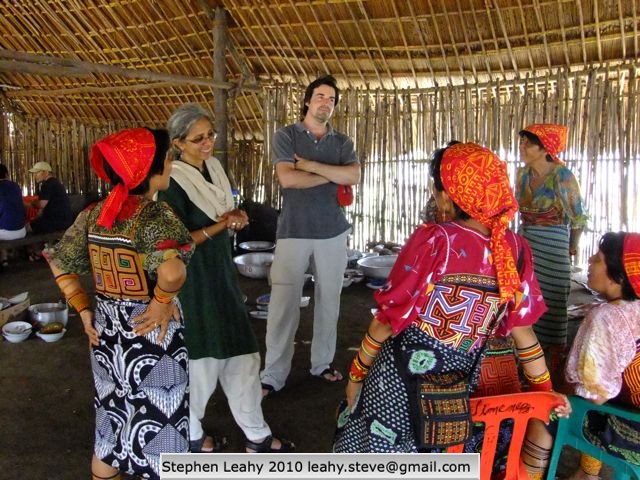
Returned from Panama a few days ago. I was offline for a week in a village in autonomus Kuna Yala territory on an island in the south Caribbean Ocean with no electricity, no roads, vehicles….just the sounds of the ocean and children playing. It was an amazing experience amongst unique group of Indigenous people still living by their traditional ways with a very strong emphasis on family, community and reciprocity.

Thanks to travel funding from an educational organization I was able to be at a unique workshop on the island where 18 indigenous people from around the world came to share their experiences in dealing with climate change. They are also documenting how their traditional knowledge is helping them adapt. What is often forgotten by those of us in the north is the lengthening of summer seasons, shortening winter, or changes in rainfall that are minor inconveniences for us often spell disaster for those who are subsistence farmers.

CONTRIBUTION UPDATE:

Special thanks to Ken of Ottawa, James from Toronto, Richard of Oshawa, Aidan who lives in Germany, Siri of London UK, Michael of Toronto, David of Salmon Arm and Catherine from Atikokan for your recent support. It is heartening to receive your encouragement and desire to help ensure I can continue to write and report on these important issues for everyone.

Thanks to these good folks the Community Supported Environmental Journalism Fund has now reached $1450.00, nearly 10 per cent of what’s needed for 2010.

There are some very important articles I’m hoping to write this year so help out if you can.

Contributions can be made via PayPal or Credit Card here:

(NOTE: For ocean lovers there is a major conference on Oceans this May –there are new prospects of international governance to hopefully end the ruthless rush to get the last fish. But will need $1000 to be able to get there)

— Greenest wishes, Steve

Fish Companies Push Hard to Halt Tuna Collapse

By Stephen Leahy*

VICTORIA, Seychelles, Feb 8, 2010 (IPS)

In the Seychelles’ only cannery, the din of thousands of empty tuna cans rattling on narrow metal troughs is incredible as they bustle along, soon to be filled with Skipjack tuna that only days ago were swimming freely in the inky blue Indian Ocean.

At one end of the Indian Ocean Tuna Limited processing plant – the world’s second largest – cranes offload nets full of frozen tuna from huge international fishing boats called purse seiners while at the other end of the plant, 5,000 cans of tuna roll off the line every minute.

That’s a lot of tuna – roughly 400 metric tonnes a day. Can the Indian Ocean tuna bounty, which amounts to more than 20 percent of the world’s tuna, be sustained?

That was the key question at the first-ever Seychelles Tuna Conference that ended last weekend. It brought together nearly 200 scientists, fishers, environmentalists and policy makers here in Victoria, Africa’s smallest capital city, located 1,800 km east of Somalia and practically in the middle of the Indian Ocean.

“The boats are much more efficient today and the tuna stocks are declining and there is much less tuna than before, ” said Alain Fonteneau, a scientist with the L’Institut de recherche pour le développement, in Montpellier, France, who opened the conference. Continue reading

Copenhagen: Rich Nations Betraying Poor In Climate Talks (surprised?)

By Stephen Leahy

COPENHAGEN, Dec 7 (IPS/TerraViva)

Betrayal and backsliding by rich countries marks the beginning of the final negotiations for a global climate treaty, according to many developing world participants at the U.N.-sponsored talks here.

“Developed countries express deep concern and commitment to action in their public statements, but it is completely different in the negotiating rooms,” said Algerian negotiator Kamel Djemouai, chair of the Africa group, which represents more than 50 African countries.

“What you hear in public is not what is being done,” Djemouai told delegates at a side meeting at the COP 15 climate meetings here.

At the last round of climate talks in Barcelona, African countries boycotted the meetings, saying that industrialised countries had set carbon-cutting targets too low to substantially reduce global greenhouse gas emissions. Climate change is already having significant impact on Africa and those impacts are a form of discrimination, Djemouai said.

“Science tells us that when the global average temperature is one degree C. higher, it will be two degrees C. hotter in Africa,” he added. Continue reading

Food Supply In Deep Trouble – Agriculture Most Vulnerable to Climate Change

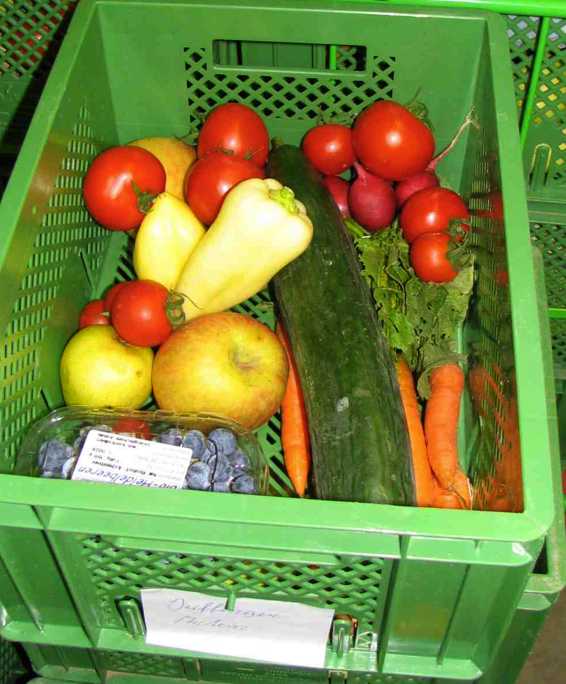
veg food basketBy Stephen Leahy

UXBRIDGE, Canada, Oct 2 (IPS)

Rocketing food prices and hundreds of millions more starving people will be part of humanity’s grim future without concerted action on climate change and new investments in agriculture, experts reported this week.

The current devastating drought in East Africa, where millions of people are on the brink of starvation, is a window on our future, suggests a new study looking at the impacts of climate change.

“Twenty-five million more children will be malnourished in 2050 due to effects of climate change,” such as decreased crop yields, crop failures and higher food prices, concluded the International Food Policy Research Institute (IFPRI) study.

“Of all human economic activities, agriculture is by far the most vulnerable to climate change,” warned the report’s author, Gerald Nelson, an agricultural economist with IFPRI, a Washington-based group focused on global hunger and poverty issues.

The report, “Quantifying the Costs of Agricultural Adaptation to Climate Change“, may be the “most comprehensive assessment of the impact of climate change on agriculture to date”, as IFPRI claims, but researchers concede that there is no current way to quantify all of the future repercussions of changing weather patterns on the food supply.

A critical component of agriculture is knowing the best time to plant seeds, for example. Farmers rely on their past experience and weather records. But one of the most robust science findings is that climate change has and will produce significant increases in weather variability.

This means extremes like droughts or floods will happen more often or last longer, and extreme temperature shifts are more likely. The past is no longer a reliable guide for farmers because the fundamental conditions in the atmosphere have been altered – far more heat is being trapped in the atmosphere today because of carbon dioxide and other greenhouse gases than at any time since the dawn of agriculture.

Nelson told IPS that the IFPRI report is a “conservative estimate” of the potential impacts and does not include impacts of pests and disease, loss of farmland due to rising sea levels or loss of water from melting glaciers. Continue reading

Green Energy for All by 2030?

WED kidjo smlBy Stephen Leahy

VIENNA, Jun 26 (IPS)

While industrialised countries struggle to switch from climate-damaging, carbon-based energy to greener energy sources, much of the world is desperately energy poor, with 1.6 billion people having no access to electricity and 2.4 billion relying on wood and dung for heat and cooking.

“Over 1.6 million deaths a year are attributed to indoor use of biomass for cooking and heating,” Kandeh Yumkella, director-general of the United Nations Industrial Development Organisation (UNIDO), told more than 600 participants from 80 countries at the Vienna Energy Conference this week in Austria’s capital city.

The conference concluded with a recommendation to create a 20-year plan to end energy poverty by 2030.

Women and children in many parts of the world have little choice but to spend hours each day in search of firewood, trapped in a vicious cycle of deforestation that increases erosion and reduces the fertility of their land. “Energy interacts with all of the development challenges we face,” said Yumkella.

The developing world – and especially those without access to electricity – must be part of the new green energy revolution, he said. “We can’t leave people out. We must have climate justice and energy justice,” he told IPS in an interview.

For complete story see  Green Energy for All by 2030?

Ethanol and Biofuels: Almost Everything You Need to Know

“The U.S. has led the fight to stem global hunger, now we are creating hunger,” said Lester Brown, president of the Earth Policy Institute.

Series of the latest articles that provide almost everything you need to know about why ethanol and biofuels will not reduce global warming but simply drive up fuel and food costs.

maize - mexicoEthanol Worse Than Gasoline

Only Green Part of Most Biofuels is the Wealth (Subsidies) They Generate

Ethanol: The Great Big Green Fraud

International Enviro Standards Needed for Biofuels

Six Experts On Why Ethanol is a Dumb Idea

Food & Fuel: Can Sorghum Be The New Magic Bullet Biofuel??

Biofuels: Another Good Reason to Hate American Policy

(Cellulosic) Greenest Ethanol Still Unproven

Tropical Forests Fight for Survival

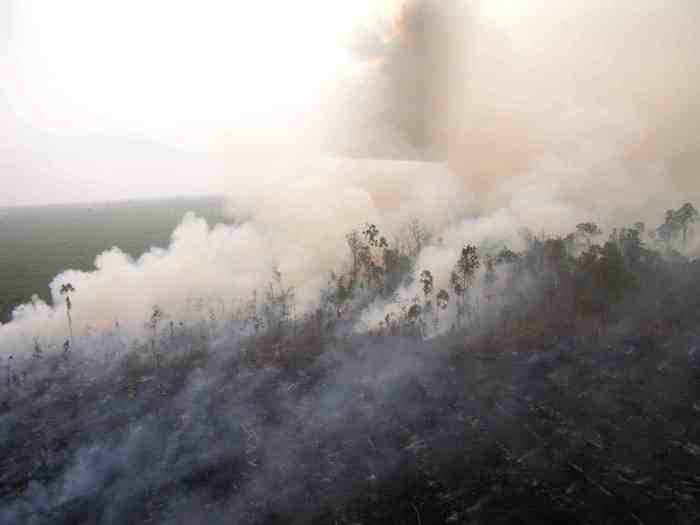
sumatra-burning-forest-courtesy-of-kim-worm-sorensen-sml

By Stephen Leahy*

UXBRIDGE, Canada, Jan 28 (Tierramérica) – Current rates of deforestation suggest there will hardly be any tropical forests left in 20 years. Sixty percent of the rainforests, which survived for 50 million consecutive years, are already gone.

However, some experts say widespread planting of previously logged forests offers hope for preserving some of the region’s rich and unique biodiversity.

Recent satellite data have shown that about 350,000 square kilometres of the original forested areas are growing back, Greg Asner of the Washington-based Carnegie Institution said at the Smithsonian symposium Jan. 12 at the Smithsonian National Museum of Natural History, also in the U.S. capital.

That is only 1.7 percent of the immense planetary belt of original forest that once covered 20 million square kilometres. Twelve million sq km have already been cleared while another five million have been selectively logged, Asner reported.

“There is going to be lots of tropical forest left in the future but it will be different forest,” says Joseph Wright of the Smithsonian Tropical Research Institute (STRI) in Panama. Continue reading