Carbon-Credit Gold: Who is going to get rich?

forest-fireBy Stephen Leahy

Paying the poor to conserve forests through a market scheme is the new star among initiatives in climate talks.

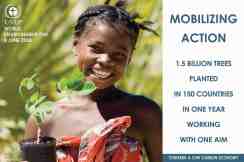
UXBRIDGE, Canada, Dec 15 (Tierramérica).- Climate experts meeting in Poznan, Poland, promised to create a new pot of carbon-credit gold for the rural poor as guardians of rural lands and forests.

But there are many who warn that the gold will flow only to corporate interests.

One of the most effective ways to combat climate change, caused by gases like carbon dioxide that trap heat in the atmosphere, is through biological sequestration of carbon in plants, trees and soils. That means reducing deforestation, increasing reforestation, and utilizing sustainable agriculture and grazing practices that conserve soil and water.

If these activities become part of a multi-billion-dollar global carbon finance regime, under a new 2009 climate treaty, there could be extraordinary benefits for the rural poor and the environment, according to Olav Kjørven, the former director of the United Nations Development Program’s (UNDP) Energy and Environment Group. Continue reading
New Diagnostic Tool Could Slash Malaria Deaths in Children

wed-child-tree-planting1By Stephen Leahy

UXBRIDGE, Canada, Dec 8 (IPS) – Malaria kills a child every 30 seconds, but a new diagnostic breakthrough may cut that devastating death toll, Canadian scientists announced Sunday.

The discovery of “biomarkers” — a telltale biological signature in children’s blood — that identify two of the most lethal forms of malaria was revealed at the annual meetings of the American Society of Tropical Medicine and Hygiene in New Orleans, Louisiana last week.

“A child with a fever may be treated in a clinic with anti-malarial drugs, but that won’t be enough to treat cerebral malaria,” said Conrad Liles, a tropical disease specialist affiliated with Toronto’s McLaughlin-Rotman Centre for Global Health (MRC). Continue reading

Haiti: “The Most Desperate Enviromental Crisis on the Planet”

Haiti hillside - Floresta Brad Lewis

By Stephen Leahy*

UXBRIDGE, Canada, Nov 13 2008 (Tierramérica)

The worst natural disaster Haiti has ever suffered requires far-reaching solutions in order to reduce this Caribbean country’s environmental fragility, say officials and humanitarian workers.

Four major storms pounded Haiti in August and September, leaving nearly 1,000 dead and a million people homeless. International relief efforts are keeping people alive and sheltered, but the already degraded landscape has been badly battered, washing away crops, soil and the few remaining trees in many areas.

I’m not sure if things could get worse here. Haiti must be the most desperate environmental crisis on the planet,” Joel Boutroue, resident humanitarian coordinator and head of the United Nations Development Programme (UNDP) in Port-au-Prince, told Tierramérica.

Boutroue was referring to the future of the poorest country in the Americas, where U.N. peace-keepers have been stationed since 2004. But he added that “the international response to the disaster is quite good.”

While pockets of severe malnutrition still exist, there is access to clean water and only about 3,000 families were without shelter as of the end of October, he said.

However, it is not possible to feed an entire country of 9.5 million people with international aid for long. Haiti cannot feed itself, and even growing 50 percent of its own food is years away, Boutroue fears. Continue reading

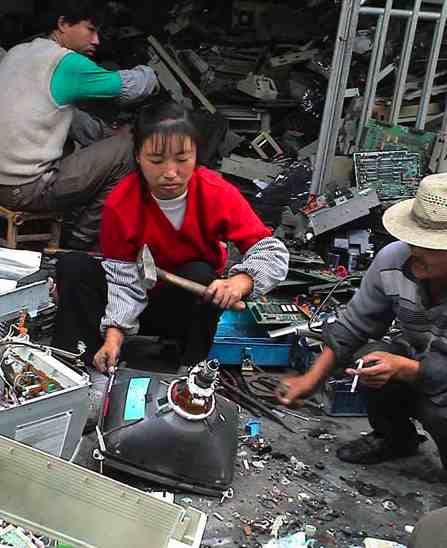
Is Your Old TV Poisoning a Child in China? Where Your e-waste Goes

guiyu-china-breaking-open-monitor-exposes-toxic-dust-basel-action-network-smlBy Stephen Leahy
UXBRIDGE, Canada, Nov 14 (IPS)

Is your old TV poisoning a child in China? Or your old computer contaminating a river in Nigeria?

Without a law banning export of toxic electronic waste in the United States, there has been no way to know if old cell phones, computers or televisions originating there didn’t end up in some poor village in the developing world, where desperate people pull them apart by hand to recover some of the valuable metals inside.

A small group of people have now allied with a few responsible recyclers to ensure e-waste can be treated responsibly by creating an e-Stewards certification programme. Announced this week, e-Stewards are electronics waste recyclers that are fully accredited and certified by an independent third party.

Such accreditation is crucial in an industry that often makes fraudulent claims. Currently even when e-waste (electronic trash) goes to a “green” recycler, the chances are high that toxic stuff from the developed world ended up in a huge pile in the middle of some village. Continue reading

Top Ten Worst Pollution Problems That Kill Millions – Including Ones You’ve Never Heard Of

By Stephen Leahychromium-a-carcinogenic-commonly-used-in-the-tanning-industry-noraiakheda-kanpur-india-photo-by-blacksmith-institute-sml

UXBRIDGE, Canada, Oct 23 (IPS)

Gold mining and recycling car batteries are two of the world’s Top 10 most dangerous pollution problems, and the least known, according a new report.

The health of hundreds of millions of people is affected and millions die because of preventable pollution problems like toxic waste, air pollution, ground and surface water contamination, metal smelting and processing, used car battery recycling and artisanal gold mining, the “Top Ten” report found.

“The global health burden from pollution is astonishing, and mainly affects women and children,” said Richard Fuller, director of the New York- based Blacksmith Institute, a independent environmental group that released the list Tuesday in partnership with Green Cross Switzerland.

“The world community needs to wake up to this fact,” Fuller told IPS.

Continue reading

Food Crisis is “Manufactured” – UK Expert

By Stephen Leahy

Rising fuel and transportation costs could force governments to return to local production of food, scientist Michel Pimbert says in a Tierramérica interview.

LONDON, May 19 (Tierramérica).- The current food crisis has revived the myth that the world doesn’t produce enough food for its six billion people, according to Michel Pimbert, author of a new study that highlights local production as a potential solution.

It is a “manufactured crisis” that is the outcome of a market-driven, global food system, says Pimbert, director of the agriculture and biodiversity program at the London-based International Institute for Environment and Development (IIED).

That system needs to evolve towards localized food production that allows people to improve nutrition, income and economies, starting at the household level and through the regional level, he says. Continue reading

Food & Fuel: Can Sorghum Be The New Magic Bullet Biofuel??

By Stephen Leahy

Korcula, CROATIA, May 13 (IPS) –

A new crop that provides food, animal feed and fuel at the same time promises to help developing countries redirect money spent on oil imports to benefit their own farmers. Is sweet sorghum biofuel’s “holy grail”?

Biofuels are widely blamed for driving food prices higher, sparking food riots in many countries. At least 25 percent of the U.S. maize crop is diverted to biofuel, and extensive areas in Indonesia, Malaysia, China and Brazil are also devoted to growing fuel rather than food.

With sweet sorghum, however, only the stalks are used for biofuel production, while the grain is saved for food or livestock feed. It is not in high demand in the global food market, and thus has little impact on food prices and food security.

“We consider sweet sorghum an ideal ‘smart crop’ because it produces food as well as fuel,” said William Dar, director general of the International Crops Research Institute for the Semi-Arid Tropics (ICRISAT). Continue reading

Energy From Dirt Wins $200K Prize

“Literally, This Is Energy From Dirt”

ACCRA, Ghana May 10 (IPS) – You’ve heard of solar power, and also wind power. Now, you might start hearing about soil power as well.

Microbial fuel cells (MFCs) that make use of the energy given off by soil microbes are amongst the technologies that hold promise for bringing power to developing states, where electricity is often scarce.

The cells also form part of a project that has just won a grant of almost 200,000 dollars in the ‘Development Marketplace’ competition, for which results were announced at ‘Lighting Africa 2008‘; this May 5-8 conference took place in the Ghanaian capital of Accra. The project, developed by six students at Harvard University in the United States, was one of 16 winners selected from 52 finalists competing to bring innovative lighting products to the 74 percent of Africans without access to electricity.

The Development Marketplace competition was held under the ‘Lighting Africa’ campaign, launched towards the end of last year by the World Bank Group. Lighting Africa aims to provide 250 million people on the continent with safe, reliable and economical lighting products and energy services that do not make use of fossil fuels, by 2030. Continue reading

Keeping Darkness At Bay In Africa – Kerosene to the LED

By Stephen Leahy

ACCRA, May 8 (IPS) – In many of Africa’s towns and villages, only smoky kerosene lamps keep the darkness at bay after sunset. However, kerosene is a dangerous and increasingly expensive source of light for Africans who do not have access to electricity — about three-quarters of those living on the continent, according to the World Bank.

Lighting industry entrepreneurs are hoping alternative devices such as solar-powered LED lights will replace the kerosene lamps.

“Africans spend more than 18 billion dollars a year purchasing kerosene,” said Russell Sturm, who heads up the sustainable energy team at the International Finance Corporation (IFC), a member of the World Bank Group.

“And that estimate was done when oil was 35 dollars a barrel, so there is an enormous market for lighting,” he told IPS, adding that the prices of LED devices and solar panels had dropped dramatically over the past three years, and were now competitive with kerosene costs. The price of oil passed the 120 dollar per barrel mark for the first time earlier this week. Continue reading

Food Crisis Needs this New Vision for Agriculture

By Stephen Leahy


JOHANNESBURG, Apr 15 (IPS) – The results of a painstaking examination of global agriculture are being formally presented Tuesday with the release of the final report for the International Assessment of Agricultural Science and Technology for Development (IAASTD).

The assessment has explored how agriculture can be reinvented to feed the world’s expanding population sustainably in an era of multiple challenges — not least those presented by climate change and a growing food crisis that has led to outbreaks of violence in a number of developing countries.

The expertise of some 400 scientists and other specialists was tapped for the IAASTD; governments of wealthy and developing nations also contributed to the assessment, along with civil society and the private sector. Continue reading