Facebookers Last Hope for Environment?

facebook header

‘The only real hope is for a global citizens’ movement unlike anything ever seen on the face of the Earth’ — Erik Assadourian, Vital Signs

By Stephen Leahy

BROOKLIN, Canada, Sep 14 2007 (IPS)

Global trends indicate a looming environmental catastrophe, and engaging high school students around the world may be the only hope say experts.

Governments, the corporate sector and media continue to champion industrial and economic growth at the cost of escalating impacts on the environment, concludes the latest report from the Washington-based Worldwatch Institute, “Vital Signs 2007-2008″.

For a number of years, the “Vital Signs” report has tracked 44 trends that are shaping the future, and they document a record level of industrial growth, says Erik Assadourian, Vital Signs project director.

“‘Vital Signs’ also documents the escalating impacts of such growth on the environment,” Assadourian told IPS in an interview from Barcelona.

The scale of the environmental crisis, in which catastrophic climate change is just one of many, is undermining the ecosystems that support life on Earth.

“Climate change and other environmental problems are symptoms of the root problem, which is the obsession with consumerism,” he said.

Vital Signs reports that in 2005, more wood was removed from forests than in any previous year. Fossil fuel usage dumped 7.6 billion tonnes of carbon emissions into the atmosphere. Meat production hit a record 276 million tonnes (43 kilogrammes per person) in 2006. Rising meat consumption is driving rising soybean demand to feed cattle, which in turn is a driver of deforestation as tropical forests are turned into soy fields.

And on it goes: global seafood consumption breaks records, steel and aluminium production too. None of this is sustainable – another three or four or five planets would be needed to maintain these levels of production and consumption. Continue reading
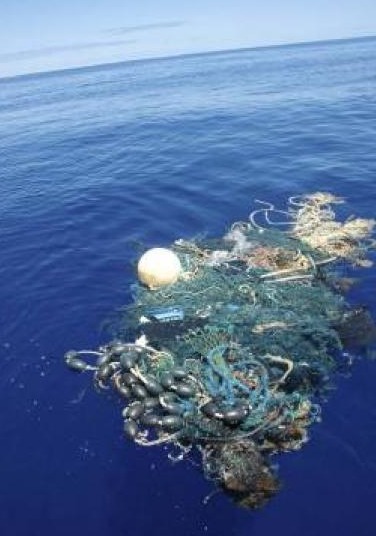
Drowning the Oceans in Plastic Trash (Pacific Garbage Patch)

plastic trash - pacific gyre By Stephen Leahy

UPDATE: The “Pacific Garbage Patch” is really a “plastic soup” where the plastic is distributed throughout the water column in area more than twice the size of Texas. See here for more

[FYI: I’m an independent journalist who supports his family and the public interest writing articles about important environmental issues. ]

Wired 06.05.04

Marine trash, mainly plastic, is killing more than a million seabirds and 100,000 mammals and sea turtles each year, said U.N. Secretary-General Kofi Annan in a statement.

Plastic bags, bottle tops and polystyrene foam coffee cups are often found in the stomachs of dead sea lions, dolphins, sea turtles and others. The implications have many at the conference concerned. Last April, Dutch scientists released a report on litter in the North Sea and found that fulmars, a type of seagull, had an average of 30 pieces of plastic in their stomachs.

In the sea, big pieces of plastic look like jellyfish or squid, while small pieces look like fish eggs, says Bill Macdonald, vice president of the Algalita Marine Research Foundation, a Long Beach, California-based nonprofit environmental organization.

Macdonald, who is also an underwater filmmaker, said he has seen albatross parents fly huge distances to feed their young a deadly diet of plastic bottle caps, lighters and light sticks.

“The sheer volumes of plastic in oceans are staggering,” he said. In recent years Algalita researchers have sampled a huge area in the middle of the North Pacific, and found six pounds of plastic for every pound of algae.

Do you like this article? It is funded by contributions from readers like you. Please click here to make a donation.

Continue reading

Science vs Politics at the Edge of the North Pole

SN852510

By Stephen Leahy

NY-ÅLESUND, Svalbard, Norway, Jun 14 (IPS)

Spectacular views of mountains and glaciers here in the world’s most northerly permanent human settlement contrasted with business and political leaders’ pessimism and concern about the enormous gap between the action on climate that science deems necessary and what politics considers realistic.

“We must push beyond the politically feasible,” said Tora Aasland, Norway’s minister of research and higher education.

SN852503“Here we are at the edge of the North Pole where climate change is easier to see…How do we communicate the urgency of our situation?” Aasland asked several dozen attendees at a recent high-level symposium in Ny-Ålesund, on the western coast of Spitsbergen Island about 1,200 kilometers from the North Pole.

She emphasised that we already know what to do and how to do it, including reducing fossil fuel energy use, improving energy efficiency, and investing in new technologies like carbon capture and storage.

Taking action on climate is imperative and an ambitious international agreement is urgently needed based on what scientists say is required to stabilise the climate system, participants concluded in a final statement. However, the current series of international climate negotiations in Bonn, Germany have bogged down and are on the edge of collapse, several participants noted. Continue reading

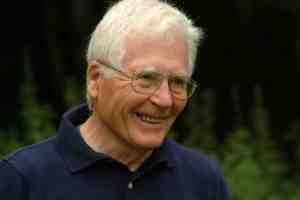
James Lovelock: “there will be a sudden shift to a new global climate … 5 or 6C warmer”

Lovelock_James credit Sandy Lovelock

Stephen Leahy interviews JAMES LOVELOCK the scientist who first proposed the Gaia Hypothesis

TORONTO, June 5 2009 (Tierramérica)

“When the first great climate disaster strikes, I hope we will all pull together just as if our nation were being invaded,” says British scientist James Lovelock in this exclusive Tierramérica interview.

Please throw something in the tip jar before reading on.
This is how I make my living.

As the world marksInternational Environment Day Friday, Lovelock argues that as the climate warms and the carbon content of the atmosphere soars, humanity is facing a far grimmer future that will be upon us sooner than any of the projections made by the Intergovernmental Panel Climate Change (IPCC).

A chemist, physician and biophysicist, Lovelock is one of the world’s foremost environmental scientists and founder of the Gaia Hypothesis, which describes the planet as a living organism, a complex system in which the components of the biosphere and atmosphere interact to regulate and sustain life.

Although his ideas often feed controversy, Lovelock has wide-ranging scientific credentials. As an inventor, he holds more than 50 patents, including the first devices for detecting the presence of ozone-depleting CFCs (chlorofluorocarbons) and pesticide residues in the environment.

He is also the author of many books. The most recent, “The Vanishing Face of Gaia: A Final Warning”, was published in April. Lovelock spoke with Tierramérica’s Stephen Leahy in Toronto.

TIERRAMÉRICA: Why are you critical of the IPCC? Continue reading

Heading for +2 degrees C (3.6 degrees F) Carbon Use Must Peak by 2015 Scientists Warn

Carbon overload - have to stop expanding
Carbon overload – have to stop expanding

By Stephen Leahy

“We shouldn’t forget that a 2-degree C global mean warming would take us far beyond the natural temperature variations that life on Earth has experienced since we humans have been around.”

ANCHORAGE, Alaska, Apr 30 (IPS)

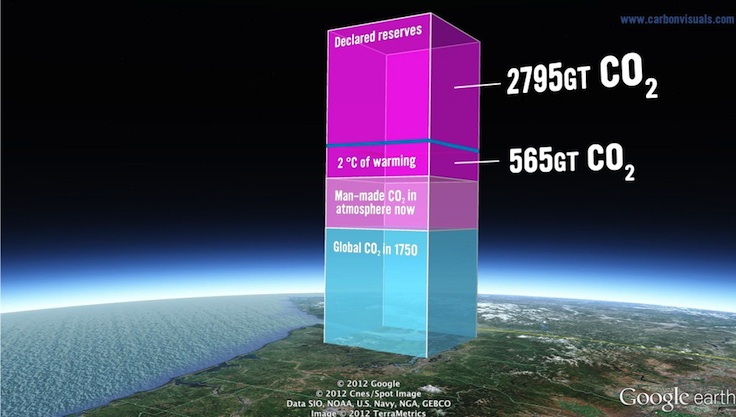
Climate scientists are calling for a phase-out of fossil fuels because humans are now pumping so much carbon dioxide (CO2) into the atmosphere that the ‘2-degree-C climate balloon’ will burst otherwise, new studies show.

That 2-degree C climate balloon has a maximum capacity of less than 1,400 gigatonnes of CO2 total emissions from the year 2000 to 2050, Malte Meinshausen and colleagues report in the current issue of Nature. The European Union and others consider a global temperature rise of more than 2 degrees C as dangerous and potentially catastrophic. Temperatures are already 0.8 C warmer than the pre-industrial period.

UPDATE Nov 2009 Prospect of a four-degree Celsius rise in global average temperatures in 50 years is alarming – but not alarmist, climate scientists now believe. Four Degrees of Devastation

The reality is that global emissions for the last seven years amounted to almost 250 gigatonnes of these long-lived greenhouse gases, meaning that the current and growing rates of fossil fuel emissions would burst the balloon in about 20 years – or less. Even if emissions are held to 1,400 gigatonnes maximum for the next 40 years, there is still a 50-percent probability of exceeding 2 degrees C, said Meinshausen, lead author of the study and climate researcher at the Potsdam Institute for Climate Impact Research.

Indigenous peoples from around the world also called for a phase-out of fossil fuels at the conclusion of the first Indigenous Peoples’ Global Summit on Climate Change in Anchorage, Alaska, that concluded last week.

“That call is well-supported by the evidence in this study,” Meinshausen told IPS.

Is this article of interest? It exists thanks to contributions from readers. Please click here to learn more about Community Supported Journalism.

Continue reading

Ethanol and Biofuels: Almost Everything You Need to Know

“The U.S. has led the fight to stem global hunger, now we are creating hunger,” said Lester Brown, president of the Earth Policy Institute.

Series of the latest articles that provide almost everything you need to know about why ethanol and biofuels will not reduce global warming but simply drive up fuel and food costs.

maize - mexicoEthanol Worse Than Gasoline

Only Green Part of Most Biofuels is the Wealth (Subsidies) They Generate

Ethanol: The Great Big Green Fraud

International Enviro Standards Needed for Biofuels

Six Experts On Why Ethanol is a Dumb Idea

Food & Fuel: Can Sorghum Be The New Magic Bullet Biofuel??

Biofuels: Another Good Reason to Hate American Policy

(Cellulosic) Greenest Ethanol Still Unproven

Do Incinerators Kill Goal of Zero Waste?

zero-waste-conceptby Stephen Leahy

The Uxbridge Cosmos Apr 30 2009

Shawn Williamson took out 2.4 bags of trash last year. Williamson hopes to trim that to 1.6 bags of garbage this year from his family of three living in a typical newer home in nearby Brooklin.

“It’s easy,” says Williamson, a consultant and Director at Durham Sustain Ability, who also uses his home as an office. The secret is buying in bulk and “not buying crap”. The family buys 50lb bags of rice, uses glass jars for storage of other bulk food items and does its own backyard composting. [living zero waste – you tube video]

“It makes more sense to compost food waste in your backyard than transport it all over the Region.”

Uxbridge and Durham Region residents may not realize there is a looming garbage crisis. Virtually all of the Region’s more than 100,000 tonnes of trash goes to Michigan. But those landfills will be closed to Ontario’s garbage in 2010. In response Durham Region Council voted last year to build an estimated $230 million incinerator, or energy-from-waste (EFW) facility in Clarington near Lake Ontario.

“No incinerator is clean. Why let the Region blow toxic smoke into your lungs?” Dr. Sean Godfrey, Chief of Pediatrics, Lakeridge Health Oshawa asked about 80 people attending an information session in Whitby in early April. The event was part of a series of sessions organized by a group of Durham residents called ZeroWaste4ZeroBurning who oppose Durham’s proposed incinerator. Continue reading

The Best Green Radio/Podcast

radio-eco-header1

Radio Ecoshock is a brilliant weekly one-hour roundup of the big environmental and social issues of our time. Alex Smith collects the best podcasts, conference recordings and original interview from a refreshing diversity of leading experts and authorities.

Many great ideas and fascinating commentary that you won’t hear anywhere else:

* “the business model of the auto industry is broken— Dr. Peter Morici, Professor of International Business at the University of Maryland

* coal-fired power plants are dumping thousands of tonnes radioactive waste such as thorium and uranium into the air and on the land

* London-based Gwynne Dyer columnist, author, military historian on extreme climate change and resulting wars

* Dec 8 show — includes shameless but hilarious, twisted XMAS songs from the coal industry: “Ho Ho Ho Clean Coal for the Holidays” and “Frosty the Coal Man”.

Lots of supplemental information on the RE blog — Ecoshock Program Notes.

Say Goodbye to Coral Reefs

severely-degraded-reef-flat-at-kelso-reef-great-barrier-reef-australiaimage-c2a9-cathie-page-very-sml

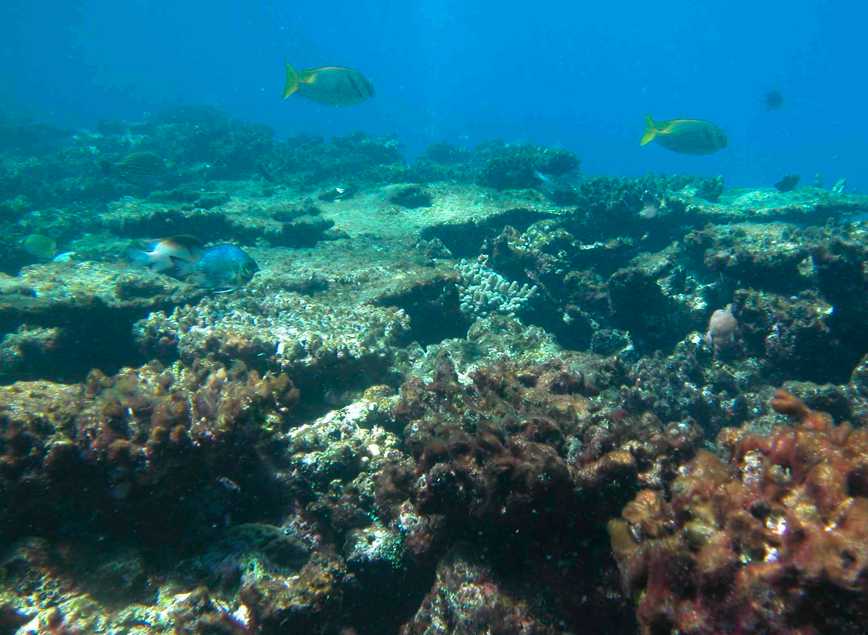
Coral reefs will be the first global ecosystem to collapse in our lifetimes.

By Stephen Leahy

GIJON, Spain, May 22 (IPS) – The one-two punch of climate change that is warming ocean temperatures and increasing acidification is making the oceans uninhabitable for corals and other marine species, researchers said at a scientific symposium in Spain.

And now other regions are being affected. Acidic or corrosive waters have been detected for the first time on the continental shelf of the west coast of North America, posing a serious threat to fisheries, Richard Feely, an oceanographer with the U.S. National Oceanic and Atmospheric Administration (NOAA), told attendees in Gijon, Spain Wednesday.

More than 450 scientists from over 60 countries are participating in the “Effects of Climate Change on the World’s Oceans” symposium.

“Surface waters off the coast of San Francisco had concentrations of carbon dioxide that we didn’t expect to see for at least another 100 years,” Feely told IPS. Continue reading

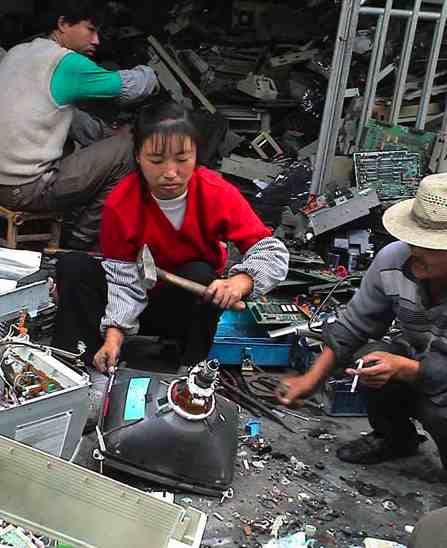
Is Your Old TV Poisoning a Child in China? Where Your e-waste Goes

guiyu-china-breaking-open-monitor-exposes-toxic-dust-basel-action-network-smlBy Stephen Leahy
UXBRIDGE, Canada, Nov 14 (IPS)

Is your old TV poisoning a child in China? Or your old computer contaminating a river in Nigeria?

Without a law banning export of toxic electronic waste in the United States, there has been no way to know if old cell phones, computers or televisions originating there didn’t end up in some poor village in the developing world, where desperate people pull them apart by hand to recover some of the valuable metals inside.

A small group of people have now allied with a few responsible recyclers to ensure e-waste can be treated responsibly by creating an e-Stewards certification programme. Announced this week, e-Stewards are electronics waste recyclers that are fully accredited and certified by an independent third party.

Such accreditation is crucial in an industry that often makes fraudulent claims. Currently even when e-waste (electronic trash) goes to a “green” recycler, the chances are high that toxic stuff from the developed world ended up in a huge pile in the middle of some village. Continue reading