Is Privatizing Air & Water Only Way to Save the Planet? — Copenhagen Talks

By Stephen Leahy*

COPENHAGEN, Dec 17 (Tierramérica)

In the last two years, the conclusion among decision-makers has been that the only way to solve the climate crisis is to turn carbon into a commodity and privatise the atmosphere.

Similar market-based solutions will be used to “solve” the growing water crisis, warned experts at the Klimaforum09, a parallel meeting a few kilometres away from the official 15th Conference of Parties (COP15) to the United Nations Framework Convention on Climate Change, held Dec. 7-18 in Copenhagen.

“Corporations do not want regulations and have convinced governments that they can deliver continued economic growth and save the planet,” said Maude Barlow, chair of the Council of Canadians, the largest citizens group in Canada and author of several books about water issues.

“It shows the power of the corporate lobby that nearly everyone, including many big NGOs, all see the market as the solution to climate change,” Barlow told Tierramérica.

Meanwhile, the climate justice movement is fighting against carbon trading and carbon offsets and advocating for real emissions cuts, while recognising that the commons – air and water – are a public trust, she said

See No Water in Copenhagen Talks

Learn About Community Supported Journalism

Plants Finally Get DNA Barcodes — Genetic profiles to fight illegal logging

By Stephen Leahy*

MÉRIDA, Mexico, Nov 20 (Tierramérica)

Advances made in genetic profiling could be used to fight illegal timber trading, provide authentication of herbal medicines and map entire food chains, according to experts at a conference of the Mexican Academy of Sciences.

“It’s taken four years, but the new science of DNA (deoxyribonucleic acid) barcoding now has the crucial 'marker' for plants,” said David Schindel, executive secretary of the Consortium for the Barcode of Life (CBOL).

“Biodiversity scientists are using DNA technology to unravel mysteries, much like detectives use it to solve crimes,” Schindel told Tierramérica from Mexico City, where CBOL was co-host of the Nov. 10-12 conference of the Mexican Academy of Sciences with the Biology Institute of the Autonomous National University of Mexico (UNAM).

“This work in Mexico and elsewhere is enormously important,” says Patricia Escalante, chair of the Institute’s zoology department.

“Barcoding is a tool to identify species faster, more cheaply, and more precisely than traditional methods,” Escalante stated in a press release. Continue reading

Conserve Nature – Best Way We Have To Cope With Climate Change & Survive This Century

“….nature is sick, which threatens the survival of the human species”

“Conservation of nature is the first order strategy for climate change and carbon capture sequestration”

The only way forward is that “we must learn to live a simple life that is spiritually based”

By Stephen Leahy

MÉRIDA, Mexico, Nov 12 (IPS)

Lawrence Amos travelled from the Arctic at the top of the world to the tropical middle to recite in a soft voice the ongoing destruction of his home by climate change.

The ice is rougher and not as thick, and melts in May instead of June. There is less snow, more coastal erosion, and permafrost is melting, threatening to swallow homes, said Amos, an Inuit who lives in Sachs Harbour in Canada’s High Arctic, one of the remotest communities on the planet.

Amos was speaking here on Memorial Day at the 9th World Wilderness Congress from Nov. 6-13, where many other indigenous peoples, scientists and conservationists from more than 50 countries documented the escalating impacts of climate change on the land and in the oceans.

Like the roll call of the names of those fallen at Memorial or Remembrance Day ceremonies, Amos’ list of impacts experienced by the people of the western Arctic was tragically long.

Insects, birds and fish never seen before are now appearing in the region. “Grizzly bears are mating with polar bears… Our traditional knowledge about the land is becoming worthless,” he told IPS.

“Mother Nature does not use language. We must be aware of the signs, the changes in species, the melting of glaciers to inform us that nature is sick, which threatens the survival of the human species,” said Bittu Sahgal, founder of Sanctuary Asia, India’s leading environmental conservation magazine and book publisher.

“Nature will not talk to us, it will give us consequences,” he told more than 1,500 participants at the WILD9 congress, a partnership between the WILD Foundation, an international, non-governmental non-profit based in the United States, and Unidos para la Conservación, a conservation organisation in Mexico. Continue reading

Amateur Biologists Join Global Bid to Catalog All the Species on the Planet – Join the Fun

By Stephen Leahy

UXBRIDGE, Canada, Aug 25 (IPS)

(all images courtesy of EOL)

Save the living environment and the physical environment will automatically be saved, according to E.O. Wilson, the world’s leading biologist and father of the online Encyclopedia of Life, which plans to create a web page for every known species – all 1.8-plus million.

Climate and water are parts of the physical environment that rely on the living environment – trees, insects, animals – to keep them clean, healthy and in balance.

But that fundamental reality is not well understood by the public and little progress has been made in preventing the destruction of ecosystems and species, Wilson recently told the New Scientist magazine. That’s why Wilson came up with the idea in 2003 to create a publicly accessible, interactive Encyclopedia of Life (EOL).

Launched in 2008, the EOL is growing quickly with 170,000 entries, over 30,000 still images and video – with some provided by members of the public.

“We want to engage the public. With the EOL they can survey the species in their yard and neighbourhoods and report what they find,” said James Edwards, EOL’s executive director based at the Smithsonian Institution in Washington.

“We’d love to see everyone become a ‘field biologist’ and submit what they’ve found,” he said.

Societal understanding and support is crucial to slow and reverse the loss of ecosystems and species, Edwards told IPS.

“If we can’t do that, we all will be in deep trouble,” he said.

Continue reading

+4 Degrees C By 2060? Alarming But Not Alarmist

07_00_01_News_Panonoramica

By Stephen Leahy

UXBRIDGE, Canada, Oct 9, 2009 (IPS)

The prospect of a four-degree Celsius rise in global average temperatures in 50 years is alarming – but not alarmist, climate scientists now believe.

Eighteen months ago, no one dared imagine humanity pushing the climate beyond an additional two degrees C of heating, but rising carbon emissions and inability to agree on cuts has meant science must now consider the previously unthinkable.

“Two degrees C is already gone as a target,” said Chris West of the University of Oxford’s UK Climate Impacts Programme.

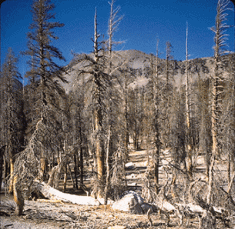
“Four degrees C is definitely possible…This is the biggest challenge in our history,” West told participants at the “4 Degrees and Beyond, International Climate Science Conference” at the University of Oxford last DeadTrees CO2 release naturalweek.
A four-degree C overall increase means a world where temperatures will be two degrees warmer in some places, 12 degrees and more in others, making them uninhabitable.

It is a world with a one- to two-metre sea level rise by 2100, leaving hundreds of millions homeless. This will head to 12 metres in the coming centuries as the Greenland and Western Antarctic ice sheets melt, according to papers presented at the conference in Oxford.

Four degrees of warming would be hotter than any time in the last 30 million years, and it could happen as soon as 2060 to 2070.

“Political reality must be grounded in physical reality or it’s completely useless,” John Schellnhuber, director of the Potsdam Institute for Climate Impact Research, told the conference.

Schellnhuber recently briefed U.S. officials from the Barack Obama administration, but he says they chided him that his findings were “not grounded in political reality” and that “the [U.S.] Senate will never agree to this”.

He had told them that the U.S. must reduce its emissions from its current 20 tonnes of carbon per person average to zero tonnes per person by 2020 to have an even chance of stabilising the climate around two degrees C.

China’s emissions must peak by 2020 and then go to zero by 2035 based on the current science, he added.

“Policymakers who agreed to a two-degree C goal at the G20 summit easily fool themselves about what emission cuts are needed,” Schellnhuber said.

Even with a two-degree rise, most of the world’s coral reefs will be lost, large portions of the ocean will become dead zones, mountain glaciers will largely vanish and many other ecosystems will be at risk, Schellnhuber warned. And there is the risk of reaching a tipping point where the warming rapidly accelerates. Continue reading

“Europe is going to cook the world’s tropical forests to fight climate change; it’s crazy,” — Millions of Trees Burned for ‘Green Energy’

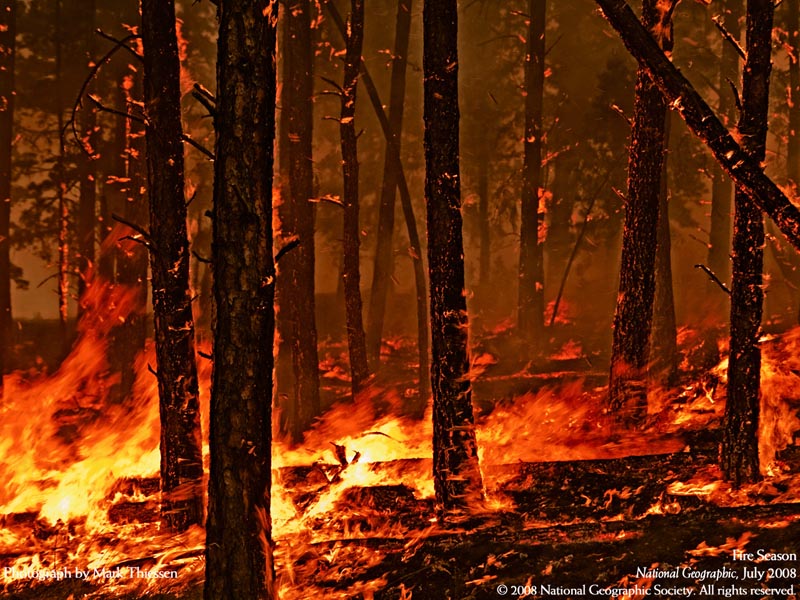
forest fire

Burning trees for energy produces 1.5 times as much carbon as coal – study shows

By Stephen Leahy*

UXBRIDGE, Canada, Sep 24 ’09 (Tierramérica)

Millions of trees, especially from the developing countries of the South, are being shipped to Europe and burned in giant furnaces to meet “green energy” requirements that are supposed to combat climate change.

In the last two months alone, energy companies in Britain have announced the construction of at least six new biomass power generation plants to produce 1,200 megawatts of energy, primarily from burning woodchips.

At least another 1,200 megawatts of wood-fired energy plants, including the world’s largest, in Port Talbot, Wales, are already under construction.

Those energy plants will burn 20 to 30 million tonnes of wood annually, nearly all imported from other regions and equivalent to at least one million hectares of forest.

“Europe is going to cook the world’s tropical forests to fight climate change; it’s crazy,” Simone Lovera, of the non-governmental Global Forest Coalition, which has a southern office in Asunción, Paraguay, told Tierramérica.

This independent environmental journalism depends on public support. Click here learn more.

Europe has committed to reducing its carbon emissions 20 percent by 2020 in an effort to fight climate change. Biofuels and biomass energy will have key roles in achieving those goals, experts say.

Continue reading

Time Running Out on Vows to Act on Climate Scientists Warn

Alleyway, RLeahy 2007

By Stephen Leahy

COLUMBUS, Ohio, Sep 24 (IPS)

Promises are easy to make.

But promises by world leaders will not halt the heat-trapping carbon emissions that are dialing-up global temperatures and altering the climate, say critics and climate researchers meeting in this U.S. Midwestern city.

As evidenced at the U.N. leader’s summit on climate change in New York Tuesday, the world’s big economies are refusing to commit to actions that will prevent this and future generations from inheriting a hostile climate no other humans have ever faced.

Do we have the social and political will to deal with a problem that we will only see partially in our lifetimes?” wonders Don McConnell, president of Battelle Energy Technology, the world’s largest non-profit research centre.

“What most don’t realise is that the biggest impact from climate change will be shifts in precipitation, not temperature increase,” McConnell told IPS at the McCormick Energy Solutions Conference at Ohio State University this week.

Continue reading

Ethanol and Biofuels: Almost Everything You Need to Know

“The U.S. has led the fight to stem global hunger, now we are creating hunger,” said Lester Brown, president of the Earth Policy Institute.

Series of the latest articles that provide almost everything you need to know about why ethanol and biofuels will not reduce global warming but simply drive up fuel and food costs.

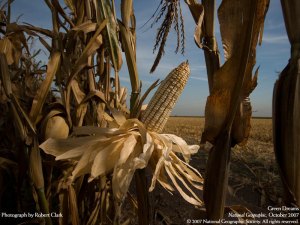
maize - mexicoEthanol Worse Than Gasoline

Only Green Part of Most Biofuels is the Wealth (Subsidies) They Generate

Ethanol: The Great Big Green Fraud

International Enviro Standards Needed for Biofuels

Six Experts On Why Ethanol is a Dumb Idea

Food & Fuel: Can Sorghum Be The New Magic Bullet Biofuel??

Biofuels: Another Good Reason to Hate American Policy

(Cellulosic) Greenest Ethanol Still Unproven

So Long, Salamanders

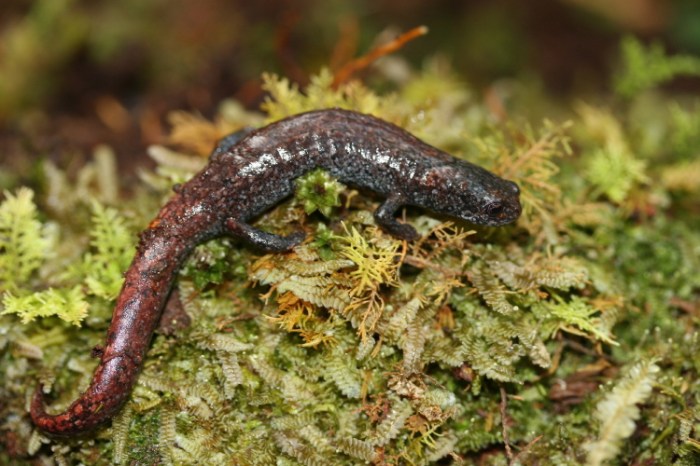
Bradytriton silus, a salamander of the Guatemalan cloud forest long thought to be extinct but rediscovered this January 2009.

By Stephen Leahy*

SAN DIEGO, U.S., Feb 21 (Tierramérica) – Mesoamerica’s salamanders appear to be joining the global decline in amphibian species, like frogs, adding to the evidence of ecological change around the planet.

“What’s happening to salamanders and other amphibians may be a strong lesson for humans,” says lead researcher David Wake, of the University of California at Berkeley.

There are global changes that are altering ecosystems and disease patterns, thus creating new elements of biological pressure, he said.

Wake and his colleagues have discovered that several salamander species have vanished or have become very rare since the 1970s in closely studied areas in western Guatemala and the southern Mexican state of Chiapas. These findings were published last week in the Proceedings of the National Academy of Sciences.

Climate change and disease are likely causing the declines but scientists do not know why, Wake, one of the world’s salamander experts, told Tierramérica.

“We don’t know what the impacts are on local ecosystems, but they could be significant,” he said. Continue reading

Tropical Forests Fight for Survival

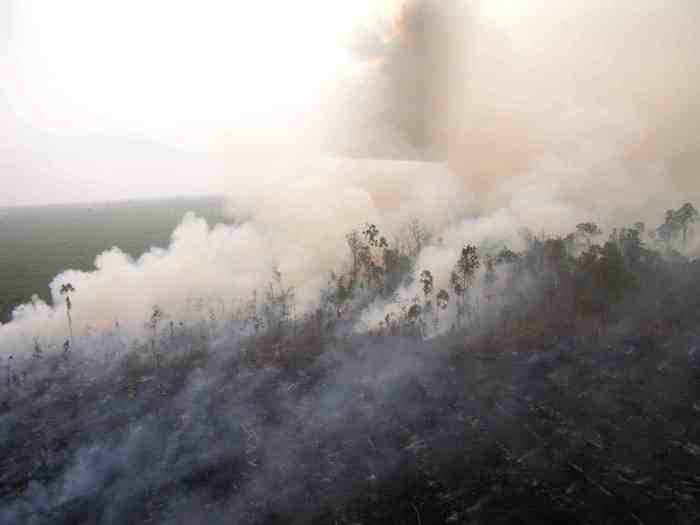
sumatra-burning-forest-courtesy-of-kim-worm-sorensen-sml

By Stephen Leahy*

UXBRIDGE, Canada, Jan 28 (Tierramérica) – Current rates of deforestation suggest there will hardly be any tropical forests left in 20 years. Sixty percent of the rainforests, which survived for 50 million consecutive years, are already gone.

However, some experts say widespread planting of previously logged forests offers hope for preserving some of the region’s rich and unique biodiversity.

Recent satellite data have shown that about 350,000 square kilometres of the original forested areas are growing back, Greg Asner of the Washington-based Carnegie Institution said at the Smithsonian symposium Jan. 12 at the Smithsonian National Museum of Natural History, also in the U.S. capital.

That is only 1.7 percent of the immense planetary belt of original forest that once covered 20 million square kilometres. Twelve million sq km have already been cleared while another five million have been selectively logged, Asner reported.

“There is going to be lots of tropical forest left in the future but it will be different forest,” says Joseph Wright of the Smithsonian Tropical Research Institute (STRI) in Panama. Continue reading