Peak Soil: The Silent Global Crisis

30% of farmland can no longer grow food

By Stephen Leahy

(First published in the Earth Island Journal Spring 2008)

A harsh winter wind blew last night, and this morning the thin snow cover has turned into a rich chocolate brown. The dirt covering the snow comes from cornfields near my home that were ploughed following the harvest, a common practice in southern Ontario and in the corn-growing regions of the US Midwest.

A handful of this dirty snow melts quickly, leaving a thin, fine-grained wet mess. It doesn’t look like much, but the mucky sludge in my hand is the prerequisite for life on the planet.

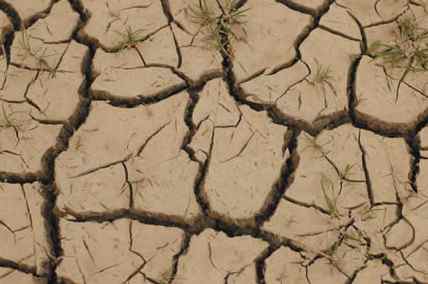
“We are overlooking soil as the foundation of all life on Earth,” says Andres Arnalds, assistant director of the Icelandic Soil Conservation Service. Arnalds is an eloquent spokesperson for the unheralded emergency of soil erosion, a problem that is reducing global food production and water availability, and is responsible for an estimated 30 percent of the greenhouse gases emissions.

“Land degradation and desertification may be regarded as the silent crisis of the world, a genuine threat to the future of humankind.”

This article  depends on public support. Click here learn more.

Continue reading

Humans Have Halted The Next Ice Age

Interview with climate expert Sir David King:

Humanity is now the primary driver of our climate

BARCELONA, Spain, Jul 22 (IPS) – Humanity faces enormous challenges at the start of the 21st century, says Sir David King, Britain’s former chief scientific advisor and now director of the Smith School of Enterprise and the Environment at Oxford University in England.

The crises surrounding climate change, population growth, water, food and land are deeply interconnected, Sir David said at the opening of the Euroscience Open Forum in Barcelona, Friday. 

The Forum, known as ESOF, is a biannual gathering of scientists, researchers, policy makers and journalists that has become Europe’s largest scientific showcase. This year, 4,700 people registered for the five-day conference in Barcelona from Jul. 18- 22. 

In his role as chief scientific advisor, Sir David was outspoken in his warnings to political leaders that climate change is a far greater threat than terrorism and that the failure to reduce emissions from burning fossil fuels would make terrorism far worse and create millions of environmental refugees. 

IPS environmental correspondent Stephen Leahy spoke to Sir David at the symposium in Barcelona. 

IPS: Population growth rates are slowing, what is your concern? 

DK: Growth rates are beginning to slow. There are 6.8 billion people now and that will rise to 8 billion in 2028 and then peak at 9 billion in 2050, according to recent projections. However, that number of people will exert an impossible strain on the Earth’s natural resources. 

For example, there isn’t enough fresh water for more than 8.5 billion people at our current average usage. Food production is limited by water availability and the only way forward will be to use genetic modification to create drought-tolerant crops. We here in Europe need to change our minds on GM crops. Those anti-GM attitudes probably crippled research and are responsible for a large number of hunger fatalities in Africa.

IPS: What about the current global food crisis? Continue reading

Global Fish Catches Vastly Underestimated

By Stephen Leahy

FORT LAUDERDALE, U.S., Jul 8 (IPS) – Fish catches in tropical island nations may be as much as 17 times higher than officially reported, according to a new study released Tuesday.

“The underreporting of fish catches is of such a magnitude it boggles the mind,” said Daniel Pauly, a renowned fisheries expert at the University of British Columbia (UBC).

All of the 20 small Pacific island countries in the study underreported catches, mainly because they did not count the catch by small-scale local fishers. This is not unique — even the U.S. does not report local and recreational fishing statistics, Pauly told IPS at the 11th International Coral Reef Symposium (ICRS) in Fort Lauderdale, Florida Tuesday.

A different study also released Tuesday estimates that the unreported recreational fish catch in the Hawaiian Islands doubles the size of the official catch. It also concluded that 75 percent of reef fishes in the main Hawaiian Islands are depleted or in critical condition because of overfishing. Continue reading

Canada “acting like USA” Torpedoes International Enviro Agreement

Analysis by Stephen Leahy

“Do Canadians know what their government is doing here? You must tell them.” — Mamadou Mana Diakite of Mali

BONN, Jun 3 (IPS) – Self-interest and petty politicking largely paralysed efforts to solve the urgent problem of the widespread extinction of species, with few concrete achievements after nearly two weeks of 14-hour meetings at the Convention on Biodiversity (CBD) in Bonn that concluded last Friday.

Why? Mainly because a few rich and powerful countries like Japan, Canada, Australia, Brazil and China fought tooth and nail to boost their own self-interest regardless of the environmental and human costs.

Six years ago, more than 160 countries at the April 2002 World Summit on Sustainable Development in Johannesburg agreed on a target of achieving a significant reduction of the current rate of biodiversity loss by 2010. In May 2008, virtually everyone here acknowledged the target will not be met.

Some countries, like Germany and most of the developing world, do understand that species extinction is undermining the vital ecosystem services that nature provides, such as food, fibre, clean water and air. Others, such as Canada, express altruistic sentiments that are belied by their actions. Since decisions at U.N. meetings are by consensus, any country can block decisions on a whim. Or, as is more often the case, countries will block agreement on something they have no connection to simply so they can force concessions on other issues.

“You listen to them debate over every comma and realise they could be arguing over anything,” said Helena Paul of EcoNexus, a British-based environmental group that participated in the CBD meetings. NGOs can observe but are not participants except for the occasional opportunity to express their views. Continue reading

Greed Stalls 21st Century Bio-Economy

By Stephen Leahy

BONN, May 31 (IPS) – The world community took some ever-so-careful steps towards slowing the biodiversity crisis at a major U.N. meeting in Bonn, while emphasising the need for urgency and action.

Agreement on the need for more protected areas in tropical forests and oceans was universal, but only Germany offered any new funding. On the contentious issue of biofuels and their impacts on food and biodiversity, members agreed at the last minute that biofuels production ought to be environmentally sustainable and not impact biodiversity. There was also an agreement on a de facto moratorium on ocean fertilisation schemes.

German Chancellor Angela Merkel pledged $785 million a year to protect forests.

And, after 16 years of meetings, the 168 nations that have ratified the Convention on Biodiversity (CBD) agreed to a final two-year timetable to establish an asset and benefit sharing (ABS) regime.

ABS is about access to biodiversity and equitable sharing of benefits resulting from its use. The intent is to end “biopiracy” — the exploitation of indigenous plants and animals for profit without permission or compensation — and reverse countries’ denial of access to any native species for scientific or commercial purposes. Half of all synthetic drugs have been derived from plants or insects.

“This is a real breakthrough. This agreement is a detailed framework on how to put ABS into place,” said German Environment Minister Sigmar Gabriel, who is also the president of the CBD for the next two years.

It might seem strange that delegates enthusiastically cheered this “Bonn Mandate”, an agreement to have two more years of meetings. But in fact, Japan, Canada, New Zealand and Australia have fought hard against anything resembling a legal obligation to compensate countries in the developing world for the use of their genetic resources, a delegate from Malaysia told IPS:

“They don’t want to share any money they’ve made from using our biodiversity.” Continue reading

“Doctor” Nature in Danger

By Stephen Leahy*

CAPE TOWN, South Africa, May 3 (Tierramérica)

“When we harm nature, we are harming ourselves,” says Aaron Bernstein, a doctor at Harvard Medical School and one of the authors of the upcoming book “Sustaining Life: How Human Health Depends on Biodiversity“.

Few people realise that our health is directly tied to the health of the natural world,” Bernstein told Tierramérica

Bernstein and Harvard colleague Eric Chivian wrote and edited contributions from more than 100 leading scientists in their new book, published by Oxford University Press and available last May.

Written for a general audience, “Sustaining Life” draws on the latest scientific evidence to make a persuasive case that the current extinction crisis, with species vanishing every day, is a serious threat to humanity equal to, if not greater than, climate change.

Pharmaceuticals, biomedical research, the emergence and spread of infectious diseases, and the production of food, both on land and in the oceans, depend on biodiversity — the rich variety of life on our planet. Continue reading

Boost Food Production by Reducing Enviro Impacts


JOHANNESBURG, Apr 15 (IPS) – Over the past few years, Robert Watson has had what must qualify as one of the world’s tougher assignments: heading an initiative to help agriculture cope with the substantial challenges it faces presently, and the even bigger hurdles ahead.

The three-year International Assessment of Agricultural Science and Technology for Development (IAASTD) has sought to evaluate agricultural knowledge across the spectrum, with the help of governments, civil society, the private sector, and hundreds of experts.

Watson initiated the project while chief scientist at the World Bank; he currently serves as director of the IAASTD — also as chief scientist at the British environment and agriculture department.

The findings of the assessment are being formally presented Tuesday, this after they were reviewed at an intergovernmental plenary held in Johannesburg, South Africa, from Apr. 7-12. IPS environment correspondent Stephen Leahy chatted to Watson at this meeting about the landmark IAASTD. Continue reading

CLIMATE CHANGE: A Vision Worth Fighting For

By Stephen Leahy*

BROOKLIN, Canada, Apr 3 (IPS) – Sweeping societal change is a slow and erratic business. The civil rights movement in the United States went nowhere for decades and then exploded in the 1960s. Not long ago, smokers could light up anywhere they pleased in Canada and the U.S. Now they are mostly confined to a few outdoor areas and as a consequence, far fewer people smoke.

“There’s been a major shift in values regarding smoking,” said Anthony Leiserowitz, director of the Yale Project on Climate Change at Yale University.

Anti-smoking laws, higher taxes, and knowledge about the health impacts of second-hand smoke were all factors driving the shift, Leiserowitz told IPS.

While most people are concerned about climate change, they view it as a largely abstract problem, and fail to equate it with devastating weather events such as Hurricane Katrina in August 2005, he said.

[ *This story is part three of a four-part examination of the psychological and behavioural changes needed to dial down the temperature on our global greenhouse. Part one: Climate Change Reshaping Civilization Part two: Climate River in Full Flood Part four: CLIMATE CHANGE: A Game With Too Many Free Riders ]

However, that might be changing. Australians suffering record droughts made more intense by climate change elected a new prime minister in 2007 in part because the incumbent refused to act on carbon dioxide emissions.

“Arguably, John Howard (the former prime minister) was the first national leader to lose their job over climate,” Leiserowitz said. Continue reading

Extinction Tourism — See It Now Before Its Gone

isfjorden-ved-jakobshavn-ilulissat-greenland-sml.jpg

By Stephen Leahy*

TORONTO, Jan 18 (Tierramérica) – Hurry! Hurry! See the polar bears, penguins, Arctic glaciers, small pacific islands before they disappear forever due to global warming.

Tourism companies are now using climate change as a marketing tool: Visit the pacific island paradise of Tuvalu before rising sea levels swallow it in the next 30 to 50 years. See the Arctic while there is still ice and polar bears.

“Some companies are using climate change as a marketing pitch, a ‘see it now before it’s gone’ kind of thing,” says Ayako Ezaki, communications director for the International Ecotourism Society, based in Washington DC.

This independent environmental journalism depends on public support. Click here learn more.

emperor penguins

Continue reading

Experimental Biotech Drugs Flourish in China

nature-biotech.pngJan 7 (IPS) – China’s booming medical biotechnology industry is producing controversial drugs and gene therapy treatment programmes for domestic use, as well as to treat critically ill foreigners seeking potential cures unavailable elsewhere.

China’s Beike Biotechnologies harvests stem cells from the umbilical cord or amniotic membrane and injects them into patient’s spinal region. More than 1,000 patients, including 60 foreigners, have been treated for a variety of conditions including Alzheimer’s disease, autism, brain trauma, cerebral palsy and spinal cord injury, according to a study published Monday in the journal Nature Biotechnology.

“We met foreigners there who were happy with Beike’s treatments,” said Peter Singer of the McLaughlin-Rotman Centre for Global Health at the University of Toronto and co-author of the study. Continue reading