Global Warming Explained in 60 Seconds or Less

derek me cop15 sml logo
Derek and Stephen Leahy at entrance to UN climate conference COP 15 in Copenhagen

One night in a bar a Russian journalist who I’d just met says:  “This global warming is too complicated for people to know if it’s real or not”.

“You don’t think climate change is happening?” I asked with surprise since we were both covering a big United Nations climate conference.

“No one has been able to give me a good explanation to prove it’s real,” said Yuri (not his real name).

“I can explain it to you in less than one minute,” I replied.

Yuri was sceptical but I went ahead and said:

“The moon has no atmosphere so it is scorching hot (+100C) during the day and bitterly cold (-150C) at night. The Earth has an atmosphere made up of oxygen, nitrogen, carbon dioxide (CO2) and other gases. Over 150 years ago scientists proved that CO2 traps heat from the sun. We also know without any doubt that burning fossil fuels like oil, gas and coal emits CO2.

Measurements, not computer models or theories, measurements show that there is now 42% more CO2 in the atmosphere than 150 years ago before massive use of fossil fuels. That extra CO2 is like putting another blanket on at night even though you are already nice and warm. The Earth is now 1.0 C hotter on average according to the latest measurements. Heat is a form of energy and with so much more energy in our atmosphere our weather system is becoming supercharged resulting in stronger storms, worse heat waves, major changes in when and where rain falls and more.

That’s it.

After a long silence Yuri says “I guess that makes sense…”.

I’m not sure he was convinced but the truth is that climate change is not that complicated.

One additional thing to know is that CO2 is forever. Every little CO2 molecule we add to the atmosphere will continue to trap the sun’s heat for hundreds and thousands of years.

Road to Paris: Plain Talk Briefing on the UN Climate Treaty Negotiations

What:    A candid, 15 minute explanation on why the UN climate negotiations are so difficult and the likely result in Paris. Intended for a general audience.

Who:     Stephen Leahy is an independent, environmental journalist who has covered climate negotiations around the world. He is co-winner of the 2012 Prince Albert/United Nations Global Prize for reporting on Climate Change.

Where: Part of a public forum in Toronto June 2014 titled CLIMATE CHANGE EMERGENCY.

Thanks to Peter Biesterfeld for making the recording.

Costs You $50-75 To Drive 100 Km (62 miles) – Don’t Blame Gas Prices

cost_of_vehicle_ownership

Smartest Thing You Can Do Is Dump Your Car

By Stephen Leahy

Uxbridge Cosmos, Feb 2013

Cars and trucks are extraordinarily expensive. The full cost of driving 100 km is between between $50 and $75 when fuel, wear and tear, insurance, depreciation, and repairs are included. The cost of owning and operating a car, van, SUV or truck ranges between $9,000 to $15,000 a year depending on the purchase price of the vehicle according to automobile clubs like the CAA . That’s a big chunk of aftertax income spent each and every year. Double this for two-car families.

If you pay $50 at the pump about $33 will go directly to oil companies. The gas station gets around a dollar and the rest is for provincial and federal taxes.

Finally ask yourself how many hours a day your vehicle isn’t being used? Most are parked 22 hours a day.

Why not give your car a day off once a week? A ‘No Car Day’ is easy to do, saves money and reduces emissions of climate-heating carbon dioxide (CO2). The average passenger vehicle emits around 4.8 tonnes of CO2 a year.

The biggest savings by far is to get rid of one vehicle. When you consider the full costs of ownership, the $9 000 to $15,000 saved will let you rent vehicles or taking taxi as needed with plenty of cash left over. For maximum savings use the bus or train. A bus from Uxbridge is only $10 to downtown Toronto — 75 km one way. Using your car that 75 km trip really costs $45 not including parking.

New study – drive less lose weight guaranteed: If drivers nationwide traveled 1 mile less by car each day, not only would fuel consumption fall, but annual health care costs could drop by billions of dollars as fewer people would be classified as obese or overweight, Jacobson estimates.

My related articles:

EcoMobility Gaining Ground As Cars/Roads Become Too Expensive

Cars Kill More Children Than Malaria — Leading Cause of Death Ages 5 to 14

Lend Your Car, Save, and Save the World

Bike vs Car on a Hot Planet

Special Event: The Virtual World of Water and 8 Other Outstanding Talks About Water

cropped-screen-shot-2014-09-20-at-8-46-03-pm.jpgThe Walrus Talks Water

Eighty minutes of lively, thought-provoking ideas about the impact, use, and health of water in Canadian and global society

SPATZ THEATRE, 1855 TROLLOPE ST., HALIFAX
MONDAY, MAY 25, 2015, 7:00 P.M.

Featuring:

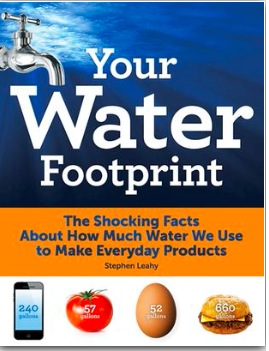
  • Stephen Leahy, International environmental journalist, author of the critically acclaimed book Your Water Footprint: The Shocking Facts about How Much Water We Use to Make Everyday Products.Your Water Footprint.  Stephen will talk about The Virtual World of Water
  • Dave Courchene (Nii Gaani Aki Inini – Leading Earth Man), founder and leader, Turtle Lodge
  • Susanna Fuller, Ecology Action Centre
  • John Geiger, Royal Canadian Geographical Society
  • Angela Giles, Council of Canadians
  • Chris Henderson, Lumos Energy
  • Kevin McMahon, Documentary director and producer
  • Alanna Mitchell, Science journalist and author
  • John Smol, Canada Research Chair in Environmental Change

More details here

  • GENERAL ADMISSION: $20
    STUDENTS: $12

Arctic Ice Gone By 2015 – First Time in One Million Years

This is what a few Arctic ice experts were saying in 2008 when I covered a special meeting in Quebec City. The ice had reached shocking record lows in September of 2007 + 2008.  Turns out the Arctic ice is more resilient and will still be there in September of this year. However it will likely be the lowest amount of ice in the past million years. – SL]

Stephen's avatarStephen Leahy, International Environmental Journalist

polar-bear-leap-wwwfirstpeopleus-sml

By Stephen Leahy

We’re going to see huge changes in the Arctic ecosystem

QUEBEC CITY, Canada, Dec 13 2008 (IPS)

In just a few summers from now, the Arctic Ocean will lose its protective cover of ice for the first time in a million years, according to some experts attending the International Arctic Change conference here.

A summer ice-free Arctic wasn’t due for another 50 to 70 years under the worst-case climate change scenarios examined by the Intergovernmental Panel on Climate Change (IPCC).

“Things are happening much faster in the Arctic. I think it will be summer ice-free by 2015,” said David Barber, an Arctic climatologist at the University of Manitoba.

Such a “dramatic and serious loss of sea ice will affect everyone on the planet,” Barber told IPS.

View original post 942 more words

Learn About Your Water Footprint with Author Stephen Leahy – Tues April 28


Whitby Public LibraryScreen Shot 2014-07-20 at 10.28.00 AM

Tuesday, April 28 at 7pm

405 Dundas Street West, Whitby, ON, L1N 6A1

Meeting Room 1B


Critically Acclaimed New Book Investigating The Enormous Amounts Of  ‘Hidden’ Water We Consume Every Day

It takes more than 7,600 liters (2,000 gallons) of water to make a single pair of jeans. That morning cup of coffee required 140 liters (37 gallons) of water before it found its way to your table—water that was used to grow, process and ship the coffee beans. When we spend money on food, clothes, cellphones or even electricity, we are buying water  — a shockingly large amount of water.

WATER IS MORE VALUABLE AND USEFUL THAN OIL

Your Water Footprint: The Shocking Facts About How Much Water We Use To Make Everyday Products reveals how water is essential to our way of life in ways we never imagined. While water usage continues to soar, shortages now affect more than 3 billion people including millions of Americans and Canadians. A decade from now 3 out of 5 people will face water shortages.

Your Water Footprint provides essential information to reduce your water use which will help you save money, be prepared for shortages and ensure our children and grandchildren will have abundant fresh water.  Water-wise choices is all about smart substitutions and changes, rather than sacrifice and self-denial.

 National Geographic Interviews Stephen Leahy About Your Water Footprint

“…a brilliant and shocking exposé on precisely how much water we use…” – Publishers Weekly

…exceptionally lucid narration with arresting, full-page info graphics”  — Booklist

70% of C02 Emissions from Cities But Fighting to be Climate Leaders

David Cadman and Park Won Soon at the ICLEI World Congress 2015 in Seoul, South Korea

By Stephen Leahy

Report from 2015 World Congress: National Governments Should Be Helping Green Cities  

Cities are responsible for 70 per cent of global CO2 emissions but they can save the planet by greening one community at a time said Vancouver’s David Cadman at the close of the ICLEI World Congress 2015, the triennial sustainability summit of local governments in Seoul, South Korea.

“We can do it. We must do it,” Cadman, the retiring president of Local Governments for Sustainability, told some 1,500 delegates from nearly 1,000 cities and local governments in 96 countries on April 11.

The majority of climate actions and most plans to reduce CO2 emissions are happening at the city level, Cadman told DeSmog Canada in Seoul.

Vancouver and 50 other cities have committed to 100 per cent renewable energy and 500 more are part of ICLEI’s Cities Climate Registry that documents verifiable CO2 emission reduction actions and commitments that amounted to 2.8 billion tons a year in 2014.

Cadman, a former City of Vancouver councillor, has been president of ICLEI since 2006. It’s an international organization headquartered in Bonn, Germany, with 280 staff and 23 other offices scattered around the globe. ICLEI, which stands for International Council for Local Environmental Initiatives, started 25 years ago in Toronto to help cities become more sustainable. It now goes by the more manageable name of “Local Governments for Sustainability,” but still uses the original acronym.

Canada’s federal and provincial governments were very strong supporters in the early days but the past decade has been very different.

Canada Chained to Fossil Fuel Sector

“We seem to be chained to the fossil energy industry in Canada and it’s pulling us down. Cities and organizations can hardly dare to speak out about this now,” he said.

Germany was only too happy to bring ICLEI to Bonn eight years ago and has been generous with its support, along with the European Union. Now the organization is experiencing what is being called an “Asian pivot,” with the mayor of Seoul, Park Won Soon, as the new president.

Park has helped Seoul to become one of the world’s leaders on sustainable development. With 11 million people and growing fast, Seoul will reduce its energy use and increase renewable generation including rolling out 40,000 solar panels to households by 2018 and 15,000 electric vehicles. By 2030, CO2 emissions will be cut 40 per cent.

“Action on climate will be by local governments no matter what national governments decide,” Park Won Soon told DeSmog Canada.

“We need to act quickly, we need to act energetically,” the mayor said.

China’s megacities are also joining ICLEI. At the congress, Hailong Li, deputy secretary general of the China Eco-city Council said the country will have 100 low-carbon eco-cities by 2017. That will drive down the costs of energy efficiency and renewable energy, Li said.

China also intends to become an expert on eco-construction and to market its expertise to the rest of the developing world.

By 2030 another 3.5 billion people will be living in cities so it is absolutely critical that the infrastructure be sustainable said Cadman who will continue to be active as special representative to the new ICLEI President.

“I’m 70 now and need to reduce my workload. My wife says she’d like me to be around a bit longer.”

Canadian cities could also do more and sooner if they had the support of provincial and federal governments, he said. That may be changing at the provincial level with growing support for various forms of carbon taxes that will help generate funds and financial incentives to reduce emissions.

“The provinces are doing the heavy-lifting on climate while the Harper government sits on the sidelines.”

Fossil fuels are in decline — divestment is taking off and investments are shifting to renewable energy. There’ll be no pipelines to the West Coast and no new investments in the oilsands, Cadman said.

Even in B.C., the hoped-for markets for LNG may not exist with China building gas pipelines to tap reserves in Iran and Russia, he said.

“Canada needs to move away from selling raw resources, but is any political party ready to go there?”

“It doesn’t cost the world to save the planet” — Economist

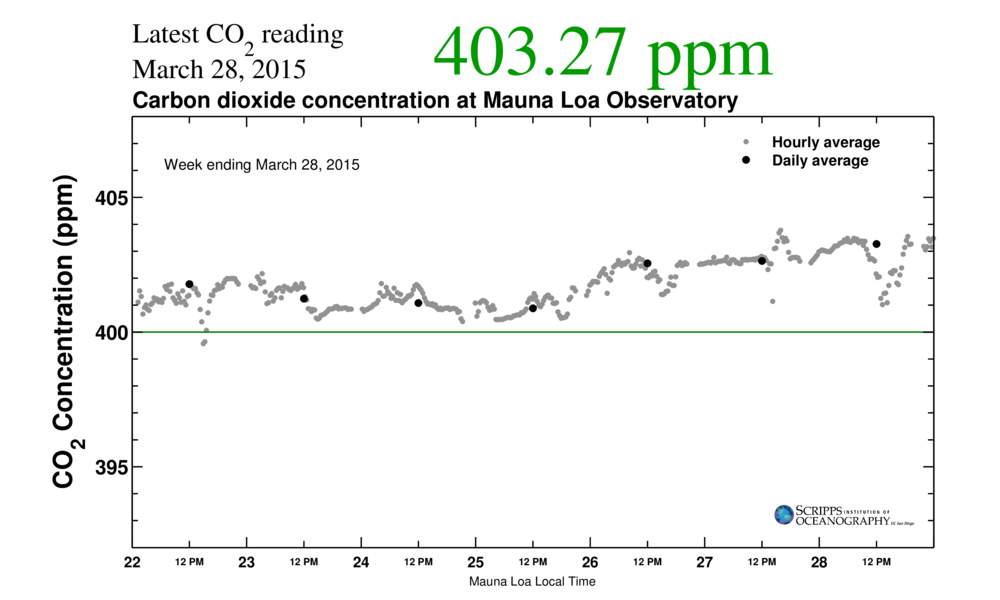
mar 28 2015 mona loa C02 png

UXBRIDGE, Canada, Apr 22 2014 (IPS)

Hopefully, on Earth Day today, high-level ministers from all countries are thinking about what they can bring to the table at a key set of meetings on climate change in early May.

This will be the first opportunity for governments to discuss their proposed climate action plans in light of the final Intergovernmental Panel on Climate Change (IPCC) report released last week.

“There is a clear message from science: To avoid dangerous interference with the climate system, we need to move away from business as usual.” — Professor Ottmar Edenhofer

That report warned that carbon dioxide (CO2) emissions from burning fossil fuels are still rising far too fast, even with more than 650 billion dollars invested in renewable energy in the last three years. However, over the same time period even more money was invested in getting more fossil fuels out of the ground.

The latter investment is keeping humanity and the planet locked onto a devastating path of a global temperature increase of four to five degrees C, the IPCC’s Working Group III report warned.

Scientists and economists say that unlocking ourselves from disaster will require a massive reduction in emissions – between 40 percent and 70 percent – by midcentury. This is can be readily accomplished without inventing any new technology and at a reasonably low cost, reducing global economic growth by a comparatively tiny 0.06 percent.

“It doesn’t cost the world to save the planet,” economist Professor Ottmar Edenhofer, who led the IPCC team, said at a press conference.

It does mean an end to investments in expanding fossil fuel infrastructure as the annual growth in CO2 emissions from burning oil, coal and gas must peak and decline in the next few years. The atmosphere already has 42 percent more CO2 than it did prior to 1800.

This extra CO2 is trapping more heat from the sun, which is heating up the oceans and land, creating the conditions that spawn super storms and extreme weather. And it will do so for the next 1,000 years since CO2 is a very durable molecule.

Current emissions are adding two percent more heat-trapping CO2 each year. That will push humanity’s ‘CO2 contribution’ to 50 percent four years from now.

“There is a clear message from science: To avoid dangerous interference with the climate system, we need to move away from business as usual,” Edenhofer said.

The IPCC’s first report released last September as part of its Fifth Assessment Report (AR5) clearly stated once again that the climate is changing rapidly as a result of human activity and urgent action is needed.

This was followed last month with a strong confirmation that climate impacts are already occurring on every continent and throughout the world’s oceans. This second report warned that one of the major impacts will be declines in food production unless emissions begin to decline.

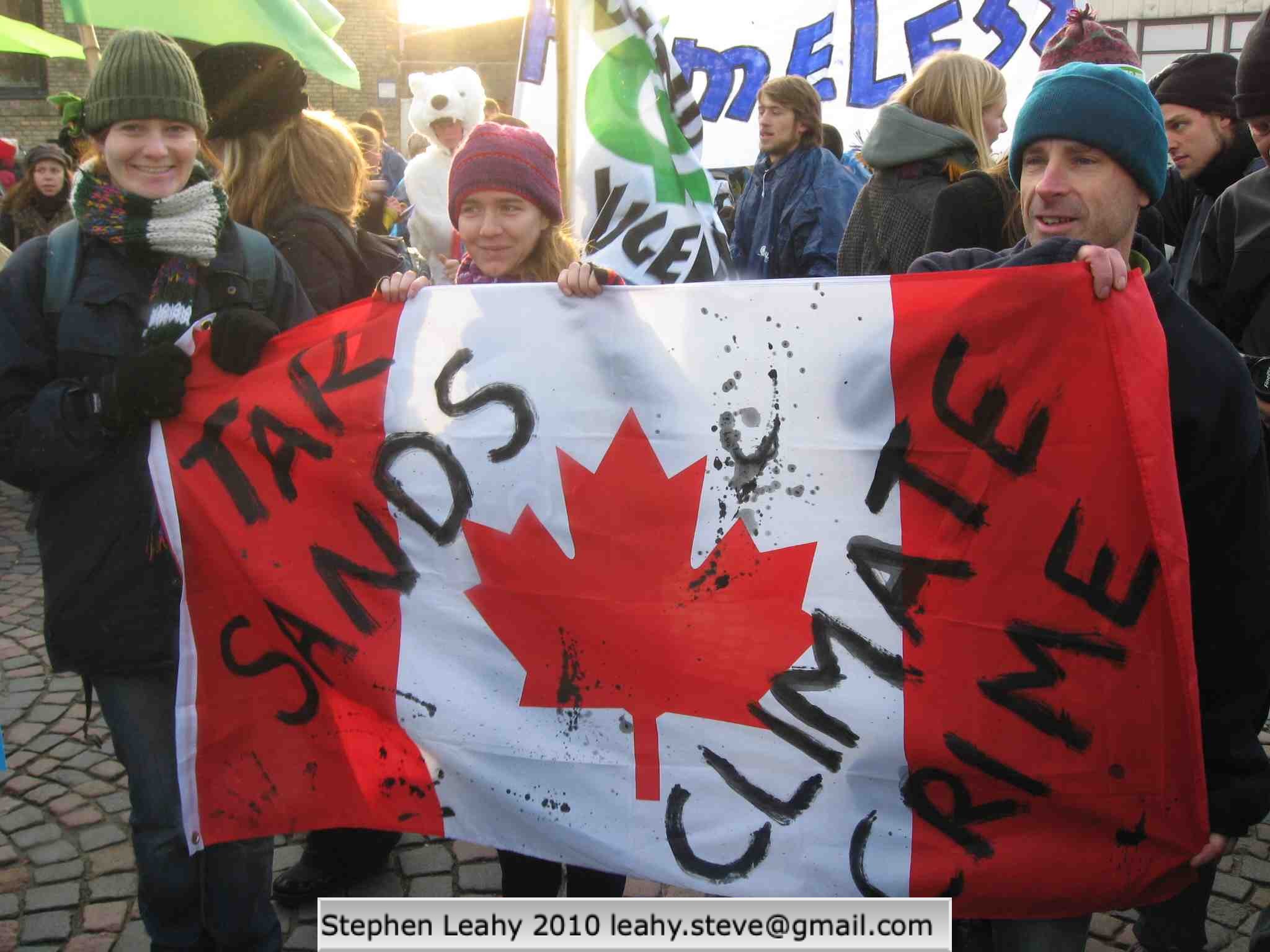
The fossil fuel sector, the richest in human history, appears to be ignoring the IPCC warnings.tar sands flag copenhagen sml0000

Earlier this month, oil giant ExxonMobil issued a report to its shareholders saying it does not believe the world will curb CO2 emissions and plans to extract and sell all of its 25.2 billion barrels worth of oil and gas in its current reserves. And it will continue investments hunting down more barrels.

“All of ExxonMobil’s current hydrocarbon reserves will be needed, along with substantial future industry investments, to address global energy needs,” said William Colton, ExxonMobil’s vice president in a statement.

The IPCC agrees oil, gas and coal will still be used in future but there is a CO2 maximum to have a reasonable chance of staying below two degrees C. That fossil energy cap won’t be enough to meet global energy needs so Working Group III recommends shifting to large-scale bioenergy and biofuels, waste incineration, nuclear power and carbon capture and storage (CCS).

These energy sources are controversial and risky. Large-scale bioenergy and biofuels needs huge areas of land and vast quantities of water and will compete with food production.

Studies show ethanol results in more emissions than burning gasoline. Even making ethanol from the leftovers of harvested corn plants released seven percent more CO2 than gasoline while depleting the soil, a new study revealed in Nature Climate Change this week.

The IPCC acknowledges bioenergy and biofuels can increase emissions, destroy livelihoods and damage the environment, says Rachel Smolker of Biofuelwatch, an environmental NGO.

“It is a shame they put so much stock in something that would make things worse rather than better,” Smolker told IPS.

Given all this, what climate action plans are governments going to propose when they meet in Abu Dhabi on May 4 and 5th? This is an informal ‘put your cards on the table’ regarding a new set of commitments on emission reduction targets and action plans to be made public at the U.N. Climate Summit in September.

Current reduction targets will not avoid four degrees C, most experts agree.

In hopes of getting countries to increase their reduction targets, U.N. Secretary-General Ban Ki-moon asked governments to bring new proposals to New York City in September. With the current U.N. Climate Change Convention meetings deadlocked on key issues, the New York Summit is intended to kick-start political momentum for an ambitious, global, legal climate treaty in 2015.

The May get-together titled the “Abu Dhabi Ascent” is the only meeting before the Summit where governments, and invited members of the private sector and civil society will come together to explore how to get ambitious action to reduce emissions.

The Abu Dhabi meeting will be a window into the future of humanity: ascent or descent?

first published as Charting a Course for Survival, or Oblivion?

” timely, important, and fascinating” — Library Journal review of Your Water Footprint

Stephen's avatarYour Water Footprint by Stephen Leahy

Screen Shot 2014-11-24 at 3.30.01 PMAnyone living on the West Coast and desert regions of the United States is familiar with the concept of water scarcity. As global warming, food and commodity production, and population increases continue to affect the planet and its resources, water scarcity will continue to be an important and critical issue.

Environmental journalist Leahy has created a guide for understanding just how much water is used in our daily activities and in the manufacturing of the products we consume, while putting into context current facts about the status of water availability. Readers will find the information, which is presented in an ­infographiclike style, easy to understand and to act upon.

While the introduction and conclusion expertly unpack the complex issue of water use, the images and large text in the body of the book seem to be geared toward younger readers. However, this book is unique in its handling of a…

View original post 143 more words

‘We Have Nothing Without Water’ – Treehugger Interviews Author of Your Water Footprint

Screen Shot 2014-11-23 at 11.06.18 AM

Why care about your water footprint?

"Your water footprint" by Stephen Leahy

© “Your water footprint” by Stephen Leahy. Groundwater comes from aquifers that take thousands of years to fill. Globally, aquifers are being drained faster than then can refill.

Margaret Badore (@mbadore) Science / Clean Water

November 18, 2014

We learn in elementary school that water is in a constant cycle of evaporation and precipitation, making our crops grow and flowing from rivers into oceans. While the amount of water on Earth remains fairly stable, its distribution around the globe is changing, and this change is being accelerated by human activities.

A new book, “Your Water Footprint,” by environmental reporter Stephen Leahy, takes a close look at the “virtual water” that surrounds us in everyday life. This isn’t just the water we use to boil pasta or take a shower, it’s the water that’s used to grow our coffee beans and power the local energy plant. As the demand for this kind of water increases, the more threatened our access to fresh water becomes. At the same time, pollution makes vast amounts of water unusable.

I had the opportunity to catch up with Leahy over Skype.

TreeHugger: What were your goals for writing this book?

Stephen Leahy: To help people understand this other aspect of water that we use, that we don’t see. This virtual water concept: the water it takes to make things, the water it takes to grow our food, to make our products, to make our clothing. This is that unseen water that we don’t think about, and because we don’t see it, we’re not really aware of it.

It’s an enormous amount of water that we end up consuming every day without realizing it.

TreeHugger: The book is very number heavy, which makes it easy to compare how much water is used in different things. How did you go about finding all the data?

Leahy: It was a nightmare actually, the numbers. Especially for a person who’s a writer, not a numbers guy.

What I did, and this was based on covering science for many years, was figure out a baseline. Who is the best researcher? Who has the best data collection of water footprints? It turned out to be the University of Twente in the Netherlands, and they actually pioneered the concept of water footprints. They’ve developed a whole methodology about how you calculate it, and they’ve done piles of studies of the various water footprints of various products. Sometimes not in the way we think of products. So, they would do a water footprint for wheat, but that doesn’t necessarily translate into a burger bun or bread, so I did that. I figured out how much wheat goes into a loaf of bread and did that part of the calculation myself.

So, University of Twente was a godsend, because there are lots of different ways of calculating water footprints, and there’s different numbers out there.

TreeHugger: In the introduction, you discuss this concept of the “water-food-energy nexus.” I’m hoping to can tell us a little more about that.

Leahy: Most people realize that we need water for food, but what most people don’t understand is that we also need water for energy. There’s no form of energy that doesn’t need water. We have a growing population, and a growing shift in diets from vegetable-based to meat-based, which uses a lot more water. At the same time, there’s a billion people who don’t have access to electricity and they of course want to get electricity. As we look to produce more energy and more food, we’re going to need more water. This is the point of the nexus: we don’t have enough water to do all that in the future.

TreeHugger: So, looking forward, we need to reduce our water footprint. I think a lot of our readers are going to be familiar with the concept of reducing a carbon footprint, and in a lot of ways these concepts overlap. So, from your perspective, what are the ways the two footprints don’t overlap?

Leahy: Certainly on the energy side they overlap a lot. But on the food side, that’s probably the best example. If you switch from a meat-based diet to a vegetarian diet, you could reduce your daily water footprint by 1,300 liters. So, that’s an enormous amount of water when you put it over a year, nearly half a million liters in savings.

The other thing you can do is swapping beef for chicken. Swapping beef for chicken for a family of four would save 900 liters of water.

Food waste is another example, 38 to 40 percent of food in North America is wasted, and that’s a huge amount of water embedded in that food. The “best before” dates are actually problematic in that regard, because it doesn’t really mean the food is bad, it just means the company’s not guaranteeing the flavor.

TreeHugger: I also wanted to ask you about how you think about the trade-offs between the water impact of a product and some of the other impacts of a product. I was thinking about tee-shirts, because I write about clothes a lot. So, on one hand, we could say cotton is natural, it can be low in toxins if we use natural dyes and it’s biodegradable. On the other hand, cotton has a high water footprint. Then if we look at polyester, it has a lower water footprint, but there are concerns about it releasing toxins as it breaks down and contributing to micro plastic pollution. So, how do you look at these kinds of trade-offs? Do you have advice for weighing them?

Leahy: This gets a little bit complicated, because a big number for a water footprint is not necessarily indicative of something that’s bad. If you’re in a water-rich area and need a lot of water, and you’re not polluting this water, that’s going to be okay.

It’s kind of site-specific and product-specific, so this does make it quite a bit more complicated. On the clothing side of things, if you’re growing cotton in a country that has reasonable amounts of rainfall and preferably it’s grown organically, that is it’s grown without pesticides and chemicals, you’re greatly reducing the contamination of water. And if you’re using rain-fed cotton and not depleting an underground source, those are some conditions under which we could talk about products being truly sustainable, because you could continue this for quite a while.

TreeHugger: So, as we look to the future, there are many areas that will soon be facing the collapse of “water bubbles.” Do you think we need to see a shift in water policies or do we need to reduce our personal water consumption? Or is it both?

Leahy: It’s both. From a government policy point of view, water needs to be respected a lot more in terms of managing it long-term. There are places like California that don’t have any rules about how much ground water you can take. Anyone can take as much groundwater as they like—and that’s not uncommon.

The other side of course is consumers. I think consumers need to raise the issue more with both their elected leaders but also the industry. Some industries have responded, Levi’s has greatly reduced their water use for the production side, although it’s not exactly waterless since it takes a lot of water to grow cotton. So, that’s a role for consumers: asking, ‘Where is this product made? Where did it come from?’

Because there are certain things that don’t make any sense. For instance, Egypt is the number two exporter of oranges in the world. Egypt, well it’s is basically a desert, so why are they exporting all these oranges? There are actually all these economic reasons that don’t make any sense from a sustainability point of view. So consumers can make a decision and say, I’m not going to buy a product that requires a lot of water from the desert, because that’s just dumb.

The point about the virtual water is that we have very little without water. So, we’re extraordinarily dependent on water in ways we just don’t realize. And yet, we under-price water, water is very cheap, and water doesn’t get the respect it deserves.

This interview has been shortened and condensed.

Original post

Your Water Footprint:  The Shocking Facts About How Much Water We Use To Make Everyday Products

October 2014 Firefly Books, 160 Pages, 125 Unique Infographics only $19.95 Paperback (Also avail in hardcover) Order today

In US:  AmazonPowell’s Books; Barnes&NobleIndiebound

Canada:  Chapters-Indigo Signed copies avail at Blue Heron Books – Stephen’s home town bookstore

UK:  WH SmithAmazonWaterstones

Australia: Angus & RobertsonBooktopia

New Zealand: Mighty Ape