+4 Degrees C By 2060? Alarming But Not Alarmist

07_00_01_News_Panonoramica

By Stephen Leahy

UXBRIDGE, Canada, Oct 9, 2009 (IPS)

The prospect of a four-degree Celsius rise in global average temperatures in 50 years is alarming – but not alarmist, climate scientists now believe.

Eighteen months ago, no one dared imagine humanity pushing the climate beyond an additional two degrees C of heating, but rising carbon emissions and inability to agree on cuts has meant science must now consider the previously unthinkable.

“Two degrees C is already gone as a target,” said Chris West of the University of Oxford’s UK Climate Impacts Programme.

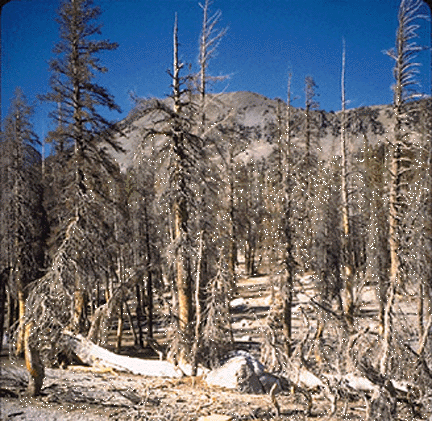
“Four degrees C is definitely possible…This is the biggest challenge in our history,” West told participants at the “4 Degrees and Beyond, International Climate Science Conference” at the University of Oxford last DeadTrees CO2 release naturalweek.
A four-degree C overall increase means a world where temperatures will be two degrees warmer in some places, 12 degrees and more in others, making them uninhabitable.

It is a world with a one- to two-metre sea level rise by 2100, leaving hundreds of millions homeless. This will head to 12 metres in the coming centuries as the Greenland and Western Antarctic ice sheets melt, according to papers presented at the conference in Oxford.

Four degrees of warming would be hotter than any time in the last 30 million years, and it could happen as soon as 2060 to 2070.

“Political reality must be grounded in physical reality or it’s completely useless,” John Schellnhuber, director of the Potsdam Institute for Climate Impact Research, told the conference.

Schellnhuber recently briefed U.S. officials from the Barack Obama administration, but he says they chided him that his findings were “not grounded in political reality” and that “the [U.S.] Senate will never agree to this”.

He had told them that the U.S. must reduce its emissions from its current 20 tonnes of carbon per person average to zero tonnes per person by 2020 to have an even chance of stabilising the climate around two degrees C.

China’s emissions must peak by 2020 and then go to zero by 2035 based on the current science, he added.

“Policymakers who agreed to a two-degree C goal at the G20 summit easily fool themselves about what emission cuts are needed,” Schellnhuber said.

Even with a two-degree rise, most of the world’s coral reefs will be lost, large portions of the ocean will become dead zones, mountain glaciers will largely vanish and many other ecosystems will be at risk, Schellnhuber warned. And there is the risk of reaching a tipping point where the warming rapidly accelerates. Continue reading
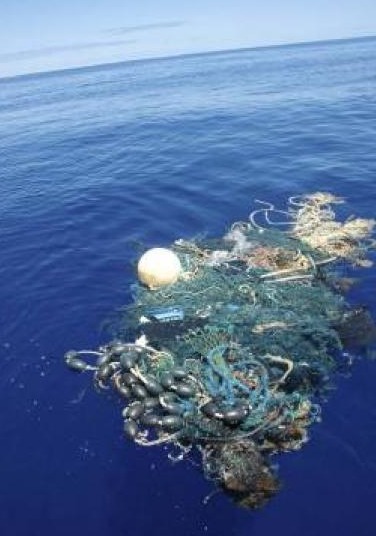

Drowning the Oceans in Plastic Trash (Pacific Garbage Patch)

plastic trash - pacific gyre By Stephen Leahy

UPDATE: The “Pacific Garbage Patch” is really a “plastic soup” where the plastic is distributed throughout the water column in area more than twice the size of Texas. See here for more

[FYI: I’m an independent journalist who supports his family and the public interest writing articles about important environmental issues. ]

Wired 06.05.04

Marine trash, mainly plastic, is killing more than a million seabirds and 100,000 mammals and sea turtles each year, said U.N. Secretary-General Kofi Annan in a statement.

Plastic bags, bottle tops and polystyrene foam coffee cups are often found in the stomachs of dead sea lions, dolphins, sea turtles and others. The implications have many at the conference concerned. Last April, Dutch scientists released a report on litter in the North Sea and found that fulmars, a type of seagull, had an average of 30 pieces of plastic in their stomachs.

In the sea, big pieces of plastic look like jellyfish or squid, while small pieces look like fish eggs, says Bill Macdonald, vice president of the Algalita Marine Research Foundation, a Long Beach, California-based nonprofit environmental organization.

Macdonald, who is also an underwater filmmaker, said he has seen albatross parents fly huge distances to feed their young a deadly diet of plastic bottle caps, lighters and light sticks.

“The sheer volumes of plastic in oceans are staggering,” he said. In recent years Algalita researchers have sampled a huge area in the middle of the North Pacific, and found six pounds of plastic for every pound of algae.

Do you like this article? It is funded by contributions from readers like you. Please click here to make a donation.

Continue reading

James Lovelock: “there will be a sudden shift to a new global climate … 5 or 6C warmer”

Lovelock_James credit Sandy Lovelock

Stephen Leahy interviews JAMES LOVELOCK the scientist who first proposed the Gaia Hypothesis

TORONTO, June 5 2009 (Tierramérica)

“When the first great climate disaster strikes, I hope we will all pull together just as if our nation were being invaded,” says British scientist James Lovelock in this exclusive Tierramérica interview.

Please throw something in the tip jar before reading on.
This is how I make my living.

As the world marksInternational Environment Day Friday, Lovelock argues that as the climate warms and the carbon content of the atmosphere soars, humanity is facing a far grimmer future that will be upon us sooner than any of the projections made by the Intergovernmental Panel Climate Change (IPCC).

A chemist, physician and biophysicist, Lovelock is one of the world’s foremost environmental scientists and founder of the Gaia Hypothesis, which describes the planet as a living organism, a complex system in which the components of the biosphere and atmosphere interact to regulate and sustain life.

Although his ideas often feed controversy, Lovelock has wide-ranging scientific credentials. As an inventor, he holds more than 50 patents, including the first devices for detecting the presence of ozone-depleting CFCs (chlorofluorocarbons) and pesticide residues in the environment.

He is also the author of many books. The most recent, “The Vanishing Face of Gaia: A Final Warning”, was published in April. Lovelock spoke with Tierramérica’s Stephen Leahy in Toronto.

TIERRAMÉRICA: Why are you critical of the IPCC? Continue reading

Extraordinary Abundance of Life in Oceans Past

trophy fish 2007By Stephen Leahy

UXBRIDGE, Canada, May 26 (IPS) – Imagine large pods of mighty blue whales and orcas darkening the waters off Cornwall, England, while closer to shore blue sharks and thresher sharks chase herds of harbour porpoise and dolphins.

Pure fantasy? No, in fact that extraordinary abundance of marine life off the English coast was the norm for oceans around the world not so long ago, researchers have now documented.

And then humans began to mine the seas of anything worth eating.

“The impact of fishing over the centuries is far larger than anyone thought,” said Poul Holm, a professor at Trinity College in Dublin and global chair of the History of Marine Animals Population (HMAP) project which part of the 10-year Census of Marine Life.

While many valuable species have been fished out in recent years, that has been happening for hundreds of years around the world based on nine years of research by hundreds of experts.

“In looking back 500 to 2,000 years ago, you get a real sense of the impacts of fishing and the cascading effects on marine ecosystems, some of which may be beyond recovery,” Holm told IPS. Continue reading

Scientists Build a Macroscope of Life on Earth

clown fish anomenes iucnBy Stephen Leahy

UXBRIDGE, Canada, Jun 2 (IPS) – Imagine looking at a Google Maps-like satellite image of the Amazon forest and with a mouse click find out what lives in that bit of forest – what tree and plant species are there, what animals, birds and insects.

You could even look at the DNA of the microbes that live on those insects in this amazing, futuristic online “macroscope of life” on planet Earth.

The information about these Amazonian species, their habitats and even their DNA already exists in most cases. But it is scattered like dry leaves all over the world in dusty museum basements, science labs, libraries and hundreds of electronic databases.

This week, scientists are launching a 10-year global effort to gather and compile the world’s vast storehouse of knowledge about biodiversity into a single online, interactive information system for life on Earth that will take its place alongside the world meteorology data network that pools information to predict the weather. Continue reading

New $Billion Cash Hand Out To Fossil Fuel Companies Under ‘Green’ Economic Stimulus Plans

Shell in Curacao, Netherlands - Humane Care Fondation, Curacao[Updated: Monday Sept 28/09

Last Friday at the G20 countries agreed to phase out subsidies for oil and other carbon dioxide-spewing fossil fuels in the “medium term” as part of efforts to combat global warming. This article documents NEW taxpayer subsidies to some of the world’s richest corporations]


By Stephen Leahy

UXBRIDGE, Canada, May 29 2009 (IPS)

Despite the economic slow down, growing numbers of world leaders are calling for urgent action on climate change while many governments used their economic stimulus packages to increase subsidies to the fossil fuel industry.

Consider Europe, with the strongest public commitment to reduce carbon emissions that are causing climate change.

In the past five years, 8 billion U.S. dollars of public money went to Europe’s fossil fuel companies mainly to the natural gas sector. And in May the European Parliament approved an additional 3.35 billion dollars in subsides as part of Europe’s 225 billion dollars economic recovery plan, according to a new research report by Friends of the Earth Europe.

“We Europeans are supposedly leading the world on the path to a new green economy but we’re putting billions of euros into fossil fuel sector that’s taking us in the opposite direction,” Darek Urbaniak of Friends of the Earth Europe.

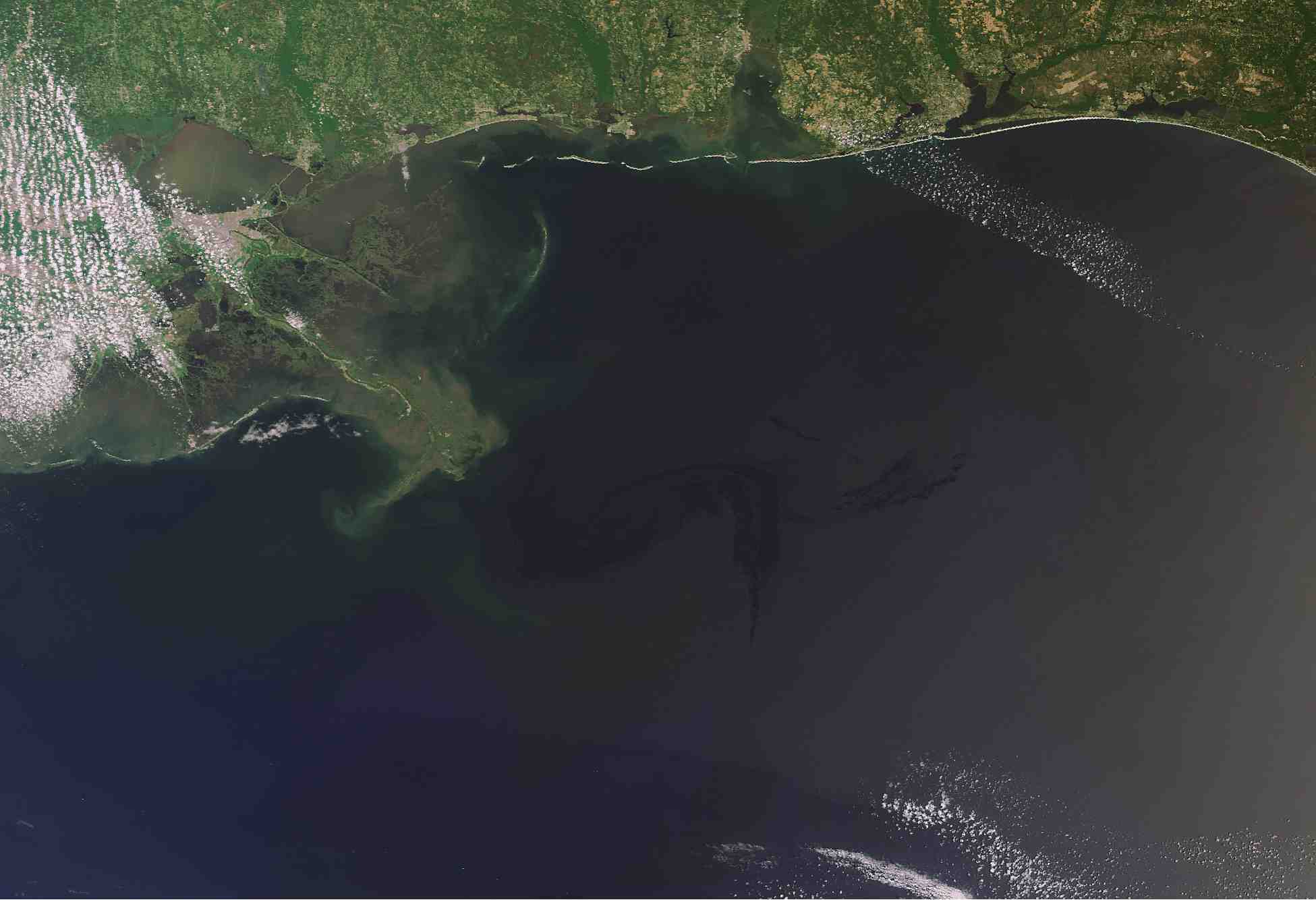
gulf spill nears coast Apr 30 2010 - ESA

Its complete hypocrisy,” Urbaniak told IPS from Brussels.

Perhaps recognising this fact, global business leaders at the World Business Summit on Climate Change that concluded May 26 called on governments to “strive to end the current perverse subsidies that favour high-emissions transport and energy”.
Continue reading

Deep CO2 Cuts May Be Last Hope for Acid Oceans

(Report from the World Oceans Conference in Indonesia)

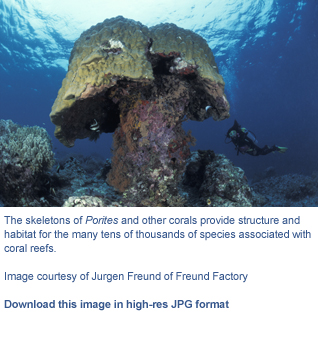
gbr cap mushroom death4By Stephen Leahy

UXBRIDGE, Canada, May 15 (IPS) –

Ocean acidification offers the clearest evidence of dangers of climate change.

And yet the indisputable fact that burning fossil fuels is slowly turning the oceans into an acid bath has been largely ignored by industrialised countries and their climate treaty negotiators, concluded delegates from 76 countries at the World Oceans Conference in Manado, Indonesia.

Oceans and coastal areas must be on the agenda at the crucial climate talks in Copenhagen in December, they wrote in a declaration. “We must come to the rescue of the oceans,” declared Indonesian President Susilo Bambang Yudhoyono at the opening of high-level government talks on Thursday in the northern city of Manado.

It is fair to say most international climate negotiators aren’t aware of the impacts of climate change on the oceans, said Carl Gustaf Lundin, head of the IUCN’s Global Marine Programme.

“Very few people understand that carbon emissions are making the oceans acidic,” Lundin told IPS.

Continue reading

Acid Oceans and Seas Without Fish – Hot New Doc

seachange-header

Lots of buzz about a hot, new documentary film A Sea Change which is about ocean acidification and its potential to empty the oceans of fish. I haven’t seen the film although I had a chance to at a seafood conference in San Diego last month but couldn’t face a visual version of a topic I’ve written about since 2006.  I have enough trouble sleeping as it is… 

Turns out the filmmakers got the idea to make the film by ‘googling’  “ocean acidification” in Nov 2006 and found very few entries. I guess my 2006 articles were among the first-ever articles published about ocean acidification and how climate change is a major threat to the global oceans. — Stephen

July 5 2006

Ailing Reefs Face New Threat of Acidity
By Stephen Leahy

Climate change is making the world’s oceans more acidic, seriously endangering marine ecosystems, including coral reefs. 

Carbon dioxide emissions from the burning of fossil fuels have already made the oceans 30 percent more acidic than they have been in millions of years, according to a new report by leading scientists. And the rate of acidification is accelerating as the oceans absorb more than two billion tonnes of carbon each year from the atmosphere. 

“This is a dramatic change in the world’s oceans, a change that marine organisms have never dealt with before,” said Joan Kleypas, the report’s lead author and a scientist at the National Centre for Atmospheric Research (NCAR) in Boulder, Colorado. 

“The oceans have changed and they are becoming more acidic. There is no debate about this,” Kleypas told IPS. Continue reading

Interview With One of the Last Environmental Journalists Left Standing

steve-on-log-in-oz-rslpixApparently as one of the few independent international environmental journalists I’m a rare beast worthy of public curiosity. In the past year I’ve been asked to do a number of talks at various conferences, colleges and universities in a number of countries and a growing number of media interviews.

Here’s my  15 min radio interview on the well-informed Radio EcoShock— talk about hard questions on big issues of our time. (@ 19:00 min)

Vancouver’s wonderful RADIO ECOSHOCK is the best environmental radio/podcast programs on the planet. One hour each week of new, innovative and intelligent information with a wry sense of humor by host Alex Smith. Check out his blog for even more.

Get links to my latest articles once a week.

This week’s EcoShock program: PROGRESS AND DENIAL

Climate change is not about politics or negotiations, but inevitable physics and science. Latest speeches by Bill McKibben and Van Jones. A look at twisted climate deniers John Coleman and Michael Savage. Interview with indy enviro journalist Stephan Leahy. Humour from Craig Mayhemradio-eco-header

Aquaculture To Double Production But Will It Destroy the Oceans?

salmon_farmsBy Stephen Leahy

SAN DIEGO, U.S., Feb 16 (Tierramérica) – With wild fish catches in sharp decline, aquaculture, which now accounts for nearly half of all seafood consumed, is expected to double production over the next two decades.

“Aquaculture is the future… [It] will be a major industry in the (developing) South and will be a major source of employment and income, replacing wild catch in terms of importance,” according to Jason Clay, a scientist with the U.S. branch of the Worldwide Fund for Nature (WWF).

The United Nations Food and Agriculture Organisation (FAO) predicts that per capita seafood consumption will increase 1.5 kilogrammes in the coming two decades, Clay told the nearly 500 participants in the recent Seafood Summit, held in the U.S. Pacific coast city of San Diego.

The international meet earlier this month, organised by Seafood Choices Alliance, gave fishers, fish farmers, multinational seafood corporations and seafood buyers a chance to mix with conservationists and scientists to debate – and attempt to find common ground about – the question: Can aquaculture be environmentally and socially responsible? Continue reading