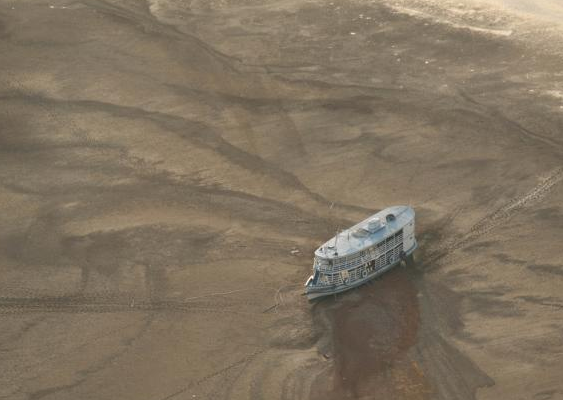
Climate Survival Means Anticipating and Adapting

Alberto Cesar AraujoBy Stephen Leahy

GENEVA, Sep 8 (IPS)

Imagine being able to know months in advance when and where floods or droughts may occur.

That is what over 150 countries participating in the third World Climate Conference, which concluded last Friday in Geneva, pledged to achieve through the creation of a Global Framework for Climate Services.

Today is a landmark day for making climate services available to all people,” said Michel Jarraud, secretary-general of the World Meteorological Organisation (WMO), convener of the conference, told over 2,000 climate scientists, sectoral experts and decision-makers.

“Climate services” is the long-distance cousin to weather services or weather forecasting. New technology and better climate science has opened the window to very long range forecasting of climate events like droughts weeks and months in advance.

This year, scientists were able to anticipate unprecedented flooding of the Red River Valley in the United States Midwest months in advance, enabling local communities to prepare and avoid the worst consequences, said Jane Lubchenko, a noted ecologist, administrator of the National Oceanographic and Atmospheric Administration (NOAA) and head of the U.S. delegation.

“Imagine farmers able to determine what to plant and where, based on drought forecasts three to five years in the future, or coastal communities able to plan for sea level rise and storm intensity,” Lubchenco told IPS.

The proposed Global Framework for Climate Services will “strengthen production, availability, delivery and application of science-based climate prediction and services”.

Continue reading

New $Billion Cash Hand Out To Fossil Fuel Companies Under ‘Green’ Economic Stimulus Plans

Shell in Curacao, Netherlands - Humane Care Fondation, Curacao[Updated: Monday Sept 28/09

Last Friday at the G20 countries agreed to phase out subsidies for oil and other carbon dioxide-spewing fossil fuels in the “medium term” as part of efforts to combat global warming. This article documents NEW taxpayer subsidies to some of the world’s richest corporations]


By Stephen Leahy

UXBRIDGE, Canada, May 29 2009 (IPS)

Despite the economic slow down, growing numbers of world leaders are calling for urgent action on climate change while many governments used their economic stimulus packages to increase subsidies to the fossil fuel industry.

Consider Europe, with the strongest public commitment to reduce carbon emissions that are causing climate change.

In the past five years, 8 billion U.S. dollars of public money went to Europe’s fossil fuel companies mainly to the natural gas sector. And in May the European Parliament approved an additional 3.35 billion dollars in subsides as part of Europe’s 225 billion dollars economic recovery plan, according to a new research report by Friends of the Earth Europe.

“We Europeans are supposedly leading the world on the path to a new green economy but we’re putting billions of euros into fossil fuel sector that’s taking us in the opposite direction,” Darek Urbaniak of Friends of the Earth Europe.

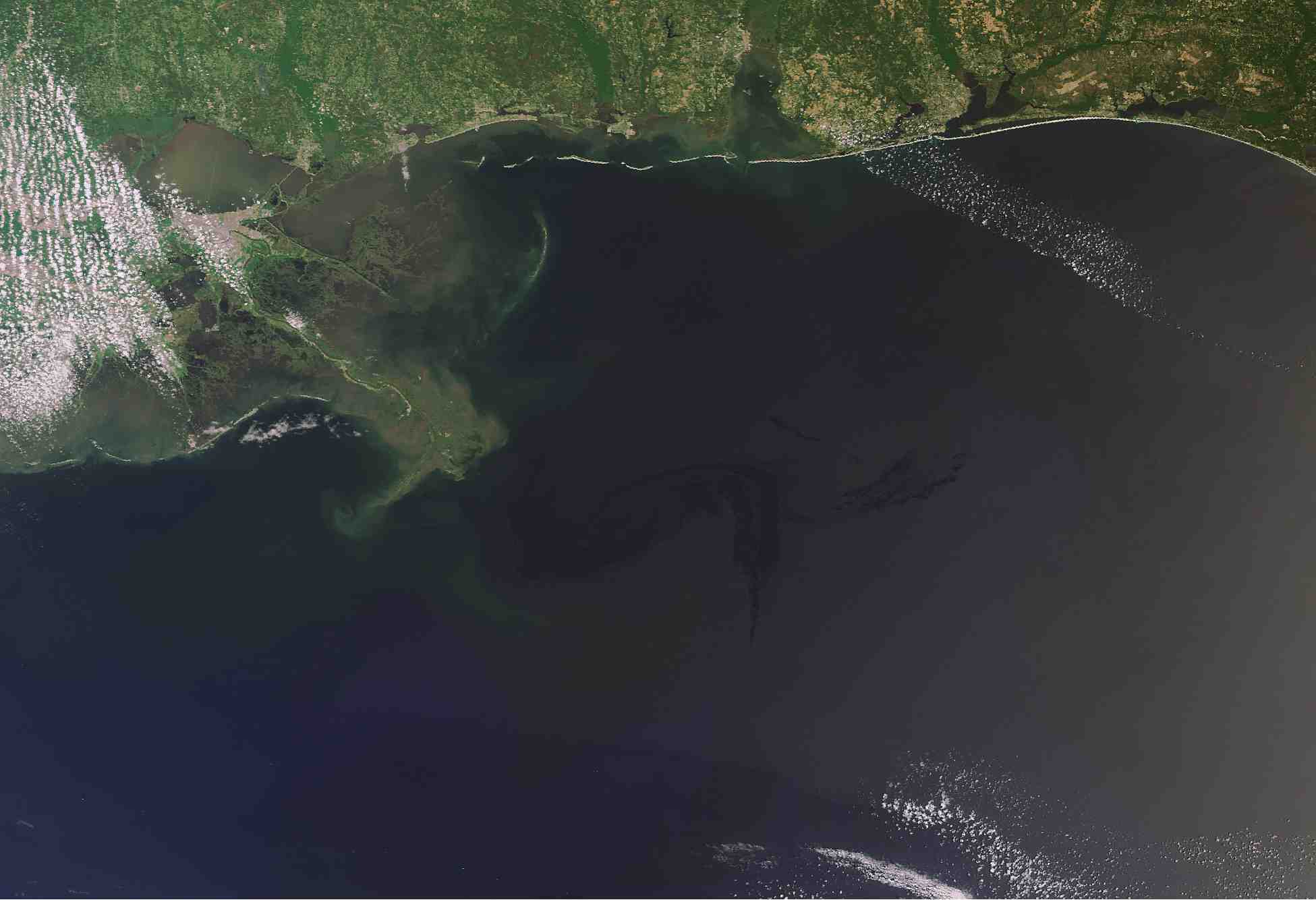
gulf spill nears coast Apr 30 2010 - ESA

Its complete hypocrisy,” Urbaniak told IPS from Brussels.

Perhaps recognising this fact, global business leaders at the World Business Summit on Climate Change that concluded May 26 called on governments to “strive to end the current perverse subsidies that favour high-emissions transport and energy”.
Continue reading

Ethanol and Biofuels: Almost Everything You Need to Know

“The U.S. has led the fight to stem global hunger, now we are creating hunger,” said Lester Brown, president of the Earth Policy Institute.

Series of the latest articles that provide almost everything you need to know about why ethanol and biofuels will not reduce global warming but simply drive up fuel and food costs.

maize - mexicoEthanol Worse Than Gasoline

Only Green Part of Most Biofuels is the Wealth (Subsidies) They Generate

Ethanol: The Great Big Green Fraud

International Enviro Standards Needed for Biofuels

Six Experts On Why Ethanol is a Dumb Idea

Food & Fuel: Can Sorghum Be The New Magic Bullet Biofuel??

Biofuels: Another Good Reason to Hate American Policy

(Cellulosic) Greenest Ethanol Still Unproven

Indigenous Wisdom Against Climate Change

1993_-_carrie_dannBy Stephen Leahy*

ANCHORAGE, Alaska, Apr 28 (Tierramérica**)While industrialised countries like Canada continue to emit ever-higher levels of greenhouse-effect gases, indigenous peoples around the world are working to survive and adapt to an increasingly dangerous climate.

Over millennia, indigenous peoples have developed a large arsenal of practices that are of potential benefit today for coping with climate change, including some holistic and refreshingly practical ideas.

Why not give automobiles and planes a day of rest? And then later on, two days of rest. That would cut down on pollution,” suggested Carrie Dann, an elder from the Western Shoshone Nation, whose ancestral lands extend across the western United States.

Dann, winner of the 1993 Right Livelihood Award – known as the Alternative Nobel Prize – for her efforts to protect ancestral lands, made her proposal before the 400 delegates gathered in Anchorage, Alaska, Apr. 20-24 for the Indigenous Peoples’ Global Summit on Climate Change.

Dann warned that Mother Nature is getting warmer and the “fever” needed to be cured. “We see many range (grassland) fires in my territory, it is getting so hot,” she said. Continue reading

Tourism Can Reduce Poverty But Some Places Must Be Off-Limits

img_0330By Stephen Leahy*

QUEBEC CITY, Mar 24 (Tierramérica)More than ever before, global tourism must play its part in sustainable development and poverty alleviation, stated experts at an international symposium in this Canadian city.

But others wonder if tourism can be truly sustainable when it involves flying thousands of kilometres to reach some “carbon-neutral” eco-lodge in the jungle.

Climate change is a major concern and air transport makes a significant contribution, sustainable tourism expert Costas Christ told more than 500 attendees of the International Symposium on Sustainable Tourism Development, Mar. 16-19.

However, Christ said, it is also important to tell the public that international tourism has played a major role in preserving biodiversity and in conservation in general.

“Without tourism, the Pantanal (in South America), the world’s largest wetland, would have just turned into a major cattle feed-lot for McDonald’s,” said Christ, a former board chair of The International Ecotourism Society.

If it weren’t for tourism, Africa would not have its game parks and nature preserves, and the Coral Triangle (which encompasses the waters of Indonesia, Malaysia, Papua New Guinea, Philippines, Solomon Islands and Timor-Leste) would have been devastated by overfishing, he continued.

“Tourism is not the problem; the challenge is how to do tourism right,” Christ told Tierramérica in an interview. Continue reading

Aquaculture To Double Production But Will It Destroy the Oceans?

salmon_farmsBy Stephen Leahy

SAN DIEGO, U.S., Feb 16 (Tierramérica) – With wild fish catches in sharp decline, aquaculture, which now accounts for nearly half of all seafood consumed, is expected to double production over the next two decades.

“Aquaculture is the future… [It] will be a major industry in the (developing) South and will be a major source of employment and income, replacing wild catch in terms of importance,” according to Jason Clay, a scientist with the U.S. branch of the Worldwide Fund for Nature (WWF).

The United Nations Food and Agriculture Organisation (FAO) predicts that per capita seafood consumption will increase 1.5 kilogrammes in the coming two decades, Clay told the nearly 500 participants in the recent Seafood Summit, held in the U.S. Pacific coast city of San Diego.

The international meet earlier this month, organised by Seafood Choices Alliance, gave fishers, fish farmers, multinational seafood corporations and seafood buyers a chance to mix with conservationists and scientists to debate – and attempt to find common ground about – the question: Can aquaculture be environmentally and socially responsible? Continue reading

Fishers Learn to Share Shrinking Catch

albacore-tuna-fishing-vessel-san-diego1

By Stephen Leahy

SAN DIEGO, California, Feb 10 (IPS) – With the oceans in crisis, where will our fish – an important source of protein for billions of people – come from?

Innovative new fisheries management tools called “catch share” have begun in recent years and promise to keep fish on the menu for future generations, according to experts at the recent Seafood Summit in San Diego.

“Adaptation is the key – adaptation and innovation,” Kristjan Davidsson, former CEO of Iceland Seafood International, told over 450 conference attendees last week.

“It is not hard to see that sustainability is the way to go but that requires collaboration with all sectors,” Davidsson said.

The summit brought together fishers, fish farmers, multinational seafood corporations and seafood buyers, along with conservationists and scientists, to debate and find common ground on how to create a sustainable seafood industry and protect the oceans.

Fish account for 28 percent of the animal protein consumed in Asia and 16 percent globally. North America is at the low end of the scale, with fish accounting for just 6.6 percent of animal protein, according to data from the U.N. Food and Agriculture Organisation. Continue reading

UN CONVENTION ON BIOLOGICAL DIVERSITY – EXCLUSIVE COVERAGE OF COP 10 FROM NAGOYA, JAPAN


I was the only North American journalist to go and cover this important conference in Nagoya. People donated enough to help with travel costs so I could write about 10 articles that reached more than 200 million people. Scroll down and look for the COP 10 logo to find those articles.

I’m an independent journalist based in Canada who supports his family and the public interest writing articles about important social & environmental issues. This is now only possible with your support: see How Community Supported Journalism Works. Contributions can be made safely via PayPal or check/cheque. Thank you/Merci. — Stephen

Support Independent Environmental Journalism

Bush’s “Midnight Regs” Chains Obama to Anti-Environmental Course

wed-outdoor-disp-low-res_pa1By Stephen Leahy

UXBRIDGE, Canada, Dec 1 (IPS) – As the world community meets in Poland this week to find solutions to the climate crisis, the George W. Bush White House is chaining the United States’ tiller to prevent a change of course by President-elect Barack Obama by passing new anti-environmental rules and regulations at a furious pace.

Nearly a million hectares of public wildlands in Wyoming and Utah are being opened up to oil shale extraction, the Endangered Species Act is being gutted, as are regulations regarding factory farm operations, the Clean Air Act, and removing mountaintops to dig for coal and more, said a coalition of environmental groups.

“There are many last-minute changes and some are draconian,” said Josh Dorner of the Sierra Club, an environmental NGO. Continue reading

Haiti: “The Most Desperate Enviromental Crisis on the Planet”

Haiti hillside - Floresta Brad Lewis

By Stephen Leahy*

UXBRIDGE, Canada, Nov 13 2008 (Tierramérica)

The worst natural disaster Haiti has ever suffered requires far-reaching solutions in order to reduce this Caribbean country’s environmental fragility, say officials and humanitarian workers.

Four major storms pounded Haiti in August and September, leaving nearly 1,000 dead and a million people homeless. International relief efforts are keeping people alive and sheltered, but the already degraded landscape has been badly battered, washing away crops, soil and the few remaining trees in many areas.

I’m not sure if things could get worse here. Haiti must be the most desperate environmental crisis on the planet,” Joel Boutroue, resident humanitarian coordinator and head of the United Nations Development Programme (UNDP) in Port-au-Prince, told Tierramérica.

Boutroue was referring to the future of the poorest country in the Americas, where U.N. peace-keepers have been stationed since 2004. But he added that “the international response to the disaster is quite good.”

While pockets of severe malnutrition still exist, there is access to clean water and only about 3,000 families were without shelter as of the end of October, he said.

However, it is not possible to feed an entire country of 9.5 million people with international aid for long. Haiti cannot feed itself, and even growing 50 percent of its own food is years away, Boutroue fears. Continue reading