Paris Climate Talks – Most Countries Want 1.5C Target not 2.0C


Wrapping Day 2 of COP 21
 

Majority of Countries want 1.5 C target not 2.0C

Leaders of 30 nations began the Paris climate negotiations with a call to cut CO2 emissions dramatically to keep the global average temperature rise below 1.5C. These countries are part of Climate Vulnerable Forum (CVF) — countries highly vulnerable to impacts of climate change.

The call for a global target of 1.5C is supported by 106 of the 195 countries in Paris this week. They also call for 100 percent renewable energy and a full decarbonization of the global economy by 2050.

Important to note that 2.0C is a political target not a scientific one. Moreover climate science does support 1.5C as a safer level of climatic change than 2.0. Currently global warming is 1.0C.cop21 logo sml 

Leaders Inspired Speeches but BAU for Negotiators
Monday saw 150 leaders making speeches about the need for urgent action. However in the negotiating rooms today it was business as usual crawling along at a snail’s pace with negotiators apparently oblivious to their leaders impassioned speeches and pleas for urgent action said Saleemul Huq is the Director of the International Centre for Climate Change & Development (ICCCAD) in Bangladesh.

Renewables Everyone’s Favorite Energy Technology

Billions and billions of dollars are being promised for renewables:
U.S. President Barack Obama, French President Francois Hollande and 18 other world leaders launched Mission Innovation, a $20-billion commitment to accelerate public and private clean energy innovation worldwide.

Bill Gates and other tech billionaires unveiled the Breakthrough Energy Coalition, to bring billions of dollars to help new, clean energy technologies come to market.

India’s prime minister announced an international solar alliance of over 120 countries. 

Tuesday also featured a focus on forests


Deforestation accounts for at least 12 percent of CO2 emissions and among developing countries it’s often the largest source of emissions. Today the Lima-Paris Action Agenda “Forest Focus” launched a number of forest protection initiatives including a commitment Germany, Norway and the United Kingdom, to provide $5 billion from 2015 to 2020, if forest countries demonstrate measured, reported and verified emission reductions.

First posted on Climate News Mosaic Live Blog

Costs You $50-75 To Drive 100 Km (62 miles) – Don’t Blame Gas Prices

cost_of_vehicle_ownership

Smartest Thing You Can Do Is Dump Your Car

By Stephen Leahy

Uxbridge Cosmos, Feb 2013

Cars and trucks are extraordinarily expensive. The full cost of driving 100 km is between between $50 and $75 when fuel, wear and tear, insurance, depreciation, and repairs are included. The cost of owning and operating a car, van, SUV or truck ranges between $9,000 to $15,000 a year depending on the purchase price of the vehicle according to automobile clubs like the CAA . That’s a big chunk of aftertax income spent each and every year. Double this for two-car families.

If you pay $50 at the pump about $33 will go directly to oil companies. The gas station gets around a dollar and the rest is for provincial and federal taxes.

Finally ask yourself how many hours a day your vehicle isn’t being used? Most are parked 22 hours a day.

Why not give your car a day off once a week? A ‘No Car Day’ is easy to do, saves money and reduces emissions of climate-heating carbon dioxide (CO2). The average passenger vehicle emits around 4.8 tonnes of CO2 a year.

The biggest savings by far is to get rid of one vehicle. When you consider the full costs of ownership, the $9 000 to $15,000 saved will let you rent vehicles or taking taxi as needed with plenty of cash left over. For maximum savings use the bus or train. A bus from Uxbridge is only $10 to downtown Toronto — 75 km one way. Using your car that 75 km trip really costs $45 not including parking.

New study – drive less lose weight guaranteed: If drivers nationwide traveled 1 mile less by car each day, not only would fuel consumption fall, but annual health care costs could drop by billions of dollars as fewer people would be classified as obese or overweight, Jacobson estimates.

My related articles:

EcoMobility Gaining Ground As Cars/Roads Become Too Expensive

Cars Kill More Children Than Malaria — Leading Cause of Death Ages 5 to 14

Lend Your Car, Save, and Save the World

Bike vs Car on a Hot Planet

Learn About Your Water Footprint with Author Stephen Leahy – Tues April 28


Whitby Public LibraryScreen Shot 2014-07-20 at 10.28.00 AM

Tuesday, April 28 at 7pm

405 Dundas Street West, Whitby, ON, L1N 6A1

Meeting Room 1B


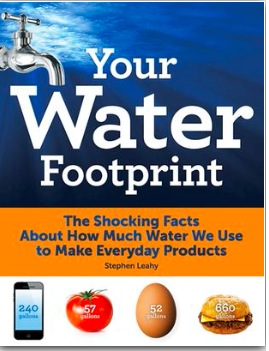
Critically Acclaimed New Book Investigating The Enormous Amounts Of  ‘Hidden’ Water We Consume Every Day

It takes more than 7,600 liters (2,000 gallons) of water to make a single pair of jeans. That morning cup of coffee required 140 liters (37 gallons) of water before it found its way to your table—water that was used to grow, process and ship the coffee beans. When we spend money on food, clothes, cellphones or even electricity, we are buying water  — a shockingly large amount of water.

WATER IS MORE VALUABLE AND USEFUL THAN OIL

Your Water Footprint: The Shocking Facts About How Much Water We Use To Make Everyday Products reveals how water is essential to our way of life in ways we never imagined. While water usage continues to soar, shortages now affect more than 3 billion people including millions of Americans and Canadians. A decade from now 3 out of 5 people will face water shortages.

Your Water Footprint provides essential information to reduce your water use which will help you save money, be prepared for shortages and ensure our children and grandchildren will have abundant fresh water.  Water-wise choices is all about smart substitutions and changes, rather than sacrifice and self-denial.

 National Geographic Interviews Stephen Leahy About Your Water Footprint

“…a brilliant and shocking exposé on precisely how much water we use…” – Publishers Weekly

…exceptionally lucid narration with arresting, full-page info graphics”  — Booklist

‘We Have Nothing Without Water’ – Treehugger Interviews Author of Your Water Footprint

Screen Shot 2014-11-23 at 11.06.18 AM

Why care about your water footprint?

"Your water footprint" by Stephen Leahy

© “Your water footprint” by Stephen Leahy. Groundwater comes from aquifers that take thousands of years to fill. Globally, aquifers are being drained faster than then can refill.

Margaret Badore (@mbadore) Science / Clean Water

November 18, 2014

We learn in elementary school that water is in a constant cycle of evaporation and precipitation, making our crops grow and flowing from rivers into oceans. While the amount of water on Earth remains fairly stable, its distribution around the globe is changing, and this change is being accelerated by human activities.

A new book, “Your Water Footprint,” by environmental reporter Stephen Leahy, takes a close look at the “virtual water” that surrounds us in everyday life. This isn’t just the water we use to boil pasta or take a shower, it’s the water that’s used to grow our coffee beans and power the local energy plant. As the demand for this kind of water increases, the more threatened our access to fresh water becomes. At the same time, pollution makes vast amounts of water unusable.

I had the opportunity to catch up with Leahy over Skype.

TreeHugger: What were your goals for writing this book?

Stephen Leahy: To help people understand this other aspect of water that we use, that we don’t see. This virtual water concept: the water it takes to make things, the water it takes to grow our food, to make our products, to make our clothing. This is that unseen water that we don’t think about, and because we don’t see it, we’re not really aware of it.

It’s an enormous amount of water that we end up consuming every day without realizing it.

TreeHugger: The book is very number heavy, which makes it easy to compare how much water is used in different things. How did you go about finding all the data?

Leahy: It was a nightmare actually, the numbers. Especially for a person who’s a writer, not a numbers guy.

What I did, and this was based on covering science for many years, was figure out a baseline. Who is the best researcher? Who has the best data collection of water footprints? It turned out to be the University of Twente in the Netherlands, and they actually pioneered the concept of water footprints. They’ve developed a whole methodology about how you calculate it, and they’ve done piles of studies of the various water footprints of various products. Sometimes not in the way we think of products. So, they would do a water footprint for wheat, but that doesn’t necessarily translate into a burger bun or bread, so I did that. I figured out how much wheat goes into a loaf of bread and did that part of the calculation myself.

So, University of Twente was a godsend, because there are lots of different ways of calculating water footprints, and there’s different numbers out there.

TreeHugger: In the introduction, you discuss this concept of the “water-food-energy nexus.” I’m hoping to can tell us a little more about that.

Leahy: Most people realize that we need water for food, but what most people don’t understand is that we also need water for energy. There’s no form of energy that doesn’t need water. We have a growing population, and a growing shift in diets from vegetable-based to meat-based, which uses a lot more water. At the same time, there’s a billion people who don’t have access to electricity and they of course want to get electricity. As we look to produce more energy and more food, we’re going to need more water. This is the point of the nexus: we don’t have enough water to do all that in the future.

TreeHugger: So, looking forward, we need to reduce our water footprint. I think a lot of our readers are going to be familiar with the concept of reducing a carbon footprint, and in a lot of ways these concepts overlap. So, from your perspective, what are the ways the two footprints don’t overlap?

Leahy: Certainly on the energy side they overlap a lot. But on the food side, that’s probably the best example. If you switch from a meat-based diet to a vegetarian diet, you could reduce your daily water footprint by 1,300 liters. So, that’s an enormous amount of water when you put it over a year, nearly half a million liters in savings.

The other thing you can do is swapping beef for chicken. Swapping beef for chicken for a family of four would save 900 liters of water.

Food waste is another example, 38 to 40 percent of food in North America is wasted, and that’s a huge amount of water embedded in that food. The “best before” dates are actually problematic in that regard, because it doesn’t really mean the food is bad, it just means the company’s not guaranteeing the flavor.

TreeHugger: I also wanted to ask you about how you think about the trade-offs between the water impact of a product and some of the other impacts of a product. I was thinking about tee-shirts, because I write about clothes a lot. So, on one hand, we could say cotton is natural, it can be low in toxins if we use natural dyes and it’s biodegradable. On the other hand, cotton has a high water footprint. Then if we look at polyester, it has a lower water footprint, but there are concerns about it releasing toxins as it breaks down and contributing to micro plastic pollution. So, how do you look at these kinds of trade-offs? Do you have advice for weighing them?

Leahy: This gets a little bit complicated, because a big number for a water footprint is not necessarily indicative of something that’s bad. If you’re in a water-rich area and need a lot of water, and you’re not polluting this water, that’s going to be okay.

It’s kind of site-specific and product-specific, so this does make it quite a bit more complicated. On the clothing side of things, if you’re growing cotton in a country that has reasonable amounts of rainfall and preferably it’s grown organically, that is it’s grown without pesticides and chemicals, you’re greatly reducing the contamination of water. And if you’re using rain-fed cotton and not depleting an underground source, those are some conditions under which we could talk about products being truly sustainable, because you could continue this for quite a while.

TreeHugger: So, as we look to the future, there are many areas that will soon be facing the collapse of “water bubbles.” Do you think we need to see a shift in water policies or do we need to reduce our personal water consumption? Or is it both?

Leahy: It’s both. From a government policy point of view, water needs to be respected a lot more in terms of managing it long-term. There are places like California that don’t have any rules about how much ground water you can take. Anyone can take as much groundwater as they like—and that’s not uncommon.

The other side of course is consumers. I think consumers need to raise the issue more with both their elected leaders but also the industry. Some industries have responded, Levi’s has greatly reduced their water use for the production side, although it’s not exactly waterless since it takes a lot of water to grow cotton. So, that’s a role for consumers: asking, ‘Where is this product made? Where did it come from?’

Because there are certain things that don’t make any sense. For instance, Egypt is the number two exporter of oranges in the world. Egypt, well it’s is basically a desert, so why are they exporting all these oranges? There are actually all these economic reasons that don’t make any sense from a sustainability point of view. So consumers can make a decision and say, I’m not going to buy a product that requires a lot of water from the desert, because that’s just dumb.

The point about the virtual water is that we have very little without water. So, we’re extraordinarily dependent on water in ways we just don’t realize. And yet, we under-price water, water is very cheap, and water doesn’t get the respect it deserves.

This interview has been shortened and condensed.

Original post

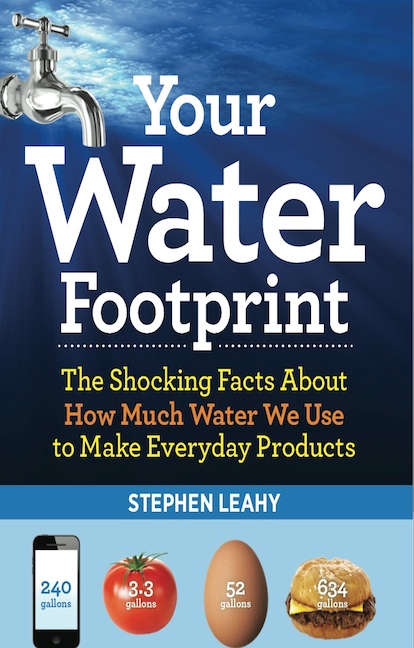
Your Water Footprint:  The Shocking Facts About How Much Water We Use To Make Everyday Products

October 2014 Firefly Books, 160 Pages, 125 Unique Infographics only $19.95 Paperback (Also avail in hardcover) Order today

In US:  AmazonPowell’s Books; Barnes&NobleIndiebound

Canada:  Chapters-Indigo Signed copies avail at Blue Heron Books – Stephen’s home town bookstore

UK:  WH SmithAmazonWaterstones

Australia: Angus & RobertsonBooktopia

New Zealand: Mighty Ape

High Seas Represent $148 Billion Carbon Sink But Overfishing is Destroying It

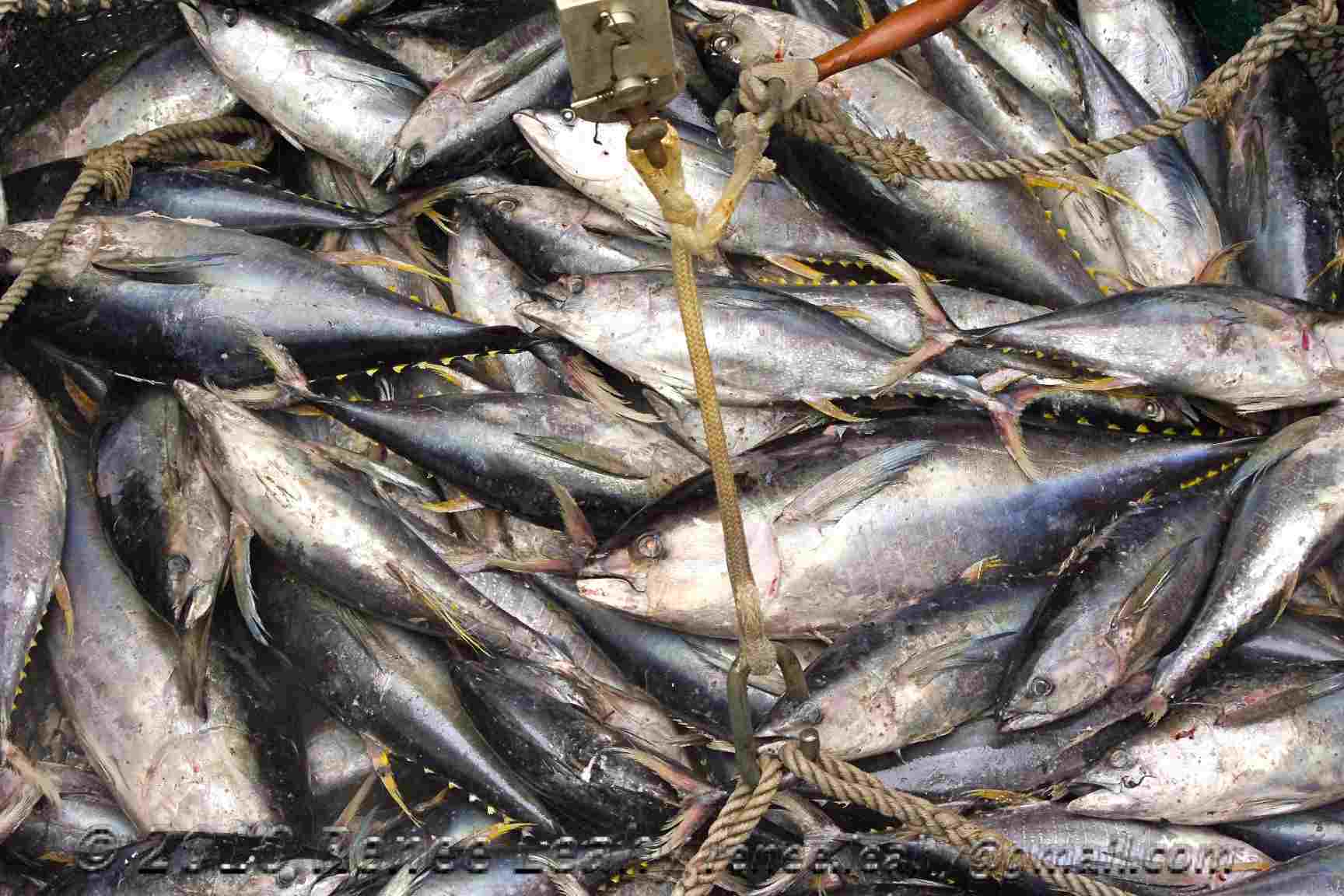
Tuna from the Spanish Purse Seiner

By STEPHEN LEAHY

Stephen Leahy's picture


Scientists estimate that phytoplankton absorb and bury more than 1.6 billion tonnes of CO2 in the seabed every year.

This would be news to readers of Canada’s Globe and Mail newspaper’s detailed two-page spread on the Global Ocean Commission report, which failed to mention this vitally important carbon reduction service (or that it is worth an estimated $148 billion a year).

Additionally, if governments ended fishing in the unclaimed oceans beyond 200-mile economic zones, near-shore fish catches would soar, even more carbon would be safely removed from the atmosphere and the oceans would be healthier said co-author of the study Rashid Sumaila of the University of British Columbia’s Fisheries Centre.

The high seas are like a failed state. Poor governance and the absence of policing and management mean valuable resources are unprotected or being squandered,” said David Miliband, co-chair of the commission and former foreign secretary of the United Kingdom.

The dollar value of all the fish caught in high seas is actually negative

Governments like Japan, Spain, the U.S. and China subsidize fishing fleets to destroy the high seas by overfishing and deep-sea bottom trawling to the tune of $152 million a year.

Here’s the kicker: The dollar value of all the fish caught way out there is actually negative when costs like fuel and subsidies are subtracted. Turns out high seas fishing fleets get 25 per cent of their income from subsidies according to a 2009 analysis by Sumaila.

Most would not be fishing the high seas without subsidies” Sumaila told DeSmog Canada.

Restoring ocean productivity

Fishing should be banned in the high seas, which represent 64 per cent of the world’s oceans just to protect and enhance its role as a carbon sponge, he said. But that is just one of 14 other valuable services the high seas provide humanity according their study, The High Seas And Us: Understanding The Value Of High Seas Ecosystems.

The study was commissioned by the Global Ocean Commission, an 18-month-old organization comprised of business leaders and former senior politicians including former Canadian prime minister Paul Martin.

The commission is calling for the negotiation of a new agreement under the UN Convention on the Law of the Sea to prioritize ocean health and resilience and restore ocean productivity. It also called for an elimination of subsidies on high seas fishing within five years.

The commission’s proposals also call for mandatory tracking of all vessels fishing in the high seas, a ban on the transshipment of fish at sea, measures to end plastics pollution and binding standards for the regulation and control of offshore oil and gas exploration and exploitation.

Carbon really does sink

Phytoplankton are the carbon-eating plants of the seas and pass on this carbon when they’re eaten. When organisms die in the deep seas, their organic matter ends up on the bottom of the ocean, which makes for an effective, natural carbon sequestration process.

Fishing is crippling this free carbon-removal system. This is especially true for bottom-trawlers that bulldoze the sea floor scooping up every living thing. Trawling is by far the most common fishing method and recent studies warn it’s destroying corals and the sea bottom leading to “long-term biological desertification.”

Last May, scientists writing in the journal Science called for an end to “the frontier mentality of exploitation” of the high seas and recommended a ban on trawling to protect the carbon-removal service and halt the decline in the productivity of the oceans. The amount of wild fish caught peaked 20 years ago.

About 70 per cent of fish caught inside the 200-mile limits spend some time in the high seas. If the high seas are protected those fish are likely to grow larger and become more numerous, benefitting near-shore fisheries, Sumaila said.

A number of studies of marine protected zones where fishing is banned or very limited show these areas act as baby-fish incubators increasing the overall population of fish.

If fishing was banned in the high seas, fisheries profits would more than double, the amount of fish would increase 30 per cent and the amount of ocean fish stock conservation would increase 150 per cent according to a study published in PLOS Biology last March.

Given the reality that fishing the high seas is a money loser, even a low carbon price could make a fishing ban valuable, not to mention the other potential benefits of regulating international fisheries. Sumaila said the $148 billion-a-year value of the high seas carbon sponge is a conservative estimate, and it could actually be as high as $222 billion.

Fishing and trawling bans have been proposed before. Last December the European parliament narrowly rejected a bottom-trawling ban on its vessels.

We need wide public understanding of the vital importance of the high seas to all of us,” concluded Sumaila.

Top 10 High Seas Fishing Nations (according to Sumaila’s study) in descending order:
Japan
South Korea
Taiwan
Spain
USA
Chile
China
Indonesia
Philippines
France

First published by DeSmog Canada Wed, 2014-06-25 10:01

Global Experts Call for Moratorium New Tarsands Development Until Climate, Environmental Impacts Assessed

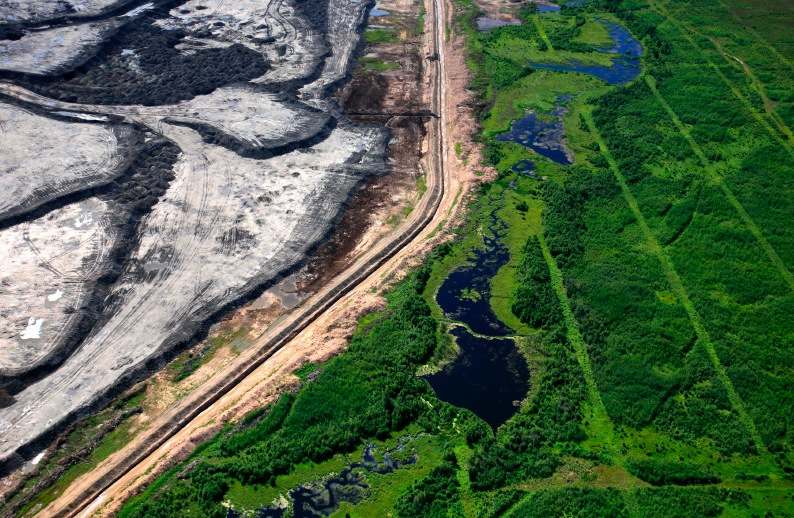
Canada's tar sands projects visible from space
Canada’s tar sands projects visible from space

By STEPHEN LEAHY  Stephen Leahy's picture

A moratorium on any new oilsands expansion is imperative given Canada’s failure to properly assess the total environmental and climate impacts Canadian and U.S. experts say in the prestigious science journal Nature.

Even with a moratorium it will be very difficult for Canada to meet its international promise to reduce CO2 emissions that are overheating the planet according to government documents as previously reported by DeSmog.

Continuing to approve pipelines and new projects guarantees Canada will not meet the Harper government’s Copenhagen emissions reduction target,” said Wendy Palen, an ecologist at Simon Fraser University.

These are the plain facts Canadians need to be aware of,” Palen, a co-author of the Naturecommentary, told DeSmog.

Canadians also have no idea of the overall ‘big picture’ of the impacts of oilsands production and transport because each project is assessed in isolation.

In total more than 280 square kilometres of boreal forest and peatlands have already been eliminated to make way for oilsands development. That amounts to an area more than twice the size of the City of Vancouver.

According to a 2012 study the destruction of this region of the boreal forest – a natural carbon sink –released about 100,000 tonnes of CO2 that had been safely stored underground. And it also meant the end of the region’s ability to absorb some 58,000 tonnes of CO2 every year. Over a 20-year time span that’s 1,161,000 tonnes of CO2 that stays in the atmosphere – close to half the annual emissions of the City of Vancouver.

This does not include CO2 emissions from developing oilsands projects themselves nor the emissions from burning millions of barrels of oil produced there each year.

This piecemeal approach is like determining the risk of cigarette smoking by only looking at the potential harm from smoking one cigarette, environmental economist Mark Jaccard said.

As critics have pointed out during recent pipeline review processes, regulators like the National Energy Board do not consider the climate impacts of pipelines and oilsands projects. It’s considered ‘out of bounds’ Jaccard, another coauthor of the report, said.  Each project is presented as an ultimatum: approve the project or lose an economic opportunity, he said.

This approach artificially restricts discussion to only a fraction of the consequences of oil development,” Jaccard and 7 co-authors argued in the report. The authors represent an interdisciplinary group of experts in environmental science, economics, policy development and decision science.

What Canada and the U.S. need is a “more coherent approach” to evaluate all oilsands projects and pipelines in the “context of broader, integrated energy and climate strategies.”

But first Canada and the U.S. need to impose an immediate halt to new oilsands developments and related pipeline construction, the authors write. (The U.S. is considering developing its own oilsands in Utah and elsewhere). Then the two countries can jointly develop a strategy that allows energy developments to proceed only if they are within environmental limits and respect other national commitments to human health, social justice and biodiversity protection.

However this strategy would need a formal, legislated acknowledgement of the reality that oilsands development impacts the climate. It also should create either a carbon tax or cap-and-trade mechanism to ensure the oil industry absorbs “the full social costs of carbon combustion.”

Finally this strategy should assess the full range of potential impacts compared to alternatives. And it should include the options of saying ‘no’ to a project.

Former Secretary of State Hillary Clinton said Canada and the U.S. need to co-ordinate their climate policies in an interview on the CBC’s The National last week. She acknowledged we need to get beyond project-by-project approvals.

With new regulations on power plants, the U.S. may be on its way to meeting its Copenhagen emission reduction target, which is identical to Canada’s.

While Prime Minister Harper “clearly doesn’t care about climate change,“ Jaccard told DeSmog,  President Obama does and could make approval of the Keystone XL pipeline contingent on Canada meeting its 2020 target.

Economists around the world now agree the costs of carbon pollution far outweigh the benefits,” Jaccard said.

First published by DeSmog Blog Canada Thu, 2014-06-26 12:19


For an Ailing Planet, the Cure Already Exists

Measure of concentration of CO2 in the atmosphere by year

By Stephen Leahy

UXBRIDGE, Canada, Jun 1, 2012 (IPS)

The planet’s climate recently reached a new milestone of 400 parts per million (ppm) of carbon dioxide in the Arctic.

The last time Earth saw similar levels of climate-heating carbon dioxide (CO2) was three million years ago during the Pliocene era, where Arctic temperatures were 10 to 14 degrees C higher and global temperatures four degrees C hotter.

Research stations in Alaska, Greenland, Norway, Iceland and even Mongolia all broke the 400 ppm barrier for the first time this spring, scientists reported in a release Thursday. A global average of 400 ppm up from the present 392 ppm is still some years off.

If today’s CO2 levels don’t decline – or worse, increase – the planet will inevitably reach those warmer temperatures, but it won’t take a thousand years. Without major cuts in fossil fuel emissions, a child born today could live in a plus-four-degree C superheated world by their late middle age, IPS previously reported. Such temperatures will make much of the planet unliveable.

In a four-degree warmer world, climate adaptation means “put your feet up and die” for many people in the world, said Chris West of the University of Oxford’s UK Climate Impacts Programme in 2009.

This week the International Energy Agency reported that the nations of the world’s CO2 emissions increased 3.2 percent in 2011 compared to 2010. This is precisely the wrong direction: emissions need to decline three percent per year to have any hope of a stable climate.

By 2050, in a world with more people, carbon emissions must be half of today’s levels.

Impossible? No. A number of different energy analyses show how it can be done. Continue reading

Lend Your Car, Make $$ and Save the World

Cars are parked 22 hours a day on average 

The costs of car ownership and travel are far higher than anyone realizes: a 100 km total trip costs between 65 and 80 dollars when parking, fuel, wear and tear, insurance, depreciation, repairs are included. A car is usually parked and unused 22 hours a day but still incurs costs. Why not let someone use the car when you’re not and make some money at the same time Robin Chase told me in this 2011 article. She launched Buzzcar in France as part of a strategy for reducing CO2 emissions and congestion in cities.  UPDATE (Feb 2015) Chase’s concept has come to North America – RelayRides is one such peer-to-peer car sharing service you can now try.  — Stephen

By Stephen Leahy

BERLIN, Jun 2, 2011 (IPS)

The world’s more than 850 million cars and small trucks are parked 20 to 22 hours a day. Why not use these vehicles more efficiently by letting other people drive them when the owners aren’t, asks Robin Chase, CEO of Buzzcar, a car- sharing network to be launched shortly in France.

“Sharing vehicles is much more efficient and represents a huge opportunity,” Chase told some 800 attendees from more than 50 countries at the OECD’s annual International Transport Forum (ITF) in Leipzig last week. The Forum is an intergovernmental organisation for the transport sector involving 52 different nations.

The ITF projects there will be three times as many cars – an eye-popping 2.5 billion – by 2050 according to its Transport Outlook 2011 report released at the meeting. Adding that many more vehicles in a sustainable way is an “extraordinary challenge”, said Jack Short, Secretary General of the ITF.

The vast majority of this growth will come from the developing countries since travel by passenger vehicle in a number of high-income countries has not increased, and even declined in some countries. Short acknowledged making such projections is risky because many factors such as lower economic growth, congestion in cities or new technologies will have an impact on levels of car ownership in future.

And the Transport Outlook report did not factor in the potential for car-sharing to offer personal mobility without car ownership.

Buzzcar is a car sharing service where car-owners in a city or town allow their idle cars to be used by other local citizens in exchange for getting about 70-75 per cent of the rental fee, Chase told IPS in an interview. Even when a car is parked it costs their owners money, she says. The average cost of owning and operating car is 8,000 to 12,000 dollars a year even if it sits parked 22 hours a day. (update: more like $9,000 to 14,000 according to auto clubs)

Buzzcar is an opportunity for car owners to get better value out of their vehicles and to help with ever- rising costs of car ownership. More importantly car sharing reduces the need for car ownership overall, she says.

This independent environmental journalism depends on public support. Click here learn more.

Chase was a co-founder of Zipcar, a U.S.-based car-rental network with more than a half million members where people rent cars by the hour from easy-to-access neighbourhood lots or stations. Zipcar owns some 8,000 rental cars. She then went on to start GoLoco, a ride sharing company in which people pay to ride along with others in the network, and the drivers take a cut of the fees. Continue reading

Free Public Talk on How You Consume 2000 Gallons of Water Every Day

Stephen Leahy sml

 [I will be in the L.A. area Feb 9 to 16 and available for interviews and book signings – Contact me

Critically Acclaimed New Book Investigating The Enormous Amounts Of  ‘Hidden’ Water We Consume Every Day

It takes more than 7,600 liters (2,000 gallons) of water to make a single pair of jeans. That morning cup of coffee required 140 liters (37 gallons) of water before it found its way to your table—water that was used to grow, process and ship the coffee beans. When we spend money on food, clothes, cellphones or even electricity, we are buying water  — a shockingly large amount of water.

WATER IS MORE VALUABLE AND USEFUL THAN OIL

Your Water Footprint: The Shocking Facts About How Much Water We Use To Make Everyday Products reveals how water is essential to our way of life in ways we never imagined. While water usage continues to soar, shortages now affect more than 3 billion people including millions of Americans and Canadians. A decade from now 3 out of 5 people will face water shortages.

Your Water Footprint provides essential information to reduce your water use which will help you save money, be prepared for shortages and ensure our children and grandchildren will have abundant fresh water.  Water-wise choices is all about smart substitutions and changes, rather than sacrifice and self-denial.


“…a brilliant and shocking exposé on precisely how much water we use…” – Publishers Weekly

…exceptionally lucid narration with arresting, full-page info graphics”  — Booklist

Your Water Footprint:  The Shocking Facts About How Much Water We Use To Make Everyday Products

October 2014 Firefly Books, 160 Pages, 125 Unique Infographics only $19.95 Paperback (Also avail in hardcover) Order today

In US:  AmazonPowell’s Books; Barnes&NobleIndiebound

Canada:  Chapters-Indigo Signed copies avail at Blue Heron Books – Stephen’s home town bookstore; In Ottawa visit the legendary Octopus Books

UK:  WH SmithAmazonWaterstones

Australia: Angus & RobertsonBooktopia

New Zealand: Mighty Ape
Water is far more valuable and useful than oil

Average water footprint of bottle of cola

The water footprint of a half-litre bottle of water is 5.5 litres – yet well over a billion people live in areas with chronic scarcity

By Stephen Leahy

I have a confession: I knocked back 320 pints at the pub last night. I actually only had two shots of a decent single malt but it took 320 pints of water to grow and process the grain used to make the whisky. That’s a whole lot of water considering the average bathtub holds 60 to 80 litres.

Even after 20 years of covering environmental issues in two dozen countries I had no idea of the incredible amounts of water needed to grow food or make things. Now, after two years working on my book Your Water Footprint: the shocking facts about how much water we use to make everyday products, I’m still amazed that the t-shirt I’m wearing needed 3,000 litres to grow and process the cotton; or that 140 litres went into my morning cup of coffee. The rest of my breakfast swallowed 1,012 litres: small orange juice (200 litres); two slices of toast (112 litres); two strips of bacon (300 litres); and two eggs (400 litres).

Water more valuable and useful than oil

Researching all this I soon realised that we’re surrounded by a hidden world of water. Litres and litres of it are consumed by everything we eat, and everything we use and buy. Cars, furniture, books, dishes, TVs, highways, buildings, jewellery, toys and even electricity would not exist without water. It’s no exaggeration to say that water is far more valuable and useful than oil.

front cover resized1A water footprint adds up the amount of water consumed to make, grow or produce something. I use the term consumed to make it clear that this is water that can no longer be used for anything else. Often water can be cleaned or reused so those amounts of water are not included in the water footprints in the book. The water footprint of 500ml of bottled water is 5.5 litres: 0.5 for the water in the bottle and another five contaminated in the process of making the plastic bottle from oil. The five litres consumed in making the bottle are as real water as the 500ml you might drink but hardly anyone in business or government accounts for it.

The incredible amounts of water documented in Your Water Footprint are based primarily on research done at the University of Twente in the Netherlands, where Arjen Hoekstra originated the concept of water footprints. The amount consumed to make something varies enormously depending on where the raw materials come from and how they are processed. Wheat grown in dry desert air of Morocco needs a lot more water than wheat grown in soggy Britain. For simplicity, the amounts in the book are global averages.

One of the biggest surprises was learning how small direct use of water for drinking, cooking and showering is by comparison. Each day the average North American uses 300 to 400 litres. (Flushing toilets is the biggest water daily use, not showers.) 400 litres is not a trivial amount; however, the virtual water that’s in the things we eat, wear and use each day averages 7,500 litres in North America, resulting in a daily water footprint of almost 8,000 litres. That’s more than twice the size of the global average. Think of running shoes side by side: the global shoe is a size 8; the North American a size 18. By contrast, the average water footprint of an individual living in China or India is size 6.

Peak water is here

Water scarcity is a reality in much of the world. About 1.2 billion people live in areas with chronic scarcity, while 2 billion are affected by shortages every year. And as the ongoing drought in California proves, water scarcity is an increasing reality for the US and Canada. Water experts estimate that by 2025 three in five people may be living with water shortages.

While low-flow shower heads and toilets are great water savers, the water footprint concept can lead to even bigger reductions in water consumption. For example green fuels may not be so green from a water consumption perspective. Biodiesel made from soybeans has an enormous water footprint, averaging more than 11,000 litres per litre of biodiesel. And this doesn’t include the large amounts of water needed for processing. Why so much water? Green plants aren’t “energy-dense,” so it takes a lot of soy to make the fuel.

Beef also has a big footprint, over 11,000 litres for a kilo. If a family of four served chicken instead of beef they’d reduce their water use by an astonishing 900,000 litres a year. That’s enough to fill an Olympic size pool to a depth of two feet. If this same family of opted for Meatless Mondays, they’d save another 400,000 litres. Now they could fill that pool halfway.

We can do nearly everything using less water. It’s all about smart substitutions and changes, rather than sacrifice and self-denial, but we can’t make the right choices unless we begin to see and understand the invisible ways in which we rely on water.

First published at The Guardian