Paris Climate Talks – Halfway Done but Long, Uphill Road Ahead

earthatnight sml
Halfway through the ‘historic’ Paris climate talks and things are going far too slow leaving major issues for last day, late night bargaining by country leaders. This is despite six years of previous negotiations since Copenhagen in 2009. 

There are now two alternative draft texts — each less than 50 pages long but still containing 200 to 300 brackets (disputed text) each.
Some of this weeks ‘hot’ issues:
cop21 logo sml
Science says 1.5C; Oil Rich Countries say 2.0C 
Countries continue to block agreement based on their short term self interest – looking at you oil-producing Arab countries blocked 1.5C as a new global target. Recent scientific studies show 1.5C provides better protection for all nations – 2.0C condemns some to drown, many to starve.


No Human Rights?
Norway and some Arab states don’t want any reference to human rights in the new climate deal. This has been in the text for nearly a year.
Where’s the Money?
Finance or funding to help developing nations survive climate impacts remains at an impasse as it has for a long time. Countries were promised this funding in 2009 and it was to ramp up to $100 billion a year by 2020. That has not happened. 

“I’m out of words, it’s just not right,” said Juan Hoffmeister, a Bolivian negotiator.


Transparency and Verification of Commitments
Although technical, another outstanding issue is “transparency”. What’s the proof countries are actually cutting emissions as promised? Rules and expert review formulas for verification are hotly contested. China and India wanting lax rules and no independent review while US insisting on strict ones.
Will We Get a Paris Climate Accord?
In the end there will be an agreement of sorts – the “Paris Climate Accord”?  What-ever the final title, it will not set the world on a path to 2.0C. Far deeper CO2 emissions cuts and more investment will be needed. 

First published on the Paris Climate Talks Live Blog available here:

Paris Climate Talks: Cities are 70% of C02 Emissions – Fighting to be Climate Leaders

By Stephen Leahy

National Governments Should Be Helping Green Cities

Cities are responsible for 70 per cent of global CO2 emissions but they can save the planet by greening one community at a time said Vancouver’s David Cadman at the close of the ICLEI World Congress 2015, the triennial sustainability summit of local governments in Seoul, South Korea.

cop21 logo sml“We can do it. We must do it,” Cadman, the retiring president of Local Governments for Sustainability, told some 1,500 delegates from nearly 1,000 cities and local governments in 96 countries on April 11.

The majority of climate actions and most plans to reduce CO2 emissions are happening at the city level, Cadman told DeSmog Canada in Seoul.

Vancouver and 50 other cities have committed to 100 per cent renewable energy and 500 more are part of ICLEI’s Cities Climate Registry that documents verifiable CO2 emission reduction actions and commitments that amounted to 2.8 billion tons a year in 2014.

Cadman, a former City of Vancouver councillor, has been president of ICLEI since 2006. It’s an international organization headquartered in Bonn, Germany, with 280 staff and 23 other offices scattered around the globe. ICLEI, which stands for International Council for Local Environmental Initiatives, started 25 years ago in Toronto to help cities become more sustainable. It now goes by the more manageable name of “Local Governments for Sustainability,” but still uses the original acronym.

Canada’s federal and provincial governments were very strong supporters in the early days but the past decade has been very different.

Canada Chained to Fossil Fuel Sector

“We seem to be chained to the fossil energy industry in Canada and it’s pulling us down. Cities and organizations can hardly dare to speak out about this now,” he said.

Germany was only too happy to bring ICLEI to Bonn eight years ago and has been generous with its support, along with the European Union. Now the organization is experiencing what is being called an “Asian pivot,” with the mayor of Seoul, Park Won Soon, as the new president.

Park has helped Seoul to become one of the world’s leaders on sustainable development. With 11 million people and growing fast, Seoul will reduce its energy use and increase renewable generation including rolling out 40,000 solar panels to households by 2018 and 15,000 electric vehicles. By 2030, CO2 emissions will be cut 40 per cent.

“Action on climate will be by local governments no matter what national governments decide,” Park Won Soon told DeSmog Canada.

“We need to act quickly, we need to act energetically,” the mayor said.

China’s megacities are also joining ICLEI. At the congress, Hailong Li, deputy secretary general of the China Eco-city Council said the country will have 100 low-carbon eco-cities by 2017. That will drive down the costs of energy efficiency and renewable energy, Li said.

China also intends to become an expert on eco-construction and to market its expertise to the rest of the developing world.

By 2030 another 3.5 billion people will be living in cities so it is absolutely critical that the infrastructure be sustainable said Cadman who will continue to be active as special representative to the new ICLEI President.

Canadian cities could also do more and sooner if they had the support of provincial and federal governments, he said. That may be changing at the provincial level with growing support for various forms of carbon taxes that will help generate funds and financial incentives to reduce emissions.

“The provinces are doing the heavy-lifting on climate while the Harper government sits on the sidelines.”

Fossil fuels are in decline — divestment is taking off and investments are shifting to renewable energy. There’ll be no pipelines to the West Coast and no new investments in the oilsands, Cadman said.

Even in B.C., the hoped-for markets for LNG may not exist with China building gas pipelines to tap reserves in Iran and Russia, he said.

“Canada needs to move away from selling raw resources, but is any political party ready to go there?”

First published April 2015

Paris Climate Talks: Three Major Issues

The main issue in Copenhagen in 2009 was determining each country’s fair share of CO2 emission reductions cuts and by when. If a flag could be attached to every CO2 molecule humanity has put into the atmosphere over the last 150 years, about 70 percent would be the flags of wealthy countries: the U.S., United Kingdom, Germany and so on.

Those rich nations agreed to make some CO2 cuts by 2020 but they were mostly small and voluntary. In exchange poor countries were promised $100 billion a year by 2020.

How much has changed at COP 21?cop21 logo sml

#1 Most countries have filed their plans for emissions reductions but they aren’t big enough to keep temperatures below 2C, never mind 1.5C. There is agreement more cuts are needed but the big issue is when. Europe and small countries want to see another round of cuts every 5 years starting as soon as 2020. Other countries like India want longer time frames.

 #2 Money has always been issue. In Copenhagen rich countries promised $100 billion a year by 2020 to help poor countries cope with climate impacts and  to green their economies. The money was supposed to ramp up from about $10 billion a year in 2010. Instead it’s been a fight to get any funds. Now developing countries want  guaranteed amounts from 2015 to 2020.

#3 Legally binding agreement. For the first time the US is saying it will agree to this for parts of an eventual Paris Climate Agreement. The US will not sign a legal-binding emission reduction target, Todd Stern, the chief negotiator said today.

First posted on Climate News Mosaic Live Blog available at Inter Press Service  news

Paris Climate Talks: Global Warming Explained in 60 Seconds or Less

cop21 logo sml

One night in a bar a Russian journalist who I’d just met says:  “This global warming is too complicated for people to know if it’s real or not”.

“You don’t think climate change is happening?” I asked with surprise since we were both covering a big United Nations climate conference.

“No one has been able to give me a good explanation to prove it’s real,” said Yuri (not his real name).

“I can explain it to you in less than one minute,” I replied.

Yuri was sceptical but I went ahead and said:

“The moon has no atmosphere so it is scorching hot (+100C) during the day and bitterly cold (-150C) at night. The Earth has an atmosphere made up of oxygen, nitrogen, carbon dioxide (CO2) and other gases. Over 150 years ago scientists proved that CO2 traps heat from the sun. We also know without any doubt that burning fossil fuels like oil, gas and coal emits CO2.

Measurements, not computer models or theories, measurements show that there is now 42% more CO2 in the atmosphere than 150 years ago before massive use of fossil fuels. That extra CO2 is like putting another blanket on at night even though you are already nice and warm. The Earth is now 1.0 C hotter on average according to the latest measurements. Heat is a form of energy and with so much more energy in our atmosphere our weather system is becoming supercharged resulting in stronger storms, worse heat waves, major changes in when and where rain falls and more.

That’s it.

After a long silence Yuri says “I guess that makes sense…”.

I’m not sure he was convinced but the truth is that climate change is not that complicated.

One additional thing to know is that CO2 is forever. Every little CO2 molecule we add to the atmosphere will continue to trap the sun’s heat for hundreds and thousands of years.

First published Aug 2015

Paris Climate Talks – Most Countries Want 1.5C Target not 2.0C


Wrapping Day 2 of COP 21
 

Majority of Countries want 1.5 C target not 2.0C

Leaders of 30 nations began the Paris climate negotiations with a call to cut CO2 emissions dramatically to keep the global average temperature rise below 1.5C. These countries are part of Climate Vulnerable Forum (CVF) — countries highly vulnerable to impacts of climate change.

The call for a global target of 1.5C is supported by 106 of the 195 countries in Paris this week. They also call for 100 percent renewable energy and a full decarbonization of the global economy by 2050.

Important to note that 2.0C is a political target not a scientific one. Moreover climate science does support 1.5C as a safer level of climatic change than 2.0. Currently global warming is 1.0C.cop21 logo sml 

Leaders Inspired Speeches but BAU for Negotiators
Monday saw 150 leaders making speeches about the need for urgent action. However in the negotiating rooms today it was business as usual crawling along at a snail’s pace with negotiators apparently oblivious to their leaders impassioned speeches and pleas for urgent action said Saleemul Huq is the Director of the International Centre for Climate Change & Development (ICCCAD) in Bangladesh.

Renewables Everyone’s Favorite Energy Technology

Billions and billions of dollars are being promised for renewables:
U.S. President Barack Obama, French President Francois Hollande and 18 other world leaders launched Mission Innovation, a $20-billion commitment to accelerate public and private clean energy innovation worldwide.

Bill Gates and other tech billionaires unveiled the Breakthrough Energy Coalition, to bring billions of dollars to help new, clean energy technologies come to market.

India’s prime minister announced an international solar alliance of over 120 countries. 

Tuesday also featured a focus on forests


Deforestation accounts for at least 12 percent of CO2 emissions and among developing countries it’s often the largest source of emissions. Today the Lima-Paris Action Agenda “Forest Focus” launched a number of forest protection initiatives including a commitment Germany, Norway and the United Kingdom, to provide $5 billion from 2015 to 2020, if forest countries demonstrate measured, reported and verified emission reductions.

First posted on Climate News Mosaic Live Blog

What a Difference Six Years Makes: Copenhagen to Paris

IMGP5790
Climate March 100% is Possible – Ottawa, Canada. Credit: Renee Leahy
The Paris climate talks began today following a weekend where a record-breaking 785,000 people in 175 countries marched in support of strong climate action. In addition almost 1.8 million people of faith signed a petition for compassionate climate action.With nearly 150 Heads of State on hand the COP 21 negotiations began Monday. Hopes are high there will be a strong, new global agreement to tackle climate change. Unlike six years ago in Copenhagen at COP 15, there is now broad public support for action on climate and virtually all leaders now take the issue very seriously.cop21 logo smlOne of the very first side meetings outside of the negotiations today featured the World Bank, the leaders of Germany, Mexico, Chile, Canada and others calling for a global price on carbon. [Watch it here]The world simply cannot afford to continue polluting the atmosphere with carbon said World Bank President Jim Yong Kim.

“We need to drastically cut CO2 emissions… or we will push another 100 million people into poverty” Kim said.

Global price on carbon inevitable

Putting a price on carbon is now seen as an inevitable in the creation of a low carbon economy that will eventually take the world to zero CO2 emissions he said.

“The price of solar has fallen 50 per cent since Copenhagen,” said Keya Chatterjee of the US Climate Action Network.

There has also been huge growth in the numbers of climate activists and in public support for real action on climate over the past six years Chatterjee said in a press conference.

The only question now is how much has political will grown, she said.

A great deal of political will is needed to overcome the many remaining obstacles to a comprehensive, ambitious, and universal climate agreement. These obstacles include finance, equity, legal status of the agreement and so on will become clear over the next two weeks.

For now hope is also back after a six year absence.

First posted on Climate News Mosaic Live Blog

Road to Paris: Plain Talk Briefing on the UN Climate Treaty Negotiations

What:    A candid, 15 minute explanation on why the UN climate negotiations are so difficult and the likely result in Paris. Intended for a general audience.

Who:     Stephen Leahy is an independent, environmental journalist who has covered climate negotiations around the world. He is co-winner of the 2012 Prince Albert/United Nations Global Prize for reporting on Climate Change.

Where: Part of a public forum in Toronto June 2014 titled CLIMATE CHANGE EMERGENCY.

Thanks to Peter Biesterfeld for making the recording.

“It doesn’t cost the world to save the planet” — Economist

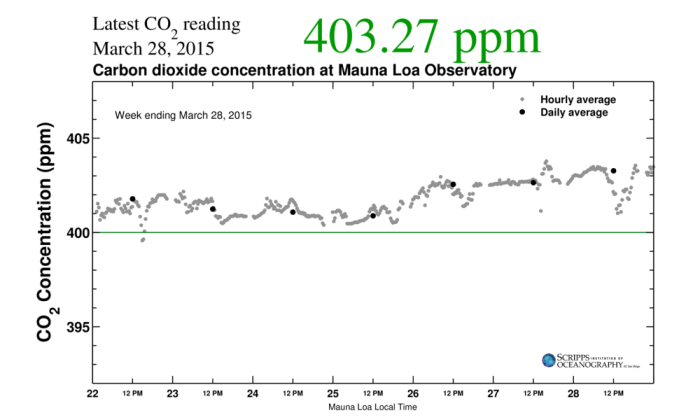
mar 28 2015 mona loa C02 png

UXBRIDGE, Canada, Apr 22 2014 (IPS)

Hopefully, on Earth Day today, high-level ministers from all countries are thinking about what they can bring to the table at a key set of meetings on climate change in early May.

This will be the first opportunity for governments to discuss their proposed climate action plans in light of the final Intergovernmental Panel on Climate Change (IPCC) report released last week.

“There is a clear message from science: To avoid dangerous interference with the climate system, we need to move away from business as usual.” — Professor Ottmar Edenhofer

That report warned that carbon dioxide (CO2) emissions from burning fossil fuels are still rising far too fast, even with more than 650 billion dollars invested in renewable energy in the last three years. However, over the same time period even more money was invested in getting more fossil fuels out of the ground.

The latter investment is keeping humanity and the planet locked onto a devastating path of a global temperature increase of four to five degrees C, the IPCC’s Working Group III report warned.

Scientists and economists say that unlocking ourselves from disaster will require a massive reduction in emissions – between 40 percent and 70 percent – by midcentury. This is can be readily accomplished without inventing any new technology and at a reasonably low cost, reducing global economic growth by a comparatively tiny 0.06 percent.

“It doesn’t cost the world to save the planet,” economist Professor Ottmar Edenhofer, who led the IPCC team, said at a press conference.

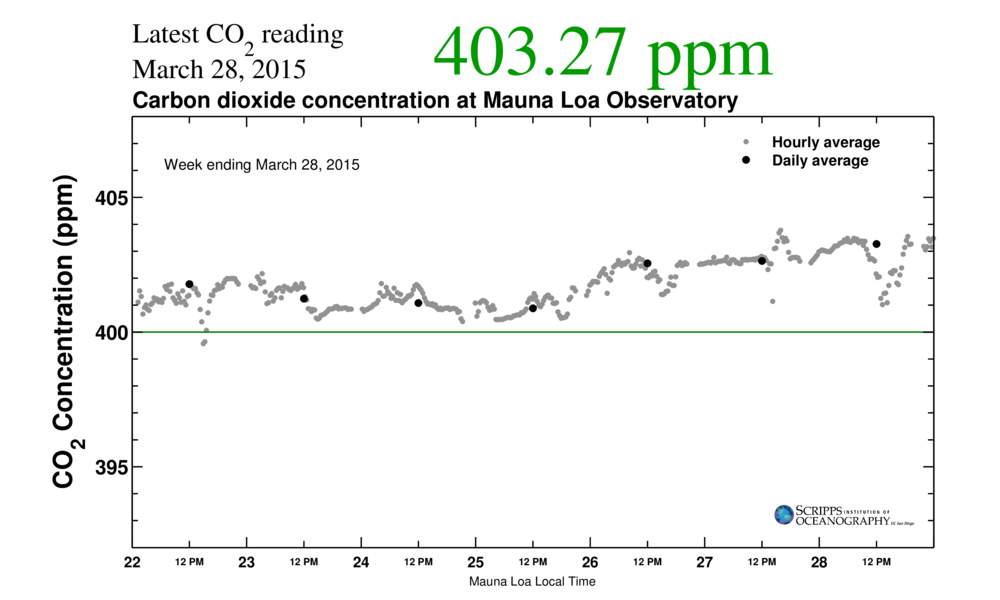
It does mean an end to investments in expanding fossil fuel infrastructure as the annual growth in CO2 emissions from burning oil, coal and gas must peak and decline in the next few years. The atmosphere already has 42 percent more CO2 than it did prior to 1800.

This extra CO2 is trapping more heat from the sun, which is heating up the oceans and land, creating the conditions that spawn super storms and extreme weather. And it will do so for the next 1,000 years since CO2 is a very durable molecule.

Current emissions are adding two percent more heat-trapping CO2 each year. That will push humanity’s ‘CO2 contribution’ to 50 percent four years from now.

“There is a clear message from science: To avoid dangerous interference with the climate system, we need to move away from business as usual,” Edenhofer said.

The IPCC’s first report released last September as part of its Fifth Assessment Report (AR5) clearly stated once again that the climate is changing rapidly as a result of human activity and urgent action is needed.

This was followed last month with a strong confirmation that climate impacts are already occurring on every continent and throughout the world’s oceans. This second report warned that one of the major impacts will be declines in food production unless emissions begin to decline.

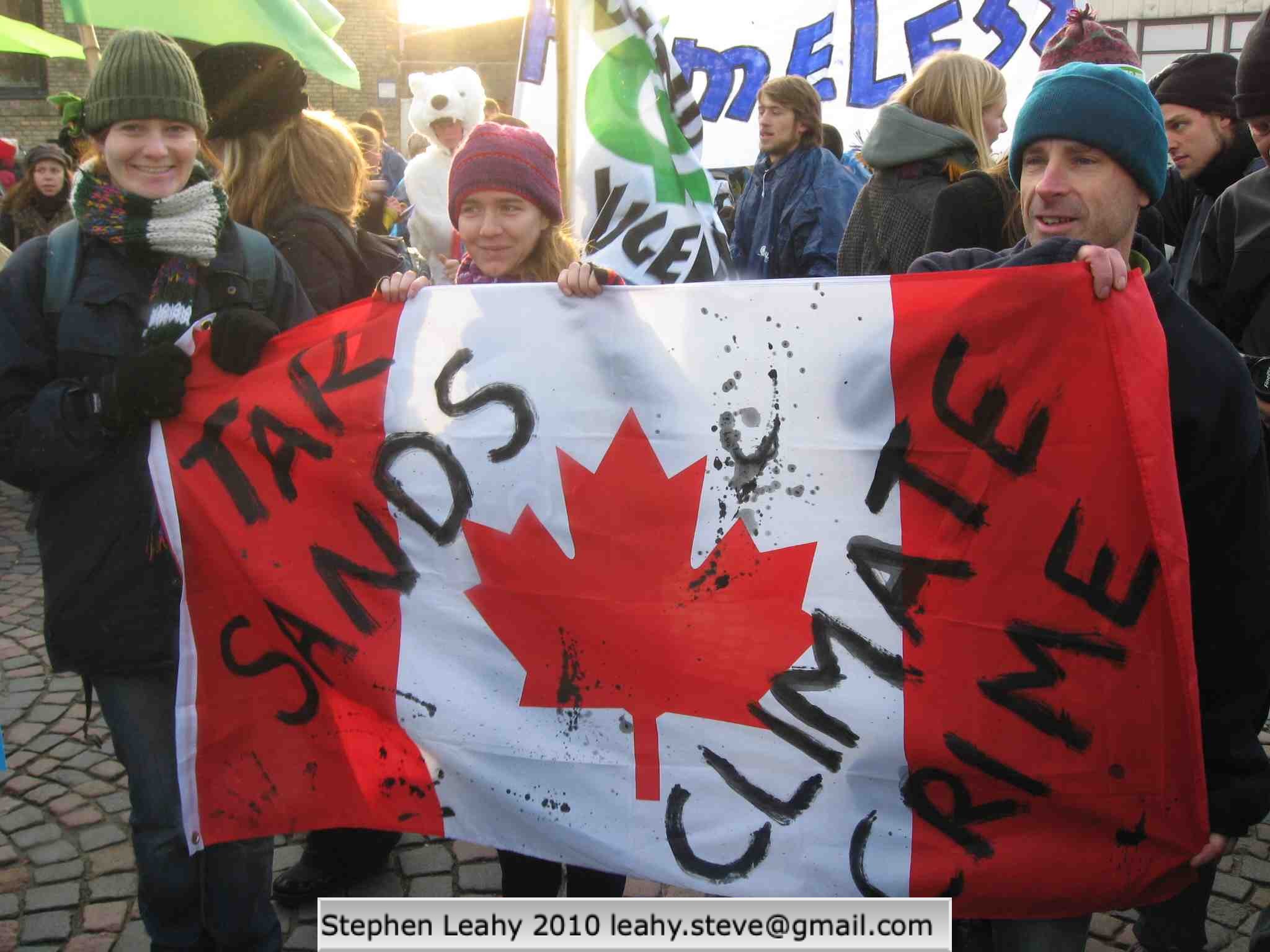
The fossil fuel sector, the richest in human history, appears to be ignoring the IPCC warnings.tar sands flag copenhagen sml0000

Earlier this month, oil giant ExxonMobil issued a report to its shareholders saying it does not believe the world will curb CO2 emissions and plans to extract and sell all of its 25.2 billion barrels worth of oil and gas in its current reserves. And it will continue investments hunting down more barrels.

“All of ExxonMobil’s current hydrocarbon reserves will be needed, along with substantial future industry investments, to address global energy needs,” said William Colton, ExxonMobil’s vice president in a statement.

The IPCC agrees oil, gas and coal will still be used in future but there is a CO2 maximum to have a reasonable chance of staying below two degrees C. That fossil energy cap won’t be enough to meet global energy needs so Working Group III recommends shifting to large-scale bioenergy and biofuels, waste incineration, nuclear power and carbon capture and storage (CCS).

These energy sources are controversial and risky. Large-scale bioenergy and biofuels needs huge areas of land and vast quantities of water and will compete with food production.

Studies show ethanol results in more emissions than burning gasoline. Even making ethanol from the leftovers of harvested corn plants released seven percent more CO2 than gasoline while depleting the soil, a new study revealed in Nature Climate Change this week.

The IPCC acknowledges bioenergy and biofuels can increase emissions, destroy livelihoods and damage the environment, says Rachel Smolker of Biofuelwatch, an environmental NGO.

“It is a shame they put so much stock in something that would make things worse rather than better,” Smolker told IPS.

Given all this, what climate action plans are governments going to propose when they meet in Abu Dhabi on May 4 and 5th? This is an informal ‘put your cards on the table’ regarding a new set of commitments on emission reduction targets and action plans to be made public at the U.N. Climate Summit in September.

Current reduction targets will not avoid four degrees C, most experts agree.

In hopes of getting countries to increase their reduction targets, U.N. Secretary-General Ban Ki-moon asked governments to bring new proposals to New York City in September. With the current U.N. Climate Change Convention meetings deadlocked on key issues, the New York Summit is intended to kick-start political momentum for an ambitious, global, legal climate treaty in 2015.

The May get-together titled the “Abu Dhabi Ascent” is the only meeting before the Summit where governments, and invited members of the private sector and civil society will come together to explore how to get ambitious action to reduce emissions.

The Abu Dhabi meeting will be a window into the future of humanity: ascent or descent?

first published as Charting a Course for Survival, or Oblivion?

High Seas Represent $148 Billion Carbon Sink But Overfishing is Destroying It

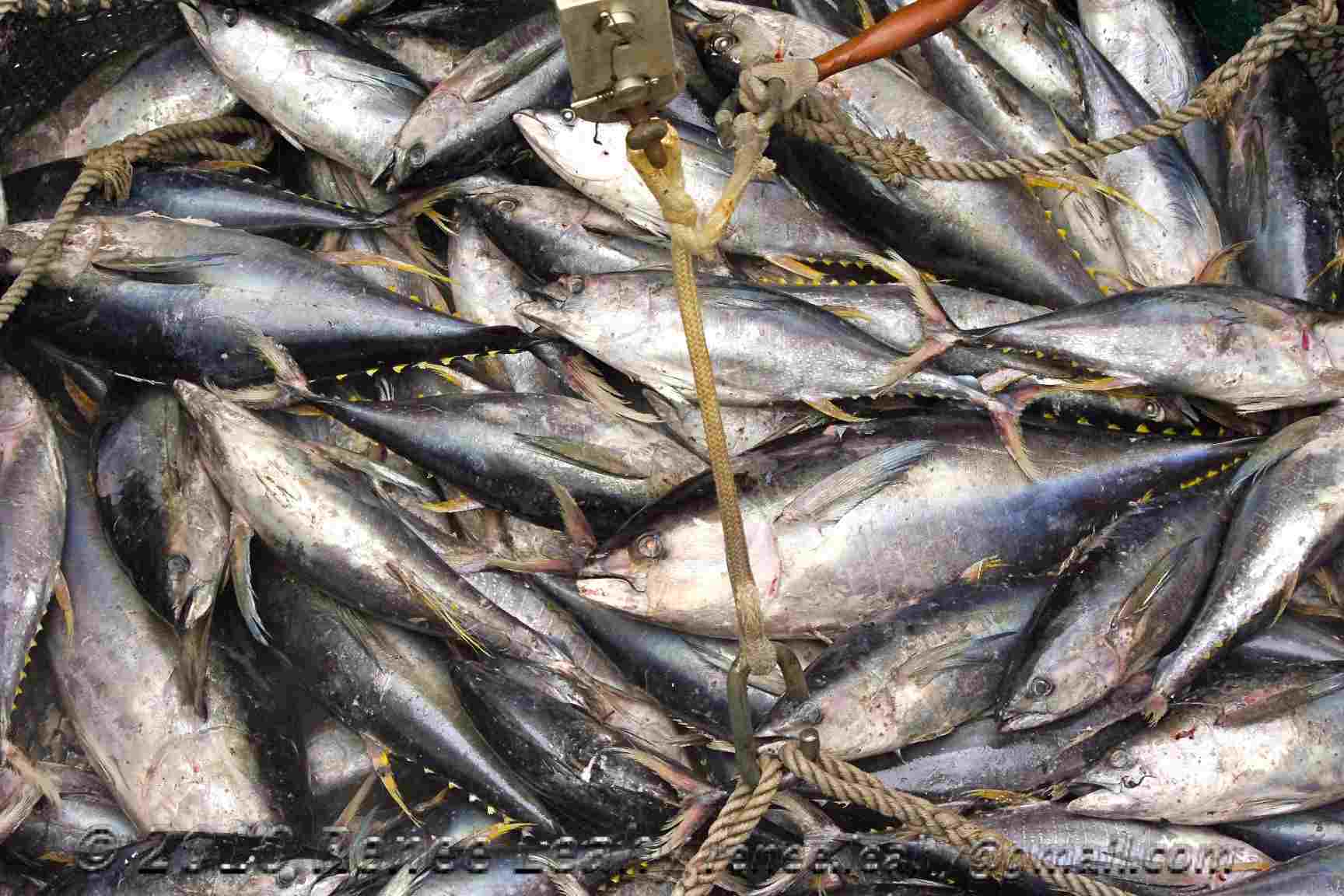
Tuna from the Spanish Purse Seiner

By STEPHEN LEAHY

Stephen Leahy's picture


Scientists estimate that phytoplankton absorb and bury more than 1.6 billion tonnes of CO2 in the seabed every year.

This would be news to readers of Canada’s Globe and Mail newspaper’s detailed two-page spread on the Global Ocean Commission report, which failed to mention this vitally important carbon reduction service (or that it is worth an estimated $148 billion a year).

Additionally, if governments ended fishing in the unclaimed oceans beyond 200-mile economic zones, near-shore fish catches would soar, even more carbon would be safely removed from the atmosphere and the oceans would be healthier said co-author of the study Rashid Sumaila of the University of British Columbia’s Fisheries Centre.

The high seas are like a failed state. Poor governance and the absence of policing and management mean valuable resources are unprotected or being squandered,” said David Miliband, co-chair of the commission and former foreign secretary of the United Kingdom.

The dollar value of all the fish caught in high seas is actually negative

Governments like Japan, Spain, the U.S. and China subsidize fishing fleets to destroy the high seas by overfishing and deep-sea bottom trawling to the tune of $152 million a year.

Here’s the kicker: The dollar value of all the fish caught way out there is actually negative when costs like fuel and subsidies are subtracted. Turns out high seas fishing fleets get 25 per cent of their income from subsidies according to a 2009 analysis by Sumaila.

Most would not be fishing the high seas without subsidies” Sumaila told DeSmog Canada.

Restoring ocean productivity

Fishing should be banned in the high seas, which represent 64 per cent of the world’s oceans just to protect and enhance its role as a carbon sponge, he said. But that is just one of 14 other valuable services the high seas provide humanity according their study, The High Seas And Us: Understanding The Value Of High Seas Ecosystems.

The study was commissioned by the Global Ocean Commission, an 18-month-old organization comprised of business leaders and former senior politicians including former Canadian prime minister Paul Martin.

The commission is calling for the negotiation of a new agreement under the UN Convention on the Law of the Sea to prioritize ocean health and resilience and restore ocean productivity. It also called for an elimination of subsidies on high seas fishing within five years.

The commission’s proposals also call for mandatory tracking of all vessels fishing in the high seas, a ban on the transshipment of fish at sea, measures to end plastics pollution and binding standards for the regulation and control of offshore oil and gas exploration and exploitation.

Carbon really does sink

Phytoplankton are the carbon-eating plants of the seas and pass on this carbon when they’re eaten. When organisms die in the deep seas, their organic matter ends up on the bottom of the ocean, which makes for an effective, natural carbon sequestration process.

Fishing is crippling this free carbon-removal system. This is especially true for bottom-trawlers that bulldoze the sea floor scooping up every living thing. Trawling is by far the most common fishing method and recent studies warn it’s destroying corals and the sea bottom leading to “long-term biological desertification.”

Last May, scientists writing in the journal Science called for an end to “the frontier mentality of exploitation” of the high seas and recommended a ban on trawling to protect the carbon-removal service and halt the decline in the productivity of the oceans. The amount of wild fish caught peaked 20 years ago.

About 70 per cent of fish caught inside the 200-mile limits spend some time in the high seas. If the high seas are protected those fish are likely to grow larger and become more numerous, benefitting near-shore fisheries, Sumaila said.

A number of studies of marine protected zones where fishing is banned or very limited show these areas act as baby-fish incubators increasing the overall population of fish.

If fishing was banned in the high seas, fisheries profits would more than double, the amount of fish would increase 30 per cent and the amount of ocean fish stock conservation would increase 150 per cent according to a study published in PLOS Biology last March.

Given the reality that fishing the high seas is a money loser, even a low carbon price could make a fishing ban valuable, not to mention the other potential benefits of regulating international fisheries. Sumaila said the $148 billion-a-year value of the high seas carbon sponge is a conservative estimate, and it could actually be as high as $222 billion.

Fishing and trawling bans have been proposed before. Last December the European parliament narrowly rejected a bottom-trawling ban on its vessels.

We need wide public understanding of the vital importance of the high seas to all of us,” concluded Sumaila.

Top 10 High Seas Fishing Nations (according to Sumaila’s study) in descending order:
Japan
South Korea
Taiwan
Spain
USA
Chile
China
Indonesia
Philippines
France

First published by DeSmog Canada Wed, 2014-06-25 10:01

Global Experts Call for Moratorium New Tarsands Development Until Climate, Environmental Impacts Assessed

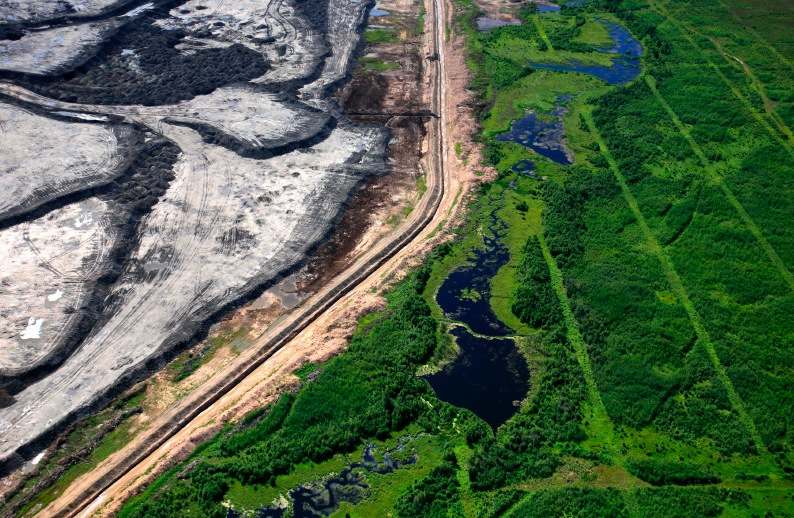
Canada's tar sands projects visible from space
Canada’s tar sands projects visible from space

By STEPHEN LEAHY  Stephen Leahy's picture

A moratorium on any new oilsands expansion is imperative given Canada’s failure to properly assess the total environmental and climate impacts Canadian and U.S. experts say in the prestigious science journal Nature.

Even with a moratorium it will be very difficult for Canada to meet its international promise to reduce CO2 emissions that are overheating the planet according to government documents as previously reported by DeSmog.

Continuing to approve pipelines and new projects guarantees Canada will not meet the Harper government’s Copenhagen emissions reduction target,” said Wendy Palen, an ecologist at Simon Fraser University.

These are the plain facts Canadians need to be aware of,” Palen, a co-author of the Naturecommentary, told DeSmog.

Canadians also have no idea of the overall ‘big picture’ of the impacts of oilsands production and transport because each project is assessed in isolation.

In total more than 280 square kilometres of boreal forest and peatlands have already been eliminated to make way for oilsands development. That amounts to an area more than twice the size of the City of Vancouver.

According to a 2012 study the destruction of this region of the boreal forest – a natural carbon sink –released about 100,000 tonnes of CO2 that had been safely stored underground. And it also meant the end of the region’s ability to absorb some 58,000 tonnes of CO2 every year. Over a 20-year time span that’s 1,161,000 tonnes of CO2 that stays in the atmosphere – close to half the annual emissions of the City of Vancouver.

This does not include CO2 emissions from developing oilsands projects themselves nor the emissions from burning millions of barrels of oil produced there each year.

This piecemeal approach is like determining the risk of cigarette smoking by only looking at the potential harm from smoking one cigarette, environmental economist Mark Jaccard said.

As critics have pointed out during recent pipeline review processes, regulators like the National Energy Board do not consider the climate impacts of pipelines and oilsands projects. It’s considered ‘out of bounds’ Jaccard, another coauthor of the report, said.  Each project is presented as an ultimatum: approve the project or lose an economic opportunity, he said.

This approach artificially restricts discussion to only a fraction of the consequences of oil development,” Jaccard and 7 co-authors argued in the report. The authors represent an interdisciplinary group of experts in environmental science, economics, policy development and decision science.

What Canada and the U.S. need is a “more coherent approach” to evaluate all oilsands projects and pipelines in the “context of broader, integrated energy and climate strategies.”

But first Canada and the U.S. need to impose an immediate halt to new oilsands developments and related pipeline construction, the authors write. (The U.S. is considering developing its own oilsands in Utah and elsewhere). Then the two countries can jointly develop a strategy that allows energy developments to proceed only if they are within environmental limits and respect other national commitments to human health, social justice and biodiversity protection.

However this strategy would need a formal, legislated acknowledgement of the reality that oilsands development impacts the climate. It also should create either a carbon tax or cap-and-trade mechanism to ensure the oil industry absorbs “the full social costs of carbon combustion.”

Finally this strategy should assess the full range of potential impacts compared to alternatives. And it should include the options of saying ‘no’ to a project.

Former Secretary of State Hillary Clinton said Canada and the U.S. need to co-ordinate their climate policies in an interview on the CBC’s The National last week. She acknowledged we need to get beyond project-by-project approvals.

With new regulations on power plants, the U.S. may be on its way to meeting its Copenhagen emission reduction target, which is identical to Canada’s.

While Prime Minister Harper “clearly doesn’t care about climate change,“ Jaccard told DeSmog,  President Obama does and could make approval of the Keystone XL pipeline contingent on Canada meeting its 2020 target.

Economists around the world now agree the costs of carbon pollution far outweigh the benefits,” Jaccard said.

First published by DeSmog Blog Canada Thu, 2014-06-26 12:19