Danger in Turning Africa’s Foodlands into “Carbon Farms”

Keep Agriculture for Food, not Carbon$$

By Stephen Leahy

DURBAN, South Africa, Dec 2 2011 (IPS)

Civil society has warned of the danger of turning Africa’s food-producing lands into “carbon farms” so that rich countries can avoid making cuts in their carbon emissions.

On Friday, they called on host country South Africa to refrain from forcing so-called “climate smart” agriculture into the United Nations climate treaty negotiations known as the 17th Conference of the Parties (COP 17).

South African President Jacob Zuma has stated that agriculture should be part of a new climate treaty. South African officials have previously told IPS they want it included so there will be “specific funds and specific actions” for agriculture under the U.N. Framework Convention on Climate Change.

“Putting agriculture into a future climate treaty is supposedly a consolation prize to Africa for failure by rich countries to agree to legally binding targets,” said Teresa Anderson of the Gaia Foundation, an international non-governmental organisation based in London.

“This consolation prize is a poisoned chalice. It will lead to land grabs and deliver African farmers into the hands of fickle carbon markets,” Anderson told IPS.

Agriculture is a major source of global warming gases like carbon and methane – directly accounting for 15 percent to 30 percent of global emissions. When the entire food production system is included, total agriculture emissions represent nearly half of all emissions. For those reasons there have been previous efforts to incorporate agriculture under a new climate treaty.

             Become a Partner in Independent Enviro Journalism

Changes in agricultural practices can greatly reduce emissions. However, the best way to do that is through regulations, not a climate treaty and carbon credits, said Anderson.

“Why are markets now seen as the only solution when less than 10 years ago they weren’t a focus at all?” Continue reading
Every six seconds a hungry child dies | UN Tries to Halt Land Degradation Crisis

By Stephen Leahy

CHANGWON, South Korea, Oct 25, 2011 (IPS)

Every six seconds a child dies of hunger-related causes.

That disturbing reality seems as remote as the moon here in the ultra-modern Changwon Convention Centre, where delegates struggled to create effective ways to stem the ongoing decline of food-producing lands.

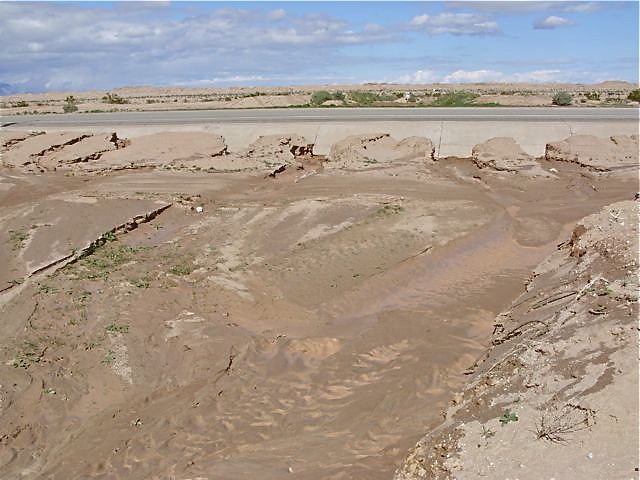
Each year, 12 million hectares of land are lost where 20 million tonnes of grain might have been grown, according to the United Nations Convention to Combat Desertification. And that loss of food-producing lands is unlikely to change in the near future, even as the final gavel fell in the early morning hours of Oct. 22 at the end the two-week biannual 10th Conference of the Parties (COP 10).

“This conference has been highly successful,” said Lee Don Koo, minister of the Korean Forest Service and COP 10 president and host.

It was certainly the largest international gathering on land degradation, with 6,450 participants from 161 countries, including 83 ministers and deputy ministers. Lee Don Koo said this meeting sent a strong message to the world community about the need for strong, sustainable land management and for the pressing need to set targets to reduce land degradation.

“Our goal is to build a land-degradation-neutral world,” said Luc Gnacadja, executive secretary of the UNCCD. The target date to reach that goal is 2030, Gnacadja told IPS.

Gnacadja would like countries to officially adopt this goal at the RIO+20 conference in June 2012 in Brazil.

It has taken nearly 20 years to get to the point where there is agreement on 11 scientific indicators to measure land degradation and its impacts. Development and implementation of those indicators will take some years yet. The Convention has yet to address the economic and policy drivers of land degradation, acknowledged Antonio Rocha Magalhães, chair of the Committee on Science and Technology. Continue reading

The Quiet Crisis: Lost Foodlands Cover Area Larger Than Canada and China Combined – Two Billion People Affected

12 Million Hectares Lost Every Year to Desertification

Dealing with desertification has a long history of failure.

By Stephen Leahy

CHANGWON, South Korea, Oct 13, 2011 (IPS)

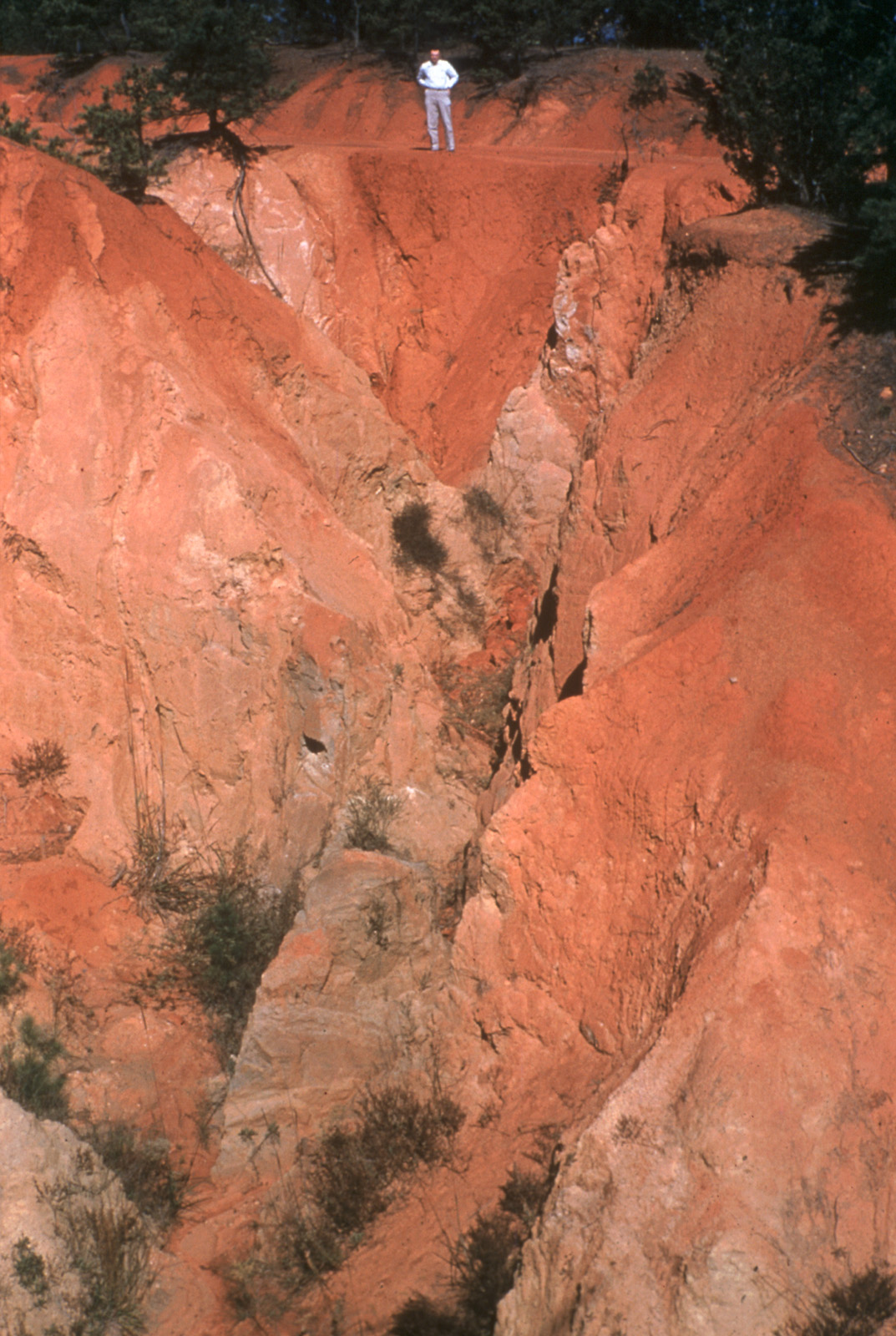
Degradation of land is the world’s quiet crisis, undercutting food production, increasing water scarcity, impoverishing hundreds of millions of people and affecting two billion overall. Nearly 20 million square kilometres of the earth’s arable lands – an area twice the size of Canada – have already been degraded.

Each year, 12 million hectares of land, where 20 million tons of grain could have been grown, are lost to desertification. Unless this trend is reversed soon, feeding the world’s growing population will be impossible, experts say. However, the global community has failed for over two decades to address this serious challenge.

Now, delegates from 193 countries are meeting in South Korea under the United Nations Convention to Combat Desertification (UNCCD) to review progress on a ten-year plan to reverse the ongoing decline in the quality and quantity of land in food-producing regions.

During the 10th Conference of the Parties (COP 10) under the UNCCD, delegates will also consider creating a scientific body like the Intergovernmental Panel on Climate Change to serve as the global authority on desertification and land degradation.

“The UNCCD will take bold steps towards delivering critical services to the two billion people that face negative impacts of desertification, land degradation and drought,” Luc Gnacadja, executive secretary of the UNCCD, told delegates during the opening session of COP 10 that began Oct. 10 and concludes Oct. 21.

Land degradation is mainly the consequence of poor land management in conjunction with changes in rainfall. Erosion and degradation most often result from ploughing fields, removing crop residues after harvest and overgrazing. It is akin to tire wear on cars – a gradual, less noticeable process with potentially catastrophic consequences if ignored for too long.

“People do not notice land degradation until there is a crisis,” said Pier Paolo Roggero, a scientist at University of Sassari in Italy. Continue reading

Selling Nature to Save Nature and Ourselves?

Humanity faces unprecedented challenge of climate change combined with food, water and energy shortages

“Markets are preconditioned on inequality and will only make matters worse”

By Stephen Leahy

THE HAGUE, Jul 5, 2011 (IPS)

Avoiding the coming catastrophic nexus of climate change, food, water and energy shortages, along with worsening poverty, requires a global technological overhaul involving investments of 1.9 trillion dollars each year for the next 40 years, said experts from the U.N. Department of Economic and Social Affairs (UN-DESA) in Geneva Tuesday.

“The need for a technological revolution is both a development and existential imperative for civilisation,” said Rob Vos, lead author of a new report, “The Great Green Technological Transformation”.

Absent in the U.N. report is a call for the other necessary transformation: what to do with the market-driven economic system that has put humanity on this catastrophic collision course? Attempts to “green” capitalism are failing and will fail, according to many of the more than 200 social science researchers at a groundbreaking international conference in The Hague titled NATURE INC? QUESTIONING THE MARKET PANACEA IN ENVIRONMENTAL POLICY AND CONSERVATION Jun. 30 to Jul. 2.

“We must start tackling and questioning some core capitalist dictums, such as consumerism, hyper-competition, the notion that ‘private’ is always better, and especially economic growth,” says Bram Büscher, the conference co-organiser and researcher at the Institute of Social Studies (ISS) at Erasmus University in The Hague, Netherlands.

Equally important is to stop looking at nature as a collection of economic objects and services that “must only benefit some specific idea of human economic progress”, Büscher told IPS.

Governments, the World Bank, the United Nations and development agencies, international conservation organisations and others have all come to see markets as the only way to mobilise enough money to end deforestation, increase the use of alternative energy, boost food production, alleviate poverty, reduce pollution and solve a host of other serious and longstanding problems.

Started as a small gathering of academics, Nature Inc? became a major event as hundreds of experts from around the world wished to participate. Büscher believes the main reason for this is that many are actively doing research on environmental and conservation issues and are increasingly running into new market schemes like carbon credit trading, payments for ecosystem services, biodiversity derivatives and new conservation finance mechanisms, and so on.

“Payments for ecosystem services are the newest tropical ‘miracle’ crop,” said Kathleen McAfee of San Francisco State University.

The market is putting new values on tropical forests as carbon sinks, reservoirs of biodiversity or ecotourism destinations, McAfee said during the conference. Continue reading

Hundreds of Millions May Soon Be Fleeing the Floodwaters

More than 5 million affected by flooding in Pakistan Sept 2011 - a repeat of 2010.

Climate disruption shrinking areas where people can live.

Mexico faces $10 billion in storm/flood damage to roads, schools, clinics, etc every year

By Stephen Leahy

OSLO, Jun 9, 2011 (IPS)

Mass migration will inevitably be part of human adaptation to climate change, experts agree, since parts of the world will become uninhabitable in the coming decades.

Last year, 38 million people were displaced by climate-related disasters such as the flooding in Pakistan and China.

“Human displacement due to climate change is happening now. There is no need to debate it,” Jonas Gahr Støre, Norway’s minister of foreign affairs, told over 200 delegates attending the Nansen Conference on Climate Change and Displacement in the 21st Century in Oslo Jun. 6-7.

Governments and the humanitarian community need to understand this fact – and that it will get much worse in the coming decades, Støre said.

This independent environmental journalism depends on public support. Click here learn more.

Without major emissions reductions, climate change could get far worse than anyone is prepared to think about.

“It may be more realistic to consider four degrees C of warming rather than two degrees C,” suggested Harald Dovland, former head of the Norwegian Delegation to the United Nations climate change negotiations.

The world has already warmed 0.8C and will rise to least 1.6 C even if all emissions of carbon and other greenhouse gases ended today, James Hansen, head of NASA’s Goddard Institute for Space Studies, told the conference.

A four-degree C warmer world is a very different planet and risks runaway climate change. Even two degrees C is not safe, Hansen said. 

“The last time the planet was two degrees C warmer was during the Pliocene (five to 2.4 million years ago) and sea levels were 25 metres higher,” he said. “If we burn all the fossil fuels (coal, oil, natural gas) we’re creating conditions that future generations will be unable to cope with.”

Even though a four-degree C warmer world “is choosing the suicidal path”, experts must avoid fuelling xenophobia with predictions of mass migrations and conflicts, says Francois Gemenne, research fellow at the Institute for Sustainable Development and International Relations in Paris.

“This also feeds into a security agenda of panic and paranoia,” Gemenne said.

At least 20 percent of humanity will be at high risk of severe flooding due to sea level rise and extreme rainfall events in the coming decades.

“Too many people live in low-lying deltas and other parts of the world that are becoming too dangerous to live in,” said Gemenne. They will be forced to move and often this movement will be permanent.

Rather than building walls and barriers, countries and the international community need to encourage people to move to safer ground. “Lift the barriers so that people can use migration to adapt to climate change,” he urged delegates.  Continue reading

Peak Water Has Already Come and Gone

Woman from Woukpokpoe village in Benin

By Stephen Leahy

UXBRIDGE, Canada, Mar 22, 2011 (IPS)

Canadian Kevin Freedman is celebrating World Water Day Tuesday by living on 25 litres of water a day, instead of the North American average of 330 litres per day. And he has enlisted 31 others in his “Water Conservation Challenge” to go water- lean, using just 25 litres per day for cooking, drinking, cleaning, and sanitation for the entire month of March.

“People in Canada and the U.S. have no idea how much water they use or how much they waste,” Freedman told IPS.

“Although people live on less, it is very difficult to use just 25 litres a day. You can’t shower or use a washing machine,” he said. “I’m hoping to raise awareness that water is a finite resource.”

Nearly a billion people don’t have good access to safe fresh water. In a single generation, that number could double as growing demands for water will exceed the available and sustainable supply by 40 percent, according a recent study. “Peak water” has already come and gone. Humanity uses more water than can be sustained, drawing on non-renewable reserves of water accumulated over thousands of years in deep aquifers.

“Water cannot be created, it can only by managed,” said Margaret Catley-Carlson, a former senior official with both the Canadian government and at the United Nations, a renowned global authority on water issues, and a director at the Canadian Water Network Continue reading

Media Fails on Climate Change in 2010 – How You Can Ensure 2011 Will Be Better

Few people understand the serious danger climate change poses all of us largely because media have done a poor job in covering it. In 2010, US TV media pretended it had all gone away – no more global warming…poof, bad dream, moving on.

From the must-bookmark The Daily Climate:

Drexel University professor Robert Brulle has analyzed nightly network news since the 1980s. Last year’s climate coverage was so miniscule, he said, that he’s doubting his data.

….

Coverage of December’s United Nations climate talks in Cancun is Exhibit A: Total meeting coverage by the networks consisted of one 10-second clip, Brulle said. By contrast, 2009’s Copenhagen talks generated 32 stories totaling 98 minutes of airtime. “I’m trying to check it again and again,” Brulle said of the 2010 data. “It’s so little, it’s stunning.”

Newspapers do little better with a huge decline in the US/Canada in 2010 which had some of the lowest level of coverage in the world, lower than Asia and the Pacific according to this graph. Continue reading

Climate Changes Herald a Future of Widespread Drought – Water Left High and Dry in Climate Talks

Serious droughts expected in large parts of the world in coming decades

By Stephen Leahy

CANCÚN, Dec 8, 2010 (IPS/TerraViva)

As the world heats up, continents are drying up, with severe droughts forecast in the future. But negotiators at the climate summit here seem to have forgotten about water in their endless discussions over forests, carbon trading and finances.

“The main impact of climate change is on the planet’s water cycle,” said Henk van Schaik of the Cooperative Programme on Water and Climate, a foundation based in the Netherlands.

“Climate-driven changes in the water cycle will affect large regions of the world,” van Schaik told TerraViva at a side event meeting here at COP 16 in Cancún .

The impact of climate on the world’s water resources is not addressed within the U.N. climate framework, said Anders Berntell of the Stockholm International Water Institute.

“Negotiators here see it as just another sector of the economy but it is a basic element for life. Water is the bloodstream of our planet,” Berntell said.

This article was made possible thanks to contributions from Hugh & Jo-Ann Roberston, Kevin Toner, Michael Sweatman, Ann Wakelin, Lynn Carey, Leif Knutsen, Nan Nolan, Chris Conrad, Godo Stoyke.

[Due to the high costs of covering such important events, support is needed from readers like you.Please consider making a small automatic monthly contribution as a fair exchange for these articles – for more information.] Continue reading

U.N. Climate Chief Quits Post — Says Business Must Lead the Way on Climate

By Stephen Leahy*

UXBRIDGE, Canada, Feb 18, 2010 (Tierramérica)

Countries have largely failed to endorse the Copenhagen Climate accord by the Jan. 31 deadline. On Thursday, the key official in the United Nations climate treaty process announced his resignation.

There is no effective global climate treaty and the well-respected Yvo de Boer, executive secretary of the United Nations Framework Convention on Climate Change, who worked tirelessly for four years to facilitate an agreement, has had enough.

“Copenhagen did not provide us with a clear agreement in legal terms, but the political commitment and sense of direction toward a low-emissions world are overwhelming,” de Boer said in a statement.

“I have always maintained that while governments provide the necessary policy framework, the real solutions must come from business,” he said.

De Boer will be joining the consultancy group KPMG as Global Adviser on Climate and Sustainability, as well as working with a number of universities.

The much-hyped “seal-the-deal” Copenhagen climate talks ended last December with the U.S., India, South Africa, China and Brazil hatching a backroom agreement called the Copenhagen Accord.

The three-page document was not legally binding and had no long-term global targets for emissions cuts. Countries were asked to support the accord by signing on by Jan 31. Less than 60 out of the 190 plus countries signed by the deadline.

via POLITICS: U.N. Climate Chief Quits Post