Noam Chomsky gets it exactly right in my experience when he says that a large minority of scientists are terrified that climate change may be much worse than anyone wants to admit. — Stephen
My related articles:

Noam Chomsky gets it exactly right in my experience when he says that a large minority of scientists are terrified that climate change may be much worse than anyone wants to admit. — Stephen
My related articles:

New study from Britain’s Centre for Ecology & Hydrology concludes: Organic agriculture better for fungi that are a key to healthy ecosystems. [press release below]
This is just one of dozens of different studies that demonstrate the benefits of organic over conventional as I’ve previously posted. Despite the benefits to society organic farmers receive little government support or are marginalized in most countries. Wonder why? — Stephen
Organic farming more profitable and better than conventional systems – U of Wisconsin
Organic Agriculture Reduces Climate Change, Poverty and Hunger
Organic Provides 3X More Food Per Acre in Poor Countries – podcast
Overweight? Hungry? Blame “Hollow Food”
Centre for Ecology & Hydrology
Farming practices have a significant impact on the diversity of beneficial microbial fungi known to play important roles in crop productivity, soil recovery and maintenance of healthy ecosystems, according to new research published today (14 September 2010) in the journal Environmental Microbiology. The conclusions could have important implications for the way humans manage the agricultural landscape and tackle food security issues. Continue reading
OSLO, 15 June 2010 (IPS)
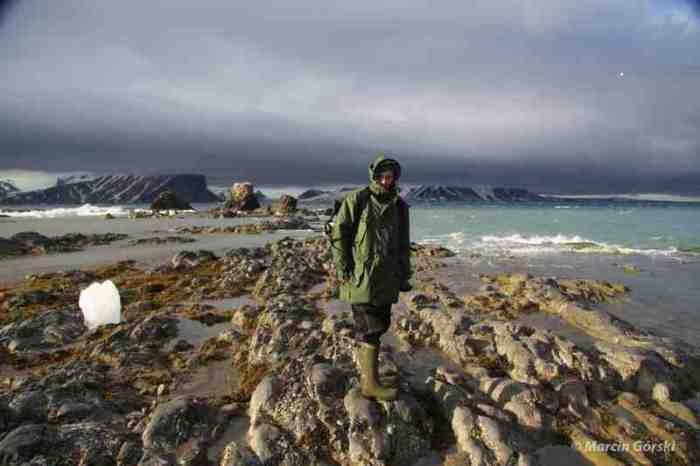
Last winter’s big snowfall and cold temperatures in the eastern United States and Europe were likely caused by the loss of Arctic sea ice, researchers concluded at the International Polar Year Oslo Science Conference in Norway in June.
Climate change has warmed the entire Arctic region, melting 2.5 million square kilometres of sea ice, and that, paradoxically, is producing colder and snowier winters for Europe, Asia and parts of North America.
“The exceptional cold and snowy winter of 2009-2010 in Europe, eastern Asia and eastern North America is connected to unique physical processes in the Arctic,” said James Overland of the NOAA/Pacific Marine Environmental Laboratory in the United States.
“In future, cold and snowy winters will be the rule rather than the exception” in these regions, Overland told IPS.
[[UPDATE Dec 29 2010 – Winter of 2010-11 appears to follow same pattern, see new post with northern hemisphere temp map for 20 Dec: Arctic Hothouse Turns Europe into an Icebox]]
 Scientists have been surprised by the rapid warming of the Arctic, where annual temperatures have increased two to three times faster than the global average. In one part of the Arctic, over the Barents and Karas Seas north of Scandinavia, average annual temperatures are now 10 degrees C higher than they were in 1990.
Overland explains the warming of the Arctic as the result of a combination of climate change, natural variability, loss of sea ice reflectivity, ocean heat storage and changing wind patterns, which has disrupted the stability of the Arctic climate system. In just 30 years, all that extra heat has shrunk the Arctic’s thick blanket of ice by 2.5 million square kilometres – an area equivalent to more than one quarter the size of the continental U.S.
The changes in the Arctic are now irreversible, he said. Continue reading
 Ice-free summer in the Arctic is just a matter of time – mostly likely within the next 5 years. Here’s a “six-pack” of my recent articles on how global warming is transforming the Arctic:
The Arctic — The Earth’s Freezer — Is Defrosting With Dire Results
The rapidly warming Arctic region is destabilising Earth’s climate in ways science is just beginning to comprehend.
Arctic Leaking Methane a Super-Potent Global Warming Gas — Reaching Feared Tipping Point? —“The way we’re going right now, I’m not optimistic that we will avoid some kind of tipping point.“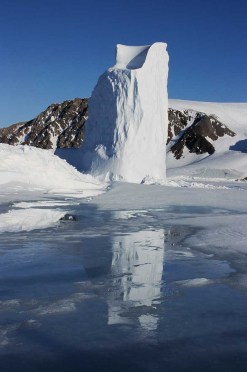
Arctic Ice Gone in 5 Years – First Time in One Million Years –– “We’re going to see huge changes in the Arctic ecosystem”
Things Happen Much Faster in the Arctic — “Things are happening much faster in the Arctic. I think it will be summer ice-free by 2015,” said David Barber, an Arctic climatologist at the University of Manitoba.
Arctic Is the Canary in the Coalmine — The Arctic is “ground zero” for climate change, with temperatures rising far faster than anywhere else on the planet.
Arctic Oil and Gas Rush Alarms Scientists — As greenhouse gas pollution destroys Arctic ecosystems, countries like Canada are spending millions not to halt the destruction but to exploit it.

Polar Bears Go Hungry as Icy Habitat Melts Away — The iconic animal of the frozen north, the polar bear, is starving to death because climate change is melting the Arctic Ocean sea ice.
Oil vs Polar Bears in Alaska — A coalition of environmental groups sued the George W. Bush administration Monday for delaying a decision to protect polar bears threatened with extinction
Polar Bears’ Future Bleak in Melting Arctic — “Without taking serious and urgent action to stabilize the climate, there is no future for polar bears” says Andrew Derocher, Chair of the World Conservation Union (IUCN), Polar Bear Specialist Group.

Water tastes much better in a steel or ceramic container than plastic. And it is a hell of lot healthier. See my previous posts about various studies about plastic container – Plastic Bottles Leach Estrogen – ‘Healthy’ Mineral Water Contaminated by Plastic and Bring Back Glass – Ban BPA (bisphenol A) Plastic Containers Now
See also: Plastic chemical linked to female aggression
Not to mention Drowning the Oceans in Plastic Trash (Pacific Garbage Patch)
So big green thumbs up to the University of Ottawa and its student federation announcement — Stephen
 No More Sales of Bottled Water
 Students, faculty, staff and other members of the uOttawa community are encouraged to find alternatives to bottled water, such as filling up cups, glasses and re-usable bottles at the nearest fountain or tap on campus.
Since 2008, the University of Ottawa has invested over $100,000 to revitalize its water fountains. An additional $75,000 will be invested next year.
The improvements include gooseneck fountains for quick and easy filling of re-usable bottles, new fountains near food service outlets, upgrades to existing fountains. The fountains are wheelchair accessible, have increased waster pressure and better refrigeration.
UXBRIDGE, Canada, Sep 24 ’09 (Tierramérica) (Revised Sept 1’10)
Millions of trees, especially from the developing countries of the South, are being shipped to Europe and burned in giant furnaces to meet “green energy” requirements that are supposed to combat climate change.
In the last two months alone, energy companies in Britain have announced the construction of at least six new biomass power generation plants to produce 1,200 megawatts of energy, primarily from burning woodchips.
At least another 1,200 megawatts of wood-fired energy plants, including the world’s largest, in Port Talbot, Wales, are already under construction.
Those energy plants will burn 20 to 30 million tonnes of wood annually, nearly all imported from other regions and equivalent to at least one million hectares of forest.
“Europe is going to cook the world’s tropical forests to fight climate change; it’s crazy,”Simone Lovera, of the non-governmental Global Forest Coalition, which has a southern officed in Asunción, Paraguay, told Tierramérica.
Europe has committed to reducing its carbon emissions 20 percent by 2020 in an effort to fight climate change. Biofuels and biomass energy will have key roles in achieving those goals, experts say.
“Biomass is a very promising sector for energy companies,” says Jarret Adams, a spokesperson for Adage, a joint venture between French nuclear power giant Areva and the U.S.-based Duke Energy.
Adage is building a 50-megawatt, wood-burning power plant in the southeastern U.S. state of Florida, the first of 12 such “green energy” plants to be built over the next six years, Adams told Tierramérica.
“Burning wood for energy is considered carbon neutral by U.S. federal and state authorities,” he said. In other words, the process of generating electricity by burning wood emits an equal or lesser amount of carbon dioxide than the quantity absorbed by the trees through photosynthesis.
When Tierramérica questioned the assumption of carbon neutrality, Adams replied, “It is, but who knows for certain?”


[Updated May 11 2012: At last a serious plan to phase out these subsidies will be on the table at the Rio+20 meet in June. I will be following this closely – with your help – Stephen ]
BERLIN, Jun 29, 2010 (IPS)
Every day, governments give away an estimated two billion dollars of taxpayer money to the fossil fuel industry. This unmatched largesse to a highly profitable sector by countries verging on bankruptcy or unable to feed large numbers of their own people is “complete madness”, according to many experts.
In Toronto Sunday, at the conclusion of G20 summit, countries agreed the madness must be constrained if not stopped.
“I was impressed. I think the commitment to phase out fossil fuel subsidies has finally arrived,” said Mark Halle, director of trade and investment at the International Institute for Sustainable Development (IISD) European office in Geneva.
“With countries committed to cutting their deficits, it is hard to ignore giving billions of real money away to the fossil fuel industry or to keep fuel prices low,” Halle said in an interview.

The two-billion-dollars-a-day public subsidy for carbon- based fuels is a very conservative estimate based on the extensive research conducted by the IISD’s Global Subsidies Initiative, said Halle. Not only do such huge subsidies undermine policies on energy efficiency, they make it impossible for alternative energy sources to compete, he said. [See also Fossil Fuel Subsidies Are 12X (more like 20X) Support for Renewables, Study Shows — Stephen]
“We can’t make the transition to low-carbon economies nor can the energy playing field be leveled without the elimination of fossil fuels. And time for that has finally come,” he said.
Others are less optimistic given the G8 and G20 track record for broken promises.
“It (the G20 commitment) fell short of vision and courage that is expected from global leaders in the light of the disastrous oil spill” in the Gulf of Mexico, said Darek Urbaniak of Friends of the Earth Europe. Urbaniak noted that BP, the company responsible for the spill, receives British and EU public subsidies.
Do you find this article interesting? It exists thanks to contributions from readers. Please click here to learn more about Community Supported Journalism. Continue reading


 Stephen Leahy, International Environmental Journalist