Danger in Turning Africa’s Foodlands into “Carbon Farms”

Keep Agriculture for Food, not Carbon$$

By Stephen Leahy

DURBAN, South Africa, Dec 2 2011 (IPS)

Civil society has warned of the danger of turning Africa’s food-producing lands into “carbon farms” so that rich countries can avoid making cuts in their carbon emissions.

On Friday, they called on host country South Africa to refrain from forcing so-called “climate smart” agriculture into the United Nations climate treaty negotiations known as the 17th Conference of the Parties (COP 17).

South African President Jacob Zuma has stated that agriculture should be part of a new climate treaty. South African officials have previously told IPS they want it included so there will be “specific funds and specific actions” for agriculture under the U.N. Framework Convention on Climate Change.

“Putting agriculture into a future climate treaty is supposedly a consolation prize to Africa for failure by rich countries to agree to legally binding targets,” said Teresa Anderson of the Gaia Foundation, an international non-governmental organisation based in London.

“This consolation prize is a poisoned chalice. It will lead to land grabs and deliver African farmers into the hands of fickle carbon markets,” Anderson told IPS.

Agriculture is a major source of global warming gases like carbon and methane – directly accounting for 15 percent to 30 percent of global emissions. When the entire food production system is included, total agriculture emissions represent nearly half of all emissions. For those reasons there have been previous efforts to incorporate agriculture under a new climate treaty.

             Become a Partner in Independent Enviro Journalism

Changes in agricultural practices can greatly reduce emissions. However, the best way to do that is through regulations, not a climate treaty and carbon credits, said Anderson.

“Why are markets now seen as the only solution when less than 10 years ago they weren’t a focus at all?” Continue reading
Become a Partner in Independent Enviro Journalism

A personal message from Stephen Leahy

“Journalism and media are society’s mirror providing accurate and essential information.

That is no longer the case.

Media are now controlled by a few major corporations like Murdoch’s News Corp. Coverage of environment and science has been gutted. If there is coverage it rarely digs below the surface. It’s not just TV, it’s all media.

After 18 years of being published in major publications on two continents I now count myself lucky to get $150 to $200 for an in-depth article. The few independent media outlets are either non-profits or struggling.

Urgent environmental issues didn’t go away just because most media stopped covering them.

More than 20,000 people attended the international climate meeting in Cancun, Mexico and it received one ten second clip on US network TV according to a Drexel University media study. (Coverage was even worse at last climate meet in Durban)

Nearly every indicator proves things are getting worse but less and less people know about this.

Many people, including leading scientists, tell me: ‘we need people like you to write about these issues‘. I’d like to do far more but it is impossible to continue without your help in what I’m calling Community Supported Journalism. People directly support independent journalists who craft honest and thoughtful articles about important subjects the mainstream media ignores or gloss over.

Community Supported Environmental Journalism Works

In 2010 dozens of people offered their help, donating $5,750 which helped ensure many breaking international stories were covered including the first media reports on the global die-off of corals and how climate change may be bringing colder winters to Europe and eastern North America. Those donors — I prefer to call them partners — enabled me to cover important international meetings like the UN Convention on Biodiversity, UNFCCC climate change conference and much more.

Thanks for reading.” — Stephen

Please join us. Consider a donation of just $10 a month to support enviro journalism that serves the public interest.

Contributions can be made safely and easily via PayPal* or Credit Card*. [You can cancel at any time, automatically. No need to contact me] 

Monthly support options starting @ $10 a month

One-time donations are most welcome. Click and enter the amount.

*More than 100,000 non-profits safely use PayPal Donate service

If you’d like a mailing address or contact me with story ideas, please complete this comment form.

Letters of Support:

We need people like you. In tough economic times, where information flow is increasingly channeled and controlled, you perform a simply critical role. Hang in there. You are an admirable role model for the future.”

– E. Ann Clark, Associate Professor, University of Guelph.

“Stephen Leahy has done a superb job exposing the enormous sums the US government is spending on corporate welfare for big oil.”

Ross Gelbspan, Pulitzer-prize winning editor and author of The Heat is On

My continued appreciation to those who have contributed in the past.

Faith Groups Call for African Spirit of “Ubuntu”; End Sinful, American-style Greed

South African Bishop Geoff Davies (L) and Mardi Tindal, Moderator of the United Church of Canada

By Stephen Leahy

DURBAN, South Africa, Dec 9 (IPS)

African and international faith leaders urged governments attending the final day of climate change negotiations to do what is right and necessary to keep global temperature from rising no more than 1.5 degrees Celsius.

“The two degrees Celsius target is unacceptable because temperatures in much of Africa will be far higher,” said South African Bishop Geoff Davies.

Oil and coal companies along with other major polluting corporations are engaged in “crimes against humanity and the planet” because they continue to pollute the atmosphere when they have ability to do otherwise, said David Le Page of the Southern African Faith Communities’ Environment Institute (SAFCEI).

More than 130 African faith leaders have signed a declaration offering specific recommendations based science, honesty, morality and equity. They called on delegates negotiating a new climate treaty here at the 17th Conference of Parties to live up to the African spirit of “ubuntu” – a way of living focused on people’s allegiances and relations with each other.

The current economic system encourages “people to get as rich as they can and forget about anyone else,” said Davies. “It’s an immoral system.”

“Historic polluters like the United States have to reduce their emissions dramatically” and their position here is “shocking” and “reprehensible”, he said. The children and grandchildren of U.S. congressmen will ask what they were doing to be so selfish and irresponsible, Davies said.

The U.S is the most religious society in the world but their behaviour is “sinful” in their refusal to reduce emissions that causing so much suffering among people, he said.

“When lifestyles of the wealthy hurt the lives of the poor….and future generations it is wrong,” Mardi Tindal, Moderator of the United Church of Canada, the country’s largest Protestant denomination.

“Climate change is a moral, ethical and spiritual issue. We need moral leadership not political leadership,” Tindal told IPS.

“South Africa has had courageous, moral leaders like Ghandi and Mandela. If our leadership shows the same moral courage the people will follow them.” Continue reading

Truth and Wisdom From Spiritual Leaders at Durban Climate Talks

Why do countries at the international climate talks accomplish so little when they apparently understand the science and risks of global warming?

Here is the knowledgeable, depressing and yet inspiring answer from three remarkable spiritual leaders:


That was a press conference on one the last days of the 2011 climate talks in Durban. And here is the article I wrote about this and the “ubuntu” declaration by more than 130 African faith leaders. — Stephen 

Toxic Electronic Waste Grows by 40 Million Tonnes a Year — Poisons Kids in Africa

A worker cooks computer motherboards over solder to remove chips and valuable metals at a makeshift e-waste workshop.

‘Public largely unaware of the e-waste impacts on human health and environment’

By Stephen Leahy

UXBRIDGE, Canada, Nov 1, 2011 (IPS)

Mountains of hazardous waste grow by about 40 million tons every year. This waste, mostly from Europe and North America, is burned in developing countries like Ghana in a hazardous effort to recover valuable metals.

A children’s school in Accra, Ghana’s capital, was recently found to be contaminated by lead, cadmium and other health-threatening pollutants at levels over 50 times higher than risk-free levels. The school is located directly beside an informal electronic waste salvage site.

“Poor people in Africa cannot afford to process Europe’s or America’s electronic wastes,” said Ghanaian researcher Atiemo Sampson.

“Those wastes are poisoning our children,” Sampson told IPS from Accra.

Ghana does not regulate the importation and management of electronic waste, or e-waste. The government hopes to have rules in place next year, he said.

Sampson, a Ph.D. student at the University of Ghana, was involved in testing the school and other areas in Accra near the Agbogbloshie scrap metal site, where more than 100 people break apart and burn electronic trash by hand to obtain valuable metals like copper.

Schoolchildren as young as six years old work around bonfires of circuitry, plastic and other leftover high-tech trash, he said.

A nearby produce market, a church headquarters and a soccer field were similarly polluted, to varying degrees. The soil around the school site had measurements for lead 12 times higher than the levels at which intervention is required. Lead is acutely toxic to children and can permanently damage their growing brains and nervous systems, even at very low levels of exposure.

“We don’t know what the immediate health impacts are. We are hoping to test the children’s blood for contaminants but we have not secured the necessary funding,” Sampson said.

International shipments of electronic trash are outlawed by the Basel Convention. However, European and North American e-waste is often shipped as “electronics for reuse” or hidden with legitimate cargo.

Continue reading

Toxic Pollution Shortens Lives By More Than a Decade

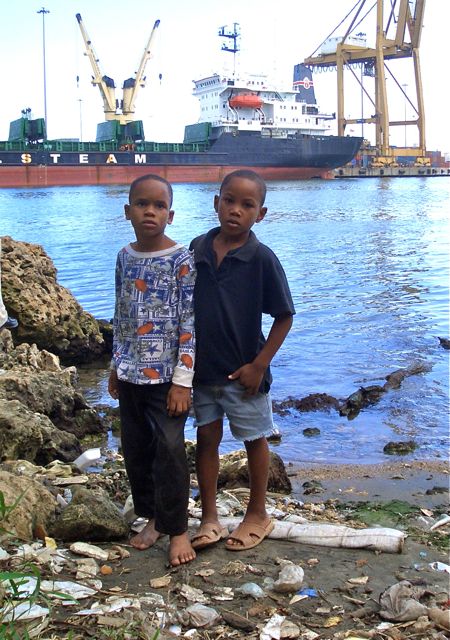
Haina, Dominican Republic - Children are developmentally impaired as a result of lead poisoning

Toxins and pollutants are major cause of illness

100 Million affected by 2000 toxic sites

By Stephen Leahy

UXBRIDGE, Canada, Nov 14, 2011 (IPS)

Toxic pollution affects the health of more than 100 million people, shortening their productive life spans by an astonishing 12.7 years on average.

It is a common misperception that disease is responsible for most illness, when in fact toxins and pollutants in the environment are a major source of illness and reduced life spans globally.

Unlike diseases, toxins and pollutants like lead, mercury, chromium, radionuclides and pesticides were created by humans and are often improperly disposed of in a classic example of fouling our own nests.

“To be honest, we were astonished the number was so large,” said Bret Ericson of the Blacksmith Institute, a small international NGO that released its annual report “World’s Worst Pollution Problems Report 2011” last week.

At least 100 million people are affected based on assessments of 2,000 toxic sites in 47 countries. Most of these sites are right inside villages and towns – all are close to people.

“There are thousands more sites out there,” Ericson told IPS. Continue reading

The Quiet Crisis: Lost Foodlands Cover Area Larger Than Canada and China Combined – Two Billion People Affected

12 Million Hectares Lost Every Year to Desertification

Dealing with desertification has a long history of failure.

By Stephen Leahy

CHANGWON, South Korea, Oct 13, 2011 (IPS)

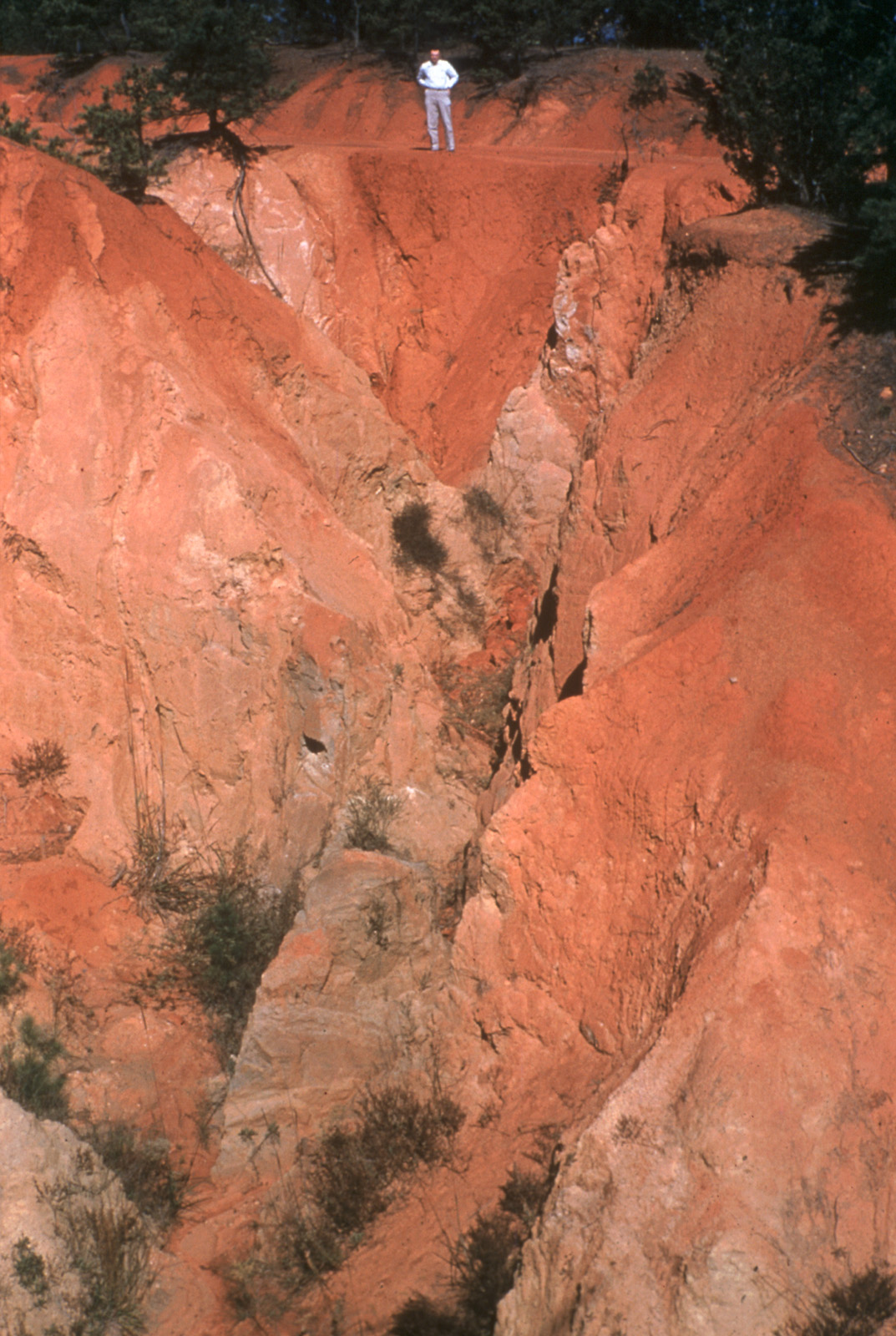
Degradation of land is the world’s quiet crisis, undercutting food production, increasing water scarcity, impoverishing hundreds of millions of people and affecting two billion overall. Nearly 20 million square kilometres of the earth’s arable lands – an area twice the size of Canada – have already been degraded.

Each year, 12 million hectares of land, where 20 million tons of grain could have been grown, are lost to desertification. Unless this trend is reversed soon, feeding the world’s growing population will be impossible, experts say. However, the global community has failed for over two decades to address this serious challenge.

Now, delegates from 193 countries are meeting in South Korea under the United Nations Convention to Combat Desertification (UNCCD) to review progress on a ten-year plan to reverse the ongoing decline in the quality and quantity of land in food-producing regions.

During the 10th Conference of the Parties (COP 10) under the UNCCD, delegates will also consider creating a scientific body like the Intergovernmental Panel on Climate Change to serve as the global authority on desertification and land degradation.

“The UNCCD will take bold steps towards delivering critical services to the two billion people that face negative impacts of desertification, land degradation and drought,” Luc Gnacadja, executive secretary of the UNCCD, told delegates during the opening session of COP 10 that began Oct. 10 and concludes Oct. 21.

Land degradation is mainly the consequence of poor land management in conjunction with changes in rainfall. Erosion and degradation most often result from ploughing fields, removing crop residues after harvest and overgrazing. It is akin to tire wear on cars – a gradual, less noticeable process with potentially catastrophic consequences if ignored for too long.

“People do not notice land degradation until there is a crisis,” said Pier Paolo Roggero, a scientist at University of Sassari in Italy. Continue reading

Gov’ts Fail to Invest in Hungriest, Poorest Regions Creating Crisis After Crisis

By Stephen Leahy

CHANGWON, South Korea, Oct 21, 2011 (IPS)

For millennia, people have coped with drought in the Horn of Africa, comprised mainly of drylands. Yet today, more than 13 million people there are starving because of political instability, poor government policies and failure to invest in the world’s poorest people, say experts here in Changwon.

2.5 billion dollars in humanitarian aid is needed to cope with a devastating hunger crisis in parts of Djibouti, Ethiopia, Kenya and Somalia.

Two billion people, half of whom are extremely impoverished, live in drylands around the world, according to Anne Juepner of the Drylands Development Centre at the UN Development Programme (UNDP) in Nairobi.

“Drylands are not wastelands, as is often thought. More than half of the world’s cattle, sheep, goats and most of its grains are grown in drylands,” Juepner told IPS in an interview outside of the United Nations Convention to Combat Desertification 10th Conference of the Parties (COP 10) in Changwon.

Juepner is here to launch UNDP’s “The Forgotten Billion”, a report to call attention to the fact that despite its productivity, drylands that comprise one third of the world’s land mass are also home to world’s poorest and most at-risk people. Continue reading

Looking to the Sahel for Lessons in Pushing Back Deserts To Feed Billions

By Stephen Leahy

CHANGWON, South Korea, Oct 17, 2011 (IPS)

Nearly all our food comes from the Earth’s limited food- producing lands, but those lands continue to be degraded, guaranteeing far higher food prices and less food in the future, experts warn.

But degradation and desertification can be halted and reversed, as evidenced by once barren parts of Africa’s dry Sahel Region that are now green and thriving thanks to local efforts.

“Without reversing ongoing land degradation, studies show food prices will be 30 percent [higher] and 12 percent less food available” by 2035, said Luc Gnacadja, executive secretary of the United Nations Convention to Combat Desertification (UNCCD), which is meeting here in Changwon, South Korea.
We can’t afford to deplete our food-producing lands when there will be nine billion people by 2050,” Gnacadja said.

Food security is a major theme at this 10th Conference of the Parties (COP 10) under the UNCCD, the international governmental convention charged with finding ways to end desertification and land degradation.

Although the world can produce enough food for everyone, roughly one in seven people will go hungry. Why? They simply cannot afford to buy enough food. World food prices remain 15 percent higher than a year ago, according to the U.N. Food and Agriculture Organisation (FAO). Food commodity speculation and climatic change that is bringing increased heat and changes in precipitation patterns, along with increasing demand for biofuels, have been blamed for rising food prices in recent years.

Largely unseen in the growing concern about feeding the world is the decline in the fertility of soils due to erosion and overuse. Every year, this results in the effective loss of some 12 million hectares of land. Continue reading

Rwanda Wins Gold for Forest Conservation Blueprint

By Stephen Leahy

UXBRIDGE, Canada, Sep 26, 2011 (IPS)

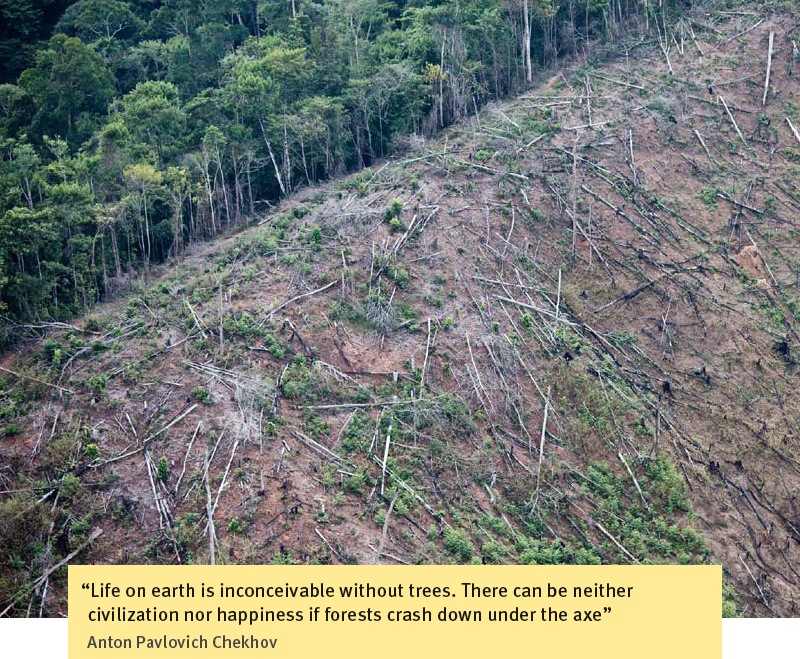
Government policies are seldom lauded, yet Rwanda’s forest policy has resulted in a 37-percent increase in forest cover on a continent better known for deforestation and desertification.

Rwanda’s National Forest Policy has also resulted in reduced erosion, improved local water supplies and livelihoods, while helping ensure peace in a country still recovering from the 1994 genocide.

Now Rwanda can also be known as the winner of the prestigious Future Policy Award  for 2011.

“Rwanda has sought not only to make its forests a national priority, but has also used them as a platform to revolutionise its stances on women’s

rights and creating a healthy environment,” said Wangari Maathai, Nobel Peace Prize Laureate and founder of the Green Belt Movement.

She issued a statement for the award ceremony in New York City last week just days before her death from cancer in Nairobi Monday at the age of 71. “Rwanda has been a very divided country since the 1994 genocide but this policy is helping to bring peace and value to the people,” said Alexandra Wandel, director of the World Future Council, which administers the Future Policy Awards.

The World Future Council is an international policy research organisation based in Hamburg, Germany that provides decision-makers with effective policy solutions.

“Our aim is to inspire other countries to adapt these successful policies to their individual needs.” said Wandel told IPS. Continue reading