Small Farmers Can Feed AND Cool the World – Industrial Agriculture Emits Almost 50% of Greenhouse Emissions

Agriculture and Food System Change needed to combat Climate Change

Women need to part of the solution

[UPDATE: Feb 2010. Small farmers can cool and feed the world according to Via Campesina. They may be right. After all industrial food production is about making profits not feeding the world nor is it concerned about carbon emissions. Shockingly the GRAIN study in this article did NOT include methane emissions from livestock, so the impact of big ag on climate is likely greater still.

Industrial agriculture is widely acknowledged to be unsustainable — check out this three-year international scientific assessment I covered in 2008 that will revolutionize farming as we know it. The food system is broken but the only reforms I hear about from governments, agribusiness and big NGOs are the same old solutions: new seeds and hi-tech equipment, more GMOs and maybe throw in some nanotech. Small farmers can already deliver what we need if we let them. — Stephen.]

By Stephen Leahy

COPENHAGEN, Dec 12’09 (IPS/TerraViva)

Industrial agriculture may emit nearly half of climate-heating greenhouse gases, but that reality has gone unrecognised by negotiators at the climate treaty talks here, say farmers with La Via Campesina, an international movement of hundreds of millions of small-scale peasant farmers.

“Small-scale farmers use 80 percent less energy than large monocultures,” said Chavannes Jean-Baptiste, a Haitian farmer with Mouvement de Paysan, through a translator.

“Peasant farmers from La Via Campesina and others can help cool the planet,” Jean-Baptiste told a press conference at the Klimaforum09, the alternative climate action talks being held here in Copenhagen Dec. 7-18.

Chavannes Jean-Baptiste, a Haitian farmer with Mouvement de Paysan

Unlike the official talks, set in a remote location surrounded by police and razor wire, Klimaforum09 is being held in the city’s community centre and is free and open to the public.

System Change for Climate Change” – that’s the phrase most often heard at the Klimaforum09 and in parts of Copenhagen.

La Via Campesina’s claim that industrial agriculture is by far the biggest source of carbon emissions is based on a recent study that looked at all emissions from the global food system.

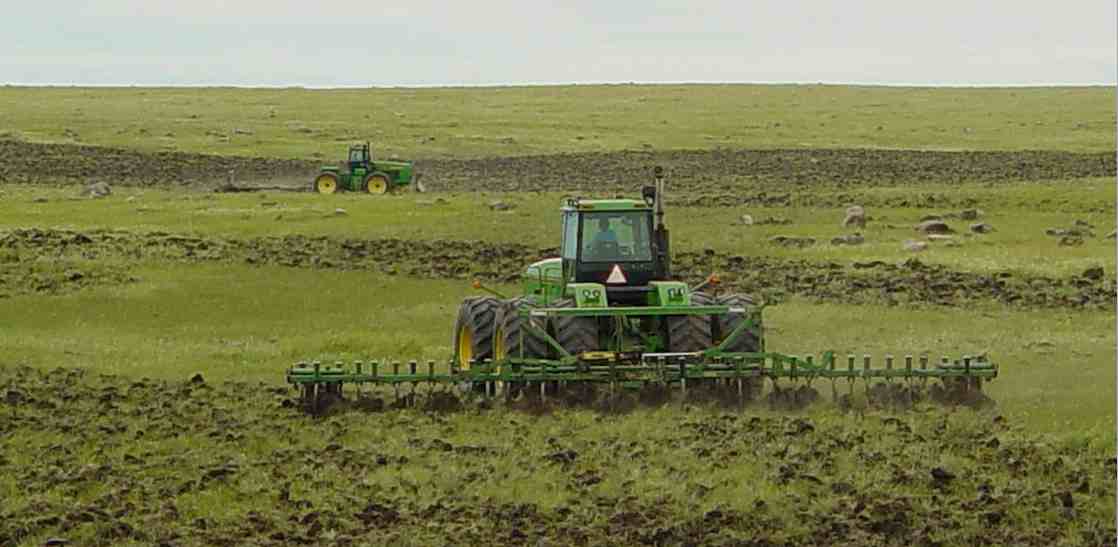
This includes oil-dependent industrial farming, together with the expansion of the meat industry, the destruction of world’s savannahs and forests to grow agricultural commodities, the use of fossil fuel energy to transport and process food, and the extensive use of chemical fertilisers.

This independent environmental journalism depends on public support. Click here learn more.

The study was conducted by GRAIN, an international non-governmental organisation that promotes the sustainable management and use of agricultural biodiversity to support local communities. Continue reading
Study: ‘Biotech Crops Bring Big Jump in Pesticide Use But Not Yields’ — hmm what would Monsanto say?

Report Failure to Yield: Evaluating the Performance of Genetically Engineered Crops reveals North America’s use of genetically engineered crops has promoted increased use of pesticides, an epidemic of herbicide-resistant weeds and more chemical residues in foods. Despite the biotechnology’s loud and well advertised claims they are the only hope for feeding the world and protect the environment.

Despite 20 years of research and 13 years of commercialization, genetic engineering has failed to significantly increase U.S. crop yields.

[Originally released April 2009 I did not get a chance to write about it then.]

It reviewed two dozen academic studies and is the first report to closely evaluate the overall effect genetic engineering has had on crop yields in relation to other agricultural technologies.

The report was released by nonprofits The Organic Center (TOC), the Union for Concerned Scientists (UCS) and the Center for Food Safety (CFS

My related articles:

Monsanto, Dow Stacking the Deck, Critics Say

The most complex genetically engineered corn (maize) yet has been approved for use next year in Canada and the United States without its potential health and environmental risks being investigated,

Organic farming more profitable and better than conventional systems – U of Wisconsin

Study concludes: governmental policy that supports mono-culture systems is outdated and support should be shifted to programs that promote crop rotations and organic farming practices.

Organic Agriculture Reduces Climate Change, Poverty and Hunger

Organic Provides 3X More Food Per Acre in Poor Countries – podcast

Overweight? Hungry? Blame “Hollow Food”

Organic Cure for Brain-damaging Pesticides Found in US Children

Male Infertility Linked to Pesticides

GM Crops Creating Pest Problems Around World

Global Day of Action Against Monsanto

maize - mexicoCanadians are calling and writing the Minister of Health to ask that she immediately halt the introduction of Monsanto’s new eight-trait GM (genetically modified) corn called “SmartStax” because it was not assessed for safety by Health Canada.

“SmartStax” corn was authorized this summer by the Canadian Food Inspection Agency for planting next year but was not examined by Health Canada for human health safety.

This is part of a global action opposing Monsanto’s genetically modified (GM) crops under the first “International Day of Action Against Multinational Corporations” initiated by the global farmers’ movement called La Via Campesina.

“Its extremely significant that La Via Campesina is focusing their World Food Day action on Monsanto and GM crops. It shows us that farmers around the world see GM crops as a major threat to their survival,” said Devlin Kuyek, a Montreal-based researcher for the international group GRAIN.

[Here’s my full story on SmartStax corn variety that could be planted next spring in US/Canada]

Monsanto, Dow Stacking the Deck, Critics Say
By Stephen Leahy

BERLIN, Jul 29 (IPS) – The most complex genetically engineered corn (maize) yet has been approved for use next year in Canada and the United States without its potential health and environmental risks being investigated, anti-biotech activists charged Wednesday. Continue reading

Food Supply In Deep Trouble – Agriculture Most Vulnerable to Climate Change

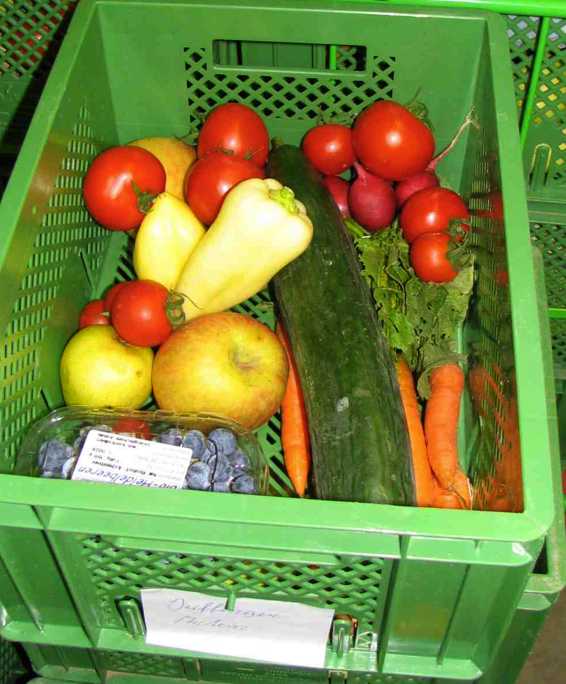
veg food basketBy Stephen Leahy

UXBRIDGE, Canada, Oct 2 (IPS)

Rocketing food prices and hundreds of millions more starving people will be part of humanity’s grim future without concerted action on climate change and new investments in agriculture, experts reported this week.

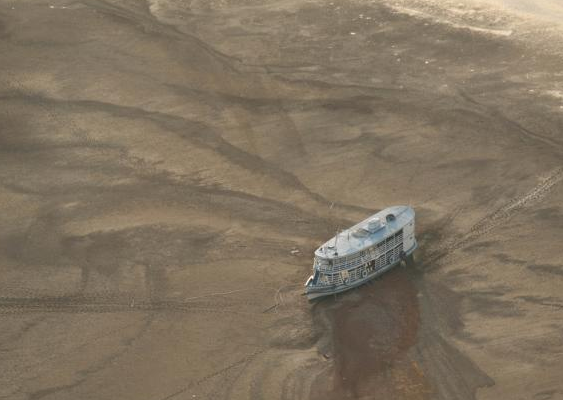
The current devastating drought in East Africa, where millions of people are on the brink of starvation, is a window on our future, suggests a new study looking at the impacts of climate change.

“Twenty-five million more children will be malnourished in 2050 due to effects of climate change,” such as decreased crop yields, crop failures and higher food prices, concluded the International Food Policy Research Institute (IFPRI) study.

“Of all human economic activities, agriculture is by far the most vulnerable to climate change,” warned the report’s author, Gerald Nelson, an agricultural economist with IFPRI, a Washington-based group focused on global hunger and poverty issues.

The report, “Quantifying the Costs of Agricultural Adaptation to Climate Change“, may be the “most comprehensive assessment of the impact of climate change on agriculture to date”, as IFPRI claims, but researchers concede that there is no current way to quantify all of the future repercussions of changing weather patterns on the food supply.

A critical component of agriculture is knowing the best time to plant seeds, for example. Farmers rely on their past experience and weather records. But one of the most robust science findings is that climate change has and will produce significant increases in weather variability.

This means extremes like droughts or floods will happen more often or last longer, and extreme temperature shifts are more likely. The past is no longer a reliable guide for farmers because the fundamental conditions in the atmosphere have been altered – far more heat is being trapped in the atmosphere today because of carbon dioxide and other greenhouse gases than at any time since the dawn of agriculture.

Nelson told IPS that the IFPRI report is a “conservative estimate” of the potential impacts and does not include impacts of pests and disease, loss of farmland due to rising sea levels or loss of water from melting glaciers. Continue reading

Climate Survival Means Anticipating and Adapting

Alberto Cesar AraujoBy Stephen Leahy

GENEVA, Sep 8 (IPS)

Imagine being able to know months in advance when and where floods or droughts may occur.

That is what over 150 countries participating in the third World Climate Conference, which concluded last Friday in Geneva, pledged to achieve through the creation of a Global Framework for Climate Services.

Today is a landmark day for making climate services available to all people,” said Michel Jarraud, secretary-general of the World Meteorological Organisation (WMO), convener of the conference, told over 2,000 climate scientists, sectoral experts and decision-makers.

“Climate services” is the long-distance cousin to weather services or weather forecasting. New technology and better climate science has opened the window to very long range forecasting of climate events like droughts weeks and months in advance.

This year, scientists were able to anticipate unprecedented flooding of the Red River Valley in the United States Midwest months in advance, enabling local communities to prepare and avoid the worst consequences, said Jane Lubchenko, a noted ecologist, administrator of the National Oceanographic and Atmospheric Administration (NOAA) and head of the U.S. delegation.

“Imagine farmers able to determine what to plant and where, based on drought forecasts three to five years in the future, or coastal communities able to plan for sea level rise and storm intensity,” Lubchenco told IPS.

The proposed Global Framework for Climate Services will “strengthen production, availability, delivery and application of science-based climate prediction and services”.

Continue reading

Content Control: Patents Threaten Traditional Knowledge of Indigenous People

Quechua in Cusco region

“To have potatoes, there must be land, people to work it, a culture to support the people, Mother Earth and the mountain gods…”

By Stephen Leahy*

VIENNA, Jul 6 (Tierramérica)

Indigenous peoples risk losing control over their traditional knowledge if the World Intellectual Property Organisation (WIPO) insists on strict standards for managing access to information.

Patents and other forms of restricting access to knowledge are very worrisome in a time of climate change, says a new report by the London-based International Institute for Environment and Development (IIED).

The study was presented at meetings of the WIPO – a United Nations agency – held Jun. 23-Jul. 3 in Geneva.

Intellectual property standards restrict use of genetic resources when we need flexibility and adaptability to cope with climate change,” said Michel Pimbert, director of IIED’s Sustainable Agriculture, Biodiversity and Livelihoods Programme.

WIPO aims to develop rules for protecting rights over traditional knowledge, such as indigenous knowledge about medicinal plants, which conventional intellectual property laws do not cover.

However, according to IIED’s Krystyna Swiderska, who coordinated the research in Africa, Asia and Latin America, “WIPO’s call for consistency with existing intellectual property standards is a flawed approach as these have been created on Western commercial lines to limit access to inventions such as drugs developed by private companies.”

Intellectual property is about restricting access, creating monopolies and eliminating competition, and it is being pushed by transnational pharmaceutical and seed companies, said Pimbert. Continue reading

James Lovelock: “there will be a sudden shift to a new global climate … 5 or 6C warmer”

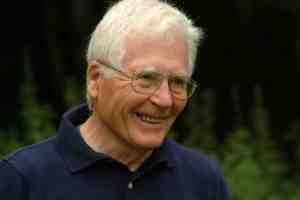
Lovelock_James credit Sandy Lovelock

Stephen Leahy interviews JAMES LOVELOCK the scientist who first proposed the Gaia Hypothesis

TORONTO, June 5 2009 (Tierramérica)

“When the first great climate disaster strikes, I hope we will all pull together just as if our nation were being invaded,” says British scientist James Lovelock in this exclusive Tierramérica interview.

Please throw something in the tip jar before reading on.
This is how I make my living.

As the world marksInternational Environment Day Friday, Lovelock argues that as the climate warms and the carbon content of the atmosphere soars, humanity is facing a far grimmer future that will be upon us sooner than any of the projections made by the Intergovernmental Panel Climate Change (IPCC).

A chemist, physician and biophysicist, Lovelock is one of the world’s foremost environmental scientists and founder of the Gaia Hypothesis, which describes the planet as a living organism, a complex system in which the components of the biosphere and atmosphere interact to regulate and sustain life.

Although his ideas often feed controversy, Lovelock has wide-ranging scientific credentials. As an inventor, he holds more than 50 patents, including the first devices for detecting the presence of ozone-depleting CFCs (chlorofluorocarbons) and pesticide residues in the environment.

He is also the author of many books. The most recent, “The Vanishing Face of Gaia: A Final Warning”, was published in April. Lovelock spoke with Tierramérica’s Stephen Leahy in Toronto.

TIERRAMÉRICA: Why are you critical of the IPCC? Continue reading

China, Korea, Saudi Arabia Lead Global Land Rush To Buy Farmland In Other Countries

By Stephen Leahy*

conversion of US grasslandANCHORAGE, Alaska, USA, May 5 (Tierramérica)

More than 20 million hectares of farmland in Africa and Latin America are now in the hands of foreign governments and companies, a sign of a global “land grab” that got a boost from last year’s food crisis.

Rich countries that are short on land or water at home are looking to secure food-producing lands elsewhere as a way to ensure food security for their populations, said Joachim von Braun, director of the International Food Policy Research Institute (IFPRI).

“There is a major lack of transparency in these land deals,” von Braun said in a telephone press conference from Washington.

The IFPRI study, “‘Land Grabbing’ by Foreign Investors in Developing Countries,” by von Braun and Ruth Meinzen-Dick, which was presented last week, estimates that 15 to 20 million hectares have been acquired or are in the process of being sold.

Von Braun pointed out that this is equivalent to about 25 percent of all the farmland in Europe.

Because hard data is difficult to come by – the study was based primarily on information from press reports – IFPRI conservatively estimates that the deals represent 20 to 30 billion dollars being invested by China, South Korea, India and the Gulf States, mainly in Africa.

“About one-quarter of these investments are for biofuel plantations,” von Braun said. Continue reading

Ethanol and Biofuels: Almost Everything You Need to Know

“The U.S. has led the fight to stem global hunger, now we are creating hunger,” said Lester Brown, president of the Earth Policy Institute.

Series of the latest articles that provide almost everything you need to know about why ethanol and biofuels will not reduce global warming but simply drive up fuel and food costs.

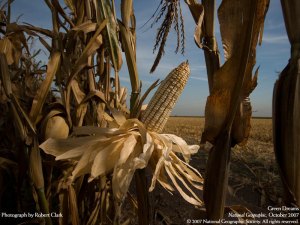
maize - mexicoEthanol Worse Than Gasoline

Only Green Part of Most Biofuels is the Wealth (Subsidies) They Generate

Ethanol: The Great Big Green Fraud

International Enviro Standards Needed for Biofuels

Six Experts On Why Ethanol is a Dumb Idea

Food & Fuel: Can Sorghum Be The New Magic Bullet Biofuel??

Biofuels: Another Good Reason to Hate American Policy

(Cellulosic) Greenest Ethanol Still Unproven

Global Warming Puts Food Supplies At Risk, New Green Revolution Needed

cattle-oz-rslBy Stephen Leahy

UXBRIDGE, Canada, Apr 2 (IPS) – Don’t forget about agriculture in the upcoming global negotiations to combat climate change, experts warn. Not only is farming most at risk in an increasingly variable and tempestuous climate, it is also a major emitter of greenhouse gases.

But with the right policies in place, agriculture could both continue to feed the world and play a crucial role in solving the climate problem.

“Agriculture has been missing in the run-up talks to Copenhagen,” says Mark Rosegrant of the International Food Policy Research Institute (IFPRI).

The nations of the world will meet in Copenhagen this December to hammer out a new climate treaty to reduce emissions of greenhouse gases (GHGs) and establish a fund to help poorer countries adapt. The complex process began in 2007 at the Bali talks, continued in Poznan, Poland in 2008 and is ongoing this week in Bonn.

Agriculture accounts for about 15 percent of human emissions of GHGs, IFPRI says, although the Intergovernmental Panel on Climate Change puts it higher at 25 percent. Much of those emissions come from developed countries that rely heavily on fossil fuels and fertilisers and raise far more methane-emitting livestock.

With climate change the world is facing reduced yields of up to 20 percent in maize and rice by the year 2050, Rosegrant told IPS. Much of that yield decline will be in the developing world, mainly because sub-tropical and tropical regions are expected to be hit hardest by significant changes in water availability and warmer temperatures.

Climate change could mean ever-rising food prices and therefore significant investments are needed in agricultural research to help countries cope with the coming changes, he says: “We’re trying to work out what the costs for adaptation in agriculture might be.” Continue reading