Global Warming Puts Food Supplies At Risk, New Green Revolution Needed

cattle-oz-rslBy Stephen Leahy

UXBRIDGE, Canada, Apr 2 (IPS) – Don’t forget about agriculture in the upcoming global negotiations to combat climate change, experts warn. Not only is farming most at risk in an increasingly variable and tempestuous climate, it is also a major emitter of greenhouse gases.

But with the right policies in place, agriculture could both continue to feed the world and play a crucial role in solving the climate problem.

“Agriculture has been missing in the run-up talks to Copenhagen,” says Mark Rosegrant of the International Food Policy Research Institute (IFPRI).

The nations of the world will meet in Copenhagen this December to hammer out a new climate treaty to reduce emissions of greenhouse gases (GHGs) and establish a fund to help poorer countries adapt. The complex process began in 2007 at the Bali talks, continued in Poznan, Poland in 2008 and is ongoing this week in Bonn.

Agriculture accounts for about 15 percent of human emissions of GHGs, IFPRI says, although the Intergovernmental Panel on Climate Change puts it higher at 25 percent. Much of those emissions come from developed countries that rely heavily on fossil fuels and fertilisers and raise far more methane-emitting livestock.

With climate change the world is facing reduced yields of up to 20 percent in maize and rice by the year 2050, Rosegrant told IPS. Much of that yield decline will be in the developing world, mainly because sub-tropical and tropical regions are expected to be hit hardest by significant changes in water availability and warmer temperatures.

Climate change could mean ever-rising food prices and therefore significant investments are needed in agricultural research to help countries cope with the coming changes, he says: “We’re trying to work out what the costs for adaptation in agriculture might be.” Continue reading


Organic farming more profitable and better than conventional systems – U of Wisconsin

stanford-food-security-banner-sml

A University of Wisconsin’s College of Agriculture and Life Science study has found that “diversified (organic) systems were more profitable than monocropping”. Looked at the Midwestern crop standards of continuous corn, no-till corn and soybeans, and intensively managed alfalfa.

Study concludes: governmental policy that supports mono-culture systems is outdated and support should be shifted to programs that promote crop rotations and organic farming practices.

This is just one a many recent studies offering clear evidence that diversified/organic/ecoag farming systems are safer, better and more environmentally sustainable than conventional monocultures:

Organic Agriculture Reduces Climate Change, Poverty and Hunger

Organic Provides 3X More Food Per Acre in Poor Countries – podcast

Overweight? Hungry? Blame “Hollow Food”

Organic Cure for Brain-damaging Pesticides Found in US Children

Male Infertility Linked to Pesticides

GM Crops Creating Pest Problems Around World

Tourism Can Reduce Poverty But Some Places Must Be Off-Limits

img_0330By Stephen Leahy*

QUEBEC CITY, Mar 24 (Tierramérica)More than ever before, global tourism must play its part in sustainable development and poverty alleviation, stated experts at an international symposium in this Canadian city.

But others wonder if tourism can be truly sustainable when it involves flying thousands of kilometres to reach some “carbon-neutral” eco-lodge in the jungle.

Climate change is a major concern and air transport makes a significant contribution, sustainable tourism expert Costas Christ told more than 500 attendees of the International Symposium on Sustainable Tourism Development, Mar. 16-19.

However, Christ said, it is also important to tell the public that international tourism has played a major role in preserving biodiversity and in conservation in general.

“Without tourism, the Pantanal (in South America), the world’s largest wetland, would have just turned into a major cattle feed-lot for McDonald’s,” said Christ, a former board chair of The International Ecotourism Society.

If it weren’t for tourism, Africa would not have its game parks and nature preserves, and the Coral Triangle (which encompasses the waters of Indonesia, Malaysia, Papua New Guinea, Philippines, Solomon Islands and Timor-Leste) would have been devastated by overfishing, he continued.

“Tourism is not the problem; the challenge is how to do tourism right,” Christ told Tierramérica in an interview. Continue reading

Acid Oceans and Seas Without Fish – Hot New Doc

seachange-header

Lots of buzz about a hot, new documentary film A Sea Change which is about ocean acidification and its potential to empty the oceans of fish. I haven’t seen the film although I had a chance to at a seafood conference in San Diego last month but couldn’t face a visual version of a topic I’ve written about since 2006.  I have enough trouble sleeping as it is… 

Turns out the filmmakers got the idea to make the film by ‘googling’  “ocean acidification” in Nov 2006 and found very few entries. I guess my 2006 articles were among the first-ever articles published about ocean acidification and how climate change is a major threat to the global oceans. — Stephen

July 5 2006

Ailing Reefs Face New Threat of Acidity
By Stephen Leahy

Climate change is making the world’s oceans more acidic, seriously endangering marine ecosystems, including coral reefs. 

Carbon dioxide emissions from the burning of fossil fuels have already made the oceans 30 percent more acidic than they have been in millions of years, according to a new report by leading scientists. And the rate of acidification is accelerating as the oceans absorb more than two billion tonnes of carbon each year from the atmosphere. 

“This is a dramatic change in the world’s oceans, a change that marine organisms have never dealt with before,” said Joan Kleypas, the report’s lead author and a scientist at the National Centre for Atmospheric Research (NCAR) in Boulder, Colorado. 

“The oceans have changed and they are becoming more acidic. There is no debate about this,” Kleypas told IPS. Continue reading

Interview With One of the Last Environmental Journalists Left Standing

steve-on-log-in-oz-rslpixApparently as one of the few independent international environmental journalists I’m a rare beast worthy of public curiosity. In the past year I’ve been asked to do a number of talks at various conferences, colleges and universities in a number of countries and a growing number of media interviews.

Here’s my  15 min radio interview on the well-informed Radio EcoShock— talk about hard questions on big issues of our time. (@ 19:00 min)

Vancouver’s wonderful RADIO ECOSHOCK is the best environmental radio/podcast programs on the planet. One hour each week of new, innovative and intelligent information with a wry sense of humor by host Alex Smith. Check out his blog for even more.

Get links to my latest articles once a week.

This week’s EcoShock program: PROGRESS AND DENIAL

Climate change is not about politics or negotiations, but inevitable physics and science. Latest speeches by Bill McKibben and Van Jones. A look at twisted climate deniers John Coleman and Michael Savage. Interview with indy enviro journalist Stephan Leahy. Humour from Craig Mayhemradio-eco-header

Aquaculture To Double Production But Will It Destroy the Oceans?

salmon_farmsBy Stephen Leahy

SAN DIEGO, U.S., Feb 16 (Tierramérica) – With wild fish catches in sharp decline, aquaculture, which now accounts for nearly half of all seafood consumed, is expected to double production over the next two decades.

“Aquaculture is the future… [It] will be a major industry in the (developing) South and will be a major source of employment and income, replacing wild catch in terms of importance,” according to Jason Clay, a scientist with the U.S. branch of the Worldwide Fund for Nature (WWF).

The United Nations Food and Agriculture Organisation (FAO) predicts that per capita seafood consumption will increase 1.5 kilogrammes in the coming two decades, Clay told the nearly 500 participants in the recent Seafood Summit, held in the U.S. Pacific coast city of San Diego.

The international meet earlier this month, organised by Seafood Choices Alliance, gave fishers, fish farmers, multinational seafood corporations and seafood buyers a chance to mix with conservationists and scientists to debate – and attempt to find common ground about – the question: Can aquaculture be environmentally and socially responsible? Continue reading

So Long, Salamanders

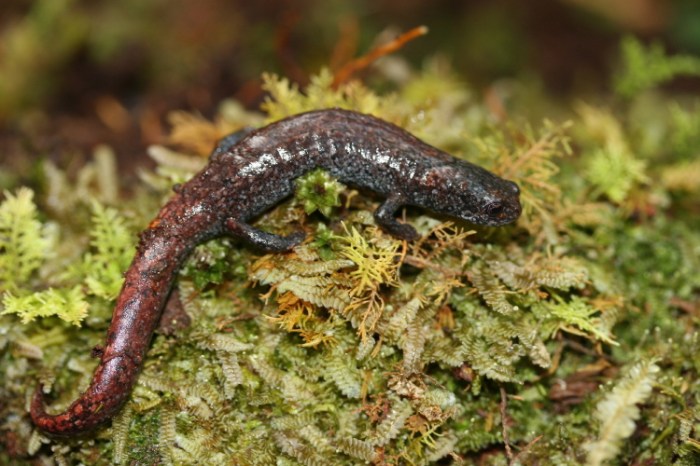
Bradytriton silus, a salamander of the Guatemalan cloud forest long thought to be extinct but rediscovered this January 2009.

By Stephen Leahy*

SAN DIEGO, U.S., Feb 21 (Tierramérica) – Mesoamerica’s salamanders appear to be joining the global decline in amphibian species, like frogs, adding to the evidence of ecological change around the planet.

“What’s happening to salamanders and other amphibians may be a strong lesson for humans,” says lead researcher David Wake, of the University of California at Berkeley.

There are global changes that are altering ecosystems and disease patterns, thus creating new elements of biological pressure, he said.

Wake and his colleagues have discovered that several salamander species have vanished or have become very rare since the 1970s in closely studied areas in western Guatemala and the southern Mexican state of Chiapas. These findings were published last week in the Proceedings of the National Academy of Sciences.

Climate change and disease are likely causing the declines but scientists do not know why, Wake, one of the world’s salamander experts, told Tierramérica.

“We don’t know what the impacts are on local ecosystems, but they could be significant,” he said. Continue reading

Fishers Learn to Share Shrinking Catch

albacore-tuna-fishing-vessel-san-diego1

By Stephen Leahy

SAN DIEGO, California, Feb 10 (IPS) – With the oceans in crisis, where will our fish – an important source of protein for billions of people – come from?

Innovative new fisheries management tools called “catch share” have begun in recent years and promise to keep fish on the menu for future generations, according to experts at the recent Seafood Summit in San Diego.

“Adaptation is the key – adaptation and innovation,” Kristjan Davidsson, former CEO of Iceland Seafood International, told over 450 conference attendees last week.

“It is not hard to see that sustainability is the way to go but that requires collaboration with all sectors,” Davidsson said.

The summit brought together fishers, fish farmers, multinational seafood corporations and seafood buyers, along with conservationists and scientists, to debate and find common ground on how to create a sustainable seafood industry and protect the oceans.

Fish account for 28 percent of the animal protein consumed in Asia and 16 percent globally. North America is at the low end of the scale, with fish accounting for just 6.6 percent of animal protein, according to data from the U.N. Food and Agriculture Organisation. Continue reading

Plenty of Blame for Collapsing Fish Stocks

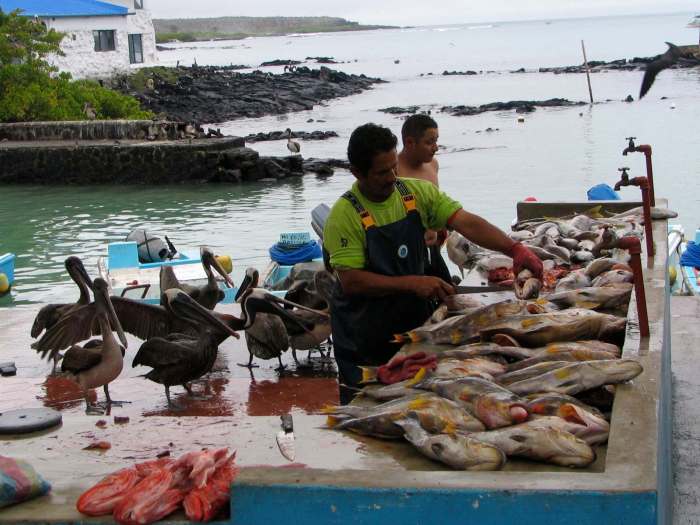
yellow-fin-tuna-catch-galapagosBy Stephen Leahy

SAN DIEGO, California, Feb 4 (IPS) – Climate change, pollution and overfishing have left the oceans in crisis, experts agree. Now a new study reveals that every national government with a fishing fleet has dramatically failed to manage fisheries in a responsible manner.

A detailed survey of the 53 countries that land 96 percent of the world’s marine catch shows that all have failed to comply with the U.N. Food and Agriculture Organisation’s Code of Conduct for Responsible Fisheries. Developed in 1995, the 53 fishing nations all agreed to comply with the code as a potential rescue measure for the world’s fisheries.

And while countries claimed to comply, in fact not one is in full compliance, according the detailed analysis reported in the science journal Nature Wednesday.

I’m confident we would have turned the corner on the collapsing fish stocks had countries complied with the code,” said Tony Pitcher of the University of British Columbia in Vancouver, Canada, one of the study co-authors. Continue reading

Tropical Forests Fight for Survival

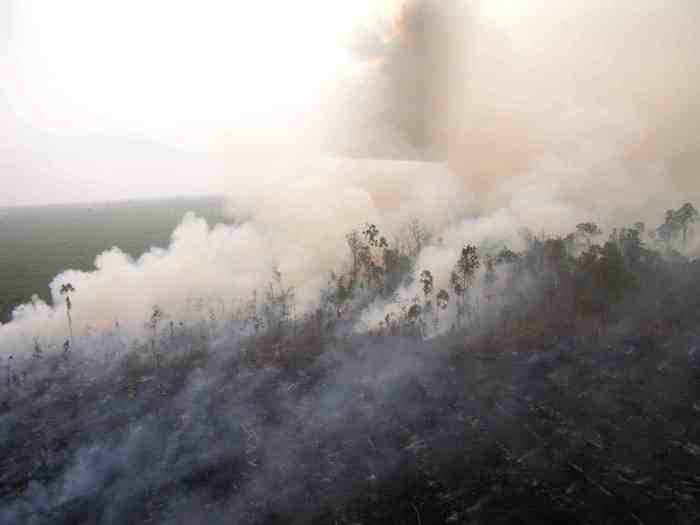
sumatra-burning-forest-courtesy-of-kim-worm-sorensen-sml

By Stephen Leahy*

UXBRIDGE, Canada, Jan 28 (Tierramérica) – Current rates of deforestation suggest there will hardly be any tropical forests left in 20 years. Sixty percent of the rainforests, which survived for 50 million consecutive years, are already gone.

However, some experts say widespread planting of previously logged forests offers hope for preserving some of the region’s rich and unique biodiversity.

Recent satellite data have shown that about 350,000 square kilometres of the original forested areas are growing back, Greg Asner of the Washington-based Carnegie Institution said at the Smithsonian symposium Jan. 12 at the Smithsonian National Museum of Natural History, also in the U.S. capital.

That is only 1.7 percent of the immense planetary belt of original forest that once covered 20 million square kilometres. Twelve million sq km have already been cleared while another five million have been selectively logged, Asner reported.

“There is going to be lots of tropical forest left in the future but it will be different forest,” says Joseph Wright of the Smithsonian Tropical Research Institute (STRI) in Panama. Continue reading