Wrote this nearly fours year ago, can’t believe it is more relevant than ever.

Stephen's avatarStephen Leahy, International Environmental Journalist

truth-over-fear.jpg

100,000 repetitions of a lie is still a lie

Many of those who deny that burning fossil fuels is altering the climate work diligently to confuse and delay action that would in reality benefit nearly all of us. These professional deniers and their followers can be convincing, citing well-known experts and twisting their views and findings.

So here’s a couple of common sense tips to add to your BS detection system.

Denier Tip #1:Check out suspect claims/sources with a simple Google search

100,000 repetitions or variations of a lie is still a lie. A reader recently told me global warming is really caused by variations in the sun’s activity. His proof was a “science” article from Investor’s Business Daily that said this was the conclusion of the Max Planck Institute for Solar System Research, a well-known research centre in Germany. A quick check of the Institute’s website…

View original post 216 more words

Faith Groups Call for African Spirit of “Ubuntu”; End Sinful, American-style Greed

South African Bishop Geoff Davies (L) and Mardi Tindal, Moderator of the United Church of Canada

By Stephen Leahy

DURBAN, South Africa, Dec 9 (IPS)

African and international faith leaders urged governments attending the final day of climate change negotiations to do what is right and necessary to keep global temperature from rising no more than 1.5 degrees Celsius.

“The two degrees Celsius target is unacceptable because temperatures in much of Africa will be far higher,” said South African Bishop Geoff Davies.

Oil and coal companies along with other major polluting corporations are engaged in “crimes against humanity and the planet” because they continue to pollute the atmosphere when they have ability to do otherwise, said David Le Page of the Southern African Faith Communities’ Environment Institute (SAFCEI).

More than 130 African faith leaders have signed a declaration offering specific recommendations based science, honesty, morality and equity. They called on delegates negotiating a new climate treaty here at the 17th Conference of Parties to live up to the African spirit of “ubuntu” – a way of living focused on people’s allegiances and relations with each other.

The current economic system encourages “people to get as rich as they can and forget about anyone else,” said Davies. “It’s an immoral system.”

“Historic polluters like the United States have to reduce their emissions dramatically” and their position here is “shocking” and “reprehensible”, he said. The children and grandchildren of U.S. congressmen will ask what they were doing to be so selfish and irresponsible, Davies said.

The U.S is the most religious society in the world but their behaviour is “sinful” in their refusal to reduce emissions that causing so much suffering among people, he said.

“When lifestyles of the wealthy hurt the lives of the poor….and future generations it is wrong,” Mardi Tindal, Moderator of the United Church of Canada, the country’s largest Protestant denomination.

“Climate change is a moral, ethical and spiritual issue. We need moral leadership not political leadership,” Tindal told IPS.

“South Africa has had courageous, moral leaders like Ghandi and Mandela. If our leadership shows the same moral courage the people will follow them.” Continue reading

Truth and Wisdom From Spiritual Leaders at Durban Climate Talks

Why do countries at the international climate talks accomplish so little when they apparently understand the science and risks of global warming?

Here is the knowledgeable, depressing and yet inspiring answer from three remarkable spiritual leaders:


That was a press conference on one the last days of the 2011 climate talks in Durban. And here is the article I wrote about this and the “ubuntu” declaration by more than 130 African faith leaders. — Stephen 

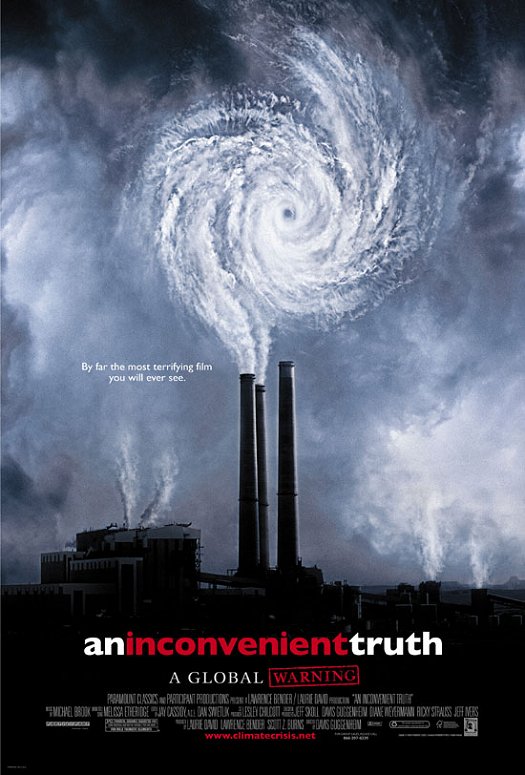
A Very Inconvenient Truth: Gore Got It Right on Global Warming

[Reposted from 2006, nearly six years ago. It offers interesting perspective about the continuing (worsening?) political insanity of inaction  – Stephen]

By Stephen Leahy

BROOKLIN, Canada, Jun 20 (IPS)

Former U.S. Vice President Al Gore’s documentary on global warming, “An Inconvenient Truth”, is filling theatres across North America – and gets the science right, according to climate experts.

“I saw it last night and was impressed with the climate science presented in the film,” said David Archer, a climatologist at the University of Chicago.

“I left the theatre profoundly depressed because of the political insanity in this country that denies global warming is a concern,” Archer told IPS.

Gore’s personal passion about global warming can be traced to the early 1980s. After losing the election to George W. Bush in 2000, Gore dedicated himself to warning the public about the devastating impacts climate change will have on hundreds of millions of people.

“An Inconvenient Truth” is a 98-minute documentary comprised mainly of highlights from Gore’s high-tech slide show explaining the science documenting global climate change.

Some truths are hard to hear, because if you really hear them – and understand that they are in fact true – then you have to change. And change can be quite inconvenient,” Gore says in the film.

Using an impressive set of graphics, he carefully illustrates changes underway such as receding glaciers, collapsing ice sheets, devastating floods and droughts. One memorable scene shows a graph of carbon-dioxide levels in the atmosphere going back 650,000 years that varies only a little until fifty years ago when it skyrockets. Gore mounts a motorised platform to lift him up high up the chart so he can place his finger on the current level of CO2. Continue reading

Shale Gas a Bridge to More Global Warming

Shale Gas Worse Than Coal Study Finds

By Stephen Leahy

UXBRIDGE, Canada, Jan 24, 2012 (IPS)

Hundreds of thousands of shale gas wells are being “fracked” in the United States and Canada, allowing large amounts of methane, a highly potent greenhouse gas, to escape into the atmosphere, new studies have shown.

Shale gas production results in 40 to 60 percent more global warming emissions than conventional gas, said Robert Howarth of Cornell University in New York State.

“Shale gas also has a larger greenhouse gas footprint than oil or coal over the short term,” said Howarth, co-author of a study called “Venting and Leaking of Methane from Shale Gas Development” to be published in the journal Climatic Change.

(Audio of news conference)http://of%20news%20conference

This latest study follows up on Howarth and colleagues’ controversial April 2011 paper that provided the first comprehensive analysis of greenhouse gas emissions from shale gas obtained by hydraulic fracturing. That study found that when gas wells are “fracked”, they leak large amounts of methane and pose a significant threat to the global climate.

“We stand by the conclusion of our 2011 research,” said Howarth.

That research undercuts the logic of energy sector claims that shale gas is a “bridge” to a low-carbon energy future. Those claims are based on the fact that natural gas (which is mainly methane) has half the carbon content of coal, and when burned for electricity it is more energy efficient than coal.

This independent  journalism depends on public support. Click here learn more.

However, those climate gains are more than negated by methane leaks both at the well during the fracking process (called flow-back), and through the gas delivery and distribution system. Howarth and colleagues estimate that between 3.6 and 7.9 percent of all shale gas produced leaks – called “fugitive emissions” – into the atmosphere, making it worse than burning coal or oil. Continue reading

Oceans Becoming Hot, Sour and Breathless

Oceans home to 80% of all life — plankton provide 50 percent of the oxygen we breathe

By Stephen Leahy

DURBAN, South Africa, Dec 3 (IPS)

The world’s oceans are becoming hot, sour and breathless – threatening a vital source of food for a billion people mainly in the developing world experts warned today at a special Oceans Day event at the UN climate negotiation.

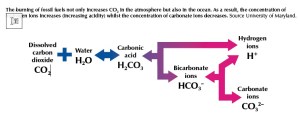
Oceans are home 80 percent of all life on the planet and emissions from fossil fuels are turning them increasingly acidic, raising water temperatures and reducing the amount of oxygen in some regions said oceanographer Carol Turley from Plymouth Marine Laboratory in the UK.

“We don’t know what all the consequences will be. We suspect the combination of all three will be far worse than one alone,” Turley told IPS in an interview on the sidelines of climate treaty negotiations known as COP 17.

It was only a few years ago that researchers realised that human emissions of carbon dioxide (CO2) was making the surface waters of oceans more acidic. The oceans naturally absorb CO2 from the atmosphere and have now absorbed about a third of all human emissions. That has kept the climate from warming faster but the additional carbon is altering the oceans’ chemistry making them 30 percent more acidic.

One documented impact is that shell-forming creatures like plankton produce thinner shells in more acidic ocean waters. These species are often very important parts of the marine food chain. As emissions of CO2 into the atmosphere increase the more the ocean sours.

[See a powerful 11 min film on Ocean acidification]

In less than ten years at least 10 per cent of the Arctic Ocean surface waters will be too acid for shell-forming species like plankton. By 2040 most of the Arctic Ocean will be too acidic as will significant areas of the Antarctic Ocean said Turley.

Change in sea water acidity pH caused by anthr...The cold waters of the polar regions allow more CO2 to be absorbed faster. The oceans haven’t seen a rapid change like this in 60 million years, she explained.

“But there will also be strange impacts. New research is showing changes in growth, behaviour and reproduction in a variety of non-shell forming species.”

Estuaries and ocean upwelling zones that are often important fishing grounds are also regions where acidification is fastest. Those areas are also subject to low oxygen levels and increasing temperatures creating new conditions in the oceans that no marine species has ever had to cope with.

Oceans are also absorbing most of the extra heat trapped by the additional CO2 in the atmosphere. Again, without this land temperatures would far higher and extreme weather events far worse.

“There is some evidence that some crab species cannot tolerate higher temperatures when ocean is more acidic,” she said.

Continue reading

“Fracking” for Shale Gas: The Bridge to Global Warming Disaster

Switching from coal to gas can increase global warming – NCAR

[UPDATE JAN 20 2012: New study published in journal Climatic Change shows large volumes of methane released during fracking]

By Stephen Leahy 

DURBAN, South Africa, Dec 5, 2011 (Tierramérica)

Hydraulic fracturing or “fracking” is being used to tap the last remaining natural gas deposits across large areas of the United States and western Canada, fueling continued dependence on hydrocarbons instead of a shift to genuinely clean energy sources to cool the planet.

Called shale gas, these deposits represent a new and enormous source of fossil fuel.

“Fracking is driving exploration and drilling all over the United States,” said Gwen Lachelt of the non-governmental organisation Earthworks’ Oil & Gas Accountability Project.

“The oil and gas industry is marching across America from Texas to North Dakota and from the east coast to California,” Lachelt told Tierramérica.

There may be as much as 23,427 billion cubic metres (bcm) in recoverable gas from U.S. shale formations, according to the Annual Energy Outlook 2011, released in April by the U.S. Energy Information Administration (EIA).

The United States will consume 650 bcm of natural gas this year, the EIA projected. Globally, it estimates reserves of “unconventional gas” – the oil and gas industry term for shale gas and coal bed methane – at 915,000 bcm, with 100,000 bcm in Latin America.
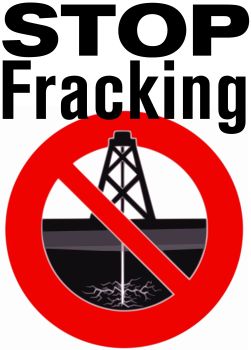
However, that estimate is already out of date due to developments in fracking technology and exploration. The EIA estimate of shale gas in the United States in 2009 was less than half the 2011 estimate.

Fracking uses horizontal drilling and hydraulic fracturing with high pressure water and chemicals to fracture gas-bearing shale rock.

Holes are drilled vertically as little as 100 metres and as much as 3,000 metres into the shale, and then horizontally 1,000 metres along the shale formation. Chemicals and large amounts of water are pumped underground at high enough pressure to fracture the shale, releasing the gas into the pipeline.

The “dash for gas” as the industry pundits like to say is being driven by potential exports to Asia and the mistaken belief that natural gas is the “transition fuel” from coal to a low-carbon economy.

It is true that natural gas is “cleaner” in that it releases about 40 to 45 percent less carbon dioxide than coal does to produce the same amount of energy.
However, gas from fracking has a higher carbon footprint because more energy is needed to get the gas and because methane leaks out.

Methane has 25 times the warming impact of carbon dioxide.

Switching from coal to gas as an energy source could result in increased global warming, not less, according to the study “Coal to Gas: The Influence of Methane Leakage”, released in September by the U.S. National Center for Atmospheric Research (NCAR).

This is mainly due to the methane leakage problem, which is common but unregulated.

[UPDATE JAN 20 2012: New study published in journal Climatic Change shows large volumes of methane released during fracking]

In Unprecedented Move, Harper Government Pulls Canada out Kyoto Protocol

Stephen Harper called Kyoto a “socialist scheme to suck money out of wealth-producing nations

Wealth-producing Nations Condemn Canada’s Withdrawal

By STEPHEN LEAHY

CAPE TOWN, Dec 14, 2011 (IPS)

Barely 24 hours after it signed a new global climate change agreement in Durban, South Africa, Canada became on Monday the first country to formally withdraw from the Kyoto Protocol, the only legally binding treaty to reduce emissions causing climate change.

The 17th Conference of the Parties (COP17) concluded last Sunday with an agreement called the Durban Platform, which includes a consensus agreement for a second commitment period of the Kyoto Protocol after the first expires at the end of 2012.

Canada’s government under Stephen Harper essentially agreed to a continuation of Kyoto only to announce formal withdrawal after Canadian Environment Minister Peter Kent arrived back safely in Canada on Monday.

“Kyoto, for Canada, is in the past,” Kent said in Durban on Dec. 7. Still, he insisted in a statement on Monday, “Canada went to Durban in a spirit of good will.”

Despite the so-called good will, Canada is well known as a pariah on climate and environmental issues, having being judged as the most uncooperative country for the last five climate treaty COPs.

Kent brought a “reckless arrogance with him to Durban, where he’s maintained a hard line… and fought hard to put polluters before people”, according to Climate Action Network, an international coalition of environmental non-governmental organisations (NGOs) attending COP17.

Canada’s withdrawal comes as no surprise. Mirroring the views of the fossil fuel industry, the Harper government has expressed disdain for the Kyoto Protocol. In a fundraising letter prior to coming to power in 2006, Harper called it a “socialist scheme to suck money out of wealth-producing nations”.

Under the Kyoto Protocol, Canada agreed to reduce its carbon emissions by six percent by 2012 in comparison to its 1990 emissions.
In Durban Canada wins Fossil of Year for 5th Year
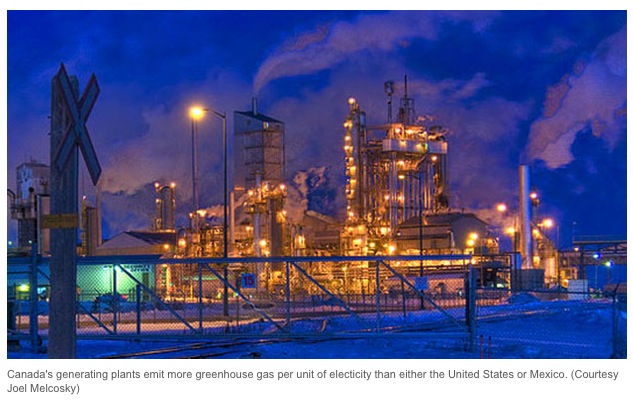
While Canadians individually cut emissions at the urging of previous governments, the enormous expansion of emission-laden tar sands operations inflated Canada’s emissions by 24 percent above 1990 emissions.

On Monday, Kent said that for Canada to meet emissions targets would entail taking every vehicle off the road and cutting the heat in every building in the country. He did not mention reducing emissions from the tar sands.

“I regret that Canada has announced it will withdraw and am surprised over its timing,” said Christiana Figueres, executive secretary of the U.N. Framework Convention on Climate Change (UNFCCC), under which climate negotiations like COP17 are held. Continue reading

EcoMobility Gaining Ground As Cars/Roads Become Too Expensive

Car Ownership Declines in Europe as Cities’ Focus on Walking, Bikes & Public Transit

Cost of Personal Car Ownership Tops $10,000 a year

By Stephen Leahy

CHANGWON, South Korea, Nov 1, 2011 (Tierramérica)

Berlin is a big capital city of a country famed for making excellent automobiles, but it can no longer afford roads and is now moving people by transit, bike and especially through walking.

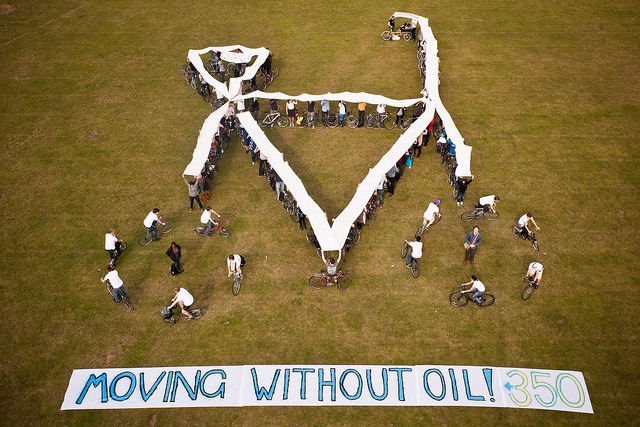
Berlin is not alone. Paris, Tokyo, Seoul, Bogotá, New York City and other major cities simply cannot afford the cost, the pollution, the noise and the congestion of more cars. They are embracing a new concept called EcoMobility – mobility without private cars.

“EcoMobility is not only walking, cycling and public transportation. It is about these three systems clicking together: connectivity is the key,” Gil Peñalosa, former director of parks and recreation in Bogotá, Colombia, told those attending the EcoMobility Changwon 2011 congress.

The congress on Mobility for the Future of Sustainable Cities was organised by the South Korean city of Changwon and ICLEI – Local Governments for Sustainability, an association of local government members from more than 1,220 cities in 70 countries.

“The famous Times Square in New York City is now a permanent pedestrian mall. Who would have believed that could happen just three years ago?” Peñalosa commented to Tierramérica.

“Five years ago who would have thought Paris would have over 22,000 bikes as part of a tremendously successful bike sharing system?” added Peñalosa, who is now the executive director of 8-80 Cities, an NGO based in Toronto that promotes walking, cycling, parks and urban trails to improve the public life of cities.

“We need to build cities around people and not around cars,” he stressed. Continue reading

Canada’s Harper Government Guts Environment, Science and Monitoring Programs

Man w picture of grandchild was arrested for protesting against tar sands expansion, Sept 2011 Ottawa, Canada - Pix by R Leahy

Environment budget slashed while PM Harper’s office places a gag order on government scientists. (And a $60 billion order for military equipment)

By Stephen Leahy

UXBRIDGE, Canada, Nov 9, 2011 (IPS)

Canada’s Stephen Harper government is spending more than 60 billion dollars on new military jets and warships while slashing more than 200 million dollars in funding for research and monitoring of the environment.

Amongst the programmes now crippled is Canada’s internationally renowned ozone monitoring network, which was instrumental in the discovery of the first-ever ozone hole over Canada last spring. Loss of ozone has been previously linked to increases in skin cancer.

“The proposed cuts go so far the network won’t be able to do serious science,” said Thomas Duck, an atmospheric scientist at Halifax’s Dalhousie University.

Canada was the pioneer in ozone monitoring, developing the first accurate ozone measuring tool that led to the discovery that the world’s ozone layer was dangerously thinning in the 1970s, which in turn led to the successful Montreal Protocol on Ozone Depleting Substances.

Canada has about one-third of the ozone monitoring stations in the Arctic region. It also hosts the world archive of ozone data, which is heavily relied on by scientists around the world.

“There’s only one guy running the entire archive, and he’s received a lay-off notice letter,” Duck told IPS.

Ozone monitoring and research is part of Environment Canada, the government department charged with protecting the environment, conservation and providing weather and meteorological information.

“Canada can’t afford to pay scientists but we can line the pockets of big oil?

That is totally backwards.”

Continue reading