A Green Lining in Market Meltdown?

By Stephen Leahy

UXBRIDGE, Canada, Oct 17 (IPS) – Clean and green technologies may end up a big winner in the current global financial crisis, say investment professionals.

Billions of dollars in new investments have been made in clean/green tech such as renewable energy and energy efficiency in recent years. And, despite fears of a major recession in the U.S., nearly all investment professionals and institutions reported plans to introduce new investment opportunities before the end of 2009, according a new survey of the 500-member Social Investment Forum (SIF), an association for socially and environmentally responsible investment firms.

“In the last two years the growth in the green economy has been tremendous,” said Jack Robinson, president of Winslow Management Company in Boston.

“But the huge win for the green economy is the U.S. bank bailout programme,” Robinson, a green investment expert, told IPS.

It turns out the near collapse of the U.S. financial system has a silver lining for the long-cash-starved alternative energy sector. Continue reading

Future Prosperity Linked to Green Technologies Bets Mexico…yes, Mexico

[Mexico exports$ billions in solar photovoltaic products and hopes to install 23 million square meters of solar panels by 2020]

By Stephen Leahy

TORONTO, Oct 3 (Tierramérica) – Achim Steiner, the eloquent executive director of the United Nations Environment Programme (UNEP), believes that Mexico could take a leadership role in the new “green” economy.

“UNEP wants to document new and creative efforts towards creating a prosperous, green economy,” said Steiner, referring to his recent meeting with Mexico’s President Felipe Calderón.

Stephen Leahy interviewed Steiner for TIERRAMÉRICA (TA)

TA: Mexico, like all Latin American countries, has traditionally looked to its natural resource base — oil, gas, minerals, agriculture — to drive economic growth. Do you see this changing?

ACHIM STEINER: I think Mexico is at the crossroads between the traditional resource-driven economy and the coming new green economy. Future prosperity, in my view, is in green technologies. Mexico is already moving in this direction. It exported solar photovoltaic products worth 2.3 billion dollars last year alone. Continue reading

‘Bailout’ for Oil Companies $20-40 Billion (and maybe more) every year


By Stephen Leahy

UXBRIDGE, Canada, Sep 30 ’08 (IPS)

Why do U.S. oil companies — some of the most profitable corporations on the planet — receive 20 to 40 billion dollars a year in subsidies from the U.S. government?

And, in a time of skyrocketing oil prices and profits, why did the George W. Bush administration in 2005 authorise an additional 32.9 billion dollars in new subsidies over a five-year period?

“Those are very good questions,” said Doug Koplow of Earth Track, Inc., an independent energy information research organisation in Boston, Massachusetts.

“I don’t have a good answer other than to say we’ve been subsidising American oil companies since 1918,” Koplow told IPS.

Koplow’s 2007 report to the Organisation for Economic Cooperation and Development puts the annual U.S. subsidy at an average of 39 billion dollars a year, when the costs of guarding oil lanes in the Persian/Arab Gulf, and the Alaska Pipeline are included. This does not include any costs from the Iraq war.

Official U.S. government statistics from the Energy Information Administration (EIA) offer a different picture, stating that the oil and gas industry only received 2.15 billion dollars in 2007.

“The EIA has a very narrow definition of what constitutes a subsidy,” said Koplow.econ-v-envir-franke1

Like many industrialised countries, the U.S. subsidises oil production, not oil consumption. Consumption subsidies reduce the cost of buying fuel to the public while production subsidies reduce the cost of finding and producing oil for oil companies.

Experts agree that both forms of subsidies encourage consumption and thus increase the price of oil.

Estimating U.S. oil and gas subsidies is very challenging. Subsidies rarely involve cash payments. Instead scores of U.S. government agencies and departments create hundreds of programmes to support the U.S. energy sector. And there is no requirement for the federal government to keep track of all this.

Among the most common subsidies are construction bonds and research-and-development programmes at low interest rates or tax-free, assuming the legal risks of exploration and development in a company’s stead and income tax breaks. Despite record high prices at the pump, the federal sales tax on petroleum products is lower than average sales tax rates for other goods. And on it goes.

Originally these production subsidies were intended to help the nascent industry meet a growing nation’s energy needs. Despite record-high prices, that rationale remains firmly in place. In 2007, U.S. oil giant Exxon corporation made history with 40.7 billion dollars in profits, the most any U.S. company has ever achieved in a single year.

And subsidy programmes from 1918 are still in place.

“I’m not aware of any oil and gas subsidy that has ever been phased out,” said Koplow, the leading expert on U.S. energy subsidies.

Energy subsidies are often simply hidden from public scrutiny. It’s only recently been revealed that 40 companies granted leases between 1996 and 2000 for drilling in the Gulf of Mexico do not have to pay royalties for the publicly-owned resource. This is worth nearly a billion dollars a year in lost revenue to the federal government, according to a 2008 study by Friends of the Earth (FOE), a U.S. environmental NGO, and may ultimately total 50 billion dollars.

That study also revealed that the Energy Policy Act of 2005 would generate an additional 32.9 billion dollars in new subsidies in the form of tax breaks, reduced royalty payments, and accounting gimmicks over a five-year period.

“The report only includes the explicit subsidies we could find,” said Erich Pica, an energy analyst at FOE.

For complete article see US: Great Place for the Oil Business

It gets better — June 09: New Story: New Way to Give Money to Oil Companies – Economic Stimulus Packages

‘Do What You Can’ Powers 1st Climate Change Village (Pub incl.)

By Stephen Leahy, Inter Press Service News Agency

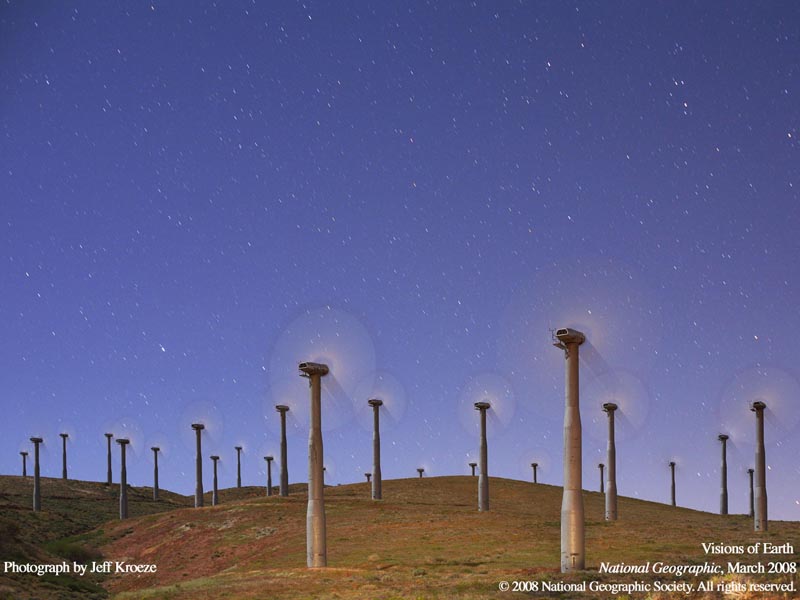
The village of Ashton Hayes in Cheshire, England is aiming to be the first carbon-neutral community in the England (Golden Lion pub included).

In just two years, the 1,000 residents have saved 20 percent on their energy costs and transformed their community.

“It’s been great fun and an amazing boost in community spirit,” said Garry Charnock, who put the idea to some friends in the local pub. “I thought they’d think of me as a bit of a crank, but they were all for it.”

More than 75 percent of the village showed up for the first meetings, something that had never happened before. Charnock told IPS that people are worried about climate change and want to do something but are reluctant to do it on their own. Unwittingly, Charnock’s notion of a carbon-neutral village unleashed the power of community. Continue reading

Arctic Oil and Gas Rush Alarms Scientists

By Stephen Leahy

[See also more recent story: Arctic Ice Gone in 5 Years – First Time in One Million Years; see also other Arctic and oil stories below. US and Canada to start offshore drilling in the Arctic summer 2010 – your support is needed to investigate and report on this. ]

UXBRIDGE, Canada, Sep 8 2008 (IPS)

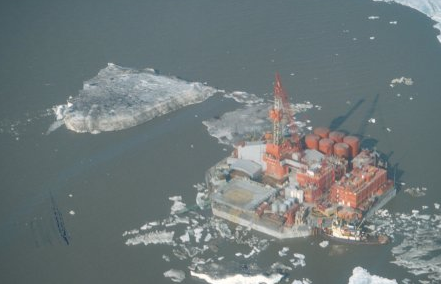
As greenhouse gas pollution destroys Arctic ecosystems, countries like Canada are spending millions not to halt the destruction but to exploit it.

Late last August, Canada announced a 93.7-million-dollar prospecting programme to map the energy and mineral resources of the region. There are “countless other precious resources buried under the sea ice and tundra,” Prime Minister Stephen Harper said during the announcement. The government’s mapping effort is expected to trigger 469 million dollars in private sector resource exploration and development.

“It is estimated that a quarter of the world’s undiscovered oil and gas lies under the Arctic,” Harper said.

This scramble to exploit some of the most environmentally delicate regions of Earth has alarmed international experts who are meeting this week in Iceland to make recommendations to the United Nations and world governments on how to protect the polar regions.

“Many experts believe this new rush to the polar regions is not manageable within existing international law,” says A.H. Zakri, director of the United Nations University’s Yokohama-based Institute of Advanced Studies (UNU-IAS), co-organisers of the conference with Iceland’s University of Akureyri. Continue reading

Arctic Meltdown Signals Long-Term Trend

By Stephen Leahy

UXBRIDGE, Canada , Sep 5 (IPS) – Soaring temperatures have led to the collapse of several huge ice shelves in the Canadian Arctic over the past few weeks.

One 50 sq km ice shelf on the northern coast of Canada’s Ellesmere Island simply “vanished” over three days, exposing a coast that lay buried under ice for at least 4,000 years.

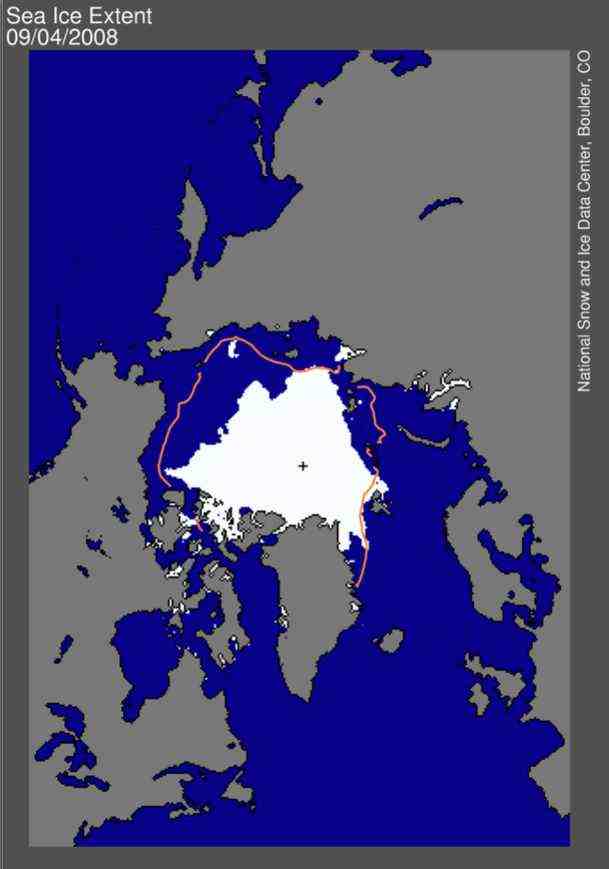
At the same time, the Arctic’s thick, year-round sea ice cover has declined to near the 2007 record of 2.6 million square kilometres less ice than the summer average minimum. This year’s ice loss is still huge — an area that’s far larger than the states of Alaska and Texas combined.

“My gut feeling is that the sea ice decline won’t beat last year’s record,” said Walter Meier of the National Snow and Ice Data Center at the University of Colorado in Boulder.

This year’s sea ice decline is expected to reach its peak in the next few days. “The (2008) decline is already the second largest loss of summer ice on record even though the weather was not as warm as last year,” Meier told IPS. Continue reading

Cut Energy Costs 70%: Save Money, Live Better, Help the Climate

Making buildings more environmentally friendly is the easiest and most effective way to cut climate-changing carbon emissions, often slashing energy costs by up to 70 percent.

So why isn’t there a massive effort to “green up” existing buildings and set green standards for all new construction?

Apparently energy costs aren’t high enough. And then there are multi-billion-dollar government subsidies paid to the energy sector to lower the actual cost of energy, tilting the market away from green buildings towards the cheapest built structures.

FACT: The most efficient buildings today use about 70 percent less energy than conventional properties.

Despite proven environmental, economic and health benefits of green buildings they only account for 2% of all new commercial buildings and even smaller percentage of new homes. 

See full article:

Cut Energy Costs 70%: Save Money, Live Better, Help the Climate 

Canada, Home of the World’s Dirtiest Oil

A new multi-million government PR campaign claims Canada is a “clean energy superpower“. Meanwhile oil production from Canada’s oil sands — the world’s dirtiest oil — is ramping up from 1.2 million barrels a day to 3.5 million. Sadly yet another example of a government resorting to the “big lie”.

By the way virtually all of this oil goes to the US market.

I wrote a series of investigative articles for IPS on the enormous environmental impacts of Canada’s oil sands in 2006. That series has been updated and collected into an e-Book format (download for free).

Here’s an excerpt from Oil Stains in the Boreal Forest: The Environmental Cost of Canada’s Oil Sands

THE ‘RECIPE’ TO MAKE A TANK (75 litres/20 gallons) OF OIL SANDS GASOLINE :

* Dig up two tonnes of earth and rock
* Burn up to 1500 cubic feet of natural gas to boil approx 700 litres of fresh water to process the dirt
* Throw away 950 litres of toxic mine tailings and emit 480 kilograms of CO2, the main greenhouse gas causing global warming

REPEAT 1.2 million times a day (one barrel of oil makes about 75 litres of gasoline)

Note: this analysis does not include local air pollution, impacts on wildlife and local people from oil sands operations and pipelines.

Oil Stains in the Boreal Forest

FREE eBook!! Reveals environmental impacts of Canada’s oil sands industry – the world’s largest industrial project.

Cutting CO2 Only Way to Save Dying Corals

By Stephen Leahy

FORT LAUDERDALE, U.S., July 12 2008 (IPS)

The rapid decline of coral reefs around the world offers a potent warning that entire ecosystems can collapse due to human activities, although there is hope for reefs if immediate action is taken, coral experts agreed at the conclusion of a five-day international meeting Friday.

“Reefs are in serious trouble, but don’t write them off,” Terry Hughes, a marine ecologist at Australia’s James Cook University told 3,000 scientists, conservationists and policy makers attending at the 11th International Coral Reef Symposium (ICRS) in Fort Lauderdale, Florida.

“We can save reefs if we take immediate action,” Hughes said.

More than 20 percent of the world’s reefs have died, and large areas are failing due to a combination of climate change, overfishing, pollution and sea level rise. Most of the fabulous corals that attract tourists to the Caribbean are gone and half of remaining reefs in the U.S. are in serious decline.

[Update 08/10 – Here’s a list of Stephen Leahy’s latest articles on corals Coral Reefs and Acid Oceans Series]

We may be facing ocean deserts in the future,” said Guillermo Dias-Pulido of Australia’s University of Queensland.

Continue reading