Hunt for Metals, Minerals, Gas and Oil Triggers Global Land Rush: No Place Is Off Limits

 Need global moratorium on new large-scale mining, extraction and prospecting

 The average U.S. citizen uses an astonishing 22,000 times their weight in minerals, metals and fuels in their lifetime 

By Stephen Leahy

UXBRIDGE, Canada – March 1 2012, IPS

A global scramble for land and mineral resources fuelled by billions of investment dollars is threatening the last remaining wilderness and critical ecosystems, destroying communities and contaminating huge volumes of fresh water, warned environmental groups in London Wednesday.

No national park, delicate ecosystem or community is off limits in the voracious hunt for valuable metals, minerals and fossil fuels, said the Gaia Foundation’s report, “Opening Pandora’s Box”. The intensity of the hunt and exploitation is building to a fever pitch despite the fact the Earth is already overheated and humanity is using more than can be sustained, the 56-page report warns.

“We’re calling for a global moratorium on new, large-scale mining, extraction and prospecting,” said Teresa Anderson of The Gaia Foundation, an international NGO headquartered in London, UK that works with local communities.

The International Union for Conservation of Nature (IUCN) has recently warned of the threats to World Heritage Sites from planned mining and oil and gas projects. One in four iconic natural areas in Africa is negatively affected, the report notes.

“No matter where you live, land acquisitions for mining, oil or gas are coming,” Anderson told IPS following the report’s launch in London.

The easy-to-get resources are gone. Now the extractive industries, funded by pension funds and commodities speculators, are using new technologies like fracking for natural gas to get at previously unprofitable resources. Continue reading
Imagination, Not Science, Is The Key To Solving Climate Change

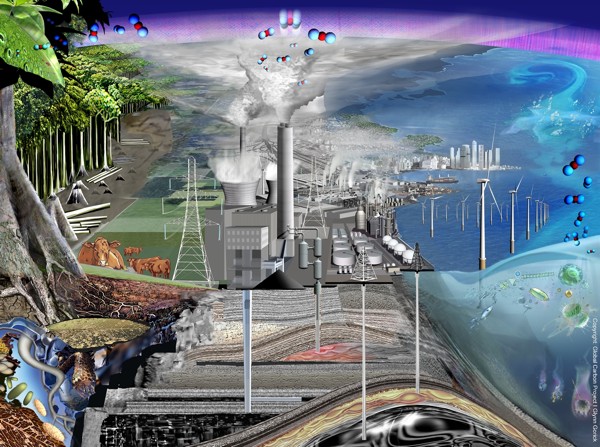
Artists Impressions- Human Perturbation Of Carbon Cycle. © Global Carbon Project I Glynn Gorick

This article has been picked up and widely reported around the web and that’s great as long as it continues to have my name on it with a link to my website.  (And if you like it, please help this work continue) — Stephen

By Stephen Leahy

VANCOUVER, Canada, Feb 20, 2012 (IPS)

Humanity’s failure to halt the deepening planetary emergency of climate change, extinctions of species and overconsumption of resources is a failure of imagination and mistaken beliefs that we act rationally.

The path to a truly sustainable future is through the muddy waters of emotions, values, ethics and most importantly, imagination, said artists and social scientists at the American Academy for the Advancement of Science (AAAS) conference here in Vancouver, British Columbia.

“We don’t live in the real world but live only in the world we imagine,” said David Maggs, a concert pianist and Phd student at the Institute for Resources, Environment and Sustainability at the University of British Columbia (UBC).

Our perception of reality is filtered by our personal experiences and values. That’s why the “if we only knew better, we’d do better” education and communication paradigm isn’t working, Maggs said. The underlying assumption that a failure to become more sustainable is the result of a lack of information is flawed, he told attendees at what is the world’s largest general science meeting.

“We live in our heads. We live in storyland,” agrees John Robinson of UBC’s Institute for Resources, Environment and Sustainability.

   Become a Partner in Independent Enviro Journalism

“When we talk about sustainability we are talking about the future, how things could be. This is the landscape of imagination,” Robinson told IPS. “If we can’t imagine a better world we won’t get it.”

This imagining will be complex and difficult. Sustainability encompasses far more than just scientific facts – it also incorporates the idea of how we relate to nature and to ourselves, he said.

“We haven’t yet grasped the depth of changes that are coming.” Continue reading

Extreme Weather is the New Normal with Climate Change

Aftermath of an early tornado in Lancaster, Texas. To join thousands of others connecting the dots between climate change and extreme weather, visit ClimateDots.org.

By Stephen Leahy

CAIRNS, Australia, Apr 3, 2012 (Tierramérica)

Extreme weather is fast becoming the new normal. Canada and much of the United States experienced summer temperatures during winter this year, confirming the findings of a new report on extreme weather.

For two weeks this March most of North America baked under extraordinarily warm temperatures that melted all the snow and ice and broke 150-year-old temperature records by large margins.

Last year the U.S. endured 14 separate billion-dollar-plus weather disasters including flooding, hurricanes and tornados.

A new report from the Intergovernmental Panel on Climate Change (IPCC), released Mar. 28, provides solid evidence that record-breaking weather events are increasing in number and becoming more extreme. And if current rates of greenhouse gas emissions are maintained, these events will reach dangerous new levels over the coming century.

Since 1950 there have been many more heat waves and record warm temperatures than in previous decades.

This will only increase in future decades, as will heavier rainfall events in tropical regions and the high latitudes, according to the Special Report on Managing the Risks of Extreme Events and Disasters to Advance Climate Change Adaptation (SREX). 

The hottest day that occurs once in 20 years is likely to become a one-in-two year event by the end of the century, except in the high latitudes of the Northern hemisphere, where it is likely to happen once every five years.

The average tropical cyclone maximum wind speed is likely to increase, but the global frequency of tropical cyclones is likely to decrease or remain unchanged.

Continue reading

Wisdom of Elders Better Than Science or the Internet: “They Still Know How to Cook Mammoth”

Petr Kaurgin, a Chukchi reindeer herder from Siberia. Photo: Citt Williams

by Stephen Leahy

First published at National Geographic’s NewsWatch

 “Our elders are the best source of information. Better than science or the internet,” said Petr Kaurgin, a Chukchi reindeer herder from the remote Turvaurgin nomadic tribal community in north-eastern Siberia.
Kaurgin delivered his message to climate scientists from Intergovernmental Panel on Climate Change (IPCC) and other Indigenous peoples at the closing of the Climate Change Mitigation with Local Communities and Indigenous peoples workshop here in Cairns, Australia.

“We need to listen to the wisdom of the elders. We can use everything in nature. But we must not break or destroy things, ” he said through a translator.

It was -45C when Kaurgin left his home to bring his people’s message to climate experts here in the hot, wet tropical part of Australia. The IPCC is the world authority on the science of climate change. And along with the United Nations University (UNU) organized the workshop to figure out how to incorporate Indigenous peoples’ traditional knowledge.

“When we love the land where we live only then we are happy,” he said.

Kaurgin’s people and other local Siberian communities have been experiencing the impacts of climate change such as melting permafrost for the last 20 years said Tero Mustonen, Head of the Village of Selkie in North Karelia, Finland.

For complete article see Nat Geo’s NewsWatch

‘Abriculture’ Using Forests to Feed Indigenous Peoples and Fight Climate Change

Seith Fourmile of Gimuy-Walubarra Yidinji Nation of Cairns, Jenny Lynch Abriculture Development Officer in Cairns.  Photo: Stephen Leahy

Forests can not only suck climate-heating carbon out of the atmosphere, they are also an important source of food for many Indigenous peoples.

“Western food is making our people sick. Our bodies are adapted to eating bush foods,” said Seith Fourmile of the Gimuy-Walubarra Yidinji Nation of Cairns.

Australia’s Aboriginal or Torres Strait Islander peoples suffer from rates of diabetes three to four times greater than other Australians. Rates of high blood pressure, cardiovascular, and kidney diseases are also higher. Similar health problems have been found among Alaska’s Eskimo and Canada’s Inuit peoples.

The world’s forests “offer a cornucopia of 80,000 species of plants as foods,” writes botanist and medical biochemist Diana Beresford-Kroeger in her book The Global Forest. Western foods rely on just a few species, while oral knowledge of the other thousands of species is rapidly being lost, according to Beresford-Kroger.

Click for full story


Every six seconds a hungry child dies | UN Tries to Halt Land Degradation Crisis

By Stephen Leahy

CHANGWON, South Korea, Oct 25, 2011 (IPS)

Every six seconds a child dies of hunger-related causes.

That disturbing reality seems as remote as the moon here in the ultra-modern Changwon Convention Centre, where delegates struggled to create effective ways to stem the ongoing decline of food-producing lands.

Each year, 12 million hectares of land are lost where 20 million tonnes of grain might have been grown, according to the United Nations Convention to Combat Desertification. And that loss of food-producing lands is unlikely to change in the near future, even as the final gavel fell in the early morning hours of Oct. 22 at the end the two-week biannual 10th Conference of the Parties (COP 10).

“This conference has been highly successful,” said Lee Don Koo, minister of the Korean Forest Service and COP 10 president and host.

It was certainly the largest international gathering on land degradation, with 6,450 participants from 161 countries, including 83 ministers and deputy ministers. Lee Don Koo said this meeting sent a strong message to the world community about the need for strong, sustainable land management and for the pressing need to set targets to reduce land degradation.

“Our goal is to build a land-degradation-neutral world,” said Luc Gnacadja, executive secretary of the UNCCD. The target date to reach that goal is 2030, Gnacadja told IPS.

Gnacadja would like countries to officially adopt this goal at the RIO+20 conference in June 2012 in Brazil.

It has taken nearly 20 years to get to the point where there is agreement on 11 scientific indicators to measure land degradation and its impacts. Development and implementation of those indicators will take some years yet. The Convention has yet to address the economic and policy drivers of land degradation, acknowledged Antonio Rocha Magalhães, chair of the Committee on Science and Technology. Continue reading

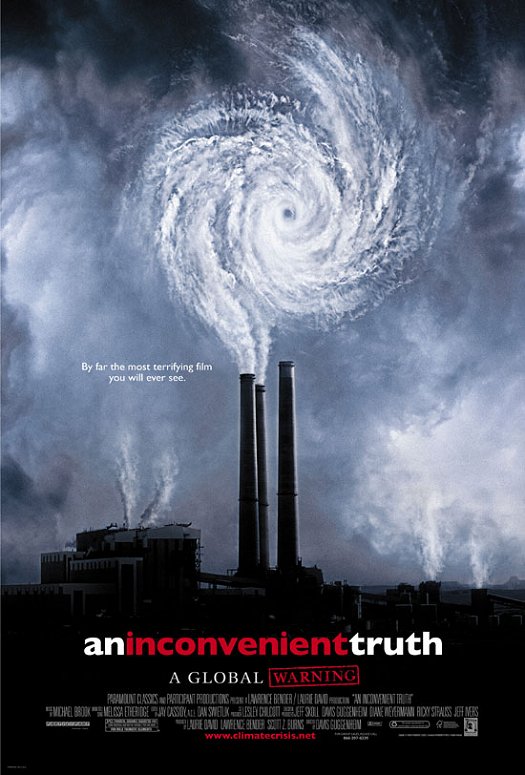
A Very Inconvenient Truth: Gore Got It Right on Global Warming

[Reposted from 2006, nearly six years ago. It offers interesting perspective about the continuing (worsening?) political insanity of inaction  – Stephen]

By Stephen Leahy

BROOKLIN, Canada, Jun 20 (IPS)

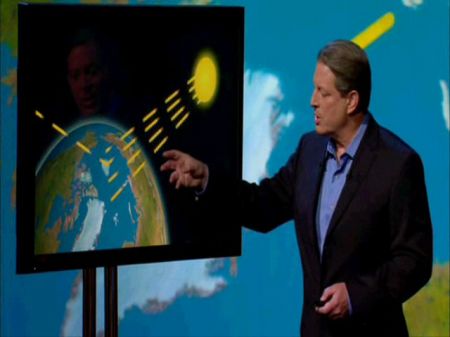
Former U.S. Vice President Al Gore’s documentary on global warming, “An Inconvenient Truth”, is filling theatres across North America – and gets the science right, according to climate experts.

“I saw it last night and was impressed with the climate science presented in the film,” said David Archer, a climatologist at the University of Chicago.

“I left the theatre profoundly depressed because of the political insanity in this country that denies global warming is a concern,” Archer told IPS.

Gore’s personal passion about global warming can be traced to the early 1980s. After losing the election to George W. Bush in 2000, Gore dedicated himself to warning the public about the devastating impacts climate change will have on hundreds of millions of people.

“An Inconvenient Truth” is a 98-minute documentary comprised mainly of highlights from Gore’s high-tech slide show explaining the science documenting global climate change.

Some truths are hard to hear, because if you really hear them – and understand that they are in fact true – then you have to change. And change can be quite inconvenient,” Gore says in the film.

Using an impressive set of graphics, he carefully illustrates changes underway such as receding glaciers, collapsing ice sheets, devastating floods and droughts. One memorable scene shows a graph of carbon-dioxide levels in the atmosphere going back 650,000 years that varies only a little until fifty years ago when it skyrockets. Gore mounts a motorised platform to lift him up high up the chart so he can place his finger on the current level of CO2. Continue reading

Selling Nature to Save Nature and Ourselves?

Humanity faces unprecedented challenge of climate change combined with food, water and energy shortages

“Markets are preconditioned on inequality and will only make matters worse”

By Stephen Leahy

THE HAGUE, Jul 5, 2011 (IPS)

Avoiding the coming catastrophic nexus of climate change, food, water and energy shortages, along with worsening poverty, requires a global technological overhaul involving investments of 1.9 trillion dollars each year for the next 40 years, said experts from the U.N. Department of Economic and Social Affairs (UN-DESA) in Geneva Tuesday.

“The need for a technological revolution is both a development and existential imperative for civilisation,” said Rob Vos, lead author of a new report, “The Great Green Technological Transformation”.

Absent in the U.N. report is a call for the other necessary transformation: what to do with the market-driven economic system that has put humanity on this catastrophic collision course? Attempts to “green” capitalism are failing and will fail, according to many of the more than 200 social science researchers at a groundbreaking international conference in The Hague titled NATURE INC? QUESTIONING THE MARKET PANACEA IN ENVIRONMENTAL POLICY AND CONSERVATION Jun. 30 to Jul. 2.

“We must start tackling and questioning some core capitalist dictums, such as consumerism, hyper-competition, the notion that ‘private’ is always better, and especially economic growth,” says Bram Büscher, the conference co-organiser and researcher at the Institute of Social Studies (ISS) at Erasmus University in The Hague, Netherlands.

Equally important is to stop looking at nature as a collection of economic objects and services that “must only benefit some specific idea of human economic progress”, Büscher told IPS.

Governments, the World Bank, the United Nations and development agencies, international conservation organisations and others have all come to see markets as the only way to mobilise enough money to end deforestation, increase the use of alternative energy, boost food production, alleviate poverty, reduce pollution and solve a host of other serious and longstanding problems.

Started as a small gathering of academics, Nature Inc? became a major event as hundreds of experts from around the world wished to participate. Büscher believes the main reason for this is that many are actively doing research on environmental and conservation issues and are increasingly running into new market schemes like carbon credit trading, payments for ecosystem services, biodiversity derivatives and new conservation finance mechanisms, and so on.

“Payments for ecosystem services are the newest tropical ‘miracle’ crop,” said Kathleen McAfee of San Francisco State University.

The market is putting new values on tropical forests as carbon sinks, reservoirs of biodiversity or ecotourism destinations, McAfee said during the conference. Continue reading

Plastic Circulating Endlessly in Oceans Killing Huge Numbers of Birds, Turtles, Fish and Marine Animals

“Degradable or compostable plastic should be banned….bio-plastics simply break down into microplastic particles”– scientist

By Stephen Leahy

HONOLULU, Hawaii, U.S., Mar 24, 2011 (IPS)

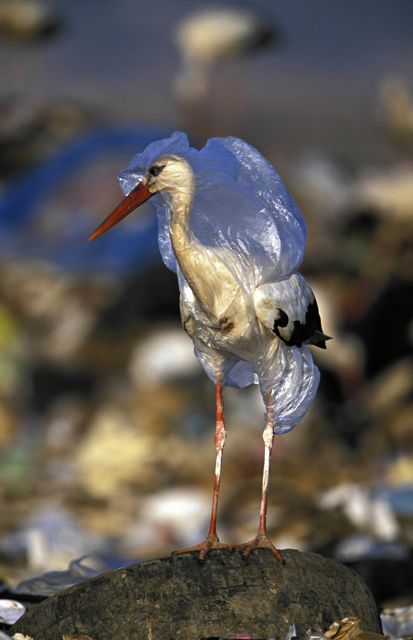
That plastic bottle or plastic take-away coffee lid that has 20 minutes of use can spend decades killing countless seabirds, marine animals and fish, experts reported here this week.

On remote Pacific island atolls, diligent albatross parents unknowingly fill their chicks’ bellies with bits of plastic that resemble food. The chicks die of malnutrition, and when their bodies decay all those plastic bottle tops, disposable lighters, and the ubiquitous bits of plastic detritus get back into the environment in a cruel perversion of ‘recycling’.

There is now so much plastic in the oceans it is likely that virtually every seabird has plastic in its belly if its feeding habits mean it mistakes plastic bits for food. The same is true for sea turtles, marine animals or fish, experts say.

Northern fulmars, a common seabird numbering in the millions, have a collective 45 tonnes worth of plastic bits in their bellies, estimates Jan Andries van Franeker, a biologist with the Institute for Marine Resources and Ecosystem Studies at the University of Wageningen in Holland.

At least 95 percent of fulmars in the North Sea where van Franeker has been working for three decades have one to several dozen bits of plastic in their stomachs. The same is true for related species like the tiny Wilson’s storm petrels, which unknowingly transport an estimated 35 tonnes of plastic from their wintering grounds in the North Atlantic to breeding grounds in the Antarctic, he says.

“If a seabird’s feeding habits mean it could mistake plastic for food, then it will likely have plastic in its stomach,” he said in an interview at the week long Fifth International Marine Debris Conference, which ends Friday in Honolulu, Hawaii. Continue reading

Reducing Fossil Fuel Use Only Way to Save Dying Corals

Another important reason why continuing to burn more fossil fuels is very dangerous for all of us. Excerpts from July 2008 article — Stephen 

‘The world’s fossil fuel economy is like the Titanic — we know its going to hit an iceberg but it takes a very long time to stop a really big ship..’

By Stephen Leahy

FORT LAUDERDALE, U.S., July 12, 2008 (IPS)

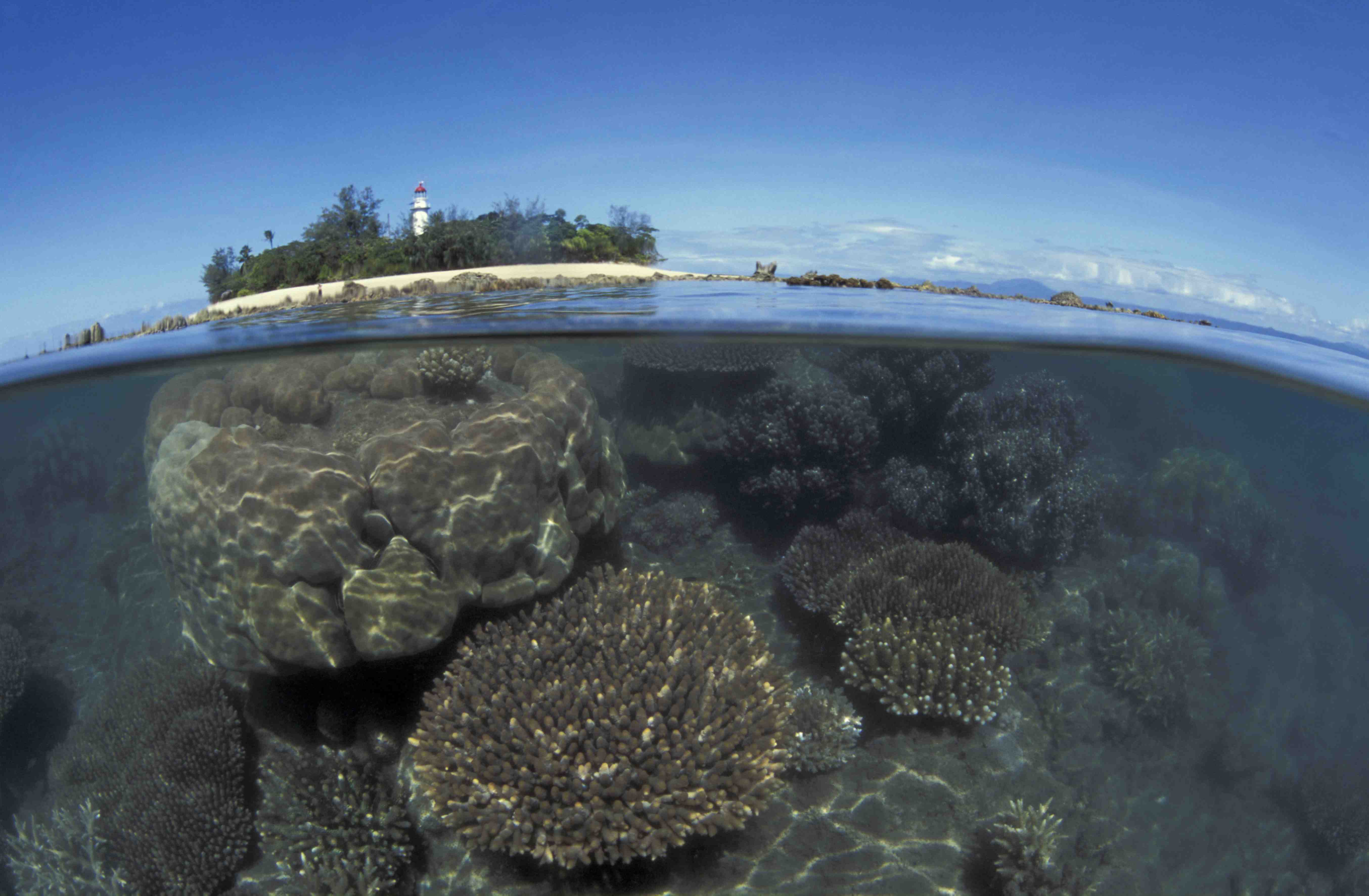
The rapid decline of coral reefs around the world offers a potent warning that entire ecosystems can collapse due to human activities, although there is hope for reefs if immediate action is taken, coral experts agreed at the conclusion of a five-day international meeting Friday.

“Reefs are in serious trouble, but don’t write them off,” Terry Hughes, a marine ecologist at Australia’s James Cook University told 3,000 scientists, conservationists and policy makers attending at the 11th International Coral Reef Symposium (ICRS) in Fort Lauderdale, Florida.

“We can save reefs if we take immediate action,” Hughes said.

More than 20 percent of the world’s reefs have died, and large areas are failing due to a combination of climate change, overfishing, pollution and sea level rise. Most of the fabulous corals that attract tourists to the Caribbean are gone and half of remaining reefs in the U.S. are in serious decline.

[Update 2010 – Here’s a list of Stephen Leahy’s latest articles on corals Coral Reefs and Acid Oceans Series]

We may be facing ocean deserts in the future,” said Guillermo Dias-Pulido of Australia’s University of Queensland.

Continue reading