Green Approaches to Water Safest and Cheapest Solution

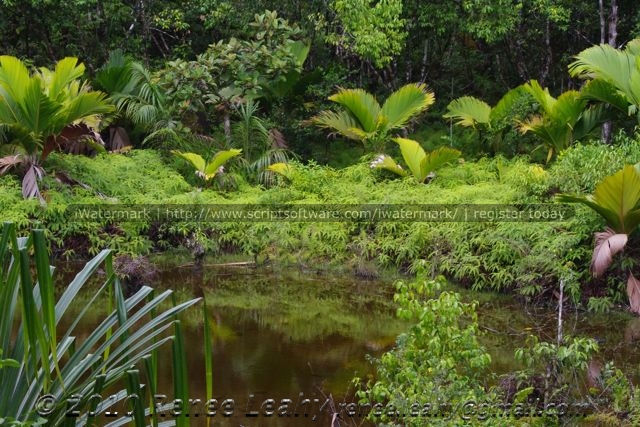
Wetlands regulate, clean and cool water. Mare Aux Cochons high-altitude wetlands, Seychelles Islands (ReneeLeahy copyright)

By Stephen Leahy

UXBRIDGE, Canada, Jan 18 2013 (IPS)

After Hurricane Sandy swept through the northeast of the United States late October 2012, millions of New Yorkers were left for days without electricity.  But they still had access to drinking water, thanks to New York City’s reliance on protected watershed areas for potable water.

Instead of using electric-powered water treatment plans, New York City brings its high-quality drinking water through aqueducts connected to protected areas in the nearby Catskill/Delaware forests and wetlands – just one example of how protecting watersheds can provide residential areas with drinking water and flood and pollution protection at bargain basement prices.

New York saved between four and six billion dollars on the cost of water treatment plants by protecting forests and compensating farmers in the Catskills for reducing pollution in lakes and streams.

In 2011, countries around the world invested more than eight billion dollars in similar watershed projects around the world, according to the State of Watershed Payments 2012 report released Thursday. That year, China led the way, accounting for 91 percent of watershed investment.

“Whether you need to save water-starved China from economic ruin or protect drinking water for New York City, investing in natural resources is emerging as the most cost-efficient and effective way to secure clean water and recharge our dangerously depleted streams and aquifers,” said Michael Jenkins, president of Forest Trends, a non-governmental organisation (NGO) in the United States, which compiled the report. Continue reading
Worlds’ Scientists Say Facing “Planetary Emergency”

Planet Under Pressure – State of the Planet Declaration Mar 29 2012.

By Stephen Leahy

UXBRIDGE, Canada, (IPS)

[Based on my article Climate Summit: A Moment That Must Be Seized ]

Governments, the media and the public aren’t paying attention to the “planetary emergency” unfolding around them. The situation is like firefighters yelling “fire” in crowded room and still no listens.

“The situation is absolutely desperate and yet there’s nothing on the front pages or on the agenda of world leaders,” said Pat Mooney, executive director of the ETC Group, an international environmental organisation based in Ottawa.

“The lack of attention is a tragedy,” said Mooney, who has 40 years experience in international environment and development issues.

Humanity is failing in its stewardship of the planet. An incredible 85 percent of the world’s oceans are in trouble, said Susan Lieberman, director of international policy at the Pew Environment Group, a U.S. organisation.

“Planetary emergency” is how many in the world’s scientific community describe “the mess we are in“. They will detail their comprehensive state of the planet assessment at the “Planet Under Pressure” conference in London Mar. 26-29.

That assessment will summarise the overwhelming evidence that “the continued functioning of the Earth system as we know it is at risk,” conference organisers previously told IPS.

Climate change, which is overheating the planet and making the oceans more acidic, is just one of the major challenges. Another is the ongoing decline of biodiversity, where so many plants and animals are going extinct that the Earth’s living systems on which humanity depends are unraveling.

Fresh water is another “planetary boundary” humanity is pushing up against. Water use has increased six-fold in the past century and in many places the quality of water resources has been degraded. Other challenges include increasing poverty, food and energy security, and the current financial and economic instability.

A first and essential step in a green transition is for nations to commit to phasing out harmful and unsustainable subsidies for fossil fuels, fisheries and industrial agriculture.

According to Mooney, some countries and large corporations see the green economy in terms of a post-petroleum future where resources and energy for industrial production comes from biomass and other living things. Most of those “living resources” are in the global South and local people rightly fear a massive land grab, he said.

Foreign investors have already gained access to more than 35 million hectares in Africa, Asia and South America for food and biofuel production according to GRAIN, a small NGO working with small farmers and farming communities.


Double Food Production in 10 Years AND Reduce Global Warming

Greening of the Sahel desert region with eco-ag

Yields went up 214 percent in 44 projects in 20 countries in sub-Saharan Africa

“If we don’t radically transform the direction of the global food system we will never feed the billion who are hungry,” De Shutter warns.

“Nor will we be able to feed ourselves in the future.”

By Stephen Leahy

UXBRIDGE, Feb 8, 2011 (IPS)

Eco-farming could double food production in entire regions within 10 years while mitigating climate change, according to a new U.N. report released Tuesday in Geneva.

An urgent transformation to ‘eco-farming’ is the only way to end hunger and face the challenges of climate change and rural poverty, said Olivier De Schutter, U.N. Special Rapporteur on the right to food, following the presentation of his annual report focusing on agroecology and the right to food to the U.N. Human Rights Council.

“Agroecology mimics nature not industrial processes. It replaces the external inputs like fertiliser with knowledge of how a combination of plants, trees and animals can enhance productivity of the land,” De Schutter told IPS.

“Yields went up 214 percent in 44 projects in 20 countries in sub-Saharan Africa using agro-ecological farming techniques over a period of 3 to 10 years… far more than any GM [genetically modified] crop has ever done.”

Other recent scientific assessments have shown that small farmers in 57 countries using agro-ecological techniques obtained average yield increases of 80 percent. Africans’ average increases were 116 percent.

“Today’s scientific evidence demonstrates that agroecological methods outperform the use of chemical fertilisers in boosting food production in regions where the hungry live,” De Schutter said. [Video Interviews with De Schutter]


Agroecology applies ecological science to the design of agricultural systems. It enhances soil productivity and protects crops against pests by relying on the natural elements. Continue reading

Global Forest Decline with Warming Temperatures Scientists Warn

Image

Forests diebacks are taking place all around the world. The evidence is quite sobering,” said tropical biologist Daniel Nepstad of IPAM in Belem, Brazil.

This reinforces the urgent need to reduce emissions of fossils fuels and to develop a global land strategy to turn sources of CO2 into sinks for CO2, he said.

“Most of the evidence shows climate change is speeding up. Meanwhile political action on climate is slowing down,” Nepstad added.

–From a previous post on how the loss of trees to deforestation, drought and disease is accelerating climate change.

Wealthy Countries and Investors Buying Up Farmland in Poor Countries

Lopiso Lagebo, 25, comes from Kambata, a small town 800km away from Metahar. He starts working at 0500, cuts up to 5 tons (5,000 kg) of sugar cane a day and earns $0.8. The company recruits most of the work force around his home town, where land shortage drives the workers to emigrate. Caption and Photo: Alfredo Bini/Cosmos  http://www.facebook.com/alfredobini

[I wrote this article three years ago revealing a global land grab by rich investors that is now estimated to be more than 200 million hectares – my recent update here – Stephen]

By Stephen Leahy*

ANCHORAGE, Alaska, USA, May 5 , 2009 (Tierramérica)

More than 20 million hectares of farmland in Africa and Latin America are now in the hands of foreign governments and companies, a sign of a global “land grab” that got a boost from last year’s food crisis.

Rich countries that are short on land or water at home are looking to secure food-producing lands elsewhere as a way to ensure food security for their populations, said Joachim von Braun, director of the International Food Policy Research Institute (IFPRI).

“There is a major lack of transparency in these land deals,” von Braun said in a telephone press conference from Washington.

The IFPRI study, “‘Land Grabbing’ by Foreign Investors in Developing Countries,” by von Braun and Ruth Meinzen-Dick, which was presented last week, estimates that 15 to 20 million hectares have been acquired or are in the process of being sold.

Von Braun pointed out that this is equivalent to about 25 percent of all the farmland in Europe.

Because hard data is difficult to come by – the study was based primarily on information from press reports – IFPRI conservatively estimates that the deals represent 20 to 30 billion dollars being invested by China, South Korea, India and the Gulf States, mainly in Africa.

“About one-quarter of these investments are for biofuel plantations,” von Braun said.  Continue reading

Traditional Slash and Burn Agriculture Sustainable Solution to Climate Change

Gwendolyn Smith, Amazon Conservation Team. Photo: Stephen Leahy

Climate change is the result of not behaving in the right way says remote Amazon tribe

 by Stephen Leahy

First published at National Geographic’s NewsWatch

Climate change is the result of not behaving in the right way, according to the isolated Trio, an indigenous people living in Suriname’s Amazon forest near its border with Brazil.

“They see climate change as big problem. They say their forests are changing, deteriorating,” said Gwendolyn Smith, a project director for the non-profit organization Amazon Conservation Team (ACT).

ACT was launched by U.S. ethnobotanist Mark Plotkin and Costa Rican conservationist Liliana Madrigain Madrigal in 1996 to work with indigenous peoples in the rainforests of Suriname and elsewhere in the Amazon to retain their traditional knowledge.

The Trio (also known as Tiriyó) number perhaps 2000 and live entirely off their forests as hunters and swidden farmers. Swidden is a form of slash and burn agriculture where small plots are cleared and crops planted for one or two seasons, after which plots in new areas are cleared. Old plots are left fallow for many years, allowing the forest and soils to replinish. On a small scale this is sustainable.

“They have strict rules for managing their forest,” said Smith, who has worked with the Trio for seven years and is also a PhD student at Nova Southeastern University in Florida.

Their knowledge of the forest is unparalleled but the Trio know little about the wider world. “Money was only introduced to them six years ago and they don’t really understand concepts like saving,” she said.

Similarly, the concept of carbon and using their forests to soak up carbon is simply not part of their worldview, she told delegates at The Climate Change Mitigation with Local Communities and Indigenous Peoples workshop in Cairns, Australia. Continue reading

Rio+20: The Moment in History to Ensure Our Future Survival?

Planet Under Pressure - State of the Planet Declaration Mar 29 2012.

Worlds’ Scientists Say Facing “Planetary Emergency”

By Stephen Leahy

UXBRIDGE, Canada, (IPS)

The upcoming Rio+20 conference has to be the moment in human history when the nations of the world come together to find ways to ensure the very survival of humanity, many science and environmental experts believe.

Except that governments, the media and the public aren’t paying attention to the “planetary emergency” unfolding around them. The situation is like firefighters yelling “fire” in crowded room and still no listens.

“The situation is absolutely desperate and yet there’s nothing on the front pages or on the agenda of world leaders,” said Pat Mooney, executive director of the ETC Group, an international environmental organisation based in Ottawa.

“The lack of attention is a tragedy,” said Mooney, who has 40 years experience in international environment and development issues.

Humanity is failing in its stewardship of the planet. An incredible 85 percent of the world’s oceans are in trouble, said Susan Lieberman, director of international policy at the Pew Environment Group, a U.S. organisation.

Rio+20 is a major opportunity to turn this around, Lieberman told IPS.

The Jun. 20-22 Rio+20 meet is timed to coincide with the 20th anniversary of 1992 Earth Summit in Rio de Janerio. The Earth Summit captured world attention, with leaders from most countries and some 10,000 media attending.

It gave birth to the most important environmental treaties on climate change, biodiversity and land degradation and desertification. World leaders also endorsed Agenda 21, a detailed blueprint on how nations can practice sustainable development.

Years of preparation went into the 1992 Summit, while only months have gone into Rio+20.

“There hasn’t been nearly enough preparation to be able to sign treaties,” said Lieberman. It’s been a struggle to get many governments like such as the US to focus on Rio+20 at all she said.

“Governments are not giving this opportunity enough importance given the mess we are in,” said Lisa Speer, director of the international oceans programme at the Natural Resources Defense Council, a U.S. NGO. Continue reading

No Magic Solutions for the Extinction of Species that Produce Our Air, Water and Water

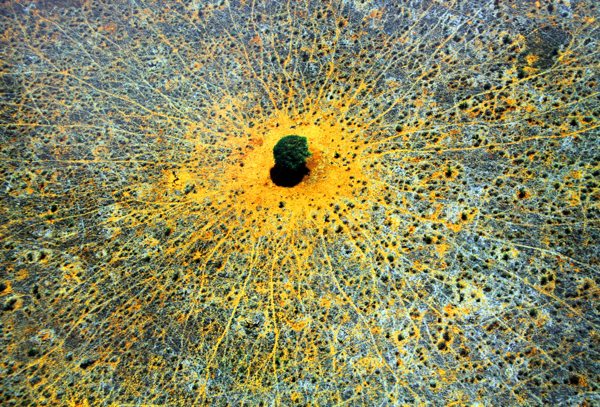
Photo: Yann Arthus- Bertrand, GoodPlanet Foundation http://www.goodplanet.org/en/

Is there a middle ground between economic interests, livelihoods and conservation?

By Stephen Leahy

VANCOUVER, Canada (IPS)

The Earth’s life support system, which generates the planet’s air, water and food, is powered by 8.7 million living species, according to the latest best estimate. We know little about 99 percent of those unique species, except that far too many are rapidly going extinct.

What can be done to slow down this process, which could eventually lead to the extinction of the human species?

“The challenge is to find the middle ground between economic interests, livelihoods and conservation,” says Braulio Ferreira de Souza Dias, the newly appointed head of the Secretariat of the United Nations Convention on Biological Diversity (CBD), the international agency charged with helping countries slow and reverse the loss of plants, animals and other species.

A native of Brazil, Dias holds a doctorate in zoology from the University of Edinburgh, and worked for many years at the Brazilian Ministry of the Environment, where his last position prior to joining the CBD was as Secretary of Biodiversity and Forests.

An exclusive interview with BRAULIO FERREIRA DE SOUZA DIAS, executive secretary of the UN Convention on Biological Diversity

Q: Why are species going extinct and why does it matter? 
Continue reading

Hunt for Metals, Minerals, Gas and Oil Triggers Global Land Rush: No Place Is Off Limits

 Need global moratorium on new large-scale mining, extraction and prospecting

 The average U.S. citizen uses an astonishing 22,000 times their weight in minerals, metals and fuels in their lifetime 

By Stephen Leahy

UXBRIDGE, Canada – March 1 2012, IPS

A global scramble for land and mineral resources fuelled by billions of investment dollars is threatening the last remaining wilderness and critical ecosystems, destroying communities and contaminating huge volumes of fresh water, warned environmental groups in London Wednesday.

No national park, delicate ecosystem or community is off limits in the voracious hunt for valuable metals, minerals and fossil fuels, said the Gaia Foundation’s report, “Opening Pandora’s Box”. The intensity of the hunt and exploitation is building to a fever pitch despite the fact the Earth is already overheated and humanity is using more than can be sustained, the 56-page report warns.

“We’re calling for a global moratorium on new, large-scale mining, extraction and prospecting,” said Teresa Anderson of The Gaia Foundation, an international NGO headquartered in London, UK that works with local communities.

The International Union for Conservation of Nature (IUCN) has recently warned of the threats to World Heritage Sites from planned mining and oil and gas projects. One in four iconic natural areas in Africa is negatively affected, the report notes.

“No matter where you live, land acquisitions for mining, oil or gas are coming,” Anderson told IPS following the report’s launch in London.

The easy-to-get resources are gone. Now the extractive industries, funded by pension funds and commodities speculators, are using new technologies like fracking for natural gas to get at previously unprofitable resources. Continue reading

Indigenous Peoples Can Show the Path to Low-Carbon Living If Their Land Rights Are Recognized

Youba Sokona of Mali is co-chair of the IPCC Working Group III. Photo: Citt Williams, OurWorld2.0

by Stephen Leahy

First published at National Geographic’s NewsWatch

Many indigenous peoples are living examples of societies thriving with sustainable, low-carbon lifestyles. Successfully meeting the global climate change challenge requires that much of the world shift from high carbon-living to low.

This shift is daunting. Current emissions for Australia and the United States average about 20 tonnes of carbon dioxide per person. In the coming decades that needs to fall to two tonnes per person as it is currently in Brazil or the Dominican Republic.

Emissions from most indigenous peoples are even lower and are amongst the lowest in the world.

All options for making the shift from high- to low-carbon living need to be explored and that’s why the United Nations University Traditional Knowledge Initiative (UNU) and  Intergovernmental Panel on Climate Change (IPCC) invited indigenous peoples to a special three-day workshop in Cairns, Australia last week.

“Climate change is the result of our behaviour,” said Youba Sokona, co-chair of the IPCC Working Group III that will report to governments in 2014 on ways carbon emissions can be reduced.

The IPCC is the world authority on climate, assessing the state of knowledge on the issue every five to six years. Traditional knowledge of local and indigenous peoples have been left out until now.

“One of the critical solutions is to change our behavior, to change our production and consumption systems,” said Sokona, a climate expert from the African nation of Mali.

The Climate Change Mitigation with Local Communities and Indigenous peoples workshop offered a number of “examples of local peoples in Siberia, in Australia, northern Canada and in some African countries demonstrating that it is possible to change our behavior,” he said.

Marilyn Wallace, a Kuku Nyungkal Aboriginal woman. Photo: Citt Williams, OneWorld 2.0

“I live in a shack but I love being on my ‘bubu’, my traditional land,” said Marilyn Wallace of the Kuku Nyungka ‘mob’ (tribe) in northern Queensland, Australia.

Wallace has lived in towns but fought for years to “return to country” and live in her tropical forest homeland 60 kilometers from Cooktown.

At the workshop Wallace and every other indigenous delegate focused on land rights. The simple truth is that if they can’t live on and manage their lands with time-tested traditional methods, they can’t be part of the solution to climate change.

For complete article see Nat Geo’s NewsWatch