Copenhagen: Rich Nations Betraying Poor In Climate Talks (surprised?)

By Stephen Leahy

COPENHAGEN, Dec 7 (IPS/TerraViva)

Betrayal and backsliding by rich countries marks the beginning of the final negotiations for a global climate treaty, according to many developing world participants at the U.N.-sponsored talks here.

“Developed countries express deep concern and commitment to action in their public statements, but it is completely different in the negotiating rooms,” said Algerian negotiator Kamel Djemouai, chair of the Africa group, which represents more than 50 African countries.

“What you hear in public is not what is being done,” Djemouai told delegates at a side meeting at the COP 15 climate meetings here.

At the last round of climate talks in Barcelona, African countries boycotted the meetings, saying that industrialised countries had set carbon-cutting targets too low to substantially reduce global greenhouse gas emissions. Climate change is already having significant impact on Africa and those impacts are a form of discrimination, Djemouai said.

“Science tells us that when the global average temperature is one degree C. higher, it will be two degrees C. hotter in Africa,” he added. Continue reading

Facebookers Last Hope for Environment?

facebook header

‘The only real hope is for a global citizens’ movement unlike anything ever seen on the face of the Earth’ — Erik Assadourian, Vital Signs

By Stephen Leahy

BROOKLIN, Canada, Sep 14 2007 (IPS)

Global trends indicate a looming environmental catastrophe, and engaging high school students around the world may be the only hope say experts.

Governments, the corporate sector and media continue to champion industrial and economic growth at the cost of escalating impacts on the environment, concludes the latest report from the Washington-based Worldwatch Institute, “Vital Signs 2007-2008″.

For a number of years, the “Vital Signs” report has tracked 44 trends that are shaping the future, and they document a record level of industrial growth, says Erik Assadourian, Vital Signs project director.

“‘Vital Signs’ also documents the escalating impacts of such growth on the environment,” Assadourian told IPS in an interview from Barcelona.

The scale of the environmental crisis, in which catastrophic climate change is just one of many, is undermining the ecosystems that support life on Earth.

“Climate change and other environmental problems are symptoms of the root problem, which is the obsession with consumerism,” he said.

Vital Signs reports that in 2005, more wood was removed from forests than in any previous year. Fossil fuel usage dumped 7.6 billion tonnes of carbon emissions into the atmosphere. Meat production hit a record 276 million tonnes (43 kilogrammes per person) in 2006. Rising meat consumption is driving rising soybean demand to feed cattle, which in turn is a driver of deforestation as tropical forests are turned into soy fields.

And on it goes: global seafood consumption breaks records, steel and aluminium production too. None of this is sustainable – another three or four or five planets would be needed to maintain these levels of production and consumption. Continue reading

James Lovelock: “there will be a sudden shift to a new global climate … 5 or 6C warmer”

Lovelock_James credit Sandy Lovelock

Stephen Leahy interviews JAMES LOVELOCK the scientist who first proposed the Gaia Hypothesis

TORONTO, June 5 2009 (Tierramérica)

“When the first great climate disaster strikes, I hope we will all pull together just as if our nation were being invaded,” says British scientist James Lovelock in this exclusive Tierramérica interview.

Please throw something in the tip jar before reading on.
This is how I make my living.

As the world marksInternational Environment Day Friday, Lovelock argues that as the climate warms and the carbon content of the atmosphere soars, humanity is facing a far grimmer future that will be upon us sooner than any of the projections made by the Intergovernmental Panel Climate Change (IPCC).

A chemist, physician and biophysicist, Lovelock is one of the world’s foremost environmental scientists and founder of the Gaia Hypothesis, which describes the planet as a living organism, a complex system in which the components of the biosphere and atmosphere interact to regulate and sustain life.

Although his ideas often feed controversy, Lovelock has wide-ranging scientific credentials. As an inventor, he holds more than 50 patents, including the first devices for detecting the presence of ozone-depleting CFCs (chlorofluorocarbons) and pesticide residues in the environment.

He is also the author of many books. The most recent, “The Vanishing Face of Gaia: A Final Warning”, was published in April. Lovelock spoke with Tierramérica’s Stephen Leahy in Toronto.

TIERRAMÉRICA: Why are you critical of the IPCC? Continue reading

Ethanol and Biofuels: Almost Everything You Need to Know

“The U.S. has led the fight to stem global hunger, now we are creating hunger,” said Lester Brown, president of the Earth Policy Institute.

Series of the latest articles that provide almost everything you need to know about why ethanol and biofuels will not reduce global warming but simply drive up fuel and food costs.

maize - mexicoEthanol Worse Than Gasoline

Only Green Part of Most Biofuels is the Wealth (Subsidies) They Generate

Ethanol: The Great Big Green Fraud

International Enviro Standards Needed for Biofuels

Six Experts On Why Ethanol is a Dumb Idea

Food & Fuel: Can Sorghum Be The New Magic Bullet Biofuel??

Biofuels: Another Good Reason to Hate American Policy

(Cellulosic) Greenest Ethanol Still Unproven

Indigenous Peoples Demand Greater Role in Climate Debate

native-windmill-art

By Stephen Leahy*


ANCHORAGE, Alaska, Apr 20 (Tierramérica) – While indigenous peoples from around the world are meeting in this Alaskan city to seek a greater role in global climate negotiations, the rapidly warming Arctic is forcing some Inuit villages to be relocated.

“We have centuries of experience in adapting to the climate and our traditional lifestyles have very low carbon footprints,” Victoria Tauli-Corpuz, an indigenous leader from the Philippines and chair of the United Nations Permanent Forum on Indigenous Issues, told Tierramérica.

Carbon-based gases are the principal cause of the greenhouse effect, which leads to climate change. The excessive release of these gases, like carbon dioxide and methane, comes from human activities: the combustion of fossil fuels in industry and transportation, and emissions from livestock production and deforestation.

Some 400 indigenous people, including Bolivian President Evo Morales and observers from 80 nations, are gathered in Anchorage, Alaska for the Apr. 20-24 U.N.-affiliated Indigenous Peoples’ Global Summit on Climate Change.

They will discuss and synthesise ways that traditional knowledge can be used to both mitigate and adapt to climate change.

“Indigenous peoples have contributed the least to the global problem of climate change, but will almost certainly bear the greatest brunt of its impact,” said Patricia Cochran, chair of both the Inuit Circumpolar Council and the April Summit. Continue reading

UN CONVENTION ON BIOLOGICAL DIVERSITY – EXCLUSIVE COVERAGE OF COP 10 FROM NAGOYA, JAPAN


I was the only North American journalist to go and cover this important conference in Nagoya. People donated enough to help with travel costs so I could write about 10 articles that reached more than 200 million people. Scroll down and look for the COP 10 logo to find those articles.

I’m an independent journalist based in Canada who supports his family and the public interest writing articles about important social & environmental issues. This is now only possible with your support: see How Community Supported Journalism Works. Contributions can be made safely via PayPal or check/cheque. Thank you/Merci. — Stephen

Support Independent Environmental Journalism

Electronic Gadgets Fuel Congo “Rape Mines”

congo-survivors-age-9

[Update: Mar 4 2010. The United States senate moved to stem the flow of money from mineral mines fuelling the brutal conflict in the Democratic Republic of Congo (DRC), the watchdog group Global Witness (GW) is calling on Europe to follow suit. http://ipsnews.net/news.asp?idnews=50543

See also this shocking report in the journal PLoS Medicine  (22 Dec 2009) http://tiny.cc/60fjz ]

What can you do?

1. Lobby your government to be more involved in the DRC and stopping this. Encourage them to help train of local police and army and prosecute all those involved

2. Help out local and international organizations that are helping the women and children of the Congo

3. Don’t buy any electronic devices until manufacturers can guarantee those purchases are not funding this continuing atrocity

By Stephen Leahy

TORONTO, Canada, Dec 3 2008 (IPS)

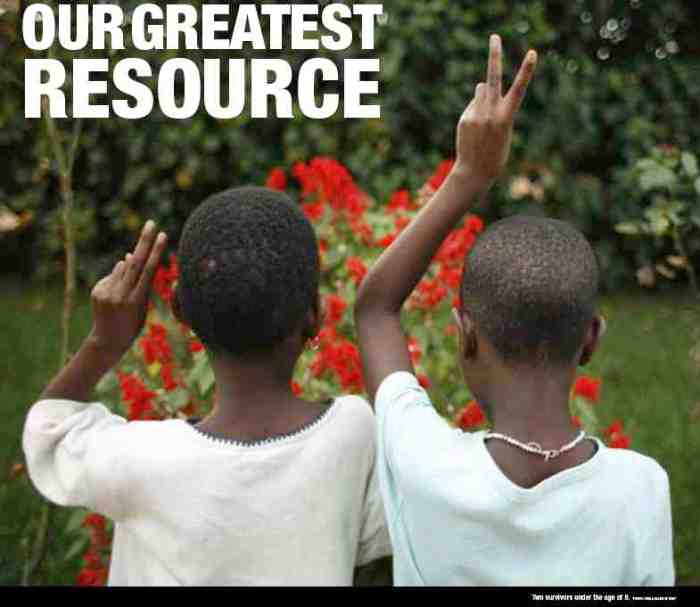
International lust for the enormous mineral and resource riches of the Democratic Republic of the Congo (DRC) abetted by international indifference has turned much of country into a colossal “rape mine” where more than 300,000 women and girls have been brutalised, say activists.

Much of Congo’s misery due to “blood coltan” that powers our electronics

“Rape is being used as a deliberate tool to control people and territory,” said Eve Ensler, a celebrated U.S. playwright and founder of V-Day, a global movement in 120 countries to end violence against women and girls.

“The rapes are systematic, horrific and often involve bands of rebels infected with HIV/AIDS,” Ensler, who recently returned from the DRC, told IPS.

Ensler was in Toronto to help raise funds for the Panzi Hospital in the DRC’s South Kivu Province where many rape victims are brought. Once a maternity hospital, Panzi Hospital now provides free care and refuge to 3,500 victims of sexual violence each year. Denis Mukwege leads a team of six surgeons who routinely work 18-hour days to repair women’s extensive internal injuries.

Hundreds of women and children were raped yesterday, hundreds more today. This is an economic war that uses terror as its main weapon to ensure warlords and their bands control regions where international companies mine for valuable metals like tin, silver and coltan, or extract lumber and diamonds, Ensler said. Continue reading

Top Ten Worst Pollution Problems That Kill Millions – Including Ones You’ve Never Heard Of

By Stephen Leahychromium-a-carcinogenic-commonly-used-in-the-tanning-industry-noraiakheda-kanpur-india-photo-by-blacksmith-institute-sml

UXBRIDGE, Canada, Oct 23 (IPS)

Gold mining and recycling car batteries are two of the world’s Top 10 most dangerous pollution problems, and the least known, according a new report.

The health of hundreds of millions of people is affected and millions die because of preventable pollution problems like toxic waste, air pollution, ground and surface water contamination, metal smelting and processing, used car battery recycling and artisanal gold mining, the “Top Ten” report found.

“The global health burden from pollution is astonishing, and mainly affects women and children,” said Richard Fuller, director of the New York- based Blacksmith Institute, a independent environmental group that released the list Tuesday in partnership with Green Cross Switzerland.

“The world community needs to wake up to this fact,” Fuller told IPS.

Continue reading

Cell Phone Service, But No Toilets or Drinking Water for the Poor

By Stephen Leahy

[Why are there mobile phone networks and not sanitation networks?]

UXBRIDGE, Canada, Oct 20 (IPS) – It is a fact of the 21st century that some of the poorest regions of the world have good mobile phone coverage but no toilets or safe drinking water.

Simply installing toilets where needed and ensuring safe water supplies would do more to end crippling poverty and improve world health than any other possible measure, according to an analysis released Monday by the United Nations University (UNU).

“Water problems, caused largely by an appalling absence of adequate toilets in many places, contribute tremendously to some of the world’s most punishing problems, foremost among them the inter-related afflictions of poor health and chronic poverty,” said Zafar Adeel, director of the U.N. University’s Canadian-based International Network on Water, Environment and Health. Continue reading

Bungled Peace-Building in Afghanistan & Iraq Opened Door to Terrorism

US focus In Afghanistan is killing terrorists not peace-building — Canadian expert says 

By Stephen Leahy

(Originally published Jan 31, 2006)

(IPS) – Washington’s attempts to bring security to Iraq and Afghanistan are not only making life harder for local people, they are breeding more terrorists, warn international security experts.

Under its anti-terrorism agenda, the U.S. has centralised power and security in post-conflict Iraq and Afghanistan, which ironically creates perfect conditions for terrorists and criminals.

“There is a great fear that unstable states and post-war societies provide an ideal breeding ground for terrorist training and activity,” said Albrecht Schnabel, a senior fellow with the Research Programme on Human Security in Bern, Switzerland.

“Yet almost three years after the toppling of Saddam Hussein, Iraq is characterised by chaos, violence and disintegration. The methods used to rebuild Iraq’s security sector are simply making matters worse,” he told IPS. Continue reading