Human Cloning Likely Legal and Popular

“Chances are clones will soon be sharing the planet with us.” — Brendan Tobin, Irish Centre for Human Rights, National University of Ireland

jamie-clone.jpg

Photo: “Jamie Clone” © 2007 citymorningblue. Used with kind permission.

By Stephen Leahy

Nov 13 (IPS) – As scientists master the technology to clone primates, some legal experts worry that human clones are no longer in the realm of science fiction, and wonder what legal rights they would have in the absence of an international ban on the practice.

More than a dozen animal species have been cloned in the last decade, including sheep, cows, dogs and pigs. Just last summer, a U.S. research team reported the first-ever cloning of a primate. A rhesus monkey embryo was cloned from adult cells and then grown to generate stem cells.

“Human clones are absolutely inevitable,” says Brendan Tobin, a barrister with the Irish Centre for Human Rights, National University of Ireland, who researched a United Nations University (UNU) report on the issue.

Continue reading

The Coming Oxygen Crisis?

“I have no idea how this will affect oxygen levels but it is something we should be thinking about.”Bradley Cardinale, biologist, University of California,

By Stephen Leahy


Credit:NASA

The Amazon River and rainforest viewed from space.

Nov 6 (IPS) – Plants are the only source of oxygen on Earth — the only source. Studies around the world show that as plant species become extinct, natural habitats can lose up to half of their living plant biomass.

Half of the oxygen they produced is lost. Half of the water, food and other ecological services they provide are lost.

If a forest loses too many unique species, it can reduce the total number of plants in that forest by half, says Bradley Cardinale, lead author of the meta-analysis published this week in the Proceedings of the National Academy of Sciences (PNAS).

“Those unique species are not replaceable. Nothing takes their place. It was a really shocking finding for me,” Cardinale, a biologist at the University of California, Santa Barbara, told IPS. “That’s how much biodiversity matters.”

Continue reading

Organic Provides 3X More Food Per Acre in Poor Countries – podcast

Organic farming can yield up to three times as much food on individual farms in developing countries, as low-intensive methods on the same land—according to new findings by researchers from the University of Michigan.

This refutes the long-standing claim that organic farming methods cannot produce enough food to feed the global population.

Listen to U of Michigan Podcast and Podcast En Español

Related articles/posts:
Food Additives Make Kids Hyperactive – Organic Better?
Overweight? Hungry? Blame “Hollow Food”
Organic Agriculture Reduces Climate Change, Poverty and Hunger
The Real Cost of US Strawberries

Skin Cancer Rising Despite New Ozone Deal to Cut CO2 Emissions

Ozone Deal to Cut Down CO2 Emissions

By Stephen Leahy


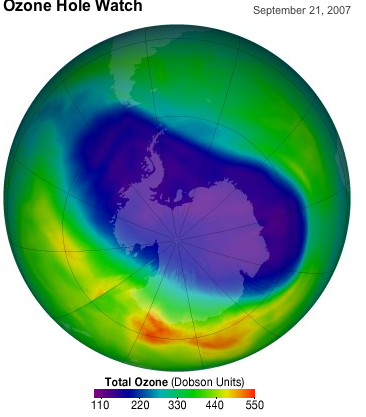
MONTREAL, Sep 23’07 (IPS) – More than 190 nations agreed this week to combat global warming and accelerate the healing of the ozone layer, although critics say more could have been accomplished.

The sun shone bright and warm here on Friday, the final day of the 19th Meeting of the Parties to the Montreal Protocol to protect the ozone layer. Outside, caravans of pre-school children in strollers or holding hands as they walked sported hats and long-sleeved shirts to protect their delicate skin.

It can be easy to forget that the sun was not always so dangerous, and that modern society is responsible for putting chemicals into the atmosphere that continue to destroy the ozone layer that protects all life from harmful levels of solar ultraviolet radiation.

[UPDATE: Sept 2009 — Ozone Treaty May Hold Key to Halting Climate Change;

— Ozone Hole 2009 – Bigger than North America – 24 million sq km]]

And we forget that things could have been far worse without international action in the form of the Montreal Protocol, which opened for signature 20 years ago this week.

Sadly, that action came late and was not vigorous enough for millions of people who have or will get skin cancer. Continue reading

Do you know what you’re eating? DNA barcoding IDs Fish Species

Geneticists Crack the Species Code
By Stephen Leahy


Credit:US CDC

Anopheles stephensi mosquito, a natural vector of malaria, which kills a million people per year.


Sep 14 (IPS) – Scientists are enthusiastic about a new DNA barcoding technology that will help keep illegal fish and timber out of global markets, slow the spread of invasive pests, and improve food safety and disease prevention and offer better environmental monitoring.

When a tree has been turned into a pile of lumber it’s very hard to know what species it was.” — David Schindel, executive secretary of the Consortium for the Barcode of Life

U.S. government regulatory agencies such as the Food and Drug Administration (FDA) and National Oceanic and Atmospheric Administration are beginning to utilise the three-year-old technology.

“It’s now a proven technology, everyone wants to use it,” said David Schindel, executive secretary of the Consortium for the Barcode of Life, comprised of 160 scientific and regulatory organisations from 50 countries and based at the Smithsonian Institution in Washington.

“It’s also an incredibly important technology for developing countries to research and protect their biodversity,” Schindel told IPS.

Continue reading

10 Worst Places on Earth – 2007

linfen-coalminer.jpgWorst Places on Earth Are Home to Millions
By Stephen Leahy

Sep 12 (IPS) – Rapidly industrialising India and China have claimed four of the top 10 most polluted places on the planet for the first time, according to a report by U.S. and European environmental groups.

In 2006, Russia topped the list with the three sites in the top 10, but this year, two very large toxic sites affecting hundreds of thousands of people in India and China were included that had been missed in the previous global survey, said Richard Fuller, director of the New York- based Blacksmith Institute, a independent environmental group that released the list Sep. 12 report in partnership with Green Cross Switzerland.

“We were surprised these sites had not been reported before,” Fuller told IPS.

One is Tianjin in the Anhui Province of China, which produces about 50 percent of the country’s lead, often from low-level and illegal production facilities. A lack of environmental enforcement has resulted in severe lead poisoning, with soil and homes contaminated at levels 10 to 24 times China’s national standards.

Up to 140,000 people may be affected, suffering from brain damage and mental retardation. Continue reading

Lifespans: Americans 80 years and rising; Africans 40 and falling

esc-cover.pngMedical Research Hits Cultural Roadblocks
By Stephen Leahy

The lifespan of a U.S. citizen is 80 and rising while an African’s is 40 and falling.
“That is the mother of all ethical challenges for the world to grapple with,” said Peter Singer of McLaughlin-Rotman Centre for Global Health in Toronto.

Sep 11 (IPS) – Many new medical technologies to improve the lives of people in the global South fail to be adopted not because of the costs but because of ethical, social and cultural issues, a new study reveals.

These issues include community and public engagement, cultural acceptability and gender, according to the comprehensive study featuring interviews with leading health experts in developing countries and published Monday in the U.S. peer-reviewed online journal PLoS Medicine.

Improper consultation with affected communities resulted in public pressure to end to medical trials of tenofovir, an antiviral medication used to treat HIV, in Cambodia, Cameroon, and Nigeria. In that instance, the community was commercial sex workers who weren’t properly consulted and would not benefit from the trials. Continue reading

Food Additives Make Kids Hyperactive – Organic Better?

My articles documenting studies on benefits of organic foods/agriculture i.e. Overweight? Hungry? Blame “Hollow Food” and Organic Agriculture Reduces Climate Change, Poverty and Hunger generate strong opinions for and against.

Here’s a Time magazine piece about a carefully designed study released Thursday in The Lancet, a leading British medical journal. A variety of common food dyes and the preservative sodium benzoate — an ingredient in many soft drinks, fruit juices, salad dressings and other foods — causes some children to become more hyperactive than usual it found.

Hog Waste and Rise in Antibiotic Resistant Bacteria

Animals living in large numbers on factory farms are given large amounts of antibiotics to prevent spread of disease. This has been implicated in rise of antibiotic resistant bacteria that render common antibiotics ineffective when used in humans. I’ve written about this a number of times but not in recent years. It’s an important issue that has not gone away.

In a new study, researchers at the University of Illinois report that some genes found in hog waste lagoons are transferred — ‘like batons’ — from one bacterial species to another. And these bacteria with antibiotic genes were found in groundwater and wells.

See also: Factory Farms, Bird Flu and Global Warming

Overweight? Hungry? Blame “Hollow Food”

New Studies Back Benefits of Organic Diet: Conventional agriculture produces “hollow food”, with low levels of nutrients and vitamins

wheat harvest sml

By Stephen Leahy

TORONTO, Canada, Mar 4, 2006 (Tierramérica)

(Originally published in 2006, two authoritative 2007 studies with similar findings are referenced at the end)

Organic foods protect children from the toxins in pesticides, while foods grown using modern, intensive agricultural techniques contain fewer nutrients and minerals than they did 60 years ago, according to two new scientific studies.

A U.S. research team from Emory University in Atlanta analysed urine samples from children ages three to 11 who ate only organic foods and found that they contained virtually no metabolites of two common pesticides, malathion and chlorpyrifos. However, once the children returned to eating conventionally grown foods, concentrations of these pesticide metabolites quickly climbed as high as 263 parts per billion, says the study published Feb. 21 (2006).

Organic crops are grown without the chemical pesticides and fertilisers that are common in intensive agriculture.There was a “dramatic and immediate protective effect” against the pesticides while consuming organically grown foods, said Chensheng Lu, an assistant professor at the Rollins School of Public Health at Emory University.

These findings, in addition to the results of another study published in Britain earlier this month, have fueled the debate about the benefits of organically grown food as compared to conventional, mass-produced foods, involving academics, food and agro-industry executives and activists in the global arena.

Continue reading