Post Climatic Stress Disorder – Climate Psychology on Radio Ecoshock

Vancouver, Canada’s Alex Smith has an excellent podcast program on the psychology of why we are not dealing with climate change. Perhaps it is a crisis in slow motion — too slow for us to get excited about some think. Let’s hope not.  – Stephen

From his Sept 29 show Alex begins:

“Friends did a month of rain that fall last night? Did rivers flood in the Fall? Did you know 214 all-time heat records were set in the U.S. September 24th? It was 30 degrees in Toronto, feeling like 37 with the humidity – the heat of the human body. And just lately, Los Angeles hit an all-time high of 113 degrees – in late September!

Worried about your kids? You might have Post Climatic Stress Disorder. PCSD is a serious condition. But don’t worry, professional help is on the way….

Post Climatic Stress Disorder on Radio Ecoshock

Locally-Run Protected Areas Could Reverse Fisheries’ Death Spiral


Great Barracuda and Jacks, Diamond Rock, Saba,...
Image via Wikipedia


One third of all species of sharks, rays and reef-building corals are facing extinction while governments spend $27 billion subsidizing overfishing

By Stephen Leahy

UXBRIDGE, Canada, Sep 15, 2010 (IPS)

Local fishers objected to the creation of a new no-fishing marine protected area off the coast of Belize in 1996. Today they are benefiting from the bounty of fish spilling out of the Laughing Bird Caye National Park. Tourism has also boomed, illustrating the multiple benefits and value of marine protected areas, according to a new series of reports released Wednesday by Conservation International (CI).

“The ocean is in crisis but we can’t see it with our own eyes so we’re not aware of what is happening,” said Leah Bunce Karrer, co-author and director of the Marine Management Area Science Programme at CI.

“Marine managed areas offer a solution which could significantly reduce ocean degradation while benefiting local communities,” Karrer told IPS.

Is this article of interest? It exists thanks to contributions from readers. Please click here to learn more about Community Supported Journalism.

One third of all species of sharks, rays and reef-building corals are facing extinction. “Most people don’t realise that,” said Gregory Stone, chief ocean scientist at CI.

“As species disappear, entire ecosystems are altered in negative ways we don’t even want to imagine,” Stone said.

Only a fraction of one percent of the world’s oceans are effectively protected even though there is growing scientific consensus of the need to protect at least 20 percent of the seas. Continue reading

“Climate change pits the rich and powerful against the young and unborn” – NASA Scientist James Hansen

One the world’s most acclaimed climate scientists, NASA’s James Hansen was handcuffed and arrested in front of the White House yesterday.

Hansen and hundreds more were urging the US government to end the coal industry practice of blowing off the tops of mountains to mine coal. Such practices are extremely damaging to the environment and local communities he says. Moreover to prevent catastrophic climate change coal must stay in the ground Hansen said.

Excerpts of Hansen’s speech in front of the White House:

“… government is failing to protect the future of young people, knowingly allowing and even subsidizing actions that benefit the few at the expense of the public and at the expense of all life sharing this Earth. Continue reading

The Future of Journalism: Adopt a Muckraker

I’m pretty damn angry that media companies are putting profits ahead of truth.

The media are deeply broken… That’s a real threat to democracy.”

— Stanford University climate scientist, Stephen Schneider


Renowned Swiss journalist Daniel Wermus and Director of the Media21 Global Journalism Network  discusses my launch of Community Supported Journalism in this article. — Stephen

“Should you and I pay for the kind of accurate news reporting that is needed to fill us in on what is happening to the planet?

If we’re not willing to pick up the tab to stay better informed, who will?”

Frontline Earth: Adopt a Muckraker?

By Daniel Wermus

“I meet international freelance journalists quite often. Most make it clear that budget cuts have made it increasingly difficult for just about anyone, especially freelancers, to get into print. It is usually the freelancers who are most willing to risk their lives to get the stories that need reporting the most. If the day arrives when they can no longer carry out their professions, we will all have a serious problem.

Muckraker: A reporter or writer who investigates and publishes reports involving a host of social issues, broadly including crime and corruption

Stephen Leahy, a Canadian, and one of the world’s best-known investigative reporters on environmental issues, has launched a challenge: if corporations won’t pay for the news, then it is up to communities and the public to fill the gap. A free society needs journalism, even if reporting the news is not commercially profitable.

Leahy’s model for supporting the news has the journalist make his pitch over the internet. The completed article can then be distributed by news agencies or magazines that are low on funds but high on public interest. That could be IPS, Reuters-Alertnet, Commondreams, InfoSud, The Essential Edge or any number of other publications and news outlets.

[edit: Wermus concludes]

Leahy observes that: “Many people tell me, we need individuals like you to get real information out.”

It may be too early to tell whether this really signals a new citizen’s approach to the need for hard information that may be crucial to society. In the best of all worlds it could bring together both consumers and media for promoting a better planet. The danger is that it could also produce yet another quagmire of holier-than-thou preaching.”

Learn more about Community Supported Journalism in the Public Interest

Adopt a Muckraker for only $10 a month

Update: Community Supported Journalism is working. However 50 people helping out has to become 500 so we all can get the crucial information we need.  Please consider becoming one of the 500. Thank you. — Stephen


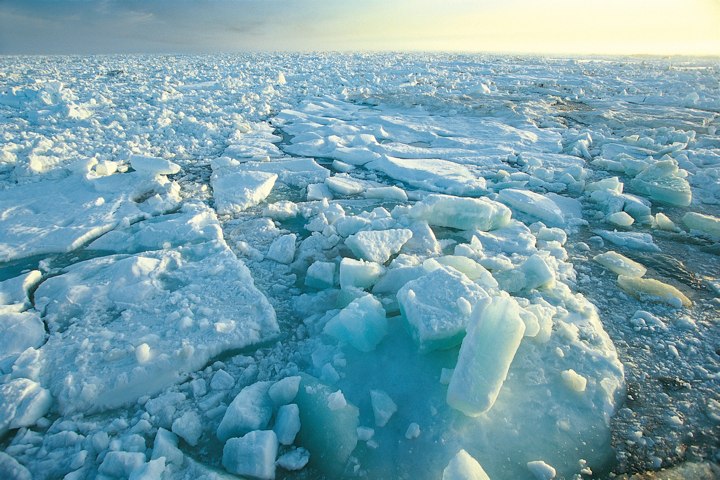
Arctic Ice in Death Spiral, Thaws Permafrost — Risks Climate Catastrophe

2 degrees C of warming could spark runaway global warming

By Stephen Leahy

UXBRIDGE, Canada, Sep 20, 2010 (IPS)

The carbon dioxide emissions from burning fossil fuels have melted the Arctic sea ice to its lowest volume since before the rise of human civilisation, dangerously upsetting the energy balance of the entire planet, climate scientists are reporting.

“The Arctic sea ice has reached its four lowest summer extents (area covered) in the last four years,” said Mark Serreze, director of the National Snow and Ice Data Center in the U.S. city of Boulder, Colorado.

The volume – extent and thickness – of ice left in the Arctic likely reached the lowest ever level this month, Serreze told IPS.

“I stand by my previous statements that the Arctic summer sea ice cover is in a death spiral. It’s not going to recover,” he said.

Is this article of interest? It exists thanks to contributions from readers. Please click here to learn more about Community Supported Journalism.

Continue reading

Record Heat Killing Caribbean and Indian Ocean Corals

By Stephen Leahy*

[There hasn’t been much news about the impacts of the record warming of parts of the world’s oceans but severe coral bleaching in the Indian ocean resulted in widespread coral death. Sadly the Caribbean also at high risk this month with record high water temps. My article connects that reality with how a new approach to protecting corals may give them the best chance to survive in hotter, more acidic oceans. — Stephen]

UXBRIDGE, Canada, Sep 13, 2010 (Tierramérica)

The waters of the Caribbean Sea are the warmest on record and the region’s imperilled corals are bleaching and beginning to die, experts warn.

This year many corals are already bleached and dying in the southern Caribbean Sea, especially in the Lesser Antilles, according to Mark Eakin coordinator of Coral Reef Watch at the U.S. National Oceanographic and Atmospheric Administration (NOAA).

Is this article of interest? It exists thanks to contributions from readers. Please click here to learn more about Community Supported Journalism.

The waters are even warmer than they were in 2005 when a severe bleaching occurred across much of the Caribbean. More than 60 percent of corals around the U.S. Virgin Islands died, Eakin told Tierramérica.

Water temperatures in this region reach their annual peak between September and October.

The area affected by bleaching and dying corals will likely extend to the region east of Nicaragua, past the island of Hispaniola (Haiti and Dominican Republic) to Puerto Rico and the Lesser Antilles, and south along the Caribbean coasts of Panama and South America, according to a warning issued by Coral Reef Watch last month.

“There is the potential that this will be worse than 2005, unless some tropical storms come through and mix the warm surface water with deeper, cooler water,” Eakin said.
Continue reading

“Drug War” Policies Need a Stint in Rehab – Makes Societies More Violent Not Safer Studies Show

DEA raid on a medical marijuana dispensary in ...
Image via Wikipedia

Drug Wars Make Societies More Violent Not Safer Studies Show

By Stephen Leahy

UXBRIDGE, Canada, Apr 29, 2010 (IPS)

The war on drugs is a complete failure everywhere, according a comprehensive review of 20 years of scientific literature released at the Harm Reduction 2010 conference in Liverpool, England that wraps up Thursday.

The war on drugs does not work, period,” said Dr. Julio Montaner, president of the International AIDS Society.

“We must take an evidence-based approach to dealing with the drug market, because current strategies are not working and people are paying for ill-considered policies with their lives,” Montaner said in a release.

Is this article of interest? It exists thanks to contributions from readers. Please click here to learn more about Community Supported Journalism.

An examination of all English-language scientific literature dating back more than 20 years reveals that drug law enforcement dramatically escalates drug-market violence. Contrary to conventional wisdom, a startling 82 percent of the studies found the various wars on drugs in countries and internationally simply increase violence. Continue reading

Flee or be Made Homeless by Climate Change? Powerful New Film (video)

Three people in a unique Pacific Island community face the first devastating effects of climate change, including a terrifying flood.  Will they decide to stay with their island home or move to a new and unfamiliar land, leaving their culture and language behind forever?

Ultimately the documentary “There Once was an Island” is about what makes us who we are and what we all stand to lose as climate change unfolds. — Stephen

Related articles by Stephen Leahy:

Drowning Country: Tuvalu Symbol of Catastrophe and Hope

Canada Reneges on Kyoto Climate Change agreement

Extinction Tourism — See It Now Before Its Gone

Hurricane Madness – 3 Hurricanes Spinning At One Time

Record warm Atlantic sea surface temperatures have spawned three simultaneous hurricanes this Thurs and Friday: Hurricanes Igor, Julia, and Karl. Although this is not the first time other records continue to fall according to weather expert Jeff Master. Julia was the strongest hurricane on record so far east, Karl was the strongest hurricane so far south in the Gulf of Mexico, and Earl was the 4th strongest Atlantic hurricane so far north.

Master said Friday: “we are now ahead of the pace of the terrible hurricane seasons of 2004 and 2005 for number of major hurricanes so early in the year”.

UN Climate Body (IPCC) Too Slow, Too Cautious

The review of the IPCC (Intergovernmental Panel on Climate Change) has been completed and concluded that the science is sound. Of course that is not what many in the blogosphere are saying.

As a journalist my experience with the IPCC over past decade has been that their communication is terrible. The Summary for Policy Makers report is unreadable except by the most dedicated jurno with good salary and few deadlines…

Secondly public statements by IPCC are so qualified with caveats to require telepathy to parse the real meanings.

Finally compared to my reading of the latest science the IPCC is woefully out of date and conservative to a fault.

In my view much of the current criticism of the IPCC is misdirected and done so to deliberately confuse the public about the reality of the near and present danger of climate change.

I have interviewed scientists and other experts about how the findings and integrity of climate science/scientists have been systematically attacked and distorted by those with vested interests:

* Proof of Anti-Global Warming Cabal: Fossil fuel Interests, Christian Evangelicals and the Media

* Violent Backlash Against Climate Scientists

* Global Warming: What is the chance that thousands of scientists are wrong and Rush Limbaugh is correct? (video)


— Stephen

Summary of the InterAcademy Council Review from the excellent Australian science blog Climate Shifts:

The long-awaited review of the IPCC has been delivered by the InterAcademy Council (an Amsterdam-based organization of the world’s science academies). Contrary to the misguided expectations of the denialist community, the Inter-Academy Council has concluded that the periodic assessment reports of the IPCC have been successful overall. There is some need, however, for improving some of the reporting process and for developing a better set of processes to deal with the growing scientific and political complexity of the climate change issue.

Here is the press release posted today by the InterAcademy Council (IAC).