Costs for Nuclear Energy Skyrocket While Cost of Renewables Plummet

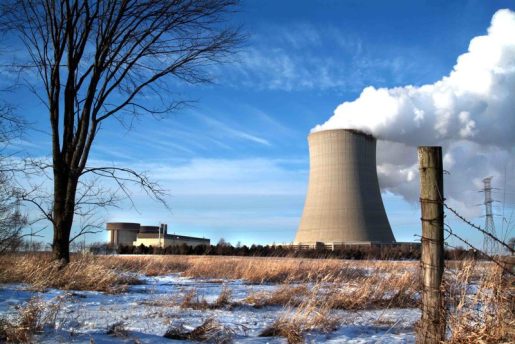
Darlington Nuclear Plant on Lake Ontario

[This is a repost about the financial costs and risks of nuclear technology (written before the Fukushima I Nuclear Power Plant disaster).   If a country is going to spend $10 billion to generate energy and reduce carbon emissions what technology truly offers the best return on a full cost-accounting basis? The latter calculation is not simple or uncontroversial. Two years ago Canada balked at the costs of new nuclear plants now it plans to build some without knowing the price tag.  — Stephen ]

By Stephen Leahy*

BERLIN, Jul 31, 2009 (IPS)

With costs of nuclear energy skyrocketing while the costs of renewables are falling quickly why is nuclear energy back on the table?

One reason is a powerful U.S. lobby where 14 energy companies spent 48 million dollars in 2007 alone to convince American politicians to give the industry huge loan guarantees because they cannot get financing anywhere else, says Ellen Vancko, a nuclear energy analyst at the Union of Concerned Scientists, a U.S.-based non governmental organisation (NGO).

This lavish lobbying effort by the energy and nuclear power sector has been ongoing since the mid-1990s, according to the Center for Responsive Politics, a U.S. NGO and now totals at least 953 million dollars.

Even more has been spent to convince the public that nuclear is one of the keys to energy security so that there is significant public support for new reactors, a Gallup Environment Poll reported this year.

“There are lots of senators and members of congress talking about nuclear as a clean, renewable energy resource,” Vancko says.

The other reason is the French.

France gets about 77 percent of its power from 58 reactors and is often cited as the model for other countries. “France is a special case. The entire industry is 85 percent owned by the government,” says Mycle Schneider, a Paris-based energy and nuclear policy analyst.

The industry gets direct and indirect subsidies, government loans and loan guarantees “on practically anything they want”, Schneider told IPS.

And despite a well-polished reputation for efficiency and low-cost, the French nuclear industry has been plagued by cost-overruns, equipment failures, and relatively low levels of reliability. Even though French reactors are all of similar design, the cost to build a plant in 1998 was 3.5 times higher than the first plants built in 1974, says Steve Thomas, professor of energy policy at the University of Greenwich in the U.K.
Unlike wind or solar energy or virtually any other technology, the costs of nuclear go up over time rather than down even in pro-nuclear France, he said. “I think that is rather telling about the technology,” Thomas told IPS.

The current Finnish nuclear experience echoes the industry’s long history.

Backed byFrench government loan guarantees, Areva, the French government-owned nuclear energy company began construction in 2005 on what is supposed to be the world’s largest and safest nuclear plant at Olkiluoto, Finland.

Plagued by thousands of construction and design problems it is currently 2 to 3 billion dollars over budget and three to four years behind schedule.

“It’s a total disaster for Areva,” Schneider says. Areva will have to sell another 12 reactors to cover the cost overruns thus far or else French taxpayers will, he said.

“The hype around a nuclear power revival or renaissance was based on nothing and is effectively dead.”

Last month Canada backed out of ordering two 1,200-megawatt reactors because cost estimates of 10,000 dollars/kW were three times higher than expected. [update Feb 2011 – Ontario now holding hearings to spend $33 billion to build two new reactors and upgrade others and bans offshore wind!]

However there is real danger that the nuclear industry will continue to promote itself as a ‘silver-bullet’ solution to climate change and give politicians the kind of mega-projects that gets them publicity, warns Schneider.

Equally important is that corporate shareholders of large utility companies can do very well financially on such projects when governments guarantee to cover any losses.

“The worst thing about new nuclear is that it steals billions of public dollars from other more effective things like energy efficiency,” he says.

(Second of two part series)

-30-

Part one:

Lobbyists Push for Nuclear Energy and put Taxpayers on the hook for 360 billion to 1.6 trillion dollars (again)

Welcome to Bizarro World: Canada and US Spending $billions to Create Climate Chaos

President Obama and Prime Minister Stephen Harper (left) say they’re worried about climate change, but neither the U.S. nor Canada has cut emissions.

Analysis by Stephen Leahy

UXBRIDGE, Canada, Aug 10, 2011 (IPS)

Canada and the United States are now the centre of Bizarro World. This is where leaders promise to reduce carbon emissions but ensure a new, supersized oil pipeline called Keystone XL is built, guaranteeing further expansion of the Alberta tar sands that produce the world’s most carbon-laden oil.

“It’s imperative that we move quickly to alternate forms of energy – and that we leave the tar sands in the ground,” the U.S.’s leading climate scientists urged President Barack Obama in an open letter Aug. 3.

“As scientists… we can say categorically that it’s [the Keystone XL pipeline] not only not in the national interest, it’s also not in the planet’s best interest.”

The letter was signed by 20 world-renowned scientists, including NASA’s James Hansen, Ken Caldeira of the Carnegie Institution, Ralph Keeling of the Scripps Institution of Oceanography, and George Woodwell, founder of the Woods Hole Research Center.  Continue reading

Who Controls the Nuclear Control Agencies?

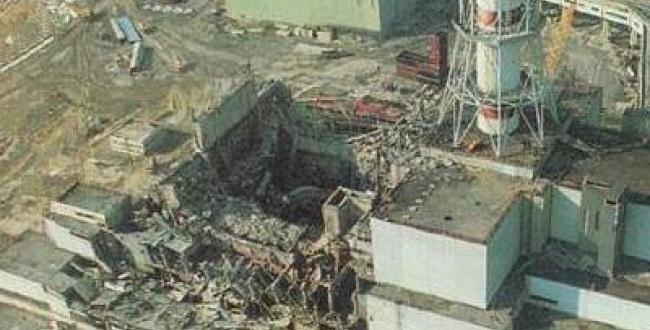
April 1986 disaster at the Chernobyla nuclear power plant in Ukraine

“There are few independent nuclear experts in the world. Everyone either works in the industry or used to and are now regulators.”

Canadian Government fired chief regulator for trying to improve safety standards — Greenpeace

By Stephen Leahy*

UXBRIDGE, Canada, Mar 23, 2011 (Tierramérica)

As Japan struggles to confront a nuclear disaster that could be the worst in history, it seems clear that any discussion about the safety of nuclear energy should address the independence of regulatory agencies.

On Apr. 26, 1986 a series of explosions and fires at the Chernobyl nuclear power plant in Ukraine released radioactive fallout that spread over eastern and western Europe, particularly affecting Ukraine itself, Byelorussia (now Belarus) and Russia, all Soviet republics at the time.

Twenty-five years later, Chernobyl’s reactor number 4 continues to emit high levels of radioactivity even though it is buried under a thick but decaying layer of concrete.

Europe and the United States are trying to raise more than two billion dollars to build a permanent sarcophagus to contain the radiation.

The Chernobyl disaster is usually attributed to obsolete technology and the secrecy characteristic of the Soviet regime.

The accident at the Tokyo Electric Power Co. (TEPCO) Fukushima I Nuclear Power Plant was triggered by the damage resulting from the 9.0-magnitude earthquake and subsequent tsunami on Mar. 11.

But “TEPCO doesn’t have the best record for safety or disclosure of information,” said Mycle Schneider, a Paris-based energy and nuclear policy analyst who also works in Japan.
Continue reading

On the Road to Green Energy for All

27 Jun 2011 09:33

By Stephen Leahy

VIENNA, Jun 27 (IPS)

Like our cave-dwelling ancestors of 200,000 years ago, nearly three billion people still use fire for cooking and heating. Of those, some 1.5 billion people have no access to electricity. For a billion more, their only access is to sporadic and unreliable electricity networks.Now an ambitious global effort is being launched by the United Nations to bring electricity to everyone on the planet by 2030.

“Energy is the issue for the next decade,” said Kandeh Yumkella, director-general of the United Nations Industrial Development Organization (UNIDO).

“Achieving the Millennium Development Goals (MDGs) is impossible without energy,” Yumkella said at the opening of the 2011 Vienna Energy Forum last week.

via On the Road to Green Energy for All – AlertNet.

Cut Climate Damaging Emissions in Half and Double Food Production With Eco-Farming

45- 50% of global warming emissions from industrial agriculture

By Stephen Leahy

UXBRIDGE, Feb 8, 2011 (IPS)

Eco-farming could double food production in entire regions within 10 years while mitigating climate change, according to a new U.N. report released Tuesday in Geneva.

An urgent transformation to ‘eco-farming’ is the only way to end hunger and face the challenges of climate change and rural poverty, said Olivier De Schutter, U.N. Special Rapporteur on the right to food, following the presentation of his annual report focusing on agroecology and the right to food to the U.N. Human Rights Council.

“Agroecology mimics nature not industrial processes. It replaces the external inputs like fertiliser with knowledge of how a combination of plants, trees and animals can enhance productivity of the land,” De Schutter told IPS, stressing that, “Yields went up 214 percent in 44 projects in 20 countries in sub-Saharan Africa using agro-ecological farming techniques over a period of 3 to 10 years… far more than any GM [genetically modified] crop has ever done.”

Other recent scientific assessments have shown that small farmers in 57 countries using agro-ecological techniques obtained average yield increases of 80 percent. Africans’ average increases were 116 percent.

“Today’s scientific evidence demonstrates that agroecological methods outperform the use of chemical fertilisers in boosting food production in regions where the hungry live,” De Schutter said. [Video Interviews with De Schutter]

Continue reading

Africa’s Future Lies in a Green Energy Grid – Universal Access to Electricity Less Than Cost of Fossil Fuel Subsidies

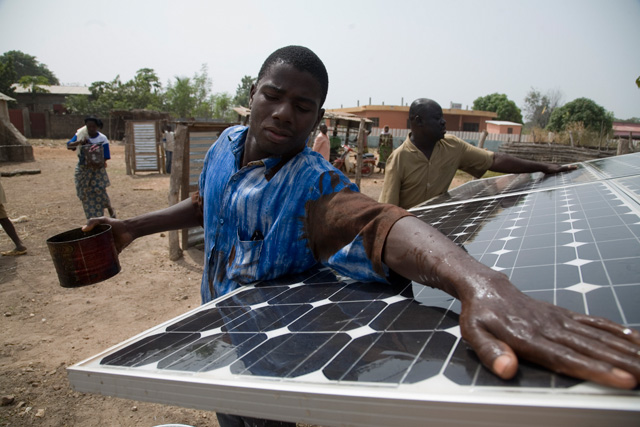
Kenya switched to green energy and now more people than ever have electricity

Universal access to modern electricity would cost much less than current subsidies to fossil fuel industry

By Stephen Leahy*

UXBRIDGE, Canada, Dec 14, 2010 (IPS)

Development in Africa could falter as climate change grips the continent, increasing the length and severity of droughts and floods by altering precipitation patterns, among other impacts.

The region needs a major shift in its economic development policies and thinking towards decentralised, green economic development, experts now say.

“The world’s big economies are largely living off financial transactions which are unconnected to development,” warns Supachai Panitchpakdi, secretary-general of United Nations Conference on Trade and Development.

“Export growth does not automatically result in green economic growth, we must look at trade for development,” said Panitchpakdi.

In a rejection of failed neoliberal economic policies, Panitchpakdi said strong national policies on investments, taxation, protection of local industries, including subsidies, and changes to less restrictive intellectual property regimes are what is needed to green economies in Africa and elsewhere.

“Green economic development underpins environmental protection, economic growth and development,” he said.

This independent environmental journalism depends on public support. Click here learn more.

Continue reading

100 Million Suffering in World’s Toxic Hotspots – 1% of Wall Street Bonuses Would End This In a Year

Millions of kids are condemned to die or suffer severe brain damage because there is no money to clean up toxic sites and neighborhoods. One or two billion dollars would solve the problem permanently but health advocates have to beg and plead to get maybe $20-$30 million. Wall Street’s 2010 bonus and salaries are estimated to total a record-breaking $144 billion for just 36 firms according to Wall Street Journal.

Don’t you think they could donate 1 per cent of their ‘earnings’? — Stephen

By Stephen Leahy

UXBRIDGE, Canada, Nov 11, 2010 (IPS)

One of the world’s biggest health threats is also one of the least recognised – more than 100 million people who literally breathe and eat toxic pollutants like lead, mercury, chromium every day, according to the first-ever detailed assessment.

By contrast, global attention and billions of dollars are focused on AIDS, tuberculosis and malaria, which affect comparable numbers of people.

“Toxic pollution has been under the radar screen of most governments for some time,” said Stephan Robinson of Green Cross Switzerland, a group focused on environmental health, and co-author of the assessment titled “World’s Worst Pollution Problems Report 2010”.

“These pollution problems can be dealt with affordably and effectively,” Robinson told IPS.

Past clean-up projects designed by the groups range from the very low-tech, low-cost to more technical engineering projects involving soil removal at playgrounds and groundwater remediation, he said. Continue reading

Geoengineering on a Desperate Planet — UN Declares Global Moratorium

By Stephen Leahy

NAGOYA, Japan, Oct 25, 2010 (Tierramérica)

[Update 30 October 2 am. Global moratorium passes.]

Delegates to the world summit on biodiversity here are calling for a moratorium on climate engineering research, like the idea of putting huge mirrors in outer space to reflect some of the sun’s heating rays away from the planet.

Climate engineering or geoengineering refers to any large-scale, human- made effort to manipulate the planet to adapt to climate change.

Representatives from Africa and Asia expressed concern about the negative impacts of geoengineering during the opening week of the 10th Conference of Parties (COP 10) to the United Nations Convention on Biological Diversity (CBD), Oct. 18-29. They were joined by civil society organisations in calling for a moratorium on geoengineering experiments.

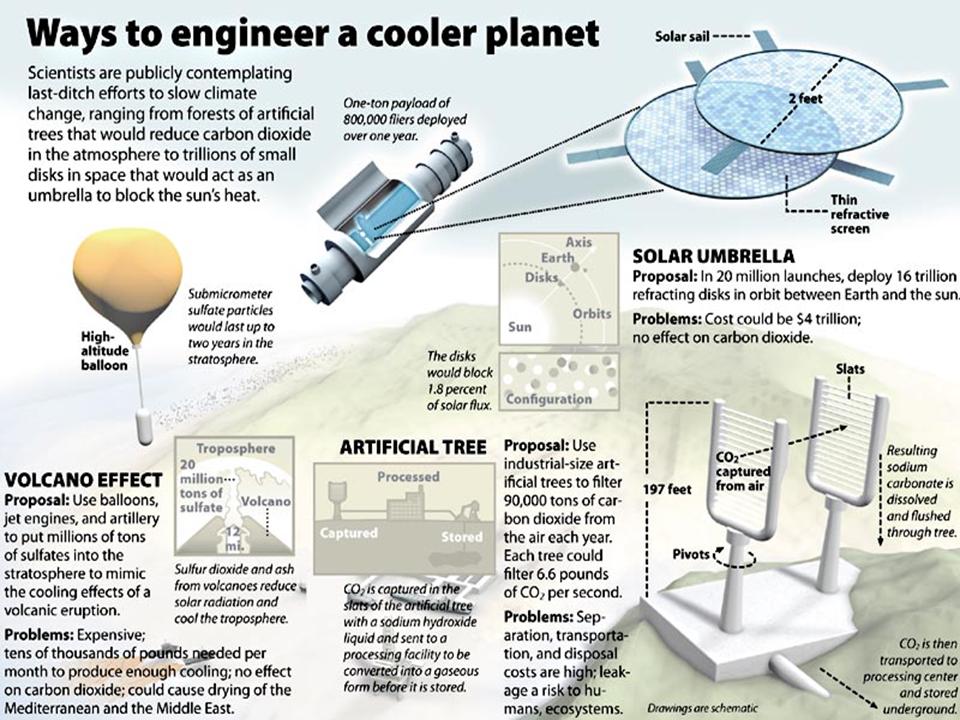
The geoengineering proposals include installing giant vertical pipes in the ocean to bring cold water to the surface, pumping vast amounts of sulphates into the stratosphere to block sunlight, or blowing ocean salt spray into clouds to increase their reflectivity.

The geoengineering proposals include installing giant vertical pipes in the ocean to bring cold water to the surface, pumping vast amounts of sulphates into the stratosphere to block sunlight, or blowing ocean salt spray into clouds to increase their reflectivity.

Broadly speaking, there are two main geoengineering approaches: solar radiation management and carbon sequestration, in other words, absorbing carbon dioxide from the atmosphere to reduce the concentration of this greenhouse-effect gas.

Is this article of interest? It exists thanks to contributions from readers. Please click here to learn more about Community Supported Journalism.

To manage the sun’s rays, there are ideas like releasing sulphates into the atmosphere or placing giant mirrors in outer space. For absorbing carbon, the possible approaches include ocean fertilisation, in which iron or nitrogen is added to seawater to stimulate the growth of phytoplankton to sequester the carbon deep in the ocean.

“Some of the proponents of these technologies think it’s easier to ‘manage the sun’ than get people to take a bus” to reduce carbon in the atmosphere, said Pat Mooney, executive director of the ETC Group, an international environmental organisation headquartered in Canada. [etc “Geopiracy” report]

“Politicians in rich countries see geoengineering as ‘Plan B’ so they don’t have to make the hard choices of reducing emissions causing climate change,” Mooney told Tierramérica.

Continue reading

Organic farms have better fungi and that’s a very good thing

Organic cultivation of mixed vegetables in Cap...
Image via Wikipedia

New study from Britain’s Centre for Ecology & Hydrology concludes: Organic agriculture better for fungi that are a key to healthy ecosystems. [press release below]

This is just one of dozens of different studies that demonstrate the benefits of organic over conventional as I’ve previously posted. Despite the benefits to society organic farmers receive little government support or are marginalized in most countries. Wonder why? — Stephen

Organic farming more profitable and better than conventional systems – U of Wisconsin

Organic Agriculture Reduces Climate Change, Poverty and Hunger

Organic Provides 3X More Food Per Acre in Poor Countries – podcast

Overweight? Hungry? Blame “Hollow Food”


Centre for Ecology & Hydrology

Farming practices have a significant impact on the diversity of beneficial microbial fungi known to play important roles in crop productivity, soil recovery and maintenance of healthy ecosystems, according to new research published today (14 September 2010) in the journal Environmental Microbiology. The conclusions could have important implications for the way humans manage the agricultural landscape and tackle food security issues. Continue reading

Europe to cook the world’s tropical forests for biofuels — British told to back off targets by its climate advisors

UPDATE 13 Sept: UK must cut biofuels target “so that tropical forests are not cut down to make way for biofuel crops, government climate advisors said last Friday.”

“Europe is going to cook the world’s tropical forests to fight climate change; it’s crazy” — Millions of Trees Burned for ‘Green Energy’ Burning trees for energy produces 1.5 times as much carbon as coal – study shows

By Stephen Leahy*

UXBRIDGE, Canada, Sep 24 ’09 (Tierramérica) (Revised Sept 1’10)

Millions of trees, especially from the developing countries of the South, are being shipped to Europe and burned in giant furnaces to meet “green energy” requirements … Read More

via Stephen Leahy, International Environmental Journalist