
 Toronto artist Franke James has another brilliant and insightful visual essay about why voting for the environment IS a vote for the economy. There will be no economy in future without a major change of direction to an energy-efficient green economy.
Bungled Peace-Building in Afghanistan & Iraq Opened Door to Terrorism
US focus In Afghanistan is killing terrorists not peace-building — Canadian expert says

By Stephen Leahy
(Originally published Jan 31, 2006)
(IPS) – Washington’s attempts to bring security to Iraq and Afghanistan are not only making life harder for local people, they are breeding more terrorists, warn international security experts.
Under its anti-terrorism agenda, the U.S. has centralised power and security in post-conflict Iraq and Afghanistan, which ironically creates perfect conditions for terrorists and criminals.
“There is a great fear that unstable states and post-war societies provide an ideal breeding ground for terrorist training and activity,” said Albrecht Schnabel, a senior fellow with the Research Programme on Human Security in Bern, Switzerland.
“Yet almost three years after the toppling of Saddam Hussein, Iraq is characterised by chaos, violence and disintegration. The methods used to rebuild Iraq’s security sector are simply making matters worse,” he told IPS. Continue reading
Monster Ozone Hole (Again) – But your skin would fry in 3 mins without 20-yr old Ozone Treaty
 By Stephen Leahy
UXBRIDGE, Canada , Sep 16 (IPS) – In hard economic times, protecting the environment is often seen as a luxury — or ignored completely. But had that attitude prevailed 20 years ago when it came to taking action to protect the ozone layer, skin cancer rates would have soared and climate change would be even more dramatic than it is today.
[Update April 09: NASA study now shows that without action UV radiation would have increased 650 per cent in mid-latitudes ie Washington DC. OUCH! fried skin in 5 mins or less. http://bit.ly/QJYN%5D
“We forget that things could have been far worse without international action in the form of the Montreal Protocol,” said U.N. Secretary-General Ban Ki-moon Tuesday as part of the annual World Ozone Day celebration.
And things are bad enough.
A massive ozone hole over Antarctica is making its annual appearance at a near record-sized 27 million square kilometres as measured by the U.S. National Aeronautics and Space Administration (NASA) on Sep. 13. This is the 25th “anniversary of the hole” and it likely has another 50 to 60 years of life left. Continue reading
Peak Soil: The Silent Global Crisis
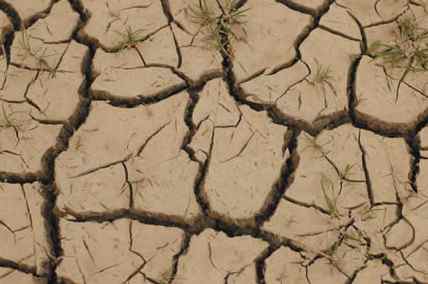
30% of farmland can no longer grow food
By Stephen Leahy
(First published in the Earth Island Journal Spring 2008)
A harsh winter wind blew last night, and this morning the thin snow cover has turned into a rich chocolate brown. The dirt covering the snow comes from cornfields near my home that were ploughed following the harvest, a common practice in southern Ontario and in the corn-growing regions of the US Midwest.
A handful of this dirty snow melts quickly, leaving a thin, fine-grained wet mess. It doesn’t look like much, but the mucky sludge in my hand is the prerequisite for life on the planet.
“We are overlooking soil as the foundation of all life on Earth,” says Andres Arnalds, assistant director of the Icelandic Soil Conservation Service. Arnalds is an eloquent spokesperson for the unheralded emergency of soil erosion, a problem that is reducing global food production and water availability, and is responsible for an estimated 30 percent of the greenhouse gases emissions.
“Land degradation and desertification may be regarded as the silent crisis of the world, a genuine threat to the future of humankind.”
This article depends on public support. Click here learn more.
‘Do What You Can’ Powers 1st Climate Change Village (Pub incl.)
 By Stephen Leahy, Inter Press Service News Agency
The village of Ashton Hayes in Cheshire, England is aiming to be the first carbon-neutral community in the England (Golden Lion pub included).
In just two years, the 1,000 residents have saved 20 percent on their energy costs and transformed their community.
“It’s been great fun and an amazing boost in community spirit,” said Garry Charnock, who put the idea to some friends in the local pub. “I thought they’d think of me as a bit of a crank, but they were all for it.”
More than 75 percent of the village showed up for the first meetings, something that had never happened before. Charnock told IPS that people are worried about climate change and want to do something but are reluctant to do it on their own. Unwittingly, Charnock’s notion of a carbon-neutral village unleashed the power of community. Continue reading
Arctic Oil and Gas Rush Alarms Scientists

By Stephen Leahy
[See also more recent story: Arctic Ice Gone in 5 Years – First Time in One Million Years; see also other Arctic and oil stories below. US and Canada to start offshore drilling in the Arctic summer 2010 – your support is needed to investigate and report on this. ]
UXBRIDGE, Canada, Sep 8 2008 (IPS)
As greenhouse gas pollution destroys Arctic ecosystems, countries like Canada are spending millions not to halt the destruction but to exploit it.
Late last August, Canada announced a 93.7-million-dollar prospecting programme to map the energy and mineral resources of the region. There are “countless other precious resources buried under the sea ice and tundra,” Prime Minister Stephen Harper said during the announcement. The government’s mapping effort is expected to trigger 469 million dollars in private sector resource exploration and development.
“It is estimated that a quarter of the world’s undiscovered oil and gas lies under the Arctic,” Harper said.
This scramble to exploit some of the most environmentally delicate regions of Earth has alarmed international experts who are meeting this week in Iceland to make recommendations to the United Nations and world governments on how to protect the polar regions.
“Many experts believe this new rush to the polar regions is not manageable within existing international law,” says A.H. Zakri, director of the United Nations University’s Yokohama-based Institute of Advanced Studies (UNU-IAS), co-organisers of the conference with Iceland’s University of Akureyri. Continue reading
Arctic Meltdown Signals Long-Term Trend
 By Stephen Leahy
UXBRIDGE, Canada , Sep 5 (IPS) – Soaring temperatures have led to the collapse of several huge ice shelves in the Canadian Arctic over the past few weeks.
One 50 sq km ice shelf on the northern coast of Canada’s Ellesmere Island simply “vanished” over three days, exposing a coast that lay buried under ice for at least 4,000 years.
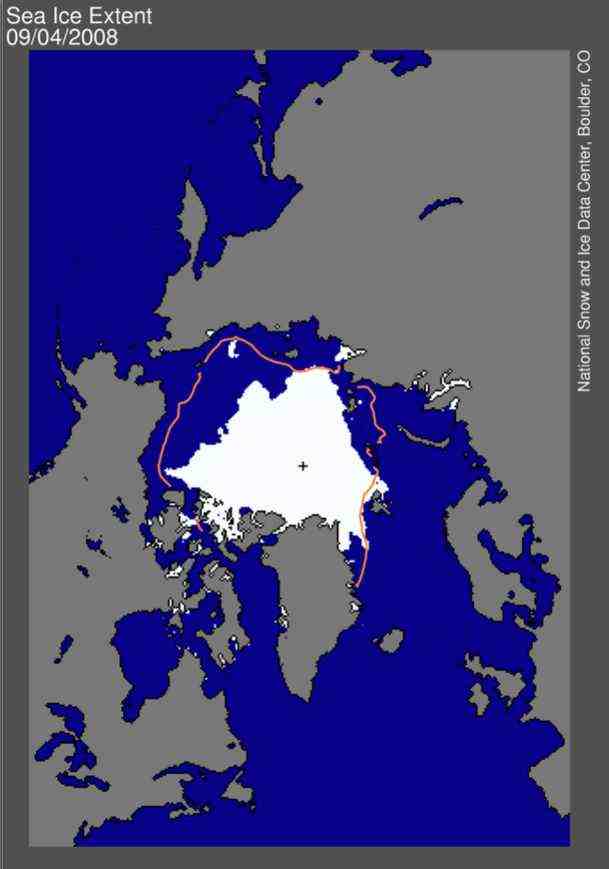
At the same time, the Arctic’s thick, year-round sea ice cover has declined to near the 2007 record of 2.6 million square kilometres less ice than the summer average minimum. This year’s ice loss is still huge — an area that’s far larger than the states of Alaska and Texas combined.
“My gut feeling is that the sea ice decline won’t beat last year’s record,” said Walter Meier of the National Snow and Ice Data Center at the University of Colorado in Boulder.
This year’s sea ice decline is expected to reach its peak in the next few days. “The (2008) decline is already the second largest loss of summer ice on record even though the weather was not as warm as last year,” Meier told IPS. Continue reading
Flying Blind Into Future Hurricane Seasons
 “…New Orleans is at the same risk as it was before Katrina.”
– Stephen Leatherman, director of the International Hurricane Research Center
In just two years from now 40 percent of the current weather and science satellites will be out of service. NASA budget cuts means few if any replacements are on the way. Billions of dollars will go into manned space efforts instead.
“The [George W.] Bush administration has decided going to Mars and the International Space Station is more important,” said Judith Curry, chair of climate and remote sensing at Georgia Tech’s School of Earth and Atmospheric Sciences.
“Earth sciences has taken a huge hit at NASA. That’s not a good thing for those of us living on Planet Earth,” Curry said.
“This is a very serious issue.”
For more see:
Flying Blind Into a Monster Hurricane Season
Related stories:
Steve’s Hurricane Handbook 2007
Hurricane Katrina Only Cat 1/2 When It Hit New Orleans – NOAA
Cut Energy Costs 70%: Save Money, Live Better, Help the Climate
 Making buildings more environmentally friendly is the easiest and most effective way to cut climate-changing carbon emissions, often slashing energy costs by up to 70 percent.
So why isn’t there a massive effort to “green up” existing buildings and set green standards for all new construction?
Apparently energy costs aren’t high enough. And then there are multi-billion-dollar government subsidies paid to the energy sector to lower the actual cost of energy, tilting the market away from green buildings towards the cheapest built structures.
FACT: The most efficient buildings today use about 70 percent less energy than conventional properties.
Despite proven environmental, economic and health benefits of green buildings they only account for 2% of all new commercial buildings and even smaller percentage of new homes.
See full article:
Cut Energy Costs 70%: Save Money, Live Better, Help the Climate
Canada, Home of the World’s Dirtiest Oil

A new multi-million government PR campaign claims Canada is a “clean energy superpower“. Meanwhile oil production from Canada’s oil sands — the world’s dirtiest oil — is ramping up from 1.2 million barrels a day to 3.5 million. Sadly yet another example of a government resorting to the “big lie”.
By the way virtually all of this oil goes to the US market.
I wrote a series of investigative articles for IPS on the enormous environmental impacts of Canada’s oil sands in 2006. That series has been updated and collected into an e-Book format (download for free).
Here’s an excerpt from Oil Stains in the Boreal Forest: The Environmental Cost of Canada’s Oil Sands
THE ‘RECIPE’ TO MAKE A TANK (75 litres/20 gallons) OF OIL SANDS GASOLINE :
* Dig up two tonnes of earth and rock
* Burn up to 1500 cubic feet of natural gas to boil approx 700 litres of fresh water to process the dirt
* Throw away 950 litres of toxic mine tailings and emit 480 kilograms of CO2, the main greenhouse gas causing global warmingREPEAT 1.2 million times a day (one barrel of oil makes about 75 litres of gasoline)
Note: this analysis does not include local air pollution, impacts on wildlife and local people from oil sands operations and pipelines.
 Stephen Leahy, International Environmental Journalist