Oceans Becoming Hot, Sour and Breathless

Oceans home to 80% of all life — plankton provide 50 percent of the oxygen we breathe

By Stephen Leahy

DURBAN, South Africa, Dec 3 (IPS)

The world’s oceans are becoming hot, sour and breathless – threatening a vital source of food for a billion people mainly in the developing world experts warned today at a special Oceans Day event at the UN climate negotiation.

Oceans are home 80 percent of all life on the planet and emissions from fossil fuels are turning them increasingly acidic, raising water temperatures and reducing the amount of oxygen in some regions said oceanographer Carol Turley from Plymouth Marine Laboratory in the UK.

“We don’t know what all the consequences will be. We suspect the combination of all three will be far worse than one alone,” Turley told IPS in an interview on the sidelines of climate treaty negotiations known as COP 17.
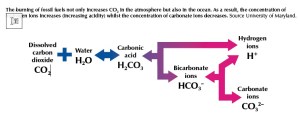
It was only a few years ago that researchers realised that human emissions of carbon dioxide (CO2) was making the surface waters of oceans more acidic. The oceans naturally absorb CO2 from the atmosphere and have now absorbed about a third of all human emissions. That has kept the climate from warming faster but the additional carbon is altering the oceans’ chemistry making them 30 percent more acidic.

One documented impact is that shell-forming creatures like plankton produce thinner shells in more acidic ocean waters. These species are often very important parts of the marine food chain. As emissions of CO2 into the atmosphere increase the more the ocean sours.

[See a powerful 11 min film on Ocean acidification]

In less than ten years at least 10 per cent of the Arctic Ocean surface waters will be too acid for shell-forming species like plankton. By 2040 most of the Arctic Ocean will be too acidic as will significant areas of the Antarctic Ocean said Turley.

Change in sea water acidity pH caused by anthr...The cold waters of the polar regions allow more CO2 to be absorbed faster. The oceans haven’t seen a rapid change like this in 60 million years, she explained.

“But there will also be strange impacts. New research is showing changes in growth, behaviour and reproduction in a variety of non-shell forming species.”

Estuaries and ocean upwelling zones that are often important fishing grounds are also regions where acidification is fastest. Those areas are also subject to low oxygen levels and increasing temperatures creating new conditions in the oceans that no marine species has ever had to cope with.

Oceans are also absorbing most of the extra heat trapped by the additional CO2 in the atmosphere. Again, without this land temperatures would far higher and extreme weather events far worse.

“There is some evidence that some crab species cannot tolerate higher temperatures when ocean is more acidic,” she said.

Continue reading

“Fracking” for Shale Gas: The Bridge to Global Warming Disaster

Switching from coal to gas can increase global warming – NCAR

[UPDATE JAN 20 2012: New study published in journal Climatic Change shows large volumes of methane released during fracking]

By Stephen Leahy 

DURBAN, South Africa, Dec 5, 2011 (Tierramérica)

Hydraulic fracturing or “fracking” is being used to tap the last remaining natural gas deposits across large areas of the United States and western Canada, fueling continued dependence on hydrocarbons instead of a shift to genuinely clean energy sources to cool the planet.

Called shale gas, these deposits represent a new and enormous source of fossil fuel.

“Fracking is driving exploration and drilling all over the United States,” said Gwen Lachelt of the non-governmental organisation Earthworks’ Oil & Gas Accountability Project.

“The oil and gas industry is marching across America from Texas to North Dakota and from the east coast to California,” Lachelt told Tierramérica.

There may be as much as 23,427 billion cubic metres (bcm) in recoverable gas from U.S. shale formations, according to the Annual Energy Outlook 2011, released in April by the U.S. Energy Information Administration (EIA).

The United States will consume 650 bcm of natural gas this year, the EIA projected. Globally, it estimates reserves of “unconventional gas” – the oil and gas industry term for shale gas and coal bed methane – at 915,000 bcm, with 100,000 bcm in Latin America.

However, that estimate is already out of date due to developments in fracking technology and exploration. The EIA estimate of shale gas in the United States in 2009 was less than half the 2011 estimate.

Fracking uses horizontal drilling and hydraulic fracturing with high pressure water and chemicals to fracture gas-bearing shale rock.

Holes are drilled vertically as little as 100 metres and as much as 3,000 metres into the shale, and then horizontally 1,000 metres along the shale formation. Chemicals and large amounts of water are pumped underground at high enough pressure to fracture the shale, releasing the gas into the pipeline.

The “dash for gas” as the industry pundits like to say is being driven by potential exports to Asia and the mistaken belief that natural gas is the “transition fuel” from coal to a low-carbon economy.

It is true that natural gas is “cleaner” in that it releases about 40 to 45 percent less carbon dioxide than coal does to produce the same amount of energy.
However, gas from fracking has a higher carbon footprint because more energy is needed to get the gas and because methane leaks out.

Methane has 25 times the warming impact of carbon dioxide.

Switching from coal to gas as an energy source could result in increased global warming, not less, according to the study “Coal to Gas: The Influence of Methane Leakage”, released in September by the U.S. National Center for Atmospheric Research (NCAR).

This is mainly due to the methane leakage problem, which is common but unregulated.

[UPDATE JAN 20 2012: New study published in journal Climatic Change shows large volumes of methane released during fracking]

Toxic Pollution Shortens Lives By More Than a Decade

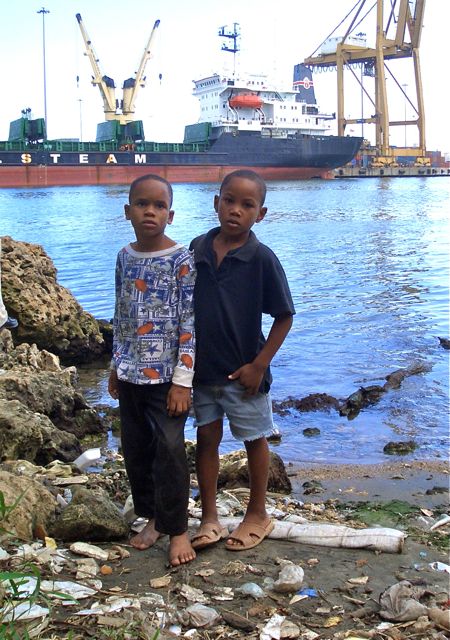
Haina, Dominican Republic - Children are developmentally impaired as a result of lead poisoning

Toxins and pollutants are major cause of illness

100 Million affected by 2000 toxic sites

By Stephen Leahy

UXBRIDGE, Canada, Nov 14, 2011 (IPS)

Toxic pollution affects the health of more than 100 million people, shortening their productive life spans by an astonishing 12.7 years on average.

It is a common misperception that disease is responsible for most illness, when in fact toxins and pollutants in the environment are a major source of illness and reduced life spans globally.

Unlike diseases, toxins and pollutants like lead, mercury, chromium, radionuclides and pesticides were created by humans and are often improperly disposed of in a classic example of fouling our own nests.

“To be honest, we were astonished the number was so large,” said Bret Ericson of the Blacksmith Institute, a small international NGO that released its annual report “World’s Worst Pollution Problems Report 2011” last week.

At least 100 million people are affected based on assessments of 2,000 toxic sites in 47 countries. Most of these sites are right inside villages and towns – all are close to people.

“There are thousands more sites out there,” Ericson told IPS. Continue reading

In Unprecedented Move, Harper Government Pulls Canada out Kyoto Protocol

Stephen Harper called Kyoto a “socialist scheme to suck money out of wealth-producing nations

Wealth-producing Nations Condemn Canada’s Withdrawal

By STEPHEN LEAHY

CAPE TOWN, Dec 14, 2011 (IPS)

Barely 24 hours after it signed a new global climate change agreement in Durban, South Africa, Canada became on Monday the first country to formally withdraw from the Kyoto Protocol, the only legally binding treaty to reduce emissions causing climate change.

The 17th Conference of the Parties (COP17) concluded last Sunday with an agreement called the Durban Platform, which includes a consensus agreement for a second commitment period of the Kyoto Protocol after the first expires at the end of 2012.

Canada’s government under Stephen Harper essentially agreed to a continuation of Kyoto only to announce formal withdrawal after Canadian Environment Minister Peter Kent arrived back safely in Canada on Monday.

“Kyoto, for Canada, is in the past,” Kent said in Durban on Dec. 7. Still, he insisted in a statement on Monday, “Canada went to Durban in a spirit of good will.”

Despite the so-called good will, Canada is well known as a pariah on climate and environmental issues, having being judged as the most uncooperative country for the last five climate treaty COPs.

Kent brought a “reckless arrogance with him to Durban, where he’s maintained a hard line… and fought hard to put polluters before people”, according to Climate Action Network, an international coalition of environmental non-governmental organisations (NGOs) attending COP17.

Canada’s withdrawal comes as no surprise. Mirroring the views of the fossil fuel industry, the Harper government has expressed disdain for the Kyoto Protocol. In a fundraising letter prior to coming to power in 2006, Harper called it a “socialist scheme to suck money out of wealth-producing nations”.

Under the Kyoto Protocol, Canada agreed to reduce its carbon emissions by six percent by 2012 in comparison to its 1990 emissions.
In Durban Canada wins Fossil of Year for 5th Year
While Canadians individually cut emissions at the urging of previous governments, the enormous expansion of emission-laden tar sands operations inflated Canada’s emissions by 24 percent above 1990 emissions.

On Monday, Kent said that for Canada to meet emissions targets would entail taking every vehicle off the road and cutting the heat in every building in the country. He did not mention reducing emissions from the tar sands.

“I regret that Canada has announced it will withdraw and am surprised over its timing,” said Christiana Figueres, executive secretary of the U.N. Framework Convention on Climate Change (UNFCCC), under which climate negotiations like COP17 are held. Continue reading

EcoMobility Gaining Ground As Cars/Roads Become Too Expensive

Car Ownership Declines in Europe as Cities’ Focus on Walking, Bikes & Public Transit

Cost of Personal Car Ownership Tops $10,000 a year

By Stephen Leahy

CHANGWON, South Korea, Nov 1, 2011 (Tierramérica)

Berlin is a big capital city of a country famed for making excellent automobiles, but it can no longer afford roads and is now moving people by transit, bike and especially through walking.

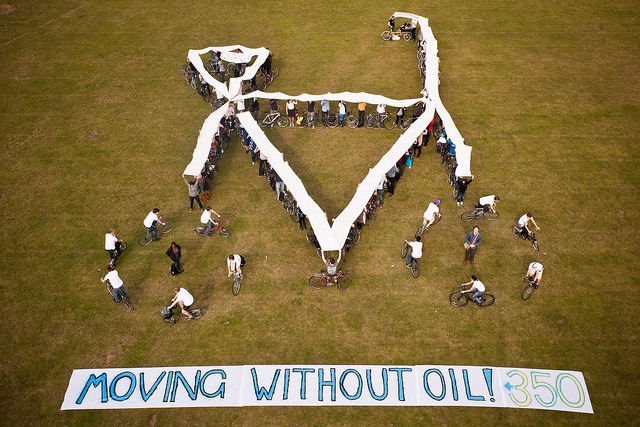
Berlin is not alone. Paris, Tokyo, Seoul, Bogotá, New York City and other major cities simply cannot afford the cost, the pollution, the noise and the congestion of more cars. They are embracing a new concept called EcoMobility – mobility without private cars.

“EcoMobility is not only walking, cycling and public transportation. It is about these three systems clicking together: connectivity is the key,” Gil Peñalosa, former director of parks and recreation in Bogotá, Colombia, told those attending the EcoMobility Changwon 2011 congress.

The congress on Mobility for the Future of Sustainable Cities was organised by the South Korean city of Changwon and ICLEI – Local Governments for Sustainability, an association of local government members from more than 1,220 cities in 70 countries.

“The famous Times Square in New York City is now a permanent pedestrian mall. Who would have believed that could happen just three years ago?” Peñalosa commented to Tierramérica.

“Five years ago who would have thought Paris would have over 22,000 bikes as part of a tremendously successful bike sharing system?” added Peñalosa, who is now the executive director of 8-80 Cities, an NGO based in Toronto that promotes walking, cycling, parks and urban trails to improve the public life of cities.

“We need to build cities around people and not around cars,” he stressed. Continue reading

Canada’s Harper Government Guts Environment, Science and Monitoring Programs

Man w picture of grandchild was arrested for protesting against tar sands expansion, Sept 2011 Ottawa, Canada - Pix by R Leahy

Environment budget slashed while PM Harper’s office places a gag order on government scientists. (And a $60 billion order for military equipment)

By Stephen Leahy

UXBRIDGE, Canada, Nov 9, 2011 (IPS)

Canada’s Stephen Harper government is spending more than 60 billion dollars on new military jets and warships while slashing more than 200 million dollars in funding for research and monitoring of the environment.

Amongst the programmes now crippled is Canada’s internationally renowned ozone monitoring network, which was instrumental in the discovery of the first-ever ozone hole over Canada last spring. Loss of ozone has been previously linked to increases in skin cancer.

“The proposed cuts go so far the network won’t be able to do serious science,” said Thomas Duck, an atmospheric scientist at Halifax’s Dalhousie University.

Canada was the pioneer in ozone monitoring, developing the first accurate ozone measuring tool that led to the discovery that the world’s ozone layer was dangerously thinning in the 1970s, which in turn led to the successful Montreal Protocol on Ozone Depleting Substances.

Canada has about one-third of the ozone monitoring stations in the Arctic region. It also hosts the world archive of ozone data, which is heavily relied on by scientists around the world.

“There’s only one guy running the entire archive, and he’s received a lay-off notice letter,” Duck told IPS.

Ozone monitoring and research is part of Environment Canada, the government department charged with protecting the environment, conservation and providing weather and meteorological information.

“Canada can’t afford to pay scientists but we can line the pockets of big oil?

That is totally backwards.”

Continue reading

The Quiet Crisis: Lost Foodlands Cover Area Larger Than Canada and China Combined – Two Billion People Affected

12 Million Hectares Lost Every Year to Desertification

Dealing with desertification has a long history of failure.

By Stephen Leahy

CHANGWON, South Korea, Oct 13, 2011 (IPS)

Degradation of land is the world’s quiet crisis, undercutting food production, increasing water scarcity, impoverishing hundreds of millions of people and affecting two billion overall. Nearly 20 million square kilometres of the earth’s arable lands – an area twice the size of Canada – have already been degraded.

Each year, 12 million hectares of land, where 20 million tons of grain could have been grown, are lost to desertification. Unless this trend is reversed soon, feeding the world’s growing population will be impossible, experts say. However, the global community has failed for over two decades to address this serious challenge.

Now, delegates from 193 countries are meeting in South Korea under the United Nations Convention to Combat Desertification (UNCCD) to review progress on a ten-year plan to reverse the ongoing decline in the quality and quantity of land in food-producing regions.

During the 10th Conference of the Parties (COP 10) under the UNCCD, delegates will also consider creating a scientific body like the Intergovernmental Panel on Climate Change to serve as the global authority on desertification and land degradation.

“The UNCCD will take bold steps towards delivering critical services to the two billion people that face negative impacts of desertification, land degradation and drought,” Luc Gnacadja, executive secretary of the UNCCD, told delegates during the opening session of COP 10 that began Oct. 10 and concludes Oct. 21.

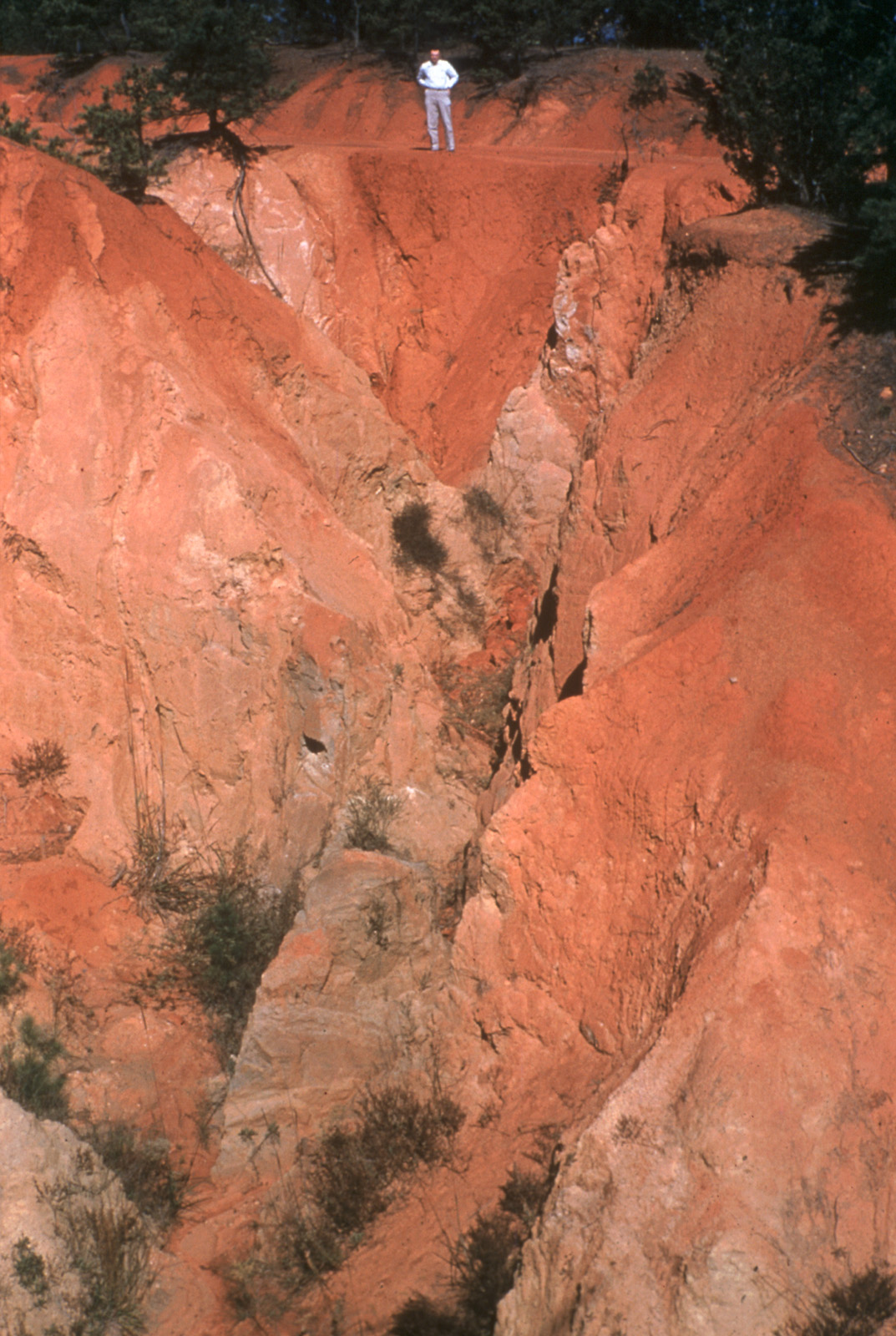
Land degradation is mainly the consequence of poor land management in conjunction with changes in rainfall. Erosion and degradation most often result from ploughing fields, removing crop residues after harvest and overgrazing. It is akin to tire wear on cars – a gradual, less noticeable process with potentially catastrophic consequences if ignored for too long.

“People do not notice land degradation until there is a crisis,” said Pier Paolo Roggero, a scientist at University of Sassari in Italy. Continue reading

Selling Nature to Save Nature and Ourselves?

Humanity faces unprecedented challenge of climate change combined with food, water and energy shortages

“Markets are preconditioned on inequality and will only make matters worse”

By Stephen Leahy

THE HAGUE, Jul 5, 2011 (IPS)

Avoiding the coming catastrophic nexus of climate change, food, water and energy shortages, along with worsening poverty, requires a global technological overhaul involving investments of 1.9 trillion dollars each year for the next 40 years, said experts from the U.N. Department of Economic and Social Affairs (UN-DESA) in Geneva Tuesday.

“The need for a technological revolution is both a development and existential imperative for civilisation,” said Rob Vos, lead author of a new report, “The Great Green Technological Transformation”.

Absent in the U.N. report is a call for the other necessary transformation: what to do with the market-driven economic system that has put humanity on this catastrophic collision course? Attempts to “green” capitalism are failing and will fail, according to many of the more than 200 social science researchers at a groundbreaking international conference in The Hague titled NATURE INC? QUESTIONING THE MARKET PANACEA IN ENVIRONMENTAL POLICY AND CONSERVATION Jun. 30 to Jul. 2.

“We must start tackling and questioning some core capitalist dictums, such as consumerism, hyper-competition, the notion that ‘private’ is always better, and especially economic growth,” says Bram Büscher, the conference co-organiser and researcher at the Institute of Social Studies (ISS) at Erasmus University in The Hague, Netherlands.

Equally important is to stop looking at nature as a collection of economic objects and services that “must only benefit some specific idea of human economic progress”, Büscher told IPS.

Governments, the World Bank, the United Nations and development agencies, international conservation organisations and others have all come to see markets as the only way to mobilise enough money to end deforestation, increase the use of alternative energy, boost food production, alleviate poverty, reduce pollution and solve a host of other serious and longstanding problems.

Started as a small gathering of academics, Nature Inc? became a major event as hundreds of experts from around the world wished to participate. Büscher believes the main reason for this is that many are actively doing research on environmental and conservation issues and are increasingly running into new market schemes like carbon credit trading, payments for ecosystem services, biodiversity derivatives and new conservation finance mechanisms, and so on.

“Payments for ecosystem services are the newest tropical ‘miracle’ crop,” said Kathleen McAfee of San Francisco State University.

The market is putting new values on tropical forests as carbon sinks, reservoirs of biodiversity or ecotourism destinations, McAfee said during the conference. Continue reading

Brazil’s Forest Code and Land Speculators To Amp Up Amazon Deforestation Rates

90% of Forest in Apuí Converted into Pasture But the Real Profit is in Land Sales

By Stephen Leahy*

UXBRIDGE, Canada, Jul 28, 2011 (Tierramérica)

Many migrants from southern Brazil who clear forests in Brazil’s state of Amazonas are making their living as small-scale land speculators and not as farmers or as cattle ranchers, new research has found.

This on-the-ground reality and the proposed changes to Brazil’s Forest Code are likely to ramp up deforestation rates again, despite the country’s commitment to reduce deforestation 80 percent by 2020, experts say.

The Forest Code (Law 4771) was adopted in 1965 and has undergone numerous reforms, the most recent in 2001. This past May 24, an overwhelming majority in the Chamber of Deputies voted in favor of a bill to relax its requirements with regard to forest conservation. The bill is currently under study in the Senate. [Update Dec 28 2011]

A detailed study conducted in the municipality of Apuí along the Transamazon Highway in Amazonas found that many families in the region earned little income from cattle.

Instead, they were clearing the land in order to claim land titles to sell the land to large corporate ranchers, according to the study “Forest Clearing Dynamics and the Expansion of Landholdings in Apuí, a Deforestation Hotspot on Brazil’s Transamazon Highway”, published in the journal Ecology and Society in June.

From the early 1990s the population of Apuí has tripled, and the municipality has had some of the highest rates of deforestation in all of the state of Amazonas. Approximately 90 per cent of the area has been converted into pasture, the study found.

“These families are always moving into new forest areas to deforest so they can claim land title. And after a few years they sell it for a much higher price,” said study co-author Gabriel Carrero of the Institute for Conservation and Sustainable Development of Amazonas (IDESAM). Continue reading

Plastic Circulating Endlessly in Oceans Killing Huge Numbers of Birds, Turtles, Fish and Marine Animals

“Degradable or compostable plastic should be banned….bio-plastics simply break down into microplastic particles”– scientist

By Stephen Leahy

HONOLULU, Hawaii, U.S., Mar 24, 2011 (IPS)

That plastic bottle or plastic take-away coffee lid that has 20 minutes of use can spend decades killing countless seabirds, marine animals and fish, experts reported here this week.

On remote Pacific island atolls, diligent albatross parents unknowingly fill their chicks’ bellies with bits of plastic that resemble food. The chicks die of malnutrition, and when their bodies decay all those plastic bottle tops, disposable lighters, and the ubiquitous bits of plastic detritus get back into the environment in a cruel perversion of ‘recycling’.

There is now so much plastic in the oceans it is likely that virtually every seabird has plastic in its belly if its feeding habits mean it mistakes plastic bits for food. The same is true for sea turtles, marine animals or fish, experts say.

Northern fulmars, a common seabird numbering in the millions, have a collective 45 tonnes worth of plastic bits in their bellies, estimates Jan Andries van Franeker, a biologist with the Institute for Marine Resources and Ecosystem Studies at the University of Wageningen in Holland.

At least 95 percent of fulmars in the North Sea where van Franeker has been working for three decades have one to several dozen bits of plastic in their stomachs. The same is true for related species like the tiny Wilson’s storm petrels, which unknowingly transport an estimated 35 tonnes of plastic from their wintering grounds in the North Atlantic to breeding grounds in the Antarctic, he says.

“If a seabird’s feeding habits mean it could mistake plastic for food, then it will likely have plastic in its stomach,” he said in an interview at the week long Fifth International Marine Debris Conference, which ends Friday in Honolulu, Hawaii. Continue reading