Two Percent Price-Tag for a Green Economy – Time to end Growth-obsessed Markets pillaging the planet

No future in the “brown” economic system driven by fossil fuel energy and the serial depletion and degradation of natural resources and ecosystems

By Stephen Leahy

UXBRIDGE, Canada, Feb 23, 2011 (IPS)

Growth-obsessed markets and governments are pillaging the planet and it must stop, a new U.N. report warns.

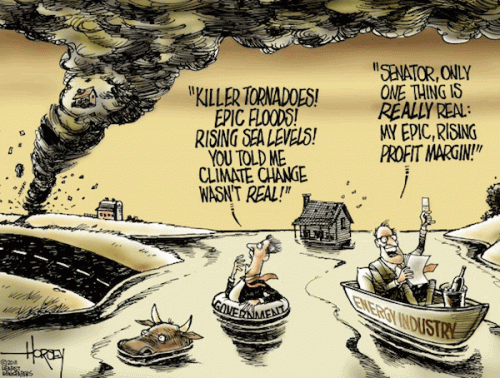
The present “brown” economic system driven by fossil fuel energy and the serial depletion and degradation of natural resources and ecosystems has no future and must be replaced by a green economy, says the Green Economy report launched in Nairobi, Kenya this week by the United Nations Environment Programme (UNEP).

Investing just two percent of the global economy into a few key sectors will kick-start a transition towards a low- carbon, resource-efficient economy, the report says. With that relatively small investment, many of the world’s biggest challenges – climate change, poverty, hunger, jobs, sanitation, energy, food – could be successfully met within two generations.

This independent environmental journalism depends on public support. Click here learn more.

“The Green Economy provides a vital part of the answer of how to keep humanity’s ecological footprint within planetary boundaries,” said Achim Steiner, UNEP executive director.

“It aims to link the environmental imperatives for changing course to economic and social outcomes,” Steiner said.

The report documents that a green, low-carbon, resource- efficient economy will be at least as prosperous as the old brown economy. Better still, a green economy will not have the inherent risks, shocks, scarcities and crises of the resource-depleting, high carbon ‘brown’ economy, it says. Continue reading
Tourism Is Poisoning the Mexican Caribbean

By Stephen Leahy*

UXBRIDGE, Canada, Feb 10, 2011 (Tierramérica)

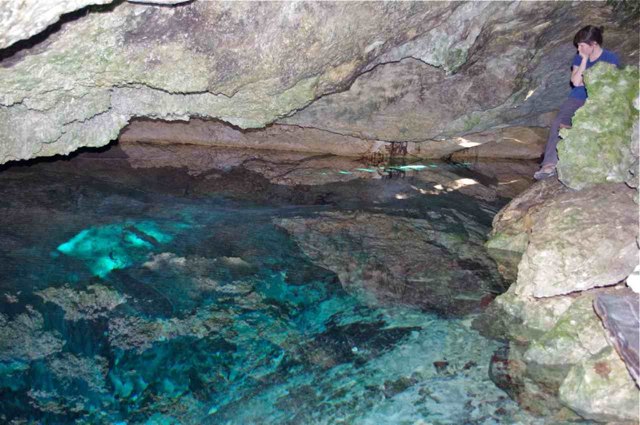
The booming tourist industry along Mexico’s Caribbean coast, particularly in the area of Cancún and the “Riviera Maya,” is polluting the world’s largest underwater cave system and harming the world’s second largest coral reef, a new study has found.

Pharmaceuticals, cocaine residues, shampoo, toothpaste, pesticides, chemical run-off from roads and many other pollutants have been found in the immense system of underground rivers and aquifers south of the resort city of Cancún, located on the Caribbean coast of Quintana Roo state.

“There is little question the pollutants we detected have come from human activity along the coastal region,” said Chris Metcalfe, a researcher with the United Nations University’s Institute for Water, Environment and Health.

The British journal “Environmental Pollution” published a study by the Institute this month, titled ” Contaminants in the coastal karst aquifer system along the Caribbean coast of the Yucatan Peninsula.”

Metcalf told Tierramérica that pit latrines, septic tanks, leaking sewer lines and golf courses were the most likely sources of groundwater pollution.

The flow of groundwater takes much of this pollution into the coastal zone and the region’s famous Mesoamerican Barrier reef, the second largest in the world, after the Great Barrier Reef off Australia.

This independent environmental journalism depends on public support. Click here learn more.

Land-based pollution is just one of the impacts on the coastal reefs, Metcalf said. Overfishing, coral diseases, and climate change have also contributed to an estimated loss of up to 50 percent of coral since 1990.

Without serious attention to preventing groundwater contamination, tourist development will kill the goose that laid the golden egg,” Metcalf said.
Continue reading

Be a Partner in Independent Enviro Journalism

More than 20,000 people from 190 nations attended the international climate meeting in Cancun, Mexico and it received one ten second clip on US network TV 

Coverage of environment and science has been gutted. If there is coverage it rarely digs below the surface. It’s not just TV, it’s all media. After 18 years of being published in major publications on two continents, I now count myself lucky to get $150 to $200 for an in-depth article. The few independent media outlets are either non-profits or struggling.

Urgent environmental issues didn’t go away just because most media stopped covering them.

Many, many people tell me:we need people like you to write about these issues”.

I’d like to do more but it is impossible to continue without your support for what I call Community Supported Journalism. People directly support independent journalists who craft honest and thoughtful articles about important subjects the mainstream media ignores or gloss over.

Community Supported Environmental Journalism Works

In 2010 dozens of people offered their help, donating $5,750 which helped ensure many breaking international stories were covered including the first media reports on the global die-off of corals and how climate change may be bringing colder winters to Europe and eastern North America. Those donors — who are really partners — enabled me to cover important international meetings like the UN Convention on Biodiversity, UN climate change conference, scientific meetings and much more.

Please join us. Consider a donation of just $10 a month to support enviro journalism that serves the public interest.

Contributions can be made safely and easily via PayPal* or Credit Card*. [You can cancel at any time, automatically. No need to contact me] 

Monthly support options starting @ $10 a month

One-time donations are most welcome. Click and enter the amount.

*More than 100,000 non-profits safely use PayPal Donate service

If you’d like a mailing address or contact me with story ideas, please complete this comment form.

Thanks for reading. — Stephen

Letters of Support:

We need people like you. In tough economic times, where information flow is increasingly channeled and controlled, you perform a simply critical role. Hang in there. You are an admirable role model for the future.”

– E. Ann Clark, Associate Professor, University of Guelph.

“Stephen Leahy has done a superb job exposing the enormous sums the US government is spending on corporate welfare for big oil.”

Ross Gelbspan, Pulitzer-prize winning editor and author of The Heat is On

My continued appreciation to those who have contributed in the past.

Final Update: COP 16 Cancun Climate Conference

19 Dec 2010

On reflection there was some progress at COP 16. Small island states, whose very existence is threatened, were satisfied the world is on its way to a significant climate treaty so that is something. Last year in Copenhagen, hardly anyone happy with the outcome. There is still a long and difficult road ahead. Not least because there remains a powerful and well-funded opposition to emission reductions in many countries.

In 2011 I hope to uncover more about that opposition while continuing to write about how the physical processes of climate change are not waiting for us to get our act together. Substantial changes are already underway. Changes to the global water cycle have been shown in the first global study of evapotranspiration rates as detailed in my article: “Climate Changes Herald a Future of Widespread Drought – Water Left High and Dry in Climate Talks”

The article also looks at some fairly dire drought projections for the coming decades.

For those experiencing a rough, early winter, I did the first article revealing how the melting Arctic may be bringing earlier and harsher winters to the UK, parts of Europe and North America. That story happened because of donations to help cover my costs of attending a polar science conference in Oslo were those new findings were presented. Science journalism isn’t easy or cheap to do. I was one of  few journalists in Oslo because hardly any media outlet covers travel costs any more – never mind paying a decent fee for a story. That’s why I am trying Community Supported Journalism where people support my efforts to inform people about the great issues of our time.

A warm thank you to those who sponsored some of the Cancun articles, contributing some much needed cash to help cover my costs.  Supporters names are prominently listed in the articles here. I can no longer continue to do environmental and science journalism without your help so thank you for helping out.

— Stephen

Just click the button to go to the PayPal Secure Donation* page & enter your sponsorship amount (fully secure, major Credit Cards accepted)

Your one-time or monthly contributions are vital for Community Supported Environmental Journalism (click for more info)

*More than 100,000 non-profits safely use PayPal Donate service

A Reporter’s Diary: EXCLUSIVE COVERAGE OF UN CONVENTION ON BIOLOGICAL DIVERSITY FROM NAGOYA, JAPAN

NOTE: The following are excerpts from my personal notes to friends and supporters written during the heat, confusion and massive information dump of a major international conference. Often written late at night I attempted to offer some personal perspective into what was going on and what I was up to. — Stephen

Tuesday, 19 Oct – Geopolitical obstacles getting in the way

I’m here at the big UN conference on biodiversity. It’s 430 am here, the first day ended about 9 pm. It’s 12-ring cat circus like the Copenhagen climate meeting but the mood here is more positive. There are similar geopolitical obstacles getting in the way of slowing the loss of species and ecosystems. Another major difference is the lack of little public awareness of the fact that we cannot continue to shred nature’s web of life without suffering dire consequences.

I’ll try and do my bit – write 10 -12 articles over next two weeks. I wanted to thank a couple of supporters who helped out to cover some of the travel costs. I want to keep you informed of what’s going on here but these notes take a couple of hours to do.

This week is a story about an important development in Africa: In sincere efforts to make one last major attempt to transform Africa’s poverty and hunger are we imposing our worldview on Africa yet again? Bill Gates and others are donating hundreds of millions to create a New Green Revolution for Africa. This difficult and controversial story took over a week to do and wrote the final draft during my 17 hr flight here.

My other story connects the dots between extreme weather this summer and climate change. No single storm is directly attributable to CC BUT without CC it is unlikely the Russian heat wave and floods in Pakistan would have occurred. (PS those were events were two sides of the same coin)

Finally I received a number of letters, mostly positive but a couple saying I was too negative in last week’s article ‘Don’t Worry Be Happy’ Canada Sees Global Warming “Prosperity” Instead of Calamity’. Any organization that puts out a chart of climate impacts at 4 – 5C of global warming and fails to mention the scale of the calamity that would result is delusional or deceptive. Some take the stunningly selfish and naive view we can ‘adapt’ by turning up the AC.

Do consider making a small automatic monthly contribution as a fair exchange for these articles.

Greenest wishes, Steve


Wednesday, 20 Oct – Diversity R Us

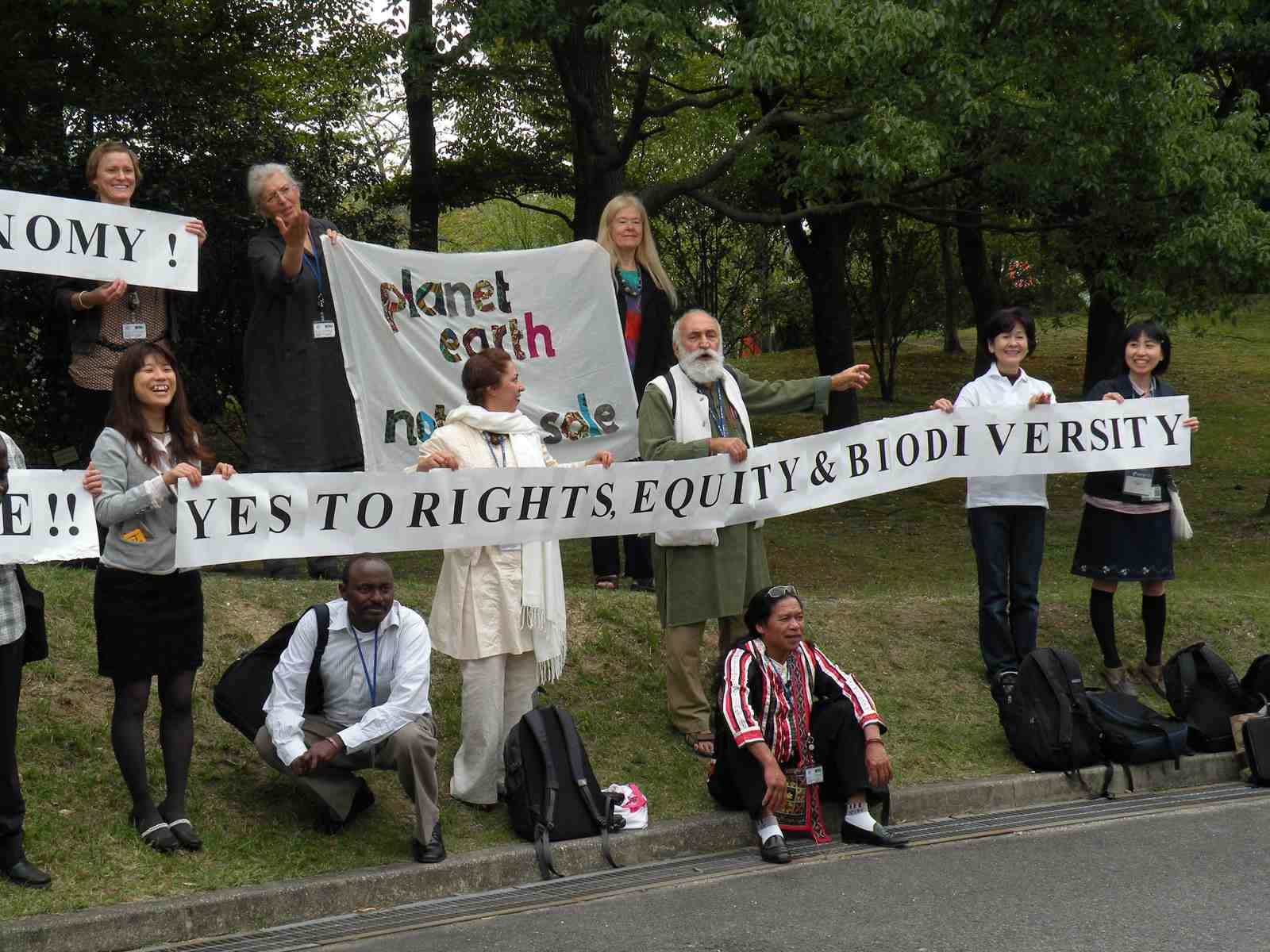
There is an astonishing diversity of people here. Last nite I talked to an Amazonian Indian who took 10 days to get here, had wine accidentally spilled on me by a reindeer herder from Finland and found the lost passport of a Brazilian diplomat. And that is a five minute snap shot. It is a very big world with so many different people it is incredible they have all come here to try and address a common issue. That they can’t agree on what kinds of actions and how to implement should not come as a surprise.

Sunday, 24 Oct – Canada won’t play nice (yet again)

Canada is blocking agreement on a key measure to get a new international agreement to protect biodiversity here. This is not new. In recent years Canada has gone out its way to snub international UN agreements including the outright refusal to fulfill its legal obligations under the Kyoto Protocol. Hard to believe the same government lobbied hard for a seat on the UN security council and actually expected to be rewarded.

Sadly there is no one reporting for Canadian publications to document the irony. (And as a result Canadian’s aren’t really aware of what their government is up to.) Continue reading

Biodiversity Pact Signed To Halt Species Extinctions and Protect the Web of Life

By Stephen Leahy*

NAGOYA, Japan, Oct 31, 2010 (Tierramérica)

The delegates to the 10th Conference of Parties (COP 10) to the Convention on Biological Diversity ended up with a relatively weak plan for the Herculean task of halting the disappearance of species. The exception was a pact on the use of genetic resources.

Delegates from 193 countries agreed to put under protection 17 percent of land and 10 percent of oceans by 2020 to stop the loss of plant and animal diversity in their ecosystems.

Currently less than 10 percent of land and less than one percent of the oceans are protected. Previous targets had been 25 and 15 percent, respectively

But among the items agreed was the “Nagoya Protocol on Access to Genetic Resources and the Fair and Equitable Sharing of Benefits Arising from Their Utilisation,” the most notable achievement of COP 10 — which had been in negotiations for 18 years.

The Nagoya Protocol establishes mechanisms for making use of the genetic material in plants, animals and microbes for food, medicines, industrial products, cosmetics and other applications.

Is this article of interest? It exists thanks to contributions from readers. Please click here to learn more about Community Supported Journalism.

Continue reading

Northern “Biopirates” Gobbling up Living Resources of the Global South

By Stephen Leahy

PARIS, Feb 1, 2010 (IPS)

Rich countries are like biopirates, looting far-away lands for food, raw materials and cheap labour. They’re plundering other richer ecosystems because they’ve largely destroyed their own. And they’re blocking global efforts to create an independent scientific assessment panel that is likely point the finger at the real reason species are going extinct at 1,000 times their natural pace, experts say.

European politicians were “shocked” to learn that just 17 percent of Europe’s ecosystems were in decent shape, Dominique Richard of the European Environmental Agency told participants on the final day of the U.N.-hosted Biodiversity Science Policy Conference in Paris.

“We’ve just completed our first complete assessment of the state of biodiversity in Europe and the results really shocked policymakers,” said Richard, a European biodiversity expert.

Most of Europe’s natural systems that provide essential services like food, clean air and water, climate regulation and so on have been in decline for years. But no one in Europe really notices.

That’s because the rich are “geosphere people” who help themselves to nature’s ecological services anywhere in the world, said Ashok Khosla, an eminent Indian environmentalist and founder of the Delhi-based Development Alternatives Group, who was representing the International Union for Conservation of Nature.

Is this article of interest? It exists thanks to contributions from readers. Please click here to learn more about Community Supported Journalism.

The poor, on the other hand, are “ecosystem people” who depend directly on local resources for their livelihoods, Khosla told delegates. The ecosystem people cannot afford to get their food or water elsewhere, so if they degrade their own ecosystems, they suffer the direct consequences. Continue reading

Tackling Climate Change Only Way to Halt Species Extinction Crisis and Declines

An IPCC for Species Needed

By Stephen Leahy

NAGOYA, Japan, Oct 26, 2010 (IPS)

A major change in the direction of economic development is essential to avoid the catastrophic unraveling of Earth’s ecosystems that support all life, a new global analysis published in the journal Science revealed Tuesday.

Climate change, pollution, deforestation and other forms of land use change are pushing species into extinction, reducing their abundance and home ranges.

Human societies and infrastructures have evolved with and rely on particular sets of species and ecosystems and now these are being reshuffled,” said Paul Leadley of the University Paris-Sud in France who led the study.

“Even optimistic scenarios for this century consistently predict extinctions and shrinking populations of many species,” Leadley told IPS by telephone from France.

The goal of halting the loss of biodiversity by 2020 is under intense negotiation this week in Nagoya at the 10th Conference of the Parties to the Convention on Biological Diversity. However, based on five recent global environmental assessments, Leadley says that ending biodiversity loss by 2020 is sadly “unrealistic”.

Is this article of interest? It exists thanks to contributions from readers. Please click here to learn more about Community Supported Journalism.

Continue reading

North-South Divide Again Clouds Biodiversity Talks


By Stephen Leahy

NAGOYA, Japan, Oct 19, 2010 (IPS)

The accelerating destruction of natural habitats will take millions of years to recover from, scientists have warned.

This may be the last chance to apply the brakes, Achim Steiner, executive director of the U.N. Environment Programme, reminded delegates representing the 193 member countries of the U.N. Convention on Biological Diversity (CBD).

“This meeting is being held to address a very simple fact: we are destroying life on this Earth,” Steiner said at the opening plenary meeting Monday. “It is absolutely essential that nations work together here.”

Ryu Matsumoto, Japan’s environment minister, warned that the world was about to reach a threshold where the loss of biodiversity would become irreversible.

“We’re now close to a tipping point on biodiversity,” he said. “We may cross that in the next 10 years.”

With 16,000 participants, the Oct. 18-29 gathering is by far the biggest international meeting on biodiversity. The term biodiversity refers to the variety of plants, animals and other species that provide a wide range of services to humanity.

Is this article of interest? It exists thanks to contributions from readers. Please click here to learn more about Community Supported Journalism. Continue reading

Record Heat Killing Caribbean and Indian Ocean Corals

By Stephen Leahy*

[There hasn’t been much news about the impacts of the record warming of parts of the world’s oceans but severe coral bleaching in the Indian ocean resulted in widespread coral death. Sadly the Caribbean also at high risk this month with record high water temps. My article connects that reality with how a new approach to protecting corals may give them the best chance to survive in hotter, more acidic oceans. — Stephen]

UXBRIDGE, Canada, Sep 13, 2010 (Tierramérica)

The waters of the Caribbean Sea are the warmest on record and the region’s imperilled corals are bleaching and beginning to die, experts warn.

This year many corals are already bleached and dying in the southern Caribbean Sea, especially in the Lesser Antilles, according to Mark Eakin coordinator of Coral Reef Watch at the U.S. National Oceanographic and Atmospheric Administration (NOAA).

Is this article of interest? It exists thanks to contributions from readers. Please click here to learn more about Community Supported Journalism.

The waters are even warmer than they were in 2005 when a severe bleaching occurred across much of the Caribbean. More than 60 percent of corals around the U.S. Virgin Islands died, Eakin told Tierramérica.

Water temperatures in this region reach their annual peak between September and October.

The area affected by bleaching and dying corals will likely extend to the region east of Nicaragua, past the island of Hispaniola (Haiti and Dominican Republic) to Puerto Rico and the Lesser Antilles, and south along the Caribbean coasts of Panama and South America, according to a warning issued by Coral Reef Watch last month.

“There is the potential that this will be worse than 2005, unless some tropical storms come through and mix the warm surface water with deeper, cooler water,” Eakin said.
Continue reading