Conserve Nature – Best Way We Have To Cope With Climate Change & Survive This Century

“….nature is sick, which threatens the survival of the human species”

“Conservation of nature is the first order strategy for climate change and carbon capture sequestration”

The only way forward is that “we must learn to live a simple life that is spiritually based”

By Stephen Leahy

MÉRIDA, Mexico, Nov 12 (IPS)

Lawrence Amos travelled from the Arctic at the top of the world to the tropical middle to recite in a soft voice the ongoing destruction of his home by climate change.

The ice is rougher and not as thick, and melts in May instead of June. There is less snow, more coastal erosion, and permafrost is melting, threatening to swallow homes, said Amos, an Inuit who lives in Sachs Harbour in Canada’s High Arctic, one of the remotest communities on the planet.

Amos was speaking here on Memorial Day at the 9th World Wilderness Congress from Nov. 6-13, where many other indigenous peoples, scientists and conservationists from more than 50 countries documented the escalating impacts of climate change on the land and in the oceans.

Like the roll call of the names of those fallen at Memorial or Remembrance Day ceremonies, Amos’ list of impacts experienced by the people of the western Arctic was tragically long.

Insects, birds and fish never seen before are now appearing in the region. “Grizzly bears are mating with polar bears… Our traditional knowledge about the land is becoming worthless,” he told IPS.

“Mother Nature does not use language. We must be aware of the signs, the changes in species, the melting of glaciers to inform us that nature is sick, which threatens the survival of the human species,” said Bittu Sahgal, founder of Sanctuary Asia, India’s leading environmental conservation magazine and book publisher.

“Nature will not talk to us, it will give us consequences,” he told more than 1,500 participants at the WILD9 congress, a partnership between the WILD Foundation, an international, non-governmental non-profit based in the United States, and Unidos para la Conservación, a conservation organisation in Mexico. Continue reading
Amateur Biologists Join Global Bid to Catalog All the Species on the Planet – Join the Fun

By Stephen Leahy

UXBRIDGE, Canada, Aug 25 (IPS)

(all images courtesy of EOL)

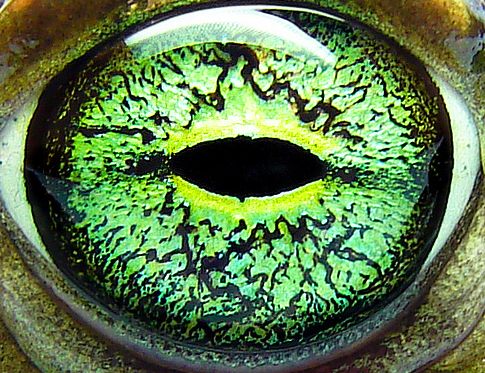
Save the living environment and the physical environment will automatically be saved, according to E.O. Wilson, the world’s leading biologist and father of the online Encyclopedia of Life, which plans to create a web page for every known species – all 1.8-plus million.

Climate and water are parts of the physical environment that rely on the living environment – trees, insects, animals – to keep them clean, healthy and in balance.

But that fundamental reality is not well understood by the public and little progress has been made in preventing the destruction of ecosystems and species, Wilson recently told the New Scientist magazine. That’s why Wilson came up with the idea in 2003 to create a publicly accessible, interactive Encyclopedia of Life (EOL).

Launched in 2008, the EOL is growing quickly with 170,000 entries, over 30,000 still images and video – with some provided by members of the public.

“We want to engage the public. With the EOL they can survey the species in their yard and neighbourhoods and report what they find,” said James Edwards, EOL’s executive director based at the Smithsonian Institution in Washington.

“We’d love to see everyone become a ‘field biologist’ and submit what they’ve found,” he said.

Societal understanding and support is crucial to slow and reverse the loss of ecosystems and species, Edwards told IPS.

“If we can’t do that, we all will be in deep trouble,” he said.

Continue reading

Carbon Emissions Can Be Reduced 80% by 2020 – Lester Brown has a plan and he’s not crazy

LesterBrown smlStephen Leahy interviews LESTER BROWN, founder of the Earth Policy Institute

UXBRIDGE, Canada, Oct 7 2009 (IPS)

Lester Brown says his views sometimes appear extreme – because the mainstream media largely doesn’t understand the urgency and challenges in avoiding catastrophic climate change.

The founder and president of the Washington-based Earth Policy Institute, he is also considered by many to be one of the world’s most influential thinkers.

“It looks like I’m a radical because the mainstream media aren’t reflecting the reality of our situation,” Brown says.

A farmer from the eastern U.S. state of New Jersey, Brown entered the U.S. Civil Service in the 1960s, becoming an expert on foreign agricultural policy before leaving to found the Worldwatch Institute in 1974.

The winner of many awards and honourary degrees, Brown is the author of 50 books. In 2001, he founded the Earth Policy Institute to provide a roadmap for achieving an environmentally sustainable economy.

His most recent book is “Plan B 4.0: Mobilizing to Save Civilization”, the fourth and perhaps most urgent version of the Plan B series, available for download at the institutes’s website. In Plan 4.0, Brown calls for carbon emissions cuts of 80 percent by 2020.

“We cannot afford to let the planet get much hotter,” he explains simply. Continue reading

Global Day of Action Against Monsanto

maize - mexicoCanadians are calling and writing the Minister of Health to ask that she immediately halt the introduction of Monsanto’s new eight-trait GM (genetically modified) corn called “SmartStax” because it was not assessed for safety by Health Canada.

“SmartStax” corn was authorized this summer by the Canadian Food Inspection Agency for planting next year but was not examined by Health Canada for human health safety.

This is part of a global action opposing Monsanto’s genetically modified (GM) crops under the first “International Day of Action Against Multinational Corporations” initiated by the global farmers’ movement called La Via Campesina.

“Its extremely significant that La Via Campesina is focusing their World Food Day action on Monsanto and GM crops. It shows us that farmers around the world see GM crops as a major threat to their survival,” said Devlin Kuyek, a Montreal-based researcher for the international group GRAIN.

[Here’s my full story on SmartStax corn variety that could be planted next spring in US/Canada]

Monsanto, Dow Stacking the Deck, Critics Say
By Stephen Leahy

BERLIN, Jul 29 (IPS) – The most complex genetically engineered corn (maize) yet has been approved for use next year in Canada and the United States without its potential health and environmental risks being investigated, anti-biotech activists charged Wednesday. Continue reading

Ethanol and Biofuels: Almost Everything You Need to Know

“The U.S. has led the fight to stem global hunger, now we are creating hunger,” said Lester Brown, president of the Earth Policy Institute.

Series of the latest articles that provide almost everything you need to know about why ethanol and biofuels will not reduce global warming but simply drive up fuel and food costs.

maize - mexicoEthanol Worse Than Gasoline

Only Green Part of Most Biofuels is the Wealth (Subsidies) They Generate

Ethanol: The Great Big Green Fraud

International Enviro Standards Needed for Biofuels

Six Experts On Why Ethanol is a Dumb Idea

Food & Fuel: Can Sorghum Be The New Magic Bullet Biofuel??

Biofuels: Another Good Reason to Hate American Policy

(Cellulosic) Greenest Ethanol Still Unproven

Bush’s “Midnight Regs” Chains Obama to Anti-Environmental Course

wed-outdoor-disp-low-res_pa1By Stephen Leahy

UXBRIDGE, Canada, Dec 1 (IPS) – As the world community meets in Poland this week to find solutions to the climate crisis, the George W. Bush White House is chaining the United States’ tiller to prevent a change of course by President-elect Barack Obama by passing new anti-environmental rules and regulations at a furious pace.

Nearly a million hectares of public wildlands in Wyoming and Utah are being opened up to oil shale extraction, the Endangered Species Act is being gutted, as are regulations regarding factory farm operations, the Clean Air Act, and removing mountaintops to dig for coal and more, said a coalition of environmental groups.

“There are many last-minute changes and some are draconian,” said Josh Dorner of the Sierra Club, an environmental NGO. Continue reading

The Real Price of Farmed Salmon

bear-catching-salmon-low-alex-morton

Stephen Leahy

UXBRIDGE, Canada, 10 Nov (IPS)

Salmon aquaculture is devastating the world’s oceans and an international coalition of scientists, Canadian First Nations and tourism operators have called for a global moratorium.

‘We’ve seen a regional collapse of all sea life in the 20 years since the salmon farms moved in,’ said Chief Bob Chamberlin of the Kwicksutaineuk Ah-kwa-mish Canadian First Nation in the province of British Columbia on Canada’s west coast.

‘I can only shake my head in bewilderment that this is allowed to continue,’ Chamberlin told IPS from Gilford Island in the Broughton Archipelago, where 20 salmon farms are in operation. Continue reading

Say Goodbye to Coral Reefs

severely-degraded-reef-flat-at-kelso-reef-great-barrier-reef-australiaimage-c2a9-cathie-page-very-sml

Coral reefs will be the first global ecosystem to collapse in our lifetimes.

By Stephen Leahy

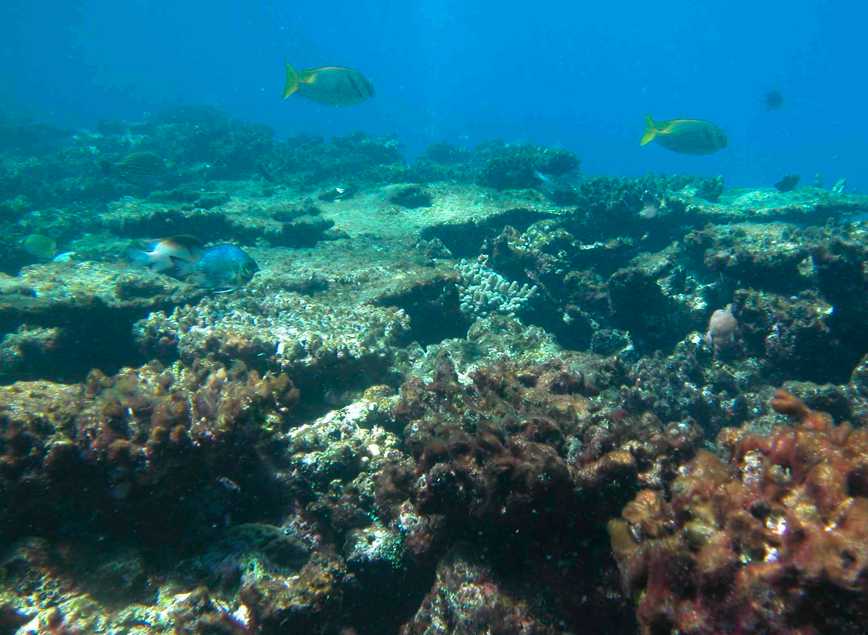
GIJON, Spain, May 22 (IPS) – The one-two punch of climate change that is warming ocean temperatures and increasing acidification is making the oceans uninhabitable for corals and other marine species, researchers said at a scientific symposium in Spain.

And now other regions are being affected. Acidic or corrosive waters have been detected for the first time on the continental shelf of the west coast of North America, posing a serious threat to fisheries, Richard Feely, an oceanographer with the U.S. National Oceanic and Atmospheric Administration (NOAA), told attendees in Gijon, Spain Wednesday.

More than 450 scientists from over 60 countries are participating in the “Effects of Climate Change on the World’s Oceans” symposium.

“Surface waters off the coast of San Francisco had concentrations of carbon dioxide that we didn’t expect to see for at least another 100 years,” Feely told IPS. Continue reading

Extinction Crisis Serious Threat to Our Health – says Harvard Doc

“Few people realize our health is directly tied to the health of the natural world,” — Dr. Aaron Bernstein, Harvard Medical School

Bernstein and colleagues reveal the latest scientific evidence to make a persuasive case that the current extinction crisis, with species vanishing every day, is a serious threat to humanity equal to, if not greater than, climate change.

Their findings are documented in a new book “Sustaining Life“, see here for complete article.

“When we harm nature, we are harming ourselves,” says Bernstein.

Wetlands Loss Fuelling CO2 Feedback Loop

By Stephen Leahy

Uxbridge, CANADA, Jul 21 (IPS) – Wetlands are dangerous, scientists say, in the sense that they are ticking carbon bombs best left alone. To help stave off extreme climate change, existing wetlands should be enhanced and new wetlands created so they could capture more carbon.

“Wetlands hold massive stores of carbon — about 20 percent of all terrestrial carbon stocks,” said Eugene Turner, a leading wetlands expert at Louisiana State University’s Coastal Ecology Institute

However, wetlands, including peatlands, continue to be converted to other uses around the world, resulting in large emissions of carbon and methane, a potent greenhouse gas that has 21 times the warming impact of carbon dioxide. 

By itself, climate change is already degrading wetlands, especially in the Arctic and near Arctic regions where the once permanently frozen peatlands are thawing, Turner told IPS prior to the opening of the Eighth INTECOL International Wetlands Conference in Cuiaba, Brazil on Monday. 

“Researchers have been measuring huge releases of carbon and methane up there,” he said. “It’s crazy to add to that by draining or mismanaging other wetlands.” Continue reading