On the Road to Green Energy for All

27 Jun 2011 09:33

By Stephen Leahy

VIENNA, Jun 27 (IPS)

Like our cave-dwelling ancestors of 200,000 years ago, nearly three billion people still use fire for cooking and heating. Of those, some 1.5 billion people have no access to electricity. For a billion more, their only access is to sporadic and unreliable electricity networks.Now an ambitious global effort is being launched by the United Nations to bring electricity to everyone on the planet by 2030.

“Energy is the issue for the next decade,” said Kandeh Yumkella, director-general of the United Nations Industrial Development Organization (UNIDO).

“Achieving the Millennium Development Goals (MDGs) is impossible without energy,” Yumkella said at the opening of the 2011 Vienna Energy Forum last week.

via On the Road to Green Energy for All – AlertNet.

Limited Liability – Nuclear Energy’s ‘Mother of all Subsidies’

By Stephen Leahy

UXBRIDGE, Canada, May 6, 2011 (IPS)

The nuclear energy industry only exists thanks to what insurance experts call the “mother of all subsidies”, and the public is largely unaware that every nuclear power plant in the world has a strict cap on how much the industry might have to pay out in case of an accident.

In Canada, this liability cap is an astonishingly low 75 million dollars. In India, it is 110 million dollars and in Britain 220 million dollars. If there is an accident, governments – i.e. the public – are on the hook for all costs exceeding those caps.

Japan has a higher liability cap of 1.2 billion dollars, but that is not nearly enough for the estimated 25 to 150 billion dollars in decommissioning and liability costs for what is still an ongoing disaster at its Fukushima Daiichi nuclear plant. Seven weeks after the tsunami caused the disaster, radiation levels continued to spike higher.

No one knows when the reactors will finally be in cold shutdown, or when the costs of theFukushima disaster will stop piling up. One report suggests decommissioning will take 30 years.

This independent environmental journalism depends on public support. Click here learn more.

Japan’s credit rating was downgraded because of the accident, noted Mycle Schneider, a Paris-based energy and nuclear policy analyst who has worked in Japan. “The Japanese know it’s just a matter of time before another large earthquake occurs,” Schneider told IPS.

“Japan will never build another nuclear plant.
Continue reading

Is Rio Earth Summit 2.0 Doomed to Fail?

By Stephen Leahy

UXBRIDGE, Mar 7, 2011 (IPS)

Timed to coincide with the 20th anniversary of the 1992 Rio de Janeiro Earth Summit, the Rio 2012 Summit hopes to recapture the optimism of that earlier era.

At the June 2012 Rio Summit it is hoped countries will agree on policies to move toward a green economy from the present “brown” economic system driven by fossil fuel energy and the serial depletion and degradation of natural resources and ecosystems. A green economy promises to bring good jobs, clean energy and water while ensuring a more sustainable and fairer use of resources.

“If we continue on our current path, we will bequeath material and environmental poverty, not prosperity, to our children and grandchildren,” said Rio 2012 Secretary-General Sha Zukang.

“Rio 2012 will be one of the most important events in the coming decades,” Zukang said

Continue reading

A Fatal Addiction to Plastic – Trashing the Oceans and Our own Health

Ocean trash art - plastic soda bottle tops, lighters, misc bits of plastic

By Stephen Leahy

KAUAI, Hawaii, U.S., Apr 1, 2011 (IPS)

“Be fantastic, don’t use plastic!” chanted a troop of 10-year- olds from President Thomas Jefferson Elementary School in Honolulu at the conclusion of an international conference on the millions of tonnes of trash that enter the oceans every year, with serious consequences for marine life and habitats as well as to human health and the global economy.

Most participants were in a celebratory mood at the Fifth International Marine Debris Conference, which concluded Mar. 25 with the Honolulu Commitment to address the growing problem of marine debris.

But Captain Charles Moore, the man who brought the world’s attention to the scope and scale of the problem, was not celebrating.

“I’ve been doing this for 30 years and every year it has only become worse,” Moore told IPS.

Moore is famous for revealing the immense amount of plastic in the north Pacific gyre, formed by ocean currents in a massive slow-moving whirlpool thousands of square kilometres in size.

Moore’s Algalita Marine Research Foundation documented that this vast expanse of oceans has about six kilogrammes of plastic for every kilogramme of plankton. He is careful to point out that there is no plastic island as reported in some media, it’s much more dispersed. Continue reading

Peak Water Has Already Come and Gone

Woman from Woukpokpoe village in Benin

By Stephen Leahy

UXBRIDGE, Canada, Mar 22, 2011 (IPS)

Canadian Kevin Freedman is celebrating World Water Day Tuesday by living on 25 litres of water a day, instead of the North American average of 330 litres per day. And he has enlisted 31 others in his “Water Conservation Challenge” to go water- lean, using just 25 litres per day for cooking, drinking, cleaning, and sanitation for the entire month of March.

“People in Canada and the U.S. have no idea how much water they use or how much they waste,” Freedman told IPS.

“Although people live on less, it is very difficult to use just 25 litres a day. You can’t shower or use a washing machine,” he said. “I’m hoping to raise awareness that water is a finite resource.”

Nearly a billion people don’t have good access to safe fresh water. In a single generation, that number could double as growing demands for water will exceed the available and sustainable supply by 40 percent, according a recent study. “Peak water” has already come and gone. Humanity uses more water than can be sustained, drawing on non-renewable reserves of water accumulated over thousands of years in deep aquifers.

“Water cannot be created, it can only by managed,” said Margaret Catley-Carlson, a former senior official with both the Canadian government and at the United Nations, a renowned global authority on water issues, and a director at the Canadian Water Network Continue reading

Cut Climate Damaging Emissions in Half and Double Food Production With Eco-Farming

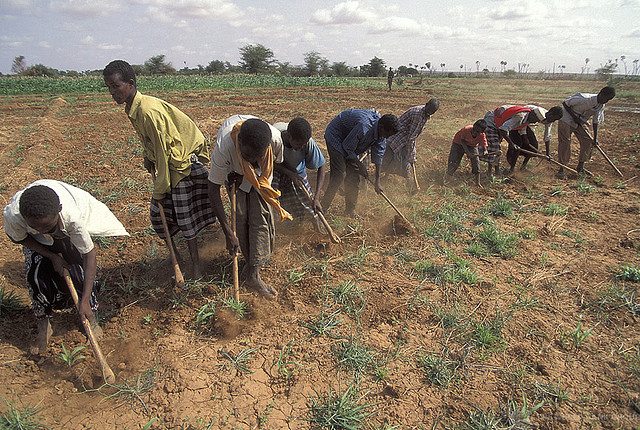
45- 50% of global warming emissions from industrial agriculture

By Stephen Leahy

UXBRIDGE, Feb 8, 2011 (IPS)

Eco-farming could double food production in entire regions within 10 years while mitigating climate change, according to a new U.N. report released Tuesday in Geneva.

An urgent transformation to ‘eco-farming’ is the only way to end hunger and face the challenges of climate change and rural poverty, said Olivier De Schutter, U.N. Special Rapporteur on the right to food, following the presentation of his annual report focusing on agroecology and the right to food to the U.N. Human Rights Council.

“Agroecology mimics nature not industrial processes. It replaces the external inputs like fertiliser with knowledge of how a combination of plants, trees and animals can enhance productivity of the land,” De Schutter told IPS, stressing that, “Yields went up 214 percent in 44 projects in 20 countries in sub-Saharan Africa using agro-ecological farming techniques over a period of 3 to 10 years… far more than any GM [genetically modified] crop has ever done.”

Other recent scientific assessments have shown that small farmers in 57 countries using agro-ecological techniques obtained average yield increases of 80 percent. Africans’ average increases were 116 percent.

“Today’s scientific evidence demonstrates that agroecological methods outperform the use of chemical fertilisers in boosting food production in regions where the hungry live,” De Schutter said. [Video Interviews with De Schutter]

Continue reading

In Corrupt Global Food System, Farmland Is the New Gold and Africans the New Share-croppers

$ Billions Made Speculating on Food

“Africans have become share-croppers, exporting coffee, cotton, flowers and now food while going hungry”

By Stephen Leahy

UXBRIDGE, Canada, Jan 13, 2011 (IPS)

Famine-hollowed farmers watch trucks loaded with grain grown on their ancestral lands heading for the nearest port, destined to fill richer bellies in foreign lands. This scene has become all too common since the 2008 food crisis.

[This is the first of a multi-part series investigating what is driving food prices higher]

Food prices are even higher now in many countries, sparking another cycle of hunger riots in the Middle East and South Asia last weekend. While bad weather gets the blame for rising prices, the instant price hikes of recent times are largely due to market speculation in a corrupt global food system.

The 2008 food crisis awoke much of the world’s investment community to the profitable reality that hungry people will do almost anything, even sell their own children, in order to eat. And with the global financial crisis, food and farmland became the “new gold” for some of the biggest investors, experts agree.

In 2010, wheat futures rose 47 percent, U.S. corn was up more than 50 percent, and soybeans rose 34 percent.

This independent environmental journalism depends on public support. Click here learn more.

On Wednesday, U.S.-based Cargill, the world’s largest agricultural commodities trader, announced a tripling of profits. The firm generated 1.49 billion dollars in three months between September and November 2010.

Meanwhile, U.S. Treasury Bills pay a return of less than one percent. Continue reading

Sir Nicholas Stern: On Our Way to Calamitous +5

Hundreds of Millions of Climate Refugees

‘Governments Fail to Understand Gravity of the Situation’ – Stern

By Stephen Leahy

COPENHAGEN (IPS/TerraViva)

[I wrote this piece 16 December 2009 and it remains fully relevant today and is posted here for 1st time. And please note that the +5C cited here is the global average which means the warming could easily be 10 C warmer where you live. All of this is well beyond anything humanity has ever faced — Stephen]

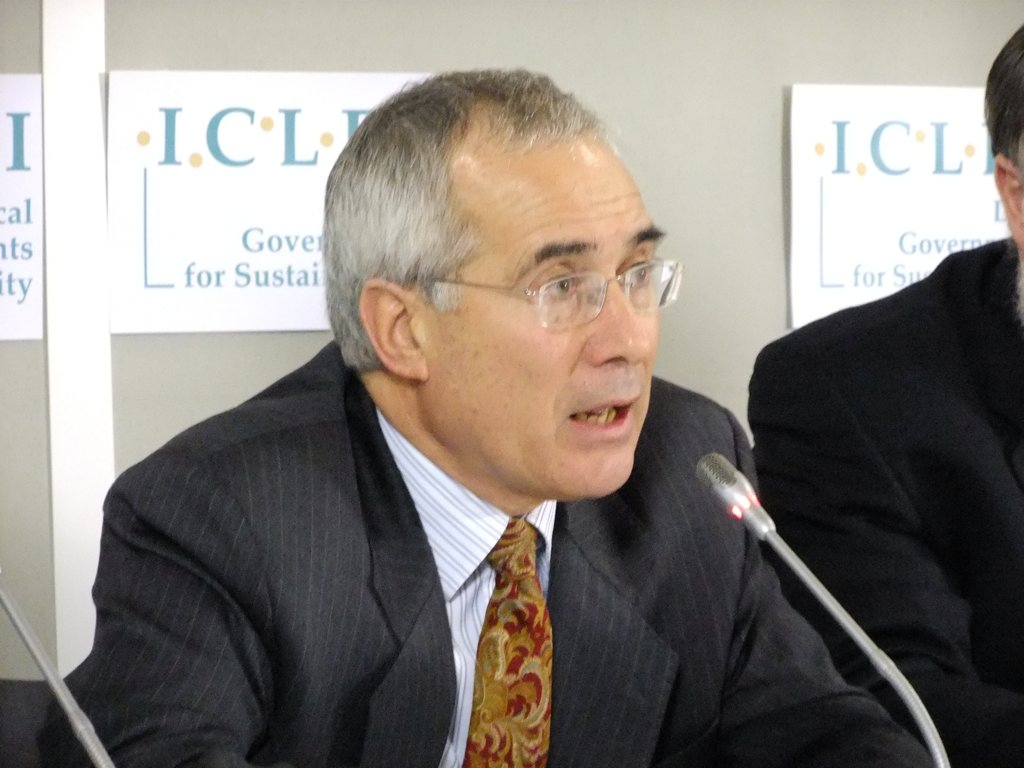
On its current carbon emissions path, humanity faces a 50-percent chance of warming the planet a whopping 5.0 degrees C by the end of this century, warned Nicholas Stern, an economist who is chair of the Grantham Institute for Climate Change and the Environment at the London School of Economics.

“Hundreds of millions of people will be forced to move. It will be the most severe global conflict in human history. That is what the science is telling us,” said Stern, author of the well-known Stern Review, the 2006 report that documented the effect of global warming on the world economy.

Humanity’s other option is to embrace a new energy revolution unlike anything ever seen.
And cities will be on the leading edge of this revolution, he said.

Cities use 80 percent of all energy and are responsible for the bulk of emissions. The good news is that cities are also the easiest places to get major emissions reductions because energy services are centralised and collaboration is easier.

This independent environmental journalism depends on public support. Click here learn more.

“Local mayors and councils can more easily agree on policies and direct their administration to take action,” he said.

“Cities are already doing the work of national governments on climate,” said David Cadman, president of ICLEI – Local Governments for Sustainability, an international association of local governments that is hosting a mayors’ conference featuring mayors from more than 100 cities as part of the climate negotiations here.

Copenhagen to be carbon-neutral by 2025

Continue reading

Africa’s Future Lies in a Green Energy Grid – Universal Access to Electricity Less Than Cost of Fossil Fuel Subsidies

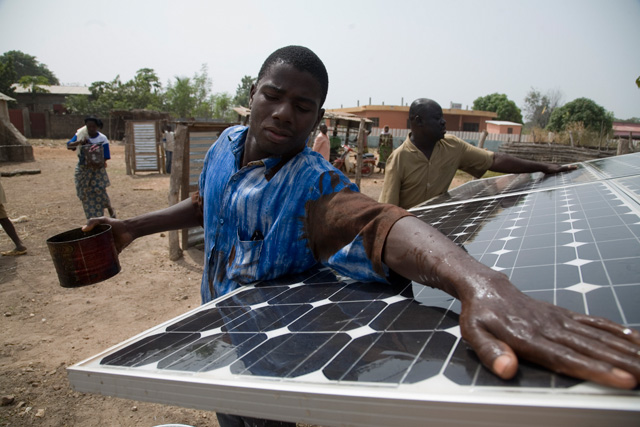
Kenya switched to green energy and now more people than ever have electricity

Universal access to modern electricity would cost much less than current subsidies to fossil fuel industry

By Stephen Leahy*

UXBRIDGE, Canada, Dec 14, 2010 (IPS)

Development in Africa could falter as climate change grips the continent, increasing the length and severity of droughts and floods by altering precipitation patterns, among other impacts.

The region needs a major shift in its economic development policies and thinking towards decentralised, green economic development, experts now say.

“The world’s big economies are largely living off financial transactions which are unconnected to development,” warns Supachai Panitchpakdi, secretary-general of United Nations Conference on Trade and Development.

“Export growth does not automatically result in green economic growth, we must look at trade for development,” said Panitchpakdi.

In a rejection of failed neoliberal economic policies, Panitchpakdi said strong national policies on investments, taxation, protection of local industries, including subsidies, and changes to less restrictive intellectual property regimes are what is needed to green economies in Africa and elsewhere.

“Green economic development underpins environmental protection, economic growth and development,” he said.

This independent environmental journalism depends on public support. Click here learn more.

Continue reading

Be a Partner in Independent Enviro Journalism

More than 20,000 people from 190 nations attended the international climate meeting in Cancun, Mexico and it received one ten second clip on US network TV 

Coverage of environment and science has been gutted. If there is coverage it rarely digs below the surface. It’s not just TV, it’s all media. After 18 years of being published in major publications on two continents, I now count myself lucky to get $150 to $200 for an in-depth article. The few independent media outlets are either non-profits or struggling.

Urgent environmental issues didn’t go away just because most media stopped covering them.

Many, many people tell me:we need people like you to write about these issues”.

I’d like to do more but it is impossible to continue without your support for what I call Community Supported Journalism. People directly support independent journalists who craft honest and thoughtful articles about important subjects the mainstream media ignores or gloss over.

Community Supported Environmental Journalism Works

In 2010 dozens of people offered their help, donating $5,750 which helped ensure many breaking international stories were covered including the first media reports on the global die-off of corals and how climate change may be bringing colder winters to Europe and eastern North America. Those donors — who are really partners — enabled me to cover important international meetings like the UN Convention on Biodiversity, UN climate change conference, scientific meetings and much more.

Please join us. Consider a donation of just $10 a month to support enviro journalism that serves the public interest.

Contributions can be made safely and easily via PayPal* or Credit Card*. [You can cancel at any time, automatically. No need to contact me] 

Monthly support options starting @ $10 a month

One-time donations are most welcome. Click and enter the amount.

*More than 100,000 non-profits safely use PayPal Donate service

If you’d like a mailing address or contact me with story ideas, please complete this comment form.

Thanks for reading. — Stephen

Letters of Support:

We need people like you. In tough economic times, where information flow is increasingly channeled and controlled, you perform a simply critical role. Hang in there. You are an admirable role model for the future.”

– E. Ann Clark, Associate Professor, University of Guelph.

“Stephen Leahy has done a superb job exposing the enormous sums the US government is spending on corporate welfare for big oil.”

Ross Gelbspan, Pulitzer-prize winning editor and author of The Heat is On

My continued appreciation to those who have contributed in the past.