Welcome to Bizarro World: Canada and US Spending $billions to Create Climate Chaos

President Obama and Prime Minister Stephen Harper (left) say they’re worried about climate change, but neither the U.S. nor Canada has cut emissions.

Analysis by Stephen Leahy

UXBRIDGE, Canada, Aug 10, 2011 (IPS)

Canada and the United States are now the centre of Bizarro World. This is where leaders promise to reduce carbon emissions but ensure a new, supersized oil pipeline called Keystone XL is built, guaranteeing further expansion of the Alberta tar sands that produce the world’s most carbon-laden oil.

“It’s imperative that we move quickly to alternate forms of energy – and that we leave the tar sands in the ground,” the U.S.’s leading climate scientists urged President Barack Obama in an open letter Aug. 3.

“As scientists… we can say categorically that it’s [the Keystone XL pipeline] not only not in the national interest, it’s also not in the planet’s best interest.”

The letter was signed by 20 world-renowned scientists, including NASA’s James Hansen, Ken Caldeira of the Carnegie Institution, Ralph Keeling of the Scripps Institution of Oceanography, and George Woodwell, founder of the Woods Hole Research Center.  Continue reading

April Heat Wave and Drought Breaks European Records

From the coldest December ever recorded to the warmest, driest April  Britain is just one of the countries being whipsawed by extreme weather. Normally wet Scotland is experiencing rare wildfires outbreaks this week. Europe’s wheat crop is at high risk due to very hot and dry temps.

My recent science articles explaining why weather extremes are becoming more common:

Why Our Weather is Weird ‘n Wild and Why It Is Getting Worse

The Yin and Yang of Climate Extremes We Will See More of

Will Year of Climate Extremes End Without Progress on Tackling Climate Change?

Peak Water Has Already Come and Gone

Woman from Woukpokpoe village in Benin

By Stephen Leahy

UXBRIDGE, Canada, Mar 22, 2011 (IPS)

Canadian Kevin Freedman is celebrating World Water Day Tuesday by living on 25 litres of water a day, instead of the North American average of 330 litres per day. And he has enlisted 31 others in his “Water Conservation Challenge” to go water- lean, using just 25 litres per day for cooking, drinking, cleaning, and sanitation for the entire month of March.

“People in Canada and the U.S. have no idea how much water they use or how much they waste,” Freedman told IPS.

“Although people live on less, it is very difficult to use just 25 litres a day. You can’t shower or use a washing machine,” he said. “I’m hoping to raise awareness that water is a finite resource.”

Nearly a billion people don’t have good access to safe fresh water. In a single generation, that number could double as growing demands for water will exceed the available and sustainable supply by 40 percent, according a recent study. “Peak water” has already come and gone. Humanity uses more water than can be sustained, drawing on non-renewable reserves of water accumulated over thousands of years in deep aquifers.

“Water cannot be created, it can only by managed,” said Margaret Catley-Carlson, a former senior official with both the Canadian government and at the United Nations, a renowned global authority on water issues, and a director at the Canadian Water Network Continue reading

Cut Climate Damaging Emissions in Half and Double Food Production With Eco-Farming

45- 50% of global warming emissions from industrial agriculture

By Stephen Leahy

UXBRIDGE, Feb 8, 2011 (IPS)

Eco-farming could double food production in entire regions within 10 years while mitigating climate change, according to a new U.N. report released Tuesday in Geneva.

An urgent transformation to ‘eco-farming’ is the only way to end hunger and face the challenges of climate change and rural poverty, said Olivier De Schutter, U.N. Special Rapporteur on the right to food, following the presentation of his annual report focusing on agroecology and the right to food to the U.N. Human Rights Council.

“Agroecology mimics nature not industrial processes. It replaces the external inputs like fertiliser with knowledge of how a combination of plants, trees and animals can enhance productivity of the land,” De Schutter told IPS, stressing that, “Yields went up 214 percent in 44 projects in 20 countries in sub-Saharan Africa using agro-ecological farming techniques over a period of 3 to 10 years… far more than any GM [genetically modified] crop has ever done.”

Other recent scientific assessments have shown that small farmers in 57 countries using agro-ecological techniques obtained average yield increases of 80 percent. Africans’ average increases were 116 percent.

“Today’s scientific evidence demonstrates that agroecological methods outperform the use of chemical fertilisers in boosting food production in regions where the hungry live,” De Schutter said. [Video Interviews with De Schutter]

Continue reading

Tourism Is Poisoning the Mexican Caribbean

By Stephen Leahy*

UXBRIDGE, Canada, Feb 10, 2011 (Tierramérica)

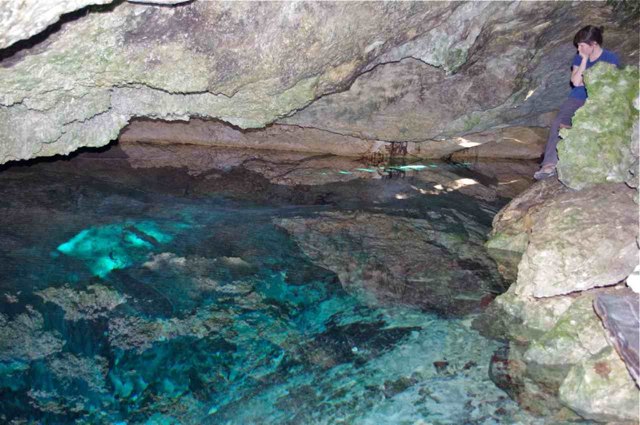
The booming tourist industry along Mexico’s Caribbean coast, particularly in the area of Cancún and the “Riviera Maya,” is polluting the world’s largest underwater cave system and harming the world’s second largest coral reef, a new study has found.

Pharmaceuticals, cocaine residues, shampoo, toothpaste, pesticides, chemical run-off from roads and many other pollutants have been found in the immense system of underground rivers and aquifers south of the resort city of Cancún, located on the Caribbean coast of Quintana Roo state.

“There is little question the pollutants we detected have come from human activity along the coastal region,” said Chris Metcalfe, a researcher with the United Nations University’s Institute for Water, Environment and Health.

The British journal “Environmental Pollution” published a study by the Institute this month, titled ” Contaminants in the coastal karst aquifer system along the Caribbean coast of the Yucatan Peninsula.”

Metcalf told Tierramérica that pit latrines, septic tanks, leaking sewer lines and golf courses were the most likely sources of groundwater pollution.

The flow of groundwater takes much of this pollution into the coastal zone and the region’s famous Mesoamerican Barrier reef, the second largest in the world, after the Great Barrier Reef off Australia.

This independent environmental journalism depends on public support. Click here learn more.

Land-based pollution is just one of the impacts on the coastal reefs, Metcalf said. Overfishing, coral diseases, and climate change have also contributed to an estimated loss of up to 50 percent of coral since 1990.

Without serious attention to preventing groundwater contamination, tourist development will kill the goose that laid the golden egg,” Metcalf said.
Continue reading

Bounce the Bottle – Back to the Tap: The Campus Ban On Bottled Water

“Queen’s University became the tenth Canadian post-secondary institute to commit to end the sale and distribution of bottled water on campus, sending the industry a clear message that campuses are backing the tap,” says Water Access Group Member Professor Steven Moore.

Students, staff and faculty are … asking college and university administrations to instead promote investment in accessible public water infrastructure, says press release.

For more visit Inside the Bottle – has great video: “The Story of Bottled Water” – Stephen

My previous post explains why getting rid of plastic water bottles are important for our health and environment (and water tastes much better in steel or glass).

The New Campus Cool: Water Fountains for Drinking – Uni bans bottled water

Climate Changes Herald a Future of Widespread Drought – Water Left High and Dry in Climate Talks

Serious droughts expected in large parts of the world in coming decades

By Stephen Leahy

CANCÚN, Dec 8, 2010 (IPS/TerraViva)

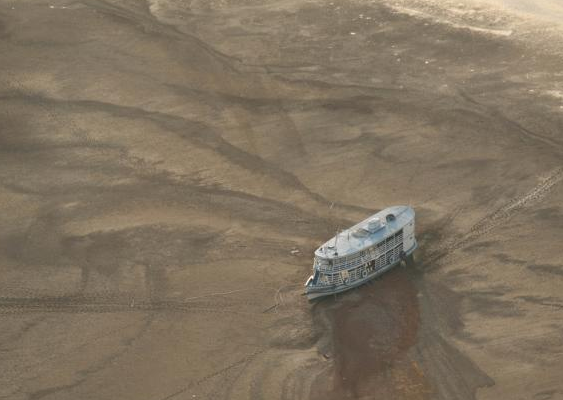
As the world heats up, continents are drying up, with severe droughts forecast in the future. But negotiators at the climate summit here seem to have forgotten about water in their endless discussions over forests, carbon trading and finances.

“The main impact of climate change is on the planet’s water cycle,” said Henk van Schaik of the Cooperative Programme on Water and Climate, a foundation based in the Netherlands.

“Climate-driven changes in the water cycle will affect large regions of the world,” van Schaik told TerraViva at a side event meeting here at COP 16 in Cancún .

The impact of climate on the world’s water resources is not addressed within the U.N. climate framework, said Anders Berntell of the Stockholm International Water Institute.

“Negotiators here see it as just another sector of the economy but it is a basic element for life. Water is the bloodstream of our planet,” Berntell said.

This article was made possible thanks to contributions from Hugh & Jo-Ann Roberston, Kevin Toner, Michael Sweatman, Ann Wakelin, Lynn Carey, Leif Knutsen, Nan Nolan, Chris Conrad, Godo Stoyke.

[Due to the high costs of covering such important events, support is needed from readers like you.Please consider making a small automatic monthly contribution as a fair exchange for these articles – for more information.] Continue reading

As World Warms, Southern Africa Will Cook In Coming Decades

“A four-degree C world would be horrendous and must be avoided at all costs”

By Stephen Leahy*

MEXICO CITY, Dec 7, 2010 (IPS/TerraViva)

Africa will be amongst the hardest hit regions of the world as the climate heats up, threatening the continent’s food security, experts agree. If global temperatures rise 2.0 degrees C, southern Africa will warm an additional 1.5 degrees to a 3.5-degree increase on average.

Such temperatures could be reached as early as 2035. The Hadley Centre for Climate Prediction and Research in Britain recently advised that a 4.0-degree C rise in the global average temperature could be reached as soon as 2060 if the ever-increasing emissions of carbon dioxide and other greenhouse gases are not curbed.

The prognosis for agriculture and food security in SSA (Sub-Saharan Africa) in a 4°C+ world is bleak,” write the authors of a special issue of the Philosophical Transactions of the Royal Society to be published next month.

“A four-degree C world would be horrendous and must be avoided at all costs,” said Philip Thornton of the International Livestock Research Institute in Nairobi, Kenya and co-author of a paper in the Royal Society special issue “Four degrees and beyond”.

“This special issue is a call to action so we can avoid such a future,” Thornton told TerraViva.

Even if a new climate treaty came out of the final week of the 16th meeting of the Conference of Parties (COP) of the U.N. Framework Convention on Climate Change in Cancún, 2.0 degrees C looks inevitable, he said. No one is realistically expecting a comprehensive climate treaty for several years. This means southern Africa can expect to be 3.5 degrees C hotter and much drier in future, he said.

“It is going to get very difficult for rain-fed agriculture in this region,” Thornton warned.

This article was made possible by a contribution from Brewster Kneen of Canada

Due to the high costs of covering such important events, support is needed from readers like you. Please consider making a small automatic monthly contribution as a fair exchange for these articles – for more information.

Continue reading

A Reporter’s Diary: EXCLUSIVE COVERAGE OF UN CONVENTION ON BIOLOGICAL DIVERSITY FROM NAGOYA, JAPAN

NOTE: The following are excerpts from my personal notes to friends and supporters written during the heat, confusion and massive information dump of a major international conference. Often written late at night I attempted to offer some personal perspective into what was going on and what I was up to. — Stephen

Tuesday, 19 Oct – Geopolitical obstacles getting in the way

I’m here at the big UN conference on biodiversity. It’s 430 am here, the first day ended about 9 pm. It’s 12-ring cat circus like the Copenhagen climate meeting but the mood here is more positive. There are similar geopolitical obstacles getting in the way of slowing the loss of species and ecosystems. Another major difference is the lack of little public awareness of the fact that we cannot continue to shred nature’s web of life without suffering dire consequences.

I’ll try and do my bit – write 10 -12 articles over next two weeks. I wanted to thank a couple of supporters who helped out to cover some of the travel costs. I want to keep you informed of what’s going on here but these notes take a couple of hours to do.

This week is a story about an important development in Africa: In sincere efforts to make one last major attempt to transform Africa’s poverty and hunger are we imposing our worldview on Africa yet again? Bill Gates and others are donating hundreds of millions to create a New Green Revolution for Africa. This difficult and controversial story took over a week to do and wrote the final draft during my 17 hr flight here.

My other story connects the dots between extreme weather this summer and climate change. No single storm is directly attributable to CC BUT without CC it is unlikely the Russian heat wave and floods in Pakistan would have occurred. (PS those were events were two sides of the same coin)

Finally I received a number of letters, mostly positive but a couple saying I was too negative in last week’s article ‘Don’t Worry Be Happy’ Canada Sees Global Warming “Prosperity” Instead of Calamity’. Any organization that puts out a chart of climate impacts at 4 – 5C of global warming and fails to mention the scale of the calamity that would result is delusional or deceptive. Some take the stunningly selfish and naive view we can ‘adapt’ by turning up the AC.

Do consider making a small automatic monthly contribution as a fair exchange for these articles.

Greenest wishes, Steve


Wednesday, 20 Oct – Diversity R Us

There is an astonishing diversity of people here. Last nite I talked to an Amazonian Indian who took 10 days to get here, had wine accidentally spilled on me by a reindeer herder from Finland and found the lost passport of a Brazilian diplomat. And that is a five minute snap shot. It is a very big world with so many different people it is incredible they have all come here to try and address a common issue. That they can’t agree on what kinds of actions and how to implement should not come as a surprise.

Sunday, 24 Oct – Canada won’t play nice (yet again)

Canada is blocking agreement on a key measure to get a new international agreement to protect biodiversity here. This is not new. In recent years Canada has gone out its way to snub international UN agreements including the outright refusal to fulfill its legal obligations under the Kyoto Protocol. Hard to believe the same government lobbied hard for a seat on the UN security council and actually expected to be rewarded.

Sadly there is no one reporting for Canadian publications to document the irony. (And as a result Canadian’s aren’t really aware of what their government is up to.) Continue reading

Biofuels Worse Than Paying People to Use More Gasoline – European Study

I’ve done several articles previously about the problems of biofuels. (see below). New report out today shows Europe’s biofuel policy completely wrong headed.

European plans to promote biofuels will drive farmers to convert 69,000 square km of wild land into fields and plantations, depriving the poor of food and accelerating climate change, a report by green groups warned.

…extra biofuels that Europe will use over the next decade will generate between 81 and 167 percent more carbon dioxide than fossil fuels,

— read Reuters take

My previous articles listed below cover much of the same ground although the report is more specific reading impacts of EU policy than anything to date.  — Stephen

Europe’s Green Energy Portfolio Up in Smoke?

“Europe is going to cook the world’s tropical forests to fight climate change; it’s crazy” — Millions of Trees Burned for ‘Green Energy’

Ethanol and Biofuels – Everything (Almost) You Need to Know