Dams Come At a Price of Hi-Quality Food — Hard to Put a Price-tag on Healthy Rivers

By Stephen Leahy

NAGOYA, Japan, Oct 22, 2010 (IPS)

Damming a river may bring electric power, but it often comes at the price of high-quality food fisheries, experts say. When dams are proposed for power, flood control or irrigation, the often devastating impacts on fisheries in rivers and lakes are ignored or discounted.

“It is very difficult to put a dollar value on what inland fisheries represent because it is much more than the landed value of the fish at the dock,” says Yumiko Kura of the WorldFish Center office in Phnom Penh, Cambodia.

Kura is co-author of a new report, “Blue Harvest: Inland Fisheries as an Ecosystem Service”, which highlights the wide-ranging importance of inland fisheries in diets, especially among children, and not just in terms of protein but in supplying micronutrients, notably vitamin A, calcium, iron and zinc.

“Detailed studies in Bangladesh for example have shown that daily consumption of small fish contributes 40 percent of the total daily household requirement of vitamin A and 31 percent of calcium,” according the report released Friday at a side event at the 10th Conference of the Parties to the Convention on Biological Diversity.

In addition, it notes there are more than 60 million full- and part-time jobs in fishing and other activities such as processing, with over half these jobs carried out by women.

Is this article of interest? It exists thanks to contributions from readers. Please click here to learn more about Community Supported Journalism. Continue reading

Blame Canada: Seeks to Drop Native Peoples from New Biodiversity Pact

Awarding Winner Poster - CBD COP 10 Nagoya - Copyright Stephen Leahy

By Stephen Leahy

NAGOYA, Japan, Oct 21, 2010 (IPS)

Blame Canada if countries fail to agree to a new binding treaty to curb the rapid loss of plant, animal and species that form the intricate web of life that sustains humanity.

That is the view of indigenous representatives from Canada in response to a late night move by the Canadian delegation to strike a reference to indigenous peoples’ rights at the U.N. Convention on Biological Diversity (CBD) members’ conference here.

“Canada is stalling progress here, weakening our rights and fighting against a legally-binding protocol on access and benefit sharing,” said Armand MacKenzie, executive director of the Innu Council of Nitassinan, the indigenous inhabitants in northeastern Canada.

“Their opposition threatens global biodiversity… people need to speak out,” MacKenzie told IPS.

A protocol on access and benefit sharing (ABS) without a guarantee of the rights of indigenous people and local communities “would be totally void”, said Paulino Franco de Carvalho, head of the Brazilian delegation.

“Brazil will not accept any agreement on biodiversity without a fair ABS protocol…. We are not bluffing on that, I must be very clear,” Franco de Carvalho said in a press conference.

Is this article of interest? It exists thanks to contributions from readers. Please click here to learn more about Community Supported Journalism. Continue reading

Biodiversity at the Cliff’s Edge – Nature’s ‘Free Services’ In Sharp Decline

By Stephen Leahy*

NAGOYA, Japan, Oct 18, 2010 (Tierramérica)

What nature gives us is often taken for granted, but if its basic elements disappear, human life on Earth would not be possible. The mission of the biodiversity summit under way in Nagoya is to reverse the headlong rush towards the precipice.

The 10th Conference of Parties (COP 10) to the Convention on Biological Diversity (CBD), Oct. 18-29 in this southern Japanese city, seeks to create a new set of international agreements to halve the rate of loss of natural habitat, end overfishing, achieve zero net deforestation, eliminate harmful subsidies, and ensure that agriculture is sustainable by 2020, among other goals.

Without a successful meeting in Nagoya, achieving the United Nations Millennium Development Goals (MDGs) will be impossible, Janez Potočnik, of the European Union’s Commission for the Environment, told a high-level UN meeting last month in New York.

“Biodiversity” is term used to describe the wide variety of the living things that comprise the planet’s biological infrastructure and provide us with health, wealth, food, water, fuel and other vital services.

Many people fail to understand how dependent humanity is on the many natural services provided by nature, says Hal Mooney, an environmental biologist at Stanford University, in California.

“Those services are considered ‘free’ and not valued under the current economic structures,” Mooney told Tierramérica.

Is this article of interest? It exists thanks to contributions from readers. Please click here to learn more about Community Supported Journalism.

via Biodiversity at the Cliff’s Edge – IPS ipsnews.net.

Local Decisions To Protect Nature Boosts Economy, Quality of Life and Secure Jobs — Global Study

Multi-trillion-dollar ecosystem services can boost local economies and quality of life

By Stephen Leahy

UXBRIDGE, Canada, Sep 10, 2010 (IPS)

What do New York City, Vienna, Quito and Rio de Janeiro have in common? They all get their high quality drinking water through aqueducts connected to protected areas in nearby hills and mountains.

Twenty years ago, a rapidly expanding New York City determined it was far cheaper to protect and restore the source of its water supply, the Catskill/Delaware forests and wetlands, than spend six to eight billion dollars on a water treatment plant.

Cities are dependent on nature. There are many examples of how the ecosystem services provided by nature can provide cost-effective solutions for local municipal services, according to a new major study titled “TEEB report for Local and Regional Policy Makers” released Thursday in India, Brazil, Belgium, Japan and South Africa.

Is this article of interest? It exists thanks to contributions from readers. Please click here to learn more about Community Supported Journalism.

However, the study notes that few politicians and public officials realise that factoring in the planet’s multi-trillion-dollar ecosystem services into their policy-making can help save cities and regional authorities’ money while boosting the local economy, enhancing quality of life, securing livelihoods and generating employment.

All economic activity and most of human well-being whether in an urban or non-urban setting is based on a healthy, functioning environment,” said Pavan Sukhdev, study leader of The Economics of Ecosystems and Biodiversity (TEEB) initiative hosted by the United Nations Environment Programme. Continue reading

Environmental Destruction Makes Money. Conservation Costs Money. This Global Dilemma Must Be Solved

Rich Countries Balk At Spending $ to Halt Biodiversity Crisis

By Stephen Leahy

NAIROBI, May 31, 2010 (IPS)

Developing countries rich in plants and animals but poor in financial and technical resources refused to make binding commitments to halt the unraveling of the planet’s biological infrastructure at the close of a major meeting Friday at the U.N.’s African headquarters in Nairobi.

For their part, rich countries balked at a 50-fold increase in funding to support efforts to slow and reverse the loss of species and ecosystems.

“Anything to do with finance has been a big problem here at this meeting,” said James Seyani, a delegate from Malawi and spokesperson for the African countries.

It takes money to protect, conserve and enhance biodiversity – the term for all living things that make up Earth’s ecosystems that are our life support system. Exploitation and destruction of vital ecosystems like forests and peatlands generates millions of dollars in revenue, but conserving or using these lands in ways that preserves biodiversity often costs governments money.

Do you find this article interesting? It is funded by contributions from readers. Please click here to learn more about Community Supported Journalism.

Reversing the declines in biodiversity is a matter of great urgency and countries with much of the world’s remaining species and intact ecosystems “are prepared to meet their commitments but we need the technical, human and financial resources to do this”, the delegate from Mexico said at the conclusion of the meeting that began May 10.

The absence of such resources is why biodiversity is in its current crisis, he said.

“The developing world needs to remember their previous commitments and provide new additional finances and resources. Those promises are not being adhered to,” Seyani told delegates late Friday afternoon at the end of the U.N. Convention on Biological Diversity’s (CBD) meeting to establish targets and an action plan to end the biodiversity crisis over the next decade. Continue reading

Biggest Conservation Agreement Ever — 2X the Size of Germany

By Stephen Leahy

UXBRIDGE, Canada, May 18, 2010 (IPS)

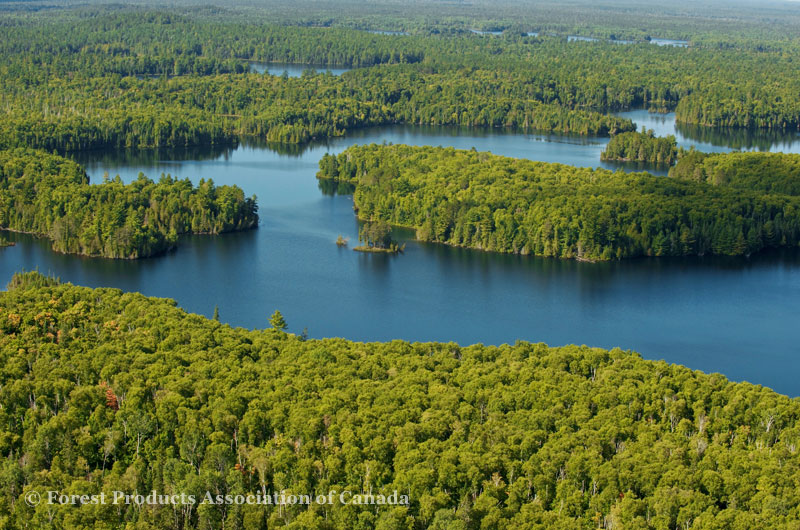
The decades-long war in Canada’s northwoods appears to be over. Environmental groups and Canadian logging companies linked arms Tuesday morning and agreed to work together to sustainably manage and protect 720,000 square kilometres of Canada’s boreal forest – an area twice the size of Germany.

“This is the biggest conservation agreement on the entire planet,” said Richard Brooks, spokesperson for participating environmental organisations and forest campaign coordinator of Greenpeace Canada.

The vast northern boreal forest is a broad band that circles the top of the world below the Arctic. It is the last great forest ecosystem – larger even than the Amazon – and the largest terrestrial storehouse of carbon. Made up primarily of pine and spruce trees, Canada’s boreal covers more than five million square kilometers, representing more than a quarter of the remaining intact forest on the planet. Just eight to 10 percent is currently protected.

“This is our best and last chance to save woodland caribou, permanently protect vast areas of the boreal forest and put in place sustainable forestry practices,” Brooks said in a press conference.

“We estimate there is roughly 20 billion tonnes of carbon in the trees and soils that are part of this agreement.”

That is equivalent to the annual emissions from 18 billion cars, he estimated. Continue reading

What if our air was 30% more acidic like the Oceans? May be 120% more acidic by 2060

Bleached coastal corals. Bantry Bay, Australia. R Leahy 2006

[2°C is a death sentence for corals scientists agree due to ocean acidification and bleaching resulting from emissions of carbon dioxide into the atmosphere. However the developed nations of the world have set 2 degrees C as the climate stabilization target not that any of them have figured out how to reach this target. It is as if the oceans don’t matter. This reflects a fundamental ignorance about life on Earth, an assumption that we can lose or seriously damage entire ecosystems without suffering any consequences.

This story shows we need to get serious about tackling emission reductions (below 2C) and preserving anything that sequesters or traps carbon because these will be tremendously valuable in a climate-changed world . — Steve

By Stephen Leahy*

COPENHAGEN, Dec 11 (IPS/TerraViva)

What would it be like if the air we breathe was 30 percent more acidic? The oceans are already 30 percent more acidic, and on their way to becoming 120 percent more acidic in 50 years at the current rates of carbon dioxide emissions.

Acidification is already affecting coral reefs, algae and plankton, the base of many marine food chains, according to a new report released here by the International Union for Conservation of Nature (IUCN).

“In the last 10 years, the growth of coral reefs in many areas has declined 15 percent,” said Carl Gustaf Lundin, head of the IUCN’s Global Marine Programme.

“That’s a dramatic shift,” Lundin told TerraViva.

The oceans absorb some carbon dioxide (CO2) from the atmosphere, but the vast quantity being emitted – mainly from the burning of fossil fuels – has altered basic ocean chemistry, turning it sour. That’s also affecting shell-forming plankton and disrupting the growth rates of other species, Lundin said.

The stated goal of many countries to stabilise global temperatures within an increase of no more than 2.0 degrees C. is still “a death sentence for most coral reefs”, he said. The 2.0 C. target implies a level of CO2 in the atmosphere of 450 parts per million (ppm), well up from the historical average of 280 ppm. Continue reading

Conserve Nature – Best Way We Have To Cope With Climate Change & Survive This Century

“….nature is sick, which threatens the survival of the human species”

“Conservation of nature is the first order strategy for climate change and carbon capture sequestration”

The only way forward is that “we must learn to live a simple life that is spiritually based”

By Stephen Leahy

MÉRIDA, Mexico, Nov 12 (IPS)

Lawrence Amos travelled from the Arctic at the top of the world to the tropical middle to recite in a soft voice the ongoing destruction of his home by climate change.

The ice is rougher and not as thick, and melts in May instead of June. There is less snow, more coastal erosion, and permafrost is melting, threatening to swallow homes, said Amos, an Inuit who lives in Sachs Harbour in Canada’s High Arctic, one of the remotest communities on the planet.

Amos was speaking here on Memorial Day at the 9th World Wilderness Congress from Nov. 6-13, where many other indigenous peoples, scientists and conservationists from more than 50 countries documented the escalating impacts of climate change on the land and in the oceans.

Like the roll call of the names of those fallen at Memorial or Remembrance Day ceremonies, Amos’ list of impacts experienced by the people of the western Arctic was tragically long.

Insects, birds and fish never seen before are now appearing in the region. “Grizzly bears are mating with polar bears… Our traditional knowledge about the land is becoming worthless,” he told IPS.

“Mother Nature does not use language. We must be aware of the signs, the changes in species, the melting of glaciers to inform us that nature is sick, which threatens the survival of the human species,” said Bittu Sahgal, founder of Sanctuary Asia, India’s leading environmental conservation magazine and book publisher.

“Nature will not talk to us, it will give us consequences,” he told more than 1,500 participants at the WILD9 congress, a partnership between the WILD Foundation, an international, non-governmental non-profit based in the United States, and Unidos para la Conservación, a conservation organisation in Mexico. Continue reading

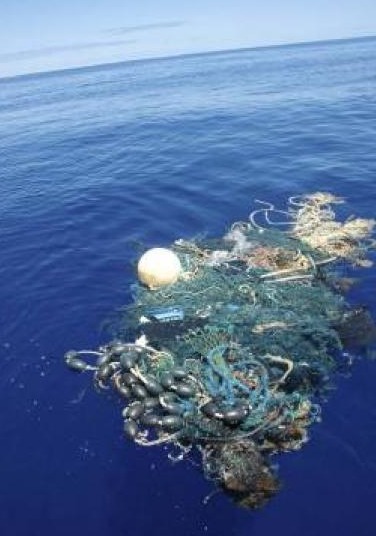
Drowning the Oceans in Plastic Trash (Pacific Garbage Patch)

plastic trash - pacific gyre By Stephen Leahy

UPDATE: The “Pacific Garbage Patch” is really a “plastic soup” where the plastic is distributed throughout the water column in area more than twice the size of Texas. See here for more

[FYI: I’m an independent journalist who supports his family and the public interest writing articles about important environmental issues. ]

Wired 06.05.04

Marine trash, mainly plastic, is killing more than a million seabirds and 100,000 mammals and sea turtles each year, said U.N. Secretary-General Kofi Annan in a statement.

Plastic bags, bottle tops and polystyrene foam coffee cups are often found in the stomachs of dead sea lions, dolphins, sea turtles and others. The implications have many at the conference concerned. Last April, Dutch scientists released a report on litter in the North Sea and found that fulmars, a type of seagull, had an average of 30 pieces of plastic in their stomachs.

In the sea, big pieces of plastic look like jellyfish or squid, while small pieces look like fish eggs, says Bill Macdonald, vice president of the Algalita Marine Research Foundation, a Long Beach, California-based nonprofit environmental organization.

Macdonald, who is also an underwater filmmaker, said he has seen albatross parents fly huge distances to feed their young a deadly diet of plastic bottle caps, lighters and light sticks.

“The sheer volumes of plastic in oceans are staggering,” he said. In recent years Algalita researchers have sampled a huge area in the middle of the North Pacific, and found six pounds of plastic for every pound of algae.

Do you like this article? It is funded by contributions from readers like you. Please click here to make a donation.

Continue reading

Extraordinary Abundance of Life in Oceans Past

trophy fish 2007By Stephen Leahy

UXBRIDGE, Canada, May 26 (IPS) – Imagine large pods of mighty blue whales and orcas darkening the waters off Cornwall, England, while closer to shore blue sharks and thresher sharks chase herds of harbour porpoise and dolphins.

Pure fantasy? No, in fact that extraordinary abundance of marine life off the English coast was the norm for oceans around the world not so long ago, researchers have now documented.

And then humans began to mine the seas of anything worth eating.

“The impact of fishing over the centuries is far larger than anyone thought,” said Poul Holm, a professor at Trinity College in Dublin and global chair of the History of Marine Animals Population (HMAP) project which part of the 10-year Census of Marine Life.

While many valuable species have been fished out in recent years, that has been happening for hundreds of years around the world based on nine years of research by hundreds of experts.

“In looking back 500 to 2,000 years ago, you get a real sense of the impacts of fishing and the cascading effects on marine ecosystems, some of which may be beyond recovery,” Holm told IPS. Continue reading