Looking to the Sahel for Lessons in Pushing Back Deserts To Feed Billions

By Stephen Leahy

CHANGWON, South Korea, Oct 17, 2011 (IPS)

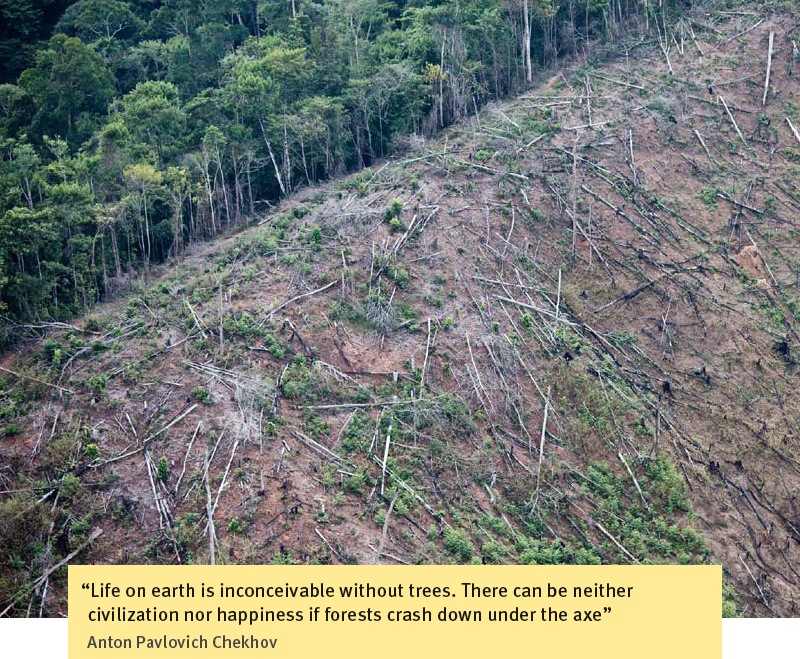
Nearly all our food comes from the Earth’s limited food- producing lands, but those lands continue to be degraded, guaranteeing far higher food prices and less food in the future, experts warn.

But degradation and desertification can be halted and reversed, as evidenced by once barren parts of Africa’s dry Sahel Region that are now green and thriving thanks to local efforts.

“Without reversing ongoing land degradation, studies show food prices will be 30 percent [higher] and 12 percent less food available” by 2035, said Luc Gnacadja, executive secretary of the United Nations Convention to Combat Desertification (UNCCD), which is meeting here in Changwon, South Korea.
We can’t afford to deplete our food-producing lands when there will be nine billion people by 2050,” Gnacadja said.

Food security is a major theme at this 10th Conference of the Parties (COP 10) under the UNCCD, the international governmental convention charged with finding ways to end desertification and land degradation.

Although the world can produce enough food for everyone, roughly one in seven people will go hungry. Why? They simply cannot afford to buy enough food. World food prices remain 15 percent higher than a year ago, according to the U.N. Food and Agriculture Organisation (FAO). Food commodity speculation and climatic change that is bringing increased heat and changes in precipitation patterns, along with increasing demand for biofuels, have been blamed for rising food prices in recent years.

Largely unseen in the growing concern about feeding the world is the decline in the fertility of soils due to erosion and overuse. Every year, this results in the effective loss of some 12 million hectares of land. Continue reading

Persistent La Niña Is Back Again — And Driving Up Food Prices

By Stephen Leahy *

UXBRIDGE, Canada, Oct 11, 2011 (Tierramérica)

La Niña is back less than three months after the end of its last appearance, a particularly strong event that contributed to driving up global food prices.

The new La Niña will continue the largely dry conditions in important agricultural regions in Brazil and Argentina as well as the southern United States and hurt yields of soy and wheat, experts say.

“Multi-year La Niñas are not uncommon,” said Jeff Masters, co-founder and director of meteorology for Weather Underground, the web’s first commercial weather service.

“The last was between 1998 to 2001 with a few months of neutral conditions like this year,” Masters told Tierramérica.

La Niña and El Niño are, respectively, the cold and warm phases of the famous El Niño-Southern Oscillation (ENSO), a cyclical climate phenomenon that affects weather patterns around the world.

ENSO is part of the system that regulates heat in the eastern tropical Pacific Ocean and is driven by changes in surface ocean temperature and air pressure.

“ENSO is undoubtedly being affected by climate change,” said Masters.  Continue reading

Carbon Markets Are NOT Cooling the Planet

Carbon markets have failed – prone to fraud – experts report

Climate change is the world’s biggest market failure so why would we expect carbon markets to save the day? There isn’t going to be a climate treaty for some years yet.It is simply too complex and politically charged. Don’t be too depressed about this. We are in uncharted waters as a species in trying to find an equitable way to manage the climate of our planet. But action is needed now and the best place is at our local neighbourhood level to save energy, use alternatives, build communities and inform people IMHO. — Stephen

By Stephen Leahy*

BONN, Jun 22, 2011 (Tierramérica)

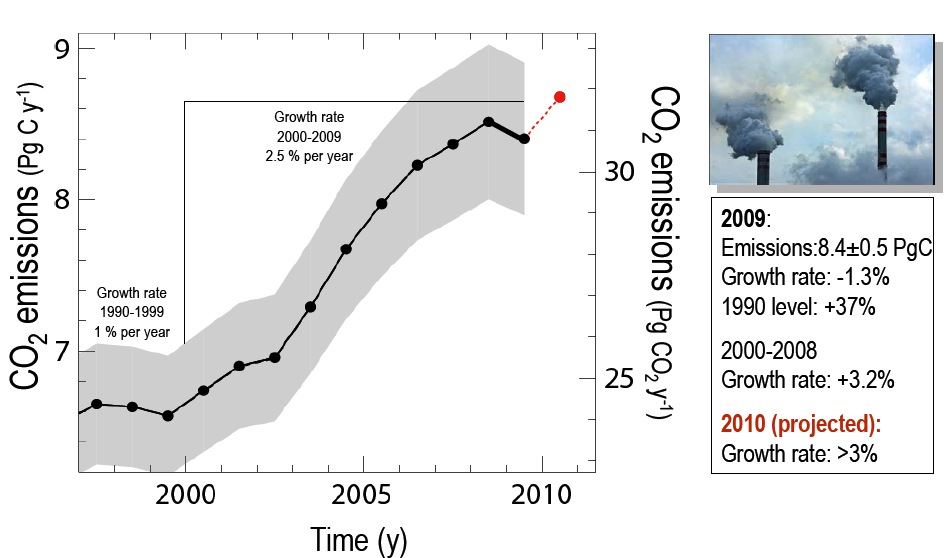
Carbon markets have been widely promoted as the only way to generate enough money to enable industries and countries to reduce their carbon dioxide emissions, which are largely responsible for global warming. The only problem is that nearly 20 years after their conception, they have failed to work, and have also been subject to fraud and other financial crimes.

Interpol, the world’s leading policing agency, has warned that carbon market schemes are easily taken advantage of by organised crime.

Earlier this year, carbon credits worth 38 million dollars went missing in the European Union’s carbon market after funds were transferred by computer hackers from the Czech Republic to Poland, Estonia and Liechtenstein before disappearing. That was the fourth time funds had been stolen or mislaid.

“A lawyer formerly involved in carbon trading told me that if markets are still trading carbon 10 or 15 years from now, then the global environment will be in very big trouble,” Steve Suppan, senior policy analyst at the U.S.-based Institute for Agriculture and Trade Policy (IATP), told Tierramerica.

“Carbon markets are open to fraud, misrepresentation and deceptive promotion,” Suppan said in an interview at the United Nations Framework Convention on Climate Change (UNFCCC) negotiating sessions held in Bonn Jun. 6-17.

These markets have had huge support from governments and they still do not work to effectively reduce greenhouse gas emissions, said Suppan, whose organisation works on trade, agriculture and environmental issues.
Continue reading

Reducing Fossil Fuel Use Only Way to Save Dying Corals

Another important reason why continuing to burn more fossil fuels is very dangerous for all of us. Excerpts from July 2008 article — Stephen 

‘The world’s fossil fuel economy is like the Titanic — we know its going to hit an iceberg but it takes a very long time to stop a really big ship..’

By Stephen Leahy

FORT LAUDERDALE, U.S., July 12, 2008 (IPS)

The rapid decline of coral reefs around the world offers a potent warning that entire ecosystems can collapse due to human activities, although there is hope for reefs if immediate action is taken, coral experts agreed at the conclusion of a five-day international meeting Friday.

“Reefs are in serious trouble, but don’t write them off,” Terry Hughes, a marine ecologist at Australia’s James Cook University told 3,000 scientists, conservationists and policy makers attending at the 11th International Coral Reef Symposium (ICRS) in Fort Lauderdale, Florida.

“We can save reefs if we take immediate action,” Hughes said.

More than 20 percent of the world’s reefs have died, and large areas are failing due to a combination of climate change, overfishing, pollution and sea level rise. Most of the fabulous corals that attract tourists to the Caribbean are gone and half of remaining reefs in the U.S. are in serious decline.

[Update 2010 – Here’s a list of Stephen Leahy’s latest articles on corals Coral Reefs and Acid Oceans Series]

We may be facing ocean deserts in the future,” said Guillermo Dias-Pulido of Australia’s University of Queensland.

Continue reading

Rwanda Wins Gold for Forest Conservation Blueprint

By Stephen Leahy

UXBRIDGE, Canada, Sep 26, 2011 (IPS)

Government policies are seldom lauded, yet Rwanda’s forest policy has resulted in a 37-percent increase in forest cover on a continent better known for deforestation and desertification.

Rwanda’s National Forest Policy has also resulted in reduced erosion, improved local water supplies and livelihoods, while helping ensure peace in a country still recovering from the 1994 genocide.

Now Rwanda can also be known as the winner of the prestigious Future Policy Award  for 2011.

“Rwanda has sought not only to make its forests a national priority, but has also used them as a platform to revolutionise its stances on women’s

rights and creating a healthy environment,” said Wangari Maathai, Nobel Peace Prize Laureate and founder of the Green Belt Movement.

She issued a statement for the award ceremony in New York City last week just days before her death from cancer in Nairobi Monday at the age of 71. “Rwanda has been a very divided country since the 1994 genocide but this policy is helping to bring peace and value to the people,” said Alexandra Wandel, director of the World Future Council, which administers the Future Policy Awards.

The World Future Council is an international policy research organisation based in Hamburg, Germany that provides decision-makers with effective policy solutions.

“Our aim is to inspire other countries to adapt these successful policies to their individual needs.” said Wandel told IPS. Continue reading

Rich Countries Largely Live Off Financial Transactions

[Excerpts from my Dec 2010 article on how rich countries move money around and produce little while preventing green development in Africa  — Stephen]

“The world’s big economies are largely living off financial transactions which are unconnected to development,” warns Supachai Panitchpakdi, secretary-general of United Nations Conference on Trade and Development.

In a rejection of failed neoliberal economic policies, Panitchpakdi said strong national policies on investments, taxation, protection of local industries, including subsidies, and changes to less restrictive intellectual property regimes are what is needed to green economies in Africa and elsewhere.

“Green economic development underpins environmental protection, economic growth and development,” he said.

Here’s a startling fact based in a new energy study:

Universal Access to Electricity Less Than Cost of Fossil Fuel Subsidies

Keystone Pipeline All About Exporting Oil Overseas – Report


 The United States is awash in oil with four times as many oil rigs pumping domestic oil today than eight years ago and declining  demand

Canada needs overseas markets for its dirty oil

[Excerpts from my September 2nd article on the proposed Keystone XL pipeline — Stephen]

The only reason U.S. citizens may be forced to endure a risky, Canadian-owned oil pipeline called Keystone XL is so oil companies with billion-dollar profits can get the dirty oil from Canada’s tar sands down to the Gulf of Mexico to export to Europe, Latin America or Asia, according to a new report by Oil Change International released Wednesday.

“Keystone XL will not lessen U.S. dependence on foreign oil, but rather transport Canadian oil to American refineries for export to overseas markets,” concludes the report, titled “Exporting Energy Security“.

….

“The oil industry would have done the Northern Gateway [pipeline] first but gambled that resistance to the [Keystone XL] pipeline would be far weaker in the mid-west,” he told IPS.

They were wrong.

Read full article:

U.S. Awash in Oil and Lies, Report Charges | More Oil Development Risks Catastrophe – Scientists Say

Nature is our reality. The economy is simply a game we invented.

Put a glass lid over Japan, Germany or England and they wouldn’t last long.

[excerpts from my Nov 2010 article on why losing species matters to everyone — Stephen]

Japan imports more than 60 percent of its food and most of Europe’s ecosystems have been trashed, with only 17 percent in reasonable shape, according to a first-ever assessment. The only reason those countries haven’t collapsed is they are rich enough to help themselves to nature’s ecological resources and services like food, timber, materials from the rest of the world.

Countries of the North are like desperate bio-pirates, addicted to plundering the richer ecosystems of the South for food, raw materials and cheap labour. Increasingly, the South is resisting and seeking redress. Part of that redress, and the only way to end the escalating loss of species – an estimated 5,000 to 30,000 extinctions per year – is to transform the growth economy

“Japan played a central role in the growth economy. We need to move to a subsistence economy,” Mushakoji told IPS.

……From:

An Awakening to the Unravelling of the Web Life

The Future of Journalism: Adopt a Muckraker

“Should you and I pay for the kind of accurate news reporting that is needed to fill us in on what is happening to the planet?

If we’re not willing to pick up the tab to stay better informed, who will?”

Renowned Swiss journalist Daniel Wermus and Director of the Media21 Global Journalism Network in Geneva asks those questions in an April 2010 article about my launch of Community Supported Journalism in 2009. [Updated from Sept 2010] — Stephen

Frontline Earth: Adopt a Muckraker?

By Daniel Wermus

I meet international freelance journalists quite often. Most make it clear that budget cuts have made it increasingly difficult for just about anyone, especially freelancers, to get into print. It is usually the freelancers who are most willing to risk their lives to get the stories that need reporting the most. If the day arrives when they can no longer carry out their professions, we will all have a serious problem.

Muckraker: A reporter or writer who investigates and publishes reports involving a host of social issues, broadly including crime and corruption

Stephen Leahy, a Canadian, and one of the world’s best-known investigative reporters on environmental issues, has launched a challenge: if corporations won’t pay for the news, then it is up to communities and the public to fill the gap. A free society needs journalism, even if reporting the news is not commercially profitable.

Leahy’s model for supporting the news has the journalist make his pitch over the internet. The completed article can then be distributed by news agencies or magazines that are low on funds but high on public interest. That could be IPS, Reuters-Alertnet, Commondreams, InfoSud, The Essential Edge or any number of other publications and news outlets.

[edit: Wermus concludes] Continue reading

Jail Before Climate-Wrecking Tar Sands, Canadians Say

By Stephen Leahy

OTTAWA, Sep 27, 2011 (IPS)

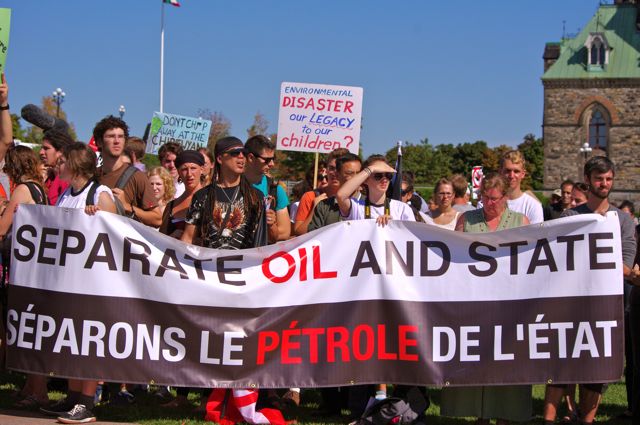
More than 200 Canadians engaged in civil disobedience, with 117 arrested in Canada’s quiet capital city on Monday. The reason? To protest the Stephen Harper right-wing government’s open support for the oil industry and expanding production in the climate-disrupting tar sands.

Maude Barlow, chairperson of the Council of Canadians, is arrested at the Sep. 26 tar sands protest. Credit:Renée Leahy/IPS

The normally placid and polite Canadians shouted, waved banners and demanded the closure of the multi-billion-dollar tar sands oil extraction projects in northern Alberta to protect the global climate and the health of local people and environment.

“People are here because they know that if we don’t turn away from the tar sands and fossil fuels soon it will be too late,” Peter McHugh, a spokesperson for Greenpeace Canada, told IPS.

“The tar sands are unsustainable. Canadians are willing to shift away from fossil fuels but our government isn’t,” Gabby Ackett a university student and protester, told IPS as she stood in front of a long line of police.

In what was proudly touted as “civil” civil disobedience, protesters aged 19 to 84 were arrested for using a step-stool to climb a low barrier separating them from the House of Commons, the seat of Canadian government. The police were friendly and accommodating because the organisers had promised there would be no violence.

“We live downstream and see the affects of tar sands pollution on the fish and the birds,” said George Poitras, a former chief of the Mikisew Cree First Nation in northern Alberta.

“Some our young people have rare forms of cancer,” Poitras told more than 500 protesters.

“Expanding the tar sands is not the way to go in a world struggling with climate change,” he said.

Carbon emissions from the tar sands production have increased 300 percent since 1990 and, at 45 to 50 million tonnes annually, are greater than most countries. And that does not include the carbon contained in the oil itself.

When burned, the 1.6 million barrels of oil that are extracted every day will add 346 million tonnes of carbon to the atmosphere this year alone. That’s almost the entire emissions of the country of Australia. The oil industry is making billion-dollar investments in the tar sands to more than double production by 2025. Continue reading