Extraordinary Abundance of Life in Oceans Past

trophy fish 2007By Stephen Leahy

UXBRIDGE, Canada, May 26 (IPS) – Imagine large pods of mighty blue whales and orcas darkening the waters off Cornwall, England, while closer to shore blue sharks and thresher sharks chase herds of harbour porpoise and dolphins.

Pure fantasy? No, in fact that extraordinary abundance of marine life off the English coast was the norm for oceans around the world not so long ago, researchers have now documented.

And then humans began to mine the seas of anything worth eating.

“The impact of fishing over the centuries is far larger than anyone thought,” said Poul Holm, a professor at Trinity College in Dublin and global chair of the History of Marine Animals Population (HMAP) project which part of the 10-year Census of Marine Life.

While many valuable species have been fished out in recent years, that has been happening for hundreds of years around the world based on nine years of research by hundreds of experts.

“In looking back 500 to 2,000 years ago, you get a real sense of the impacts of fishing and the cascading effects on marine ecosystems, some of which may be beyond recovery,” Holm told IPS. Continue reading

Bring Back Glass – Ban BPA (bisphenol A) Plastic Containers Now

(This is an important subject but I don’t have time to write a full article  on this so here’s my quick take on two new studies — Steve)

carbon neutral pub77 lucky Harvard student volunteers experienced a nearly 70 percent increase in urinary levels of bisphenol A (BPA), a plastics component and synthetic estrogen linked to cancer, after drinking cold beverages from baby bottles for ONE WEEK.  — Research by Harvard University and the U.S. Centers for Disease Control and Prevention (CDC) published May 13.

The bottles were made of made of polycarbonate, a common hard plastic often used to make reusable bottles/containers among other things. BPA is used to make most polycarbonate and evidently leaches into the water or whatever is in the container.

Another study published May 12 shows that very small amounts of BPA affects the growth of tadpoles: “Bisphenol A stifles thyroid hormone and slows frog development” — this is an easy to read summary from Environmental Health News.

Bottom Line : “The study confirms past research showing BPA interferes with thyroid hormone (Goto et al. 2006, Iwamuro et al. 2006). It is also consistent with studies that show BPA slows and alters development.”

What you can do:

1. Use Glass or Steel Containers – all liquids taste much better in these

2. Insist that plastic containers for water-pop-soda are banned in your workplace, community, district.

3. Lobby for bottle return deposit systems — These are still in place in much of the world and they work fine.

Other research on this:

Plastic chemical linked to female aggression

Plastic Bottles Leach Estrogen – ‘Healthy’ Mineral Water Contaminated by Plastic

China, Korea, Saudi Arabia Lead Global Land Rush To Buy Farmland In Other Countries

By Stephen Leahy*

conversion of US grasslandANCHORAGE, Alaska, USA, May 5 (Tierramérica)

More than 20 million hectares of farmland in Africa and Latin America are now in the hands of foreign governments and companies, a sign of a global “land grab” that got a boost from last year’s food crisis.

Rich countries that are short on land or water at home are looking to secure food-producing lands elsewhere as a way to ensure food security for their populations, said Joachim von Braun, director of the International Food Policy Research Institute (IFPRI).

“There is a major lack of transparency in these land deals,” von Braun said in a telephone press conference from Washington.

The IFPRI study, “‘Land Grabbing’ by Foreign Investors in Developing Countries,” by von Braun and Ruth Meinzen-Dick, which was presented last week, estimates that 15 to 20 million hectares have been acquired or are in the process of being sold.

Von Braun pointed out that this is equivalent to about 25 percent of all the farmland in Europe.

Because hard data is difficult to come by – the study was based primarily on information from press reports – IFPRI conservatively estimates that the deals represent 20 to 30 billion dollars being invested by China, South Korea, India and the Gulf States, mainly in Africa.

“About one-quarter of these investments are for biofuel plantations,” von Braun said. Continue reading

Ethanol and Biofuels: Almost Everything You Need to Know

“The U.S. has led the fight to stem global hunger, now we are creating hunger,” said Lester Brown, president of the Earth Policy Institute.

Series of the latest articles that provide almost everything you need to know about why ethanol and biofuels will not reduce global warming but simply drive up fuel and food costs.

maize - mexicoEthanol Worse Than Gasoline

Only Green Part of Most Biofuels is the Wealth (Subsidies) They Generate

Ethanol: The Great Big Green Fraud

International Enviro Standards Needed for Biofuels

Six Experts On Why Ethanol is a Dumb Idea

Food & Fuel: Can Sorghum Be The New Magic Bullet Biofuel??

Biofuels: Another Good Reason to Hate American Policy

(Cellulosic) Greenest Ethanol Still Unproven

Global Warming Puts Food Supplies At Risk, New Green Revolution Needed

cattle-oz-rslBy Stephen Leahy

UXBRIDGE, Canada, Apr 2 (IPS) – Don’t forget about agriculture in the upcoming global negotiations to combat climate change, experts warn. Not only is farming most at risk in an increasingly variable and tempestuous climate, it is also a major emitter of greenhouse gases.

But with the right policies in place, agriculture could both continue to feed the world and play a crucial role in solving the climate problem.

“Agriculture has been missing in the run-up talks to Copenhagen,” says Mark Rosegrant of the International Food Policy Research Institute (IFPRI).

The nations of the world will meet in Copenhagen this December to hammer out a new climate treaty to reduce emissions of greenhouse gases (GHGs) and establish a fund to help poorer countries adapt. The complex process began in 2007 at the Bali talks, continued in Poznan, Poland in 2008 and is ongoing this week in Bonn.

Agriculture accounts for about 15 percent of human emissions of GHGs, IFPRI says, although the Intergovernmental Panel on Climate Change puts it higher at 25 percent. Much of those emissions come from developed countries that rely heavily on fossil fuels and fertilisers and raise far more methane-emitting livestock.

With climate change the world is facing reduced yields of up to 20 percent in maize and rice by the year 2050, Rosegrant told IPS. Much of that yield decline will be in the developing world, mainly because sub-tropical and tropical regions are expected to be hit hardest by significant changes in water availability and warmer temperatures.

Climate change could mean ever-rising food prices and therefore significant investments are needed in agricultural research to help countries cope with the coming changes, he says: “We’re trying to work out what the costs for adaptation in agriculture might be.” Continue reading

Organic farming more profitable and better than conventional systems – U of Wisconsin

stanford-food-security-banner-sml

A University of Wisconsin’s College of Agriculture and Life Science study has found that “diversified (organic) systems were more profitable than monocropping”. Looked at the Midwestern crop standards of continuous corn, no-till corn and soybeans, and intensively managed alfalfa.

Study concludes: governmental policy that supports mono-culture systems is outdated and support should be shifted to programs that promote crop rotations and organic farming practices.

This is just one a many recent studies offering clear evidence that diversified/organic/ecoag farming systems are safer, better and more environmentally sustainable than conventional monocultures:

Organic Agriculture Reduces Climate Change, Poverty and Hunger

Organic Provides 3X More Food Per Acre in Poor Countries – podcast

Overweight? Hungry? Blame “Hollow Food”

Organic Cure for Brain-damaging Pesticides Found in US Children

Male Infertility Linked to Pesticides

GM Crops Creating Pest Problems Around World

Plastic Bottles Leach Estrogen – ‘Healthy’ Mineral Water Contaminated by Plastic

churning-ocean-sml1An analysis of commercially available mineral waters in Germany reveals estrogenic compounds leaching out of the plastic packaging into the water. What’s worse these chemicals are potent and affected the development of  invertebrate embryos. Estrogen contamination was found in  78% of waters in plastic bottles and waters bottled in composite packaging.

“We must have identified just the tip of the iceberg in that plastic packaging may be a major source of xenohormone* contamination of many other edibles. Our findings provide an insight into the potential exposure to endocrine-disrupting chemicals due to unexpected sources of contamination.” — write the study authors in the journal of Environmental Science and Pollution Research.

*man-made substance that has a hormone-like effect

See also:  A Mar 27/09 discovery that two commonly used food additives are estrogenic has led scientists to suspect that many ingredients added to the food supply may be capable of altering hormones–Environmental Health News

My Related Articles/Posts:
Male Infertility Linked to Pesticides

30 Million Lead-laden TVs Dumped on Poor Countries

Top Ten Worst Pollution Problems That Kill Millions – Including Ones You’ve Never Heard Of

Aquaculture To Double Production But Will It Destroy the Oceans?

salmon_farmsBy Stephen Leahy

SAN DIEGO, U.S., Feb 16 (Tierramérica) – With wild fish catches in sharp decline, aquaculture, which now accounts for nearly half of all seafood consumed, is expected to double production over the next two decades.

“Aquaculture is the future… [It] will be a major industry in the (developing) South and will be a major source of employment and income, replacing wild catch in terms of importance,” according to Jason Clay, a scientist with the U.S. branch of the Worldwide Fund for Nature (WWF).

The United Nations Food and Agriculture Organisation (FAO) predicts that per capita seafood consumption will increase 1.5 kilogrammes in the coming two decades, Clay told the nearly 500 participants in the recent Seafood Summit, held in the U.S. Pacific coast city of San Diego.

The international meet earlier this month, organised by Seafood Choices Alliance, gave fishers, fish farmers, multinational seafood corporations and seafood buyers a chance to mix with conservationists and scientists to debate – and attempt to find common ground about – the question: Can aquaculture be environmentally and socially responsible? Continue reading

Fishers Learn to Share Shrinking Catch

albacore-tuna-fishing-vessel-san-diego1

By Stephen Leahy

SAN DIEGO, California, Feb 10 (IPS) – With the oceans in crisis, where will our fish – an important source of protein for billions of people – come from?

Innovative new fisheries management tools called “catch share” have begun in recent years and promise to keep fish on the menu for future generations, according to experts at the recent Seafood Summit in San Diego.

“Adaptation is the key – adaptation and innovation,” Kristjan Davidsson, former CEO of Iceland Seafood International, told over 450 conference attendees last week.

“It is not hard to see that sustainability is the way to go but that requires collaboration with all sectors,” Davidsson said.

The summit brought together fishers, fish farmers, multinational seafood corporations and seafood buyers, along with conservationists and scientists, to debate and find common ground on how to create a sustainable seafood industry and protect the oceans.

Fish account for 28 percent of the animal protein consumed in Asia and 16 percent globally. North America is at the low end of the scale, with fish accounting for just 6.6 percent of animal protein, according to data from the U.N. Food and Agriculture Organisation. Continue reading

Peak Soil: The Silent Global Crisis

30% of farmland can no longer grow food

By Stephen Leahy

(First published in the Earth Island Journal Spring 2008)

A harsh winter wind blew last night, and this morning the thin snow cover has turned into a rich chocolate brown. The dirt covering the snow comes from cornfields near my home that were ploughed following the harvest, a common practice in southern Ontario and in the corn-growing regions of the US Midwest.

A handful of this dirty snow melts quickly, leaving a thin, fine-grained wet mess. It doesn’t look like much, but the mucky sludge in my hand is the prerequisite for life on the planet.

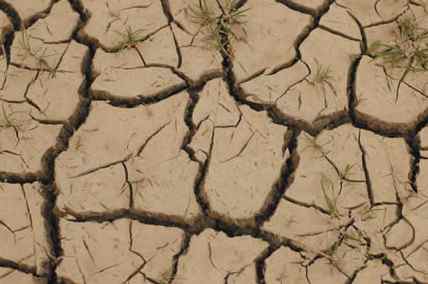
“We are overlooking soil as the foundation of all life on Earth,” says Andres Arnalds, assistant director of the Icelandic Soil Conservation Service. Arnalds is an eloquent spokesperson for the unheralded emergency of soil erosion, a problem that is reducing global food production and water availability, and is responsible for an estimated 30 percent of the greenhouse gases emissions.

“Land degradation and desertification may be regarded as the silent crisis of the world, a genuine threat to the future of humankind.”

This article  depends on public support. Click here learn more.

Continue reading