It doesn’t have to be this way – typical family could reduce their energy use 60 to 75 percent
By Stephen Leahy
UXBRIDGE, Canada, Jan 29 2013 (IPS)
Weird is the only way to describe January temperatures whipsawing between record warm and arctic cold over a span of a few days. Experts say that is what climate change looks like: weird, record-shattering weather.
Here’s a fact that goes beyond weird to astonishing. Anyone who is 27 years old or younger has never lived through a month that was colder than the global 20th century average. In other words, we’ve had 334 consecutive months with above average temperatures, according to the U.S. National Oceanic and Atmospheric Administration.
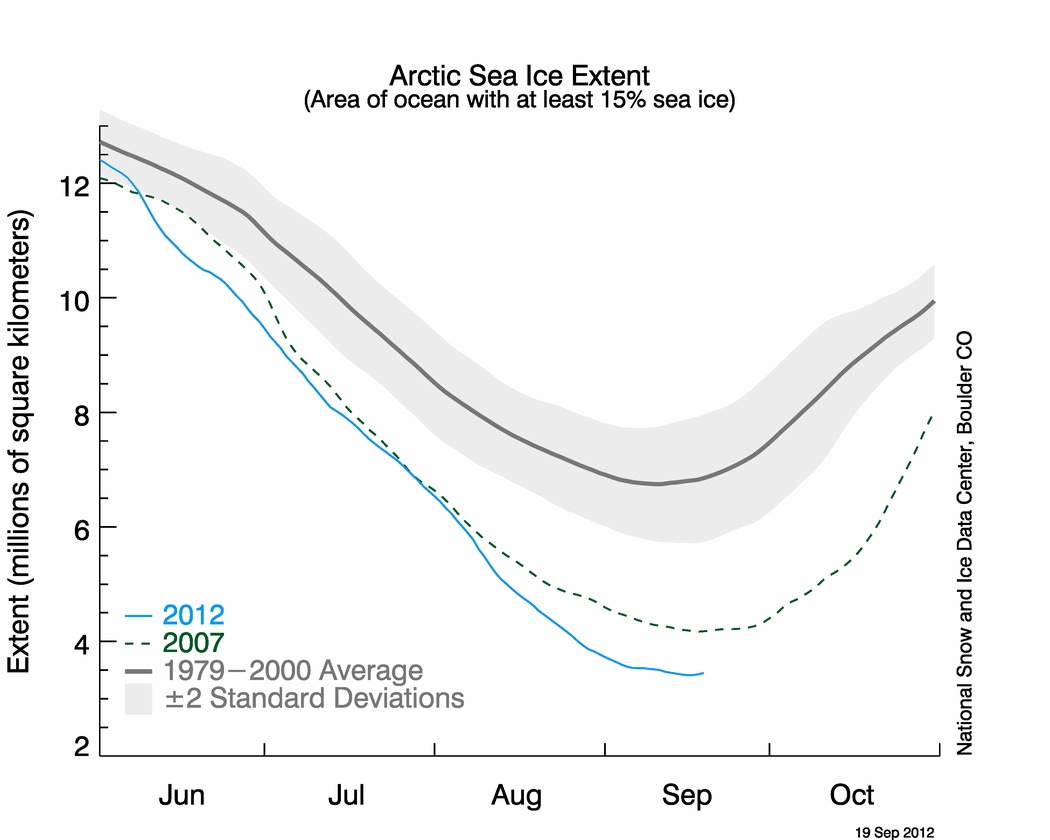
Arctic sea ice extent. Area of ocean with at least 15 percent sea ice as of Sept 12, 2012. Credit: National Snow and Ice Data Center.
Last summer, the Arctic sea ice shrunk to half of what it used to be during summers only three decades ago. Our planet’s weather is driven largely by the two cold polar regions and the warm tropics. With the Arctic defrosting, it should be no surprise our weather is getting weird. And that it’s not going to get better.
Our planet is heating up because we each year put thousands of millions of tonnes of carbon dioxide (CO2) into the atmosphere by burning coal, oil, and natural gas. CO2 acts as heating blanket keeping the planet warm by trapping some of the sun’s heat.
The amount of extra heat-energy being trapped is like exploding 400,000 Hiroshima atomic bombs per day 365 days per year, calculates James Hansen, a climate scientist who heads the NASA Goddard Institute for Space Studies.
Cautious scientists like Hansen are terrified of what’s coming. Conservative institutions like the World Bank and accounting giant Price Waterhouse Coopers (PwC) have warned we’re on a path to heating the entire surface of the planet by an average of four or five degrees C before 2100. That translates into eight to 12 degrees C hotter in places like Canada.
“The only way Keystone XL could be considered in the national interest is if you equate that with profits for the oil industry”
By Stephen Leahy
UXBRIDGE, Canada, Sep 2, 2011 (IPS)
With four times as many oil rigs pumping domestic oil today than eight years ago and declining domestic demand, the United States is awash in oil.
The country’s oil industry is primarily interested in who will pay the most on the global marketplace. They call that “energy security” when it suits, but in reality it is “oil company security” through maximising profits, say energy experts like Steve Kretzman of Oil Change International, an NGO that researches the links between oil, gas and coal companies and governments.
The only reason U.S. citizens may be forced to endure a risky, Canadian-owned oil pipeline called Keystone XL is so oil companies with billion-dollar profits can get the dirty oil from Canada’s tar sands down to the Gulf of Mexico to export to Europe, Latin America or Asia, according to a new report by Oil Change International released Wednesday.
“Keystone XL will not lessen U.S. dependence on foreign oil, but rather transport Canadian oil to American refineries for export to overseas markets,” concludes the report, titled “Exporting Energy Security“.
Little of the 700,000 to 800,000 barrels of tar sands oil pumped through the 2,400-kilometre, seven-billion-dollar Keystone XL will end up in U.S. gas tanks because the refineries on the Gulf Coast are all about expanding export markets. One huge refinery operator called Valero has been touting the potential export revenues of tar sands oil to investors, the report found.
Because Keystone XL crosses national borders, President Barack Obama has to issue a permit declaring the pipeline serves the “national interest” in order to be approved.
“The only way Keystone XL could be considered in the national interest is if you equate that with profits for the oil industry,” said Kretzman, who wrote the report.
Canada’s huge tar sands deposits, located mainly in the far north of the province of Alberta, are the world’s second largest oil reserves, but they are landlocked. It’s the industry’s biggest worry and also Alberta Energy Minister Ron Lieper’s biggest concern.
Lieper recently said that without new pipelines “our greatest risk in Alberta is that by 2020 we will be landlocked in bitumen”. Bitumen is thick tarry oil from the tar sands that needs lots of high-energy and chemical processing to be useable – one reason it’s widely considered the world’s dirtiest oil.
The shortest route to the big Asian markets is through the Rocky Mountains to Canada’s west coast via the proposed Northern Gateway pipeline. However, Canadian native people live on some of the land and are staunchly opposed, so the industry thought it would be easier to put an export pipeline right through the U.S. heartland, said Kretzman.
“The oil industry would have done the Northern Gateway first but gambled that resistance to the pipeline would be far weaker in the mid-west,” he told IPS.
They were wrong.
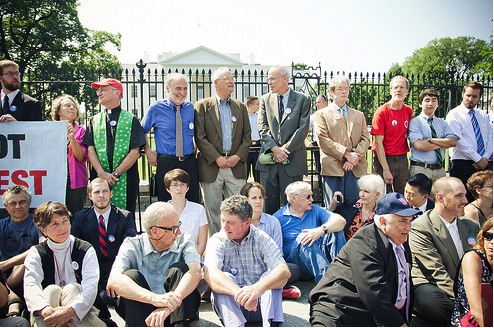
Thousands of people, including landowners and religious leaders, have gone to Washington DC in the past two weeks to tell President Obama to reject Keystone. Nearly 850 people have been arrested for standing on the sidewalk in front of the White House in what protesters call the largest civil disobedience in the history of the U.S. climate movement.
“It’s remarkable, a very dignified and moving protest much like the civil rights demonstrations in the 1960s,” said Maude Barlow, chairperson of the Council of Canadians, a large environmental NGO.
“This is about the rights of the environment and future generations. It is the blossoming of a new movement,” Barlow told IPS from Washington.
Other massive pipelines are being planned, including ones bringing tar sands crude to New England and the Great Lakes, she said. “Keystone is just the beginning. Once these are built they will have to put something in them.”
Infrastructure dictates policy, she stressed. Once pipelines, refineries or power plants are built, it is nearly impossible for governments to shut them down.
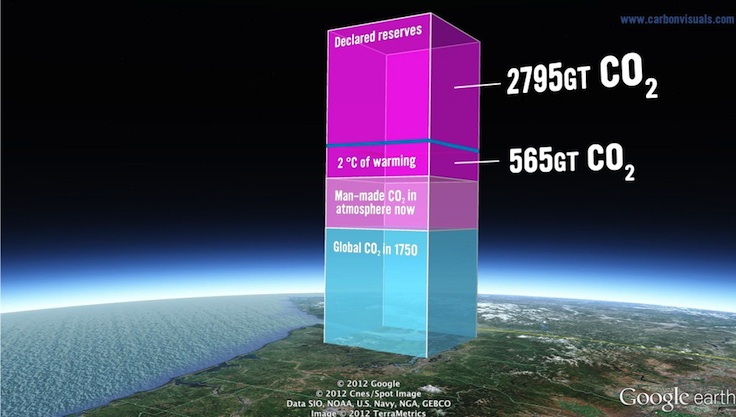
Last year, scientists writing in the journal Science concluded there is already enough fossil fuel burning capacity to raise global temperatures by 1.5 degrees C by 2060. Any additional power plants, vehicles, or other fossil fuel burning equipment built from 2011 onward puts humanity at ever greater risk of catastrophic climate change.
Carbon overload – have to stop expanding
“We conclude that sources of the most threatening emissions have yet to built,” the scientists wrote.
The Obama administration knows this but the powerful oil lobby can use its unlimited funds to attack Democratic officials during the next election cycle if they don’t approve the pipeline, says Kretzman.
Changes to U.S. law in 2010 allow corporations to spend as much as they want on elections, and there is no sector with more money than the oil industry.
“That scares the hell out of the Obama administration,” he said.
It’s never been clearer that corporations wield the real power in the United States and Canada, activists say.
“This is the beginning of a very big fight for the future,” Barlow told IPS.
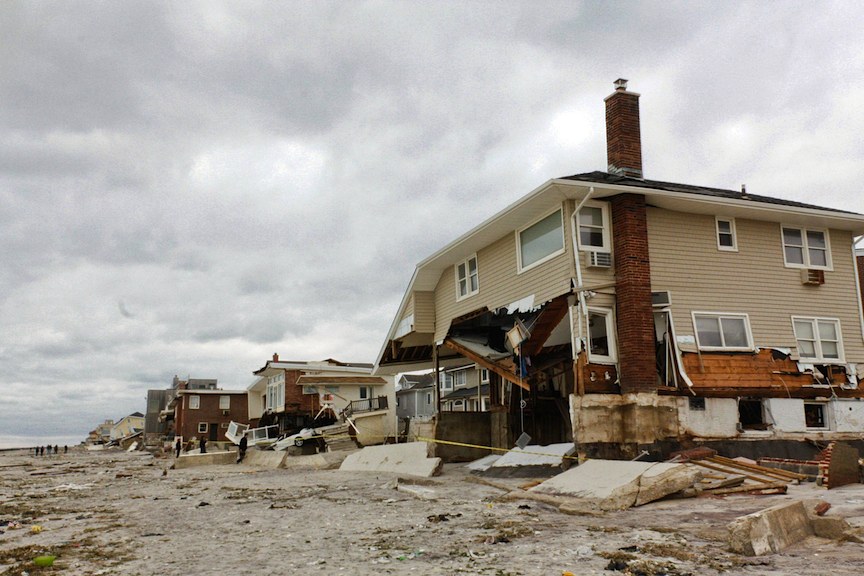
Killing nearly 200 people in the United States, Canada and the Caribbean and crippling much of New York City and surrounding areas earlier this week, Hurricane Sandy was the kind of extreme weather event scientists have long predicted will occur with global warming.
“Climate change is a reality,” said New York Governor Andrew Cuomo after Sandy swept through his state.
Sandy was twice the size of an average hurricane, and it hit the eastern coast of the United States, where sea levels have been rising the fastest, said Kevin Trenberth, senior scientist at the National Center for Atmospheric Researchin Boulder, Colorado.
“All weather events are affected by climate change because the environment in which they occur is warmer and moister than it used to be,” Trenberth, an expert on extreme events, told IPS.
Whether climate change caused Hurricane Sandy is the wrong question to ask, added Trenberth. He explained that climate change helped make Hurricane Sandy more destructive than it otherwise would have been.
“This is the new normal,” Trenberth said. “It doesn’t make sense to rebuild in some regions – they’ll just be swept away again.”
I was born just over a week ago and more than 100 people have died in the US and Caribbean region as a result. For the rest of today please take care as I will continue to bring strong winds, heavy rains and snowfall from North Carolina to well into Canada. Some of the worst flooding hit Haiti in the hours after I’d passed by.
Climate change is making oceans warmer and more acidic…expect the worst
By Stephen Leahy
When the carbon dioxide absorbed by the oceans dissolves in seawater, carbonic acid is formed and calcium carbonate, vital for the formation of the skeletons and shells of many marine organisms, becomes scarcer.
Climate change will ruin Chilean sea snails’ ability to sniff out and avoid their archenemy, a predatory crab, according to Chilean scientists who presented their findings at an international science symposium here.
Researchers from Australia also revealed that as the oceans become more and more acidic, some fish become hyperactive and confused, and move towards their predators instead of trying to escape.
“The conditions in oceans are changing 100 times faster than at any time in the past,” said Jean-Pierre Gattuso, a marine biologist with CNRS-INSU and the Laboratoire d’Océanographie de Villefranche in France.
Climate change is making oceans warmer and more acidic. “We are beginning to understand what will happen. I think we can expect the worst,” Gattuso told Tierramérica*.
Gattuso is one of nearly 600 scientists from around the world who presented their research on Sep. 24-27 at the Third International Symposium on the Ocean in a High-CO2 World: Ocean Acidification in Monterey, California.
Researchers discovered only 10 years ago that burning fossil fuels like coal, oil and gas has made the oceans about 30 percent more acidic since the beginning of the Industrial Revolution. Continue reading →
The melt of Arctic sea ice has reached its lowest point this year, shrinking 18 percent from last year’s near-record low.
Summer ice this year is half what it was 30 years ago and is now affecting weather patterns. The massive declines in ice in recent summers have shocked scientists and Arctic experts. Some predict that in just a few years we will witness an event that hasn’t happened in millions of years: the complete loss of summer ice.
“Few of us were prepared for how rapidly the changes would actually occur” as a result of the burning fossil fuels that are warming the planet, said Serreze.
“We could see an essentially ice-free Arctic ocean in late summer by the year 2030,” he told IPS.
Not long ago experts thought the soonest the Arctic would be ice-free was 2070. Now it’s anywhere from four to 18 years away.
The impacts are already being felt across the entire northern hemisphere. The loss of sea ice in recent years has been affecting weather patterns, recent research has shown. The all-important jet stream – the west-to-east winds that are the boundary between the cold Arctic and the warm mid-latitudes – is slowing down, moving north and become more erratic.
“Europe, eastern Asia and eastern North America is connected to unique physical processes in the Arctic,” said James Overland of the NOAA/Pacific Marine Environmental Laboratory in the United States.
“In future, cold and snowy winters will be the rule rather than the exception” in these regions, Overland told IPS in Oslo in 2010.
The summer’s record loss of Arctic sea ice may mean a cold winter for the UK and northern Europe, Jennifer Francis, a researcher at Rutgers University, told the Guardian last week.
The region has been prone to bad winters after summers with very low sea ice, such as 2011 and 2007, Francis said. Continue reading →
When the carbon dioxide absorbed by the oceans dissolves in seawater, carbonic acid is formed and calcium carbonate, vital for the formation of the skeletons and shells of many marine organisms, becomes scarcer.
MONTEREY, California, Oct 2 2012 (IPS) –
Climate change will ruin Chilean sea snails’ ability to sniff out and avoid their archenemy, a predatory crab, according to Chilean scientists who presented their findings at an international science symposium here.
Researchers from Australia also revealed that as the oceans become more and more acidic, some fish become hyperactive and confused, and move towards their predators instead of trying to escape.
“The conditions in oceans are changing 100 times faster than at any time in the past,” said Jean-Pierre Gattuso, a marine biologist with CNRS-INSU and the Laboratoire d’Océanographie de Villefranche in France.
Climate change is making oceans warmer and more acidic. “We are beginning to understand what will happen. I think we can expect the worst,” Gattuso told Tierramérica*.
Political will is all that’s needed to bring electricity to the 2.5 billion people with no or unreliable access to power, or to feed the one billion who go hungry every day, or to finally begin to slash carbon emissions to avoid dangerous climate change, or just about any other global problem.
Humanity has the technology, resources and even the money to solve these problems, agree scientists, corporate business leaders, heads of civil society organisations and United Nations agencies and government ministers. “All that is lacking is political will,” they almost always declare at the dozens of international conferences, summits and forums this reporter has attended for the past five years. And then everyone goes home.
What is this magical “political will” that can solve any problem?
BONN, Jun 20, 2011 (IPS) — If we’re lucky, by the time a tough but fair international treaty to meet the climate change challenge is finalised, it will be largely unnecessary. The snail’s pace of negotiations certainly gives countries plenty of time to understand the financial, social and environmental advantages of kicking their dangerous addiction to fossil fuels.
That may be a cynical optimist’s hope, but the European Union is already moving in that direction.
No developed country is close to the 40-percent cut that the science says is needed by 2020 to stay below a two degrees C increase.
A lot of coral reefs have died this year due to unprecedented ocean heating largely due to climate change. I broke that story last summer. Few coral reefs will survive the next 50 years most experts say without immediate action to reduce greenhouse gas emissions.
Forests are next in line according a new study in PNAS. Huge uncontrollable wildfires will dominate forest landscapes of the near future without dramatic reductions in the burning of fossil fuels the study found.
I would have done a full article explaining all this but simply can’t find a publication willing to pay me to do the work. That’s why I am trying community supported journalism where readers donate small amounts so these articles get done and made available for millions to read.









 Stephen Leahy, International Environmental Journalist