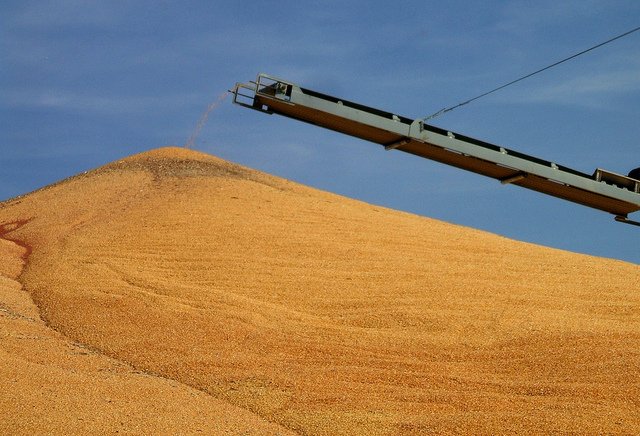
Rampant Speculation Inflated Food Price Bubble – Wall St./Grain Traders Pushing Price Rises

“Hunger is not a food production problem. It is an income problem”

By Stephen Leahy

UXBRIDGE, Canada, Jan 28, 2011 (IPS)

Billions of dollars are being made by investors in a speculative “food bubble” that’s created record food prices, starving millions and destabilising countries, experts now conclude.

[This is the second of a multi-part series investigating what is driving food prices higher]

Wall Street investment firms and banks, along with their kin in London and Europe, were responsible for the technology dot-com bubble, the stock market bubble, and the recent U.S. and UK housing bubbles. They extracted enormous profits and their bonuses before the inevitable collapse of each.

Now they’ve turned to basic commodities. The result? At a time when there has been no significant change in the global food supply or in food demand, the average cost of buying food shot up 32 percent from June to December 2010, according to the U.N. Food and Agriculture Organisation (FAO).

This independent environmental journalism depends on public support. Click here learn more.

Nothing but price speculation can explain wheat prices jumping 70 percent from June to December last year when global wheat stocks were stable, experts say.

“There is no food shortage in the world. Food is simply priced out of the reach of the world’s poorest people,” said Robert Fox of Oxfam Canada in reference to the estimated one billion people who go hungry.

“Hunger is not a food production problem. It is an income problem,” Fox told IPS. Continue reading
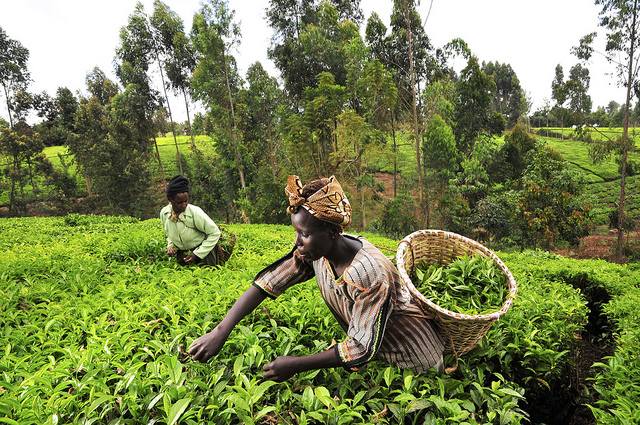
In Corrupt Global Food System, Farmland Is the New Gold and Africans the New Share-croppers

$ Billions Made Speculating on Food

“Africans have become share-croppers, exporting coffee, cotton, flowers and now food while going hungry”

By Stephen Leahy

UXBRIDGE, Canada, Jan 13, 2011 (IPS)

Famine-hollowed farmers watch trucks loaded with grain grown on their ancestral lands heading for the nearest port, destined to fill richer bellies in foreign lands. This scene has become all too common since the 2008 food crisis.

[This is the first of a multi-part series investigating what is driving food prices higher]

Food prices are even higher now in many countries, sparking another cycle of hunger riots in the Middle East and South Asia last weekend. While bad weather gets the blame for rising prices, the instant price hikes of recent times are largely due to market speculation in a corrupt global food system.

The 2008 food crisis awoke much of the world’s investment community to the profitable reality that hungry people will do almost anything, even sell their own children, in order to eat. And with the global financial crisis, food and farmland became the “new gold” for some of the biggest investors, experts agree.

In 2010, wheat futures rose 47 percent, U.S. corn was up more than 50 percent, and soybeans rose 34 percent.

This independent environmental journalism depends on public support. Click here learn more.

On Wednesday, U.S.-based Cargill, the world’s largest agricultural commodities trader, announced a tripling of profits. The firm generated 1.49 billion dollars in three months between September and November 2010.

Meanwhile, U.S. Treasury Bills pay a return of less than one percent. Continue reading

Coral Reefs In Dire Peril – 75% May Die In Coming Years

One of the most incredible natural wonders of our world is being decimated by our actions: burning fossil fuel, pollution of land and sea, overfishing. The most recent estimate shows 75% of the world’s coral reefs are threatened according to new report by the World Resources Institute (WRI) and 24 other organizations. The report is “Reefs at Risk Revisited“.

Here’s one thing you can do to help. Follow and encourage others to live by these Three Simple Rules:

1. Reduce.

Reduce fossil fuel consumption everywhere.

2. Eliminate.

Eliminate all non-essential activities and products that involve burning fossil fuel.

3. Demand.

Demand that business and government provide transport, activities and products that minimize fossil fuel use.

Reduce. Eliminate. Demand. R.E.D.

More on the Corals, Ocean Acidification, Bleaching, Overfishing.

I have written more than 15 articles in last few years about the serious threats corals face:

Record Heat Killing Caribbean and Indian Ocean Corals

What if our air was 30% more acidic like the Oceans? May be 120% more acidic by 2060

Coral Reefs and Acid Oceans Series

Reefs and Forests Burn as Climate Disruption Takes Hold NOW

Factory Farms Spawn Climate Disruption and Disease

60 percent of factory farms in poor countries

[This is a re-post from 2007. Meat production in factory farms are major animal health and welfare issues, they also produce more emissions than cars and trucks. Not to mention creating perfect conditions for diseases like bird flu and swine flu and who knows what else. — Stephen]

Cramming 100,000 chickens into a single facility to produce low-cost meat also creates the perfect atmosphere for the spread of disease

By Stephen Leahy

Feb 20 (IPS) 2007

Factory farms are responsible for both the bird flu and emissions of greenhouse gases top those of cars and sport utility vehicles (SUVs), according to a report released Monday.

Sixty percent of global livestock production, including chicken and pig “confined animal feedlot operations” (CAFOs), now occur in the developing world. Unregulated zoning and subsidies that encourage these CAFOs or factory farms are moving closer to major urban areas in China, Bangladesh, India, and many countries in Africa, said the report, “Vital Signs 2007-2008” by the Worldwatch Institute.

Although there is no definitive scientific proof, those farms are very likely where avian or bird flu started and will continue to be responsible for new outbreaks, said the author of the report, Danielle Nierenberg, a Worldwatch research associate. Continue reading

Report: +2.4C by 2020 leaves Billions Hungry? Scary but Untrue. Inside Story of Good Intentions Gone Wrong (and how the media fell for it)

Food Report Released Knowing the Science Was Wrong

By Stephen Leahy

Jan 19 2011

In the year 2020 climate change will devastate much of the world’s harvest leaving one in five people starving because the global temperature will have shot up an average of 2.4 degrees C a new report released Tuesday shows.

Shocking. Stunning. Scary even. And completely untrue.

Days before the report’s release I told the author Liliana Hisas of the Universal Ecological Fund (FEU), an Argentina-based NGO, it was impossible to get to 2.4 degrees of warming by 2020. Global temperatures have increased 0.8C in the last century and the 64-page report, “The Impacts of Climate Change on Food Production: A 2020 Perspective,” is based on additional 1.6C degree increase in just nine years time.

I asked several climate experts if it was possible to reach a +2.4 degree average global temperature by 2020. Their answer: “No way”.

This independent environmental journalism depends on public support. Click here learn more.

The reason is that the oceans absorb 93 per cent of the additional heat being trapped in the atmosphere due to the burning fossil fuels. If we stopped burning all fossil fuels and emitting other greenhouse gases today, the atmosphere would still continue to slowly heat up over the next 50 to 100 years as the oceans released that stored heat.

So ‘thank God for the oceans’ I said to Hisas who is also Executive Director of FEU-US when I explained all this via emails. And in an interview with Hisas on Monday I suggested the report be withdrawn. She refused, saying her organization had worked on the report for more than a year and the science was solid. It was all based on the Intergovernmental Panel on Climate Change (IPCC) 2007 report and had been vetted by Osvaldo Canziani, a former co-chair of the IPCC she said.

Unfortunately Canziani was in hospital and unavailable for an interview. Continue reading

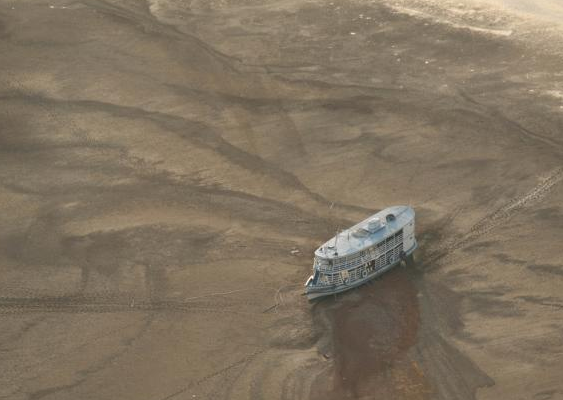
Climate Changes Herald a Future of Widespread Drought – Water Left High and Dry in Climate Talks

Serious droughts expected in large parts of the world in coming decades

By Stephen Leahy

CANCÚN, Dec 8, 2010 (IPS/TerraViva)

As the world heats up, continents are drying up, with severe droughts forecast in the future. But negotiators at the climate summit here seem to have forgotten about water in their endless discussions over forests, carbon trading and finances.

“The main impact of climate change is on the planet’s water cycle,” said Henk van Schaik of the Cooperative Programme on Water and Climate, a foundation based in the Netherlands.

“Climate-driven changes in the water cycle will affect large regions of the world,” van Schaik told TerraViva at a side event meeting here at COP 16 in Cancún .

The impact of climate on the world’s water resources is not addressed within the U.N. climate framework, said Anders Berntell of the Stockholm International Water Institute.

“Negotiators here see it as just another sector of the economy but it is a basic element for life. Water is the bloodstream of our planet,” Berntell said.

This article was made possible thanks to contributions from Hugh & Jo-Ann Roberston, Kevin Toner, Michael Sweatman, Ann Wakelin, Lynn Carey, Leif Knutsen, Nan Nolan, Chris Conrad, Godo Stoyke.

[Due to the high costs of covering such important events, support is needed from readers like you.Please consider making a small automatic monthly contribution as a fair exchange for these articles – for more information.] Continue reading

As World Warms, Southern Africa Will Cook In Coming Decades

“A four-degree C world would be horrendous and must be avoided at all costs”

By Stephen Leahy*

MEXICO CITY, Dec 7, 2010 (IPS/TerraViva)

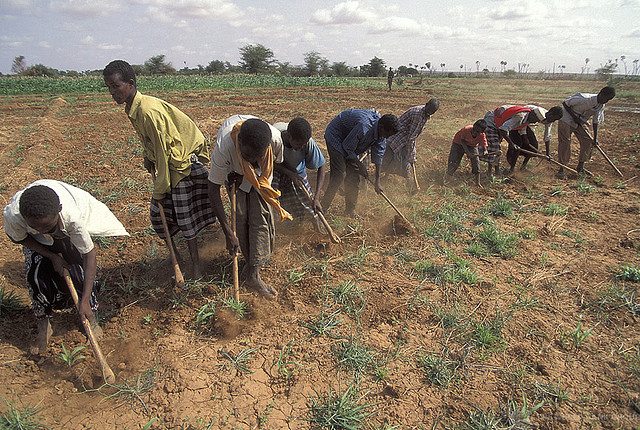
Africa will be amongst the hardest hit regions of the world as the climate heats up, threatening the continent’s food security, experts agree. If global temperatures rise 2.0 degrees C, southern Africa will warm an additional 1.5 degrees to a 3.5-degree increase on average.

Such temperatures could be reached as early as 2035. The Hadley Centre for Climate Prediction and Research in Britain recently advised that a 4.0-degree C rise in the global average temperature could be reached as soon as 2060 if the ever-increasing emissions of carbon dioxide and other greenhouse gases are not curbed.

The prognosis for agriculture and food security in SSA (Sub-Saharan Africa) in a 4°C+ world is bleak,” write the authors of a special issue of the Philosophical Transactions of the Royal Society to be published next month.

“A four-degree C world would be horrendous and must be avoided at all costs,” said Philip Thornton of the International Livestock Research Institute in Nairobi, Kenya and co-author of a paper in the Royal Society special issue “Four degrees and beyond”.

“This special issue is a call to action so we can avoid such a future,” Thornton told TerraViva.

Even if a new climate treaty came out of the final week of the 16th meeting of the Conference of Parties (COP) of the U.N. Framework Convention on Climate Change in Cancún, 2.0 degrees C looks inevitable, he said. No one is realistically expecting a comprehensive climate treaty for several years. This means southern Africa can expect to be 3.5 degrees C hotter and much drier in future, he said.

“It is going to get very difficult for rain-fed agriculture in this region,” Thornton warned.

This article was made possible by a contribution from Brewster Kneen of Canada

Due to the high costs of covering such important events, support is needed from readers like you. Please consider making a small automatic monthly contribution as a fair exchange for these articles – for more information.

Continue reading

Biofuels Worse Than Paying People to Use More Gasoline – European Study

I’ve done several articles previously about the problems of biofuels. (see below). New report out today shows Europe’s biofuel policy completely wrong headed.

European plans to promote biofuels will drive farmers to convert 69,000 square km of wild land into fields and plantations, depriving the poor of food and accelerating climate change, a report by green groups warned.

…extra biofuels that Europe will use over the next decade will generate between 81 and 167 percent more carbon dioxide than fossil fuels,

— read Reuters take

My previous articles listed below cover much of the same ground although the report is more specific reading impacts of EU policy than anything to date.  — Stephen

Europe’s Green Energy Portfolio Up in Smoke?

“Europe is going to cook the world’s tropical forests to fight climate change; it’s crazy” — Millions of Trees Burned for ‘Green Energy’

Ethanol and Biofuels – Everything (Almost) You Need to Know

Dams Come At a Price of Hi-Quality Food — Hard to Put a Price-tag on Healthy Rivers

By Stephen Leahy

NAGOYA, Japan, Oct 22, 2010 (IPS)

Damming a river may bring electric power, but it often comes at the price of high-quality food fisheries, experts say. When dams are proposed for power, flood control or irrigation, the often devastating impacts on fisheries in rivers and lakes are ignored or discounted.

“It is very difficult to put a dollar value on what inland fisheries represent because it is much more than the landed value of the fish at the dock,” says Yumiko Kura of the WorldFish Center office in Phnom Penh, Cambodia.

Kura is co-author of a new report, “Blue Harvest: Inland Fisheries as an Ecosystem Service”, which highlights the wide-ranging importance of inland fisheries in diets, especially among children, and not just in terms of protein but in supplying micronutrients, notably vitamin A, calcium, iron and zinc.

“Detailed studies in Bangladesh for example have shown that daily consumption of small fish contributes 40 percent of the total daily household requirement of vitamin A and 31 percent of calcium,” according the report released Friday at a side event at the 10th Conference of the Parties to the Convention on Biological Diversity.

In addition, it notes there are more than 60 million full- and part-time jobs in fishing and other activities such as processing, with over half these jobs carried out by women.

Is this article of interest? It exists thanks to contributions from readers. Please click here to learn more about Community Supported Journalism. Continue reading

Blame Canada: Seeks to Drop Native Peoples from New Biodiversity Pact

Awarding Winner Poster - CBD COP 10 Nagoya - Copyright Stephen Leahy

By Stephen Leahy

NAGOYA, Japan, Oct 21, 2010 (IPS)

Blame Canada if countries fail to agree to a new binding treaty to curb the rapid loss of plant, animal and species that form the intricate web of life that sustains humanity.

That is the view of indigenous representatives from Canada in response to a late night move by the Canadian delegation to strike a reference to indigenous peoples’ rights at the U.N. Convention on Biological Diversity (CBD) members’ conference here.

“Canada is stalling progress here, weakening our rights and fighting against a legally-binding protocol on access and benefit sharing,” said Armand MacKenzie, executive director of the Innu Council of Nitassinan, the indigenous inhabitants in northeastern Canada.

“Their opposition threatens global biodiversity… people need to speak out,” MacKenzie told IPS.

A protocol on access and benefit sharing (ABS) without a guarantee of the rights of indigenous people and local communities “would be totally void”, said Paulino Franco de Carvalho, head of the Brazilian delegation.

“Brazil will not accept any agreement on biodiversity without a fair ABS protocol…. We are not bluffing on that, I must be very clear,” Franco de Carvalho said in a press conference.

Is this article of interest? It exists thanks to contributions from readers. Please click here to learn more about Community Supported Journalism. Continue reading